
 Bitaigen Research
 We approach the topic by examining the essence of blockchain technology, outlining the core advantages of putting game assets on‑chain, and using representative case studies to show how players can turn in‑game items and tokens into tradable value. The article also explores the current ecosystem and future trends, helping you gain a comprehensive view of the profit pathways in blockchain gaming—worth a careful read.
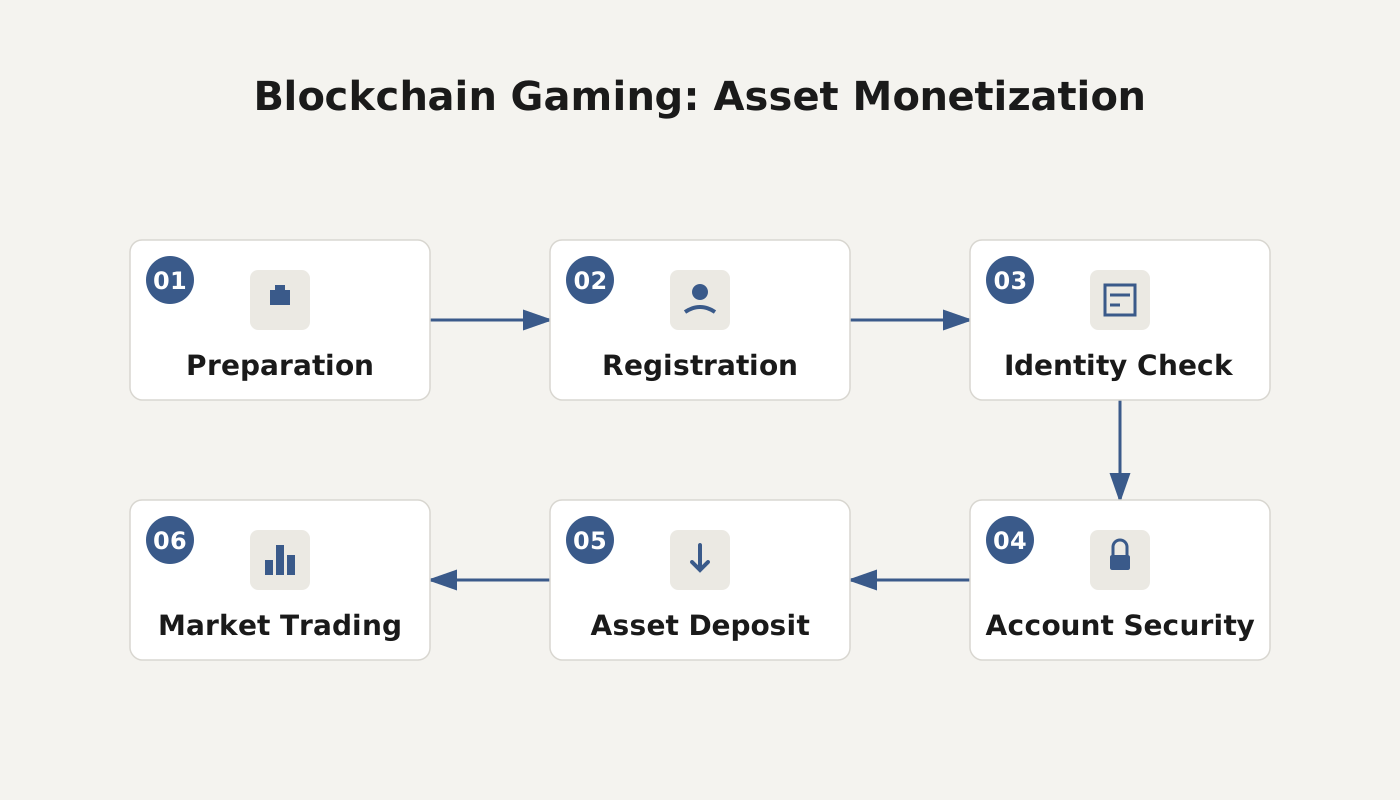
Background of Blockchain Games
Blockchain games are video games that run on a blockchain network. Compared with traditional games, the fundamental difference lies in the fact that all game data is recorded on the blockchain, giving it public, transparent and traceable characteristics. Players’ assets, progress, and even the number of participants can be queried directly on‑chain, eliminating the “black box” where data is controlled solely by a company’s internal servers.
The decentralized nature of blockchain means that every in‑game transaction requires network consensus. This is also the primary reason why current blockchain games struggle to achieve daily active user numbers comparable to titles like *Honor of Kings*. Conventional centralized servers can handle massive concurrent requests in milliseconds, whereas decentralized nodes are still limited by the throughput of their underlying chain. Consequently, most blockchain games today are developed by small teams and operate on a relatively modest scale.
The majority of well‑known blockchain games are built on the Ethereum network. Ethereum’s position in the blockchain ecosystem is akin to iOS and Android in the mobile world—it hosts the broadest developer community and the most mature smart‑contract standards. Without Ethereum, it is hard to imagine the blockchain‑gaming landscape being as vibrant as it is today.
Having covered the basic concepts, we now turn to the most emblematic historical example—Fomo 3D—as a launching point to further examine blockchain‑gaming revenue models.
How Blockchain Games Generate Revenue
Direct answer (50‑80 words): Blockchain games enable players to obtain ownership of digital assets, earn native tokens, and trade NFTs, allowing them to acquire tradable digital property that can be sold on secondary markets for cash.
Over the past four years, the blockchain boom has swept across many industries, with the gaming sector being especially hot. Beyond early projects such as CryptoKitties and Axie Infinity, platforms like NetEase Planet, MetaChain Galaxy, and HiveNest Planet have also entered the market. Players commonly ask: what concrete earnings can blockchain games deliver?
Primary Sources of Income
- Token Rewards
- Completing quests, clearing levels, or taking part in events grants the platform’s native token.
- Tokens can be freely transferred on‑chain and exchanged for fiat (typically USD) via exchanges that support SEPA/SWIFT transfers; U.S. users should use Binance.US rather than the global Binance platform.
- NFT Trading
- In‑game characters, gear, and items are minted as NFTs, providing uniqueness and verifiable ownership.
- Players may buy and sell these NFTs on secondary marketplaces, potentially realizing appreciation.
- Mining and Staking
- Some games incorporate “game mining,” where routine actions generate mining yields.
- Staking the platform’s token can earn additional rewards, boosting the effective yield on held assets.
Case Overview
| Project | Core Gameplay | Revenue Mechanism |
|---|---|---|
| **MetaChain Galaxy** (Singapore ACNC Foundation) | Mobile mining + quest challenges | Mining rewards, token dividends |
| **NetEase Planet · Black Diamond** | Virtual‑asset auctions | NFT auction, secondary‑market trading |
| **Fomo 3D** | 3D cyber‑combat arena | Token airdrops, NFT sales |
- MetaChain Galaxy lets users earn mining yields by “tapping” within the app, combining blockchain education with light fitness—an approachable entry point for newcomers.
- NetEase Planet · Black Diamond recorded an average auction price of roughly ¥11.6 (≈ USD 1.60) per item in its March sale; while future price trajectories are uncertain, the event highlighted the liquidity potential of virtual assets.
- Fomo 3D leveraged celebrity branding and NFT characters to generate millions of transactions in a short span, demonstrating the fundraising power of pairing hot IP with on‑chain assets.
Points of Caution
- Asset Volatility: On‑chain tokens and NFTs are highly sensitive to market sentiment, and prices can swing dramatically.
- Contract Security: Before participating, review the game’s smart‑contract audit reports to avoid losses from potential vulnerabilities.
- Regulatory Compliance: Jurisdictions differ in their treatment of digital assets; participants should familiarize themselves with local regulations and ensure they do not breach any laws.
- Tax Considerations: Gains realized from converting crypto‑derived tokens or NFTs into fiat (e.g., USD) may be subject to taxation in the participant’s country of residence; consult a tax professional for guidance.
Conclusion
The profit model of blockchain games revolves around token rewards, NFT trading, and on‑chain mining, offering players pathways to acquire digital assets that can be freely transferred and monetized. For deeper insights and ongoing coverage of blockchain‑gaming developments, stay tuned to Bitaigen (比特根).


Related Reading
- Synthetic Assets in DeFi: Core Principles, Use Cases & Opportunities
- Blockchain Gaming Economies: Ownership, Decentralization & Global Access
- Blockchain Gaming Guilds: Play-to-Earn Services
💡 Register on Binance with referral code B2345 for the maximum trading fee discount. See Binance complete guide.



