
 Bitaigen Research
In the highly volatile cryptocurrency market, price appreciation is not the only way to make money. When the market weakens, liquidity contracts, or panic spreads, many professional traders adopt “short‑selling” strategies to profit from price declines. Shorting serves both as a hedging tool and as a means to improve capital efficiency during bear markets. As long as there is sufficient liquidity and contract depth, assets ranging from Bitcoin and Ethereum to highly volatile altcoins can be positioned for a fall via leveraged tokens, perpetual contracts, or loan‑based short sales.
However, shorting is not a simple reverse of buying; it demands stricter risk‑management discipline. Because upside potential is theoretically unlimited while downside is capped at 100 %, stop‑loss design, leverage multiples, and position sizing must be more precise than when going long. Accurately judging market trends, confirming weakening signals, and spotting break‑downs and liquidity gaps are key to improving win rates.
This guide systematically breaks down the main methods, trading principles, and practical steps for shorting cryptocurrencies, and explains how to build a controllable profit model during sharp downturns so you can retain the initiative when the market turns bearish.
In this article we systematically outline the core principles and common pathways of shorting crypto, dive deep into risk‑control points, and provide practical thinking to help readers effectively manage positions and capture downside opportunities in bear markets or volatile periods. If you want to learn how to construct a controlled short‑position strategy from both technical and capital perspectives, keep reading for a comprehensive guide.
Introduction to Shorting Cryptocurrency
Shorting cryptocurrency is a trading approach that allows profit when the market falls. Its core concept is: borrow a cryptocurrency, sell it at a high price, then buy it back at a lower price to return the loan, pocketing the price difference. Unlike the traditional “buy low, sell high” approach, shorting is a contrarian trade often implemented through leverage, perpetual contracts, or lending protocols.
The strategy offers extra profit opportunities in bear markets, but it comes with high risk because price upside has no ceiling, making forced liquidations possible during sudden rallies. Therefore, shorting relies heavily on precise stop‑losses, position sizing, and market‑signal identification. When leverage is managed sensibly, exit points are set thoughtfully, and funding rates are understood, shorting can become an effective tool in down‑trend scenarios.
Key Insights on How to Short Cryptocurrency
- Short positions profit when prices fall, not when they rise.
- High leverage magnifies profits but also raises the risk of liquidation.
- Perpetual contracts are currently the most common shorting method.
- Stop‑losses are essential to prevent catastrophic losses from rapid rallies.
- Holding a short position for a long time incurs funding fees.
- Shorting is most effective during clear downtrends or corrective phases.
What Does Shorting Cryptocurrency Mean?
Shorting cryptocurrency refers to a trading method that gains when the coin’s price declines. Traditional “long” trading buys low and sells high; shorting does the opposite—traders first borrow a crypto asset, sell it at a relatively high market price, then repurchase it at a lower price to return the loan, extracting profit from the spread.
This model is especially common in crypto markets, particularly during bear phases or sharp corrections, and has become an essential tool for professional traders to maintain profitability. The core idea is simple: bet on price decline. Yet the practical execution involves margin, funding rates, liquidation mechanisms, and volatility calculations, making it a high‑risk, high‑skill advanced trading technique.
Why Shorting Is Particularly Important in Crypto Markets
Cryptocurrency markets exhibit volatility far higher than traditional financial markets; prices can surge or plunge dramatically within minutes. In such an environment, shorting not only provides a way to profit from crashes but also serves as a hedge, helping traders reduce portfolio risk while holding long‑term positions.
For example, an investor who holds Bitcoin long‑term may anticipate a short‑term correction and open a short position to offset potential losses from the dip. The flexibility of shorting gives traders operational space across various market conditions, eliminating the need to wait passively for a bull market to return.
Fundamental Mechanics of Shorting: Borrow, Sell, Repurchase
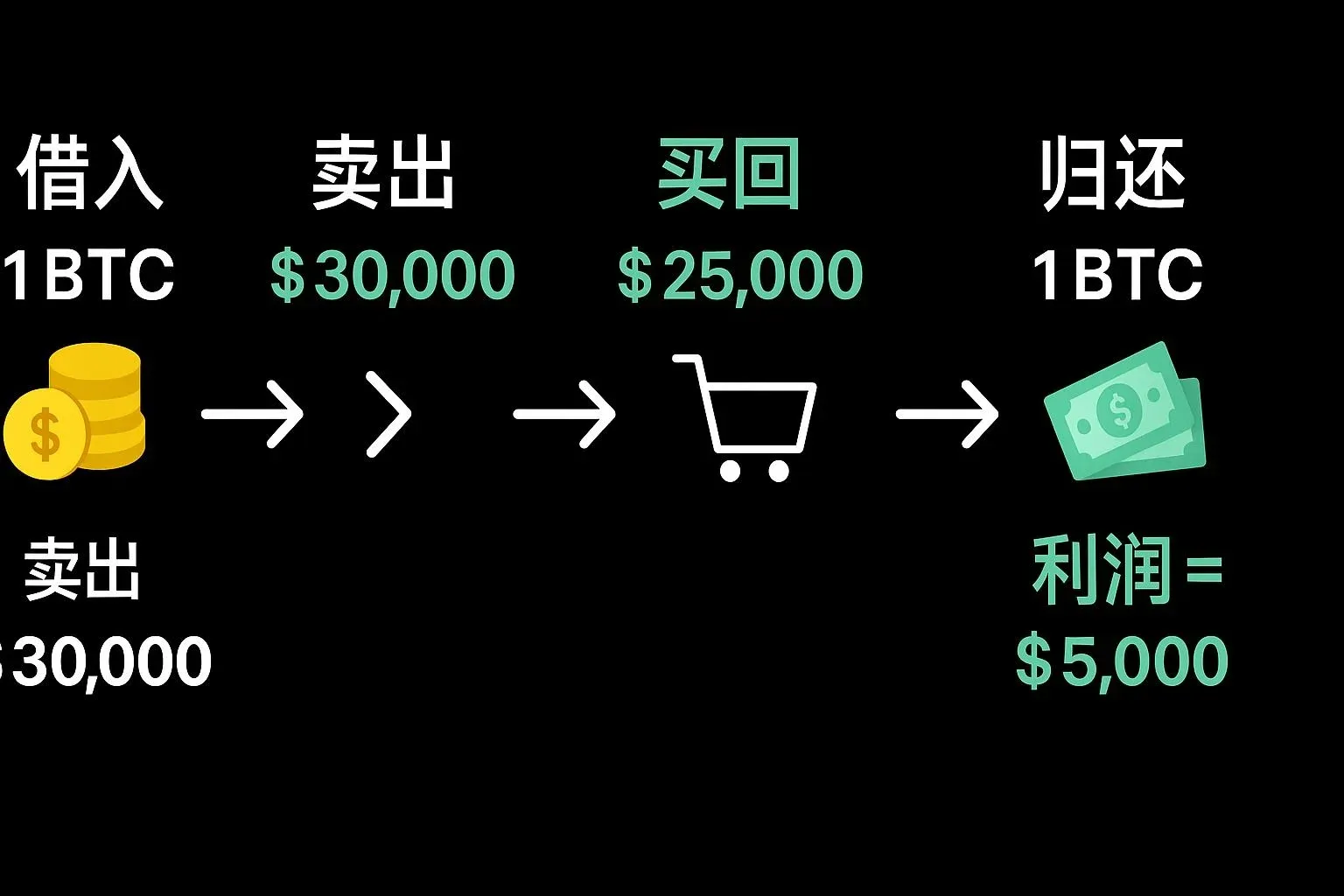
To grasp the technical flow of shorting, one must first understand an exchange’s lending system. When shorting, traders do not sell assets they own; they borrow them from the exchange or a lending pool. For instance, a user wanting to short Bitcoin might borrow 1 BTC from a platform.
Assume Bitcoin is priced at $30,000 at the moment of borrowing; the user immediately sells the 1 BTC at market price, receiving an equivalent amount of stablecoins while now owing the platform 1 BTC. If the price later falls to $25,000, the user can repurchase 1 BTC at the lower price, return the loan, and keep the $5,000 price difference as profit. The entire process relies on a margin system; the platform will require the user to post collateral—typically USDT or another stablecoin—as risk security.
Margin Trading: The Most Traditional Way to Short
Margin trading was the earliest widely adopted shorting method. Traders use leverage to amplify their capital, controlling larger positions with a modest amount of capital. In crypto, leverage ranging from 2× to 10× is common, while some high‑risk traders employ 20× or more.
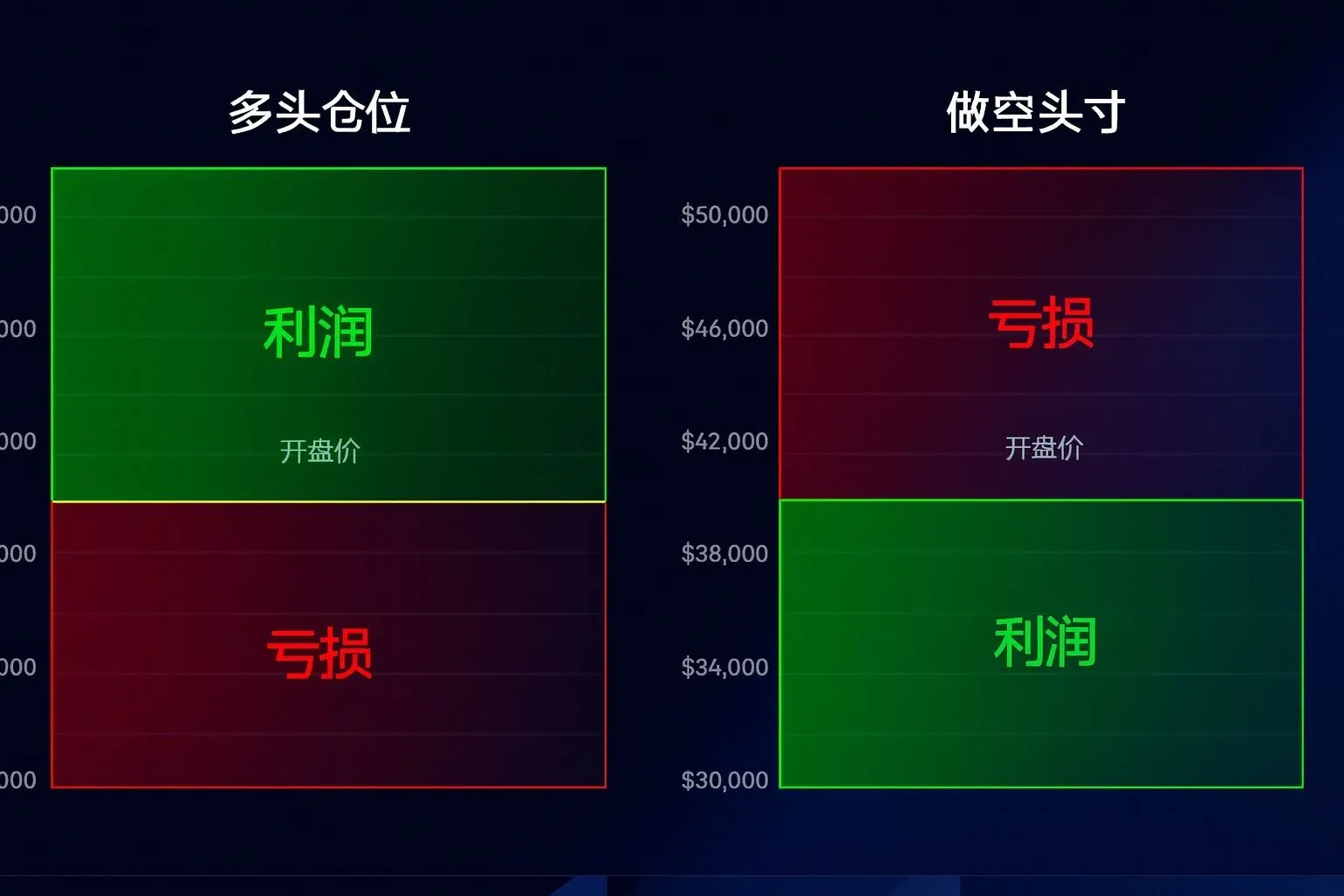
With 10× leverage on a short, a 10 % adverse price movement can trigger liquidation. Consequently, margin shorting emphasizes strict control of position size and the placement of stop‑losses; otherwise, a brief rebound can generate massive losses.
Perpetual Contracts: The Dominant Modern Shorting Tool
Perpetual contracts have become the mainstream method for shorting cryptocurrencies. Their hallmark is the absence of an expiry date, allowing traders to hold short or long positions indefinitely while funding rates balance longs and shorts. Perpetuals do not require the actual borrowing of the underlying asset; instead, they are derivative instruments that let participants bet on price movements, offering higher liquidity, transparent costs, and avoidance of the complexities associated with borrowing.
In a perpetual contract, shorting revolves around trend assessment and finding an optimal entry point. When the market breaks below support, exhibits a trend reversal, or macro conditions deteriorate, short positions can generate rapid gains. However, if the funding rate is biased toward shorts, long‑term holdings incur additional costs, making perpetuals better suited for medium‑term or short‑term operations.
Options Trading: An Advanced Shorting Method
For experienced traders, options provide a more nuanced shorting avenue. The most common approach is buying put options. Purchasing a put requires paying a relatively small premium for the right to sell the underlying asset at a predetermined price in the future. If the underlying price drops sharply, the put’s value rises, delivering leveraged returns.
The advantage of options lies in the fact that maximum loss is limited to the premium paid, making risk exposure transparent. Nevertheless, options demand a higher technical threshold, requiring solid understanding of volatility, the Greeks, and other parameters.
Inverse Tokens: Low‑Barrier Shorting
Users who prefer to avoid leverage, funding‑rate calculations, or liquidation risk can trade exchange‑issued inverse tokens. For example, BTC3S (a three‑times short Bitcoin token) automatically provides three‑times inverse exposure to Bitcoin’s price movement. When BTC falls 1 %, BTC3S rises roughly 3 %. While convenient, inverse tokens suffer from “volatility decay” over time, causing a downward drift if held long‑term; they are therefore best suited for short‑term timing rather than prolonged positions.
Core Technical Aspects of Shorting: Entry, Risk, Rhythm
Shorting is not just about picking a tool; it also hinges on technical execution. Entry timing is crucial—shorts placed closer to a trend‑reversal point are safer. For example, entering when price breaks a key support level or when indicators such as MACD or RSI show a clear reversal reduces risk.
Risk management requires setting explicit stop‑loss zones, such as exiting immediately if price retests the previous high. In terms of rhythm, professional traders avoid heavy short exposure during ranging markets; they wait for a clear trend before scaling in. Lack of disciplined methodology can lead to being swept out by market volatility.
Funding Rates and Long‑Term Holding Costs
Funding rates on perpetual contracts represent the most significant cost for short positions. When rates are biased toward shorts, traders must continuously pay fees, and prolonged holding can erode profits. Consequently, short strategies generally discourage “buy‑and‑hold” of shorts; they are better suited for capturing wave‑type opportunities. If a trader anticipates a prolonged bear market, they may employ staggered entries or combine options to mitigate high funding fees.
Risks and Common Misconceptions
The biggest risk of shorting is that price upside is unlimited, while downside is capped at 100 %. Theoretically, losses can be infinite, while profit potential is limited. Sudden bullish sentiment, liquidation cascades, or positive macro news can force a short position to be liquidated within minutes. Therefore, shorting is not suitable for everyone and should not be the primary long‑term strategy.
A frequent misconception is “the higher it goes, the more you short,” i.e., holding a short during a strong uptrend, which typically ends in a forced stop‑loss. The correct approach is to wait for confirmed weakening signals before establishing a short.
Shorting as a Technical Skill and Risk‑Management Art
Shorting cryptocurrency is not a mere sell‑off; it comprises a complete technical system. It demands that traders understand market structure, trend reversals, leverage risk, and funding costs. Beginners should start with low leverage and short time frames, adhering strictly to stop‑losses; seasoned traders can use shorting to manage portfolio risk and broaden strategic space.
How Shorting Works: Step‑by‑Step Explanation
1. Borrow the Asset
When shorting, you do not sell crypto you already own; you temporarily borrow it from an exchange or lending pool. For example, you could borrow 1 BTC on platforms such as Binance (U.S. users should use Binance.US), OKX, or Aave. The system automatically processes the loan, and you must provide collateral—usually a stablecoin like USDT—to secure the borrowing.
If you employ 10× leverage, the initial margin might be as low as $3,000 to short a $30,000‑valued BTC position, meaning even tiny price moves can have a large impact on the position.
2. Sell at Market Price
After borrowing, the platform immediately sells the BTC at the prevailing market price. Assuming BTC is $30,000, you now hold an equivalent amount of stablecoins while owing the platform 1 BTC.
Your profit or loss will depend entirely on the price at which you later repurchase the BTC.
3. Wait for the Price to Decline
If BTC’s price drops, your trade becomes profitable. For instance, a decline from $30,000 to $25,000 means the purchasing power of your stablecoins has increased, reducing the cost to buy back the borrowed BTC.
Conversely, if the price climbs to $32,000, you will need more capital to repurchase the BTC, and if the value of your collateral falls below the platform’s maintenance margin, the platform may force a liquidation to protect itself from larger losses.
4. Repurchase the Asset and Repay the Loan
When BTC reaches $25,000, you use your $30,000 stablecoin balance to buy back 1 BTC for $25,000, leaving $5,000 as gross profit. After subtracting roughly $300 in fees, interest, and financing costs, the net profit would be about $4,700.
High leverage amplifies both gains and risks, which is why professional traders combine aggressive stop‑losses with disciplined position management.
Pros and Cons of Shorting Cryptocurrency
Shorting is a double‑edged sword; before opening your first short position, fully understand its strengths and weaknesses.
Pros | Cons
--- | ---
✅ Allows profit in bear markets; you can earn when prices fall | ❌ Even a modest rally can trigger liquidation
✅ Flexible; can be executed on both centralized and decentralized exchanges | ❌ Leverage magnifies pressure; requires constant monitoring and discipline
✅ Advanced derivatives enable hedging or precise speculation | ❌ Fees and funding rates may erode profits
Practical Short‑Selling Mindset
Shorting is a high‑risk activity that can add strategic value when executed correctly. Traders who master the underlying principles and risk controls can generate returns in bear markets and hedge effectively during sharp volatility. However, improper execution often leads to faster losses than going long. Therefore, best‑practice discipline is the key to success.
Start Small: Master Low Leverage Before Scaling Up
Beginners should begin with 2‑3× leverage because short positions are more sensitive to price increases. Low leverage provides a larger buffer, preventing minor rebounds from instantly liquidating the position. Small position sizes also allow you to focus on learning trend identification, entry timing, and stop‑loss placement without the emotional strain of large capital swings. Once you’re comfortable recognizing false breakouts, genuine trends, and consistently applying risk management, you can gradually increase position size or leverage.
Set Stop‑Losses: The Core Mechanism for Capital Protection
Stop‑losses are central to short‑selling success. A short’s loss can balloon in a very short period, so professional traders set stop‑loss orders the moment they open a position rather than adding them later. The goal is to cut catastrophic loss and preserve capital for future trades. An ideal stop‑loss should meet these criteria:
- Positioned outside the technical structure, such as above the previous rebound high, a key resistance zone, or a broken trend line.
- Sized proportionally to the position, ensuring a single stop‑loss does not exceed 1 %‑3 % of total account equity.
- Executed automatically to avoid hesitation or emotional bias that can lead to missed exits.
Manual stop‑losses often lag during rapid reversals, resulting in forced liquidation. Automated stop‑losses are an indispensable discipline tool for short‑selling.
Funding Rates on Perpetual Contracts: Hidden Costs Not to Overlook
Perpetual contracts have no expiry; exchanges periodically settle funding fees between longs and shorts. When the market is biased bearish, short traders must pay funding to longs, and the cost accumulates over time. In the short term, the impact is modest, but holding a short for several days or weeks can significantly erode profits. Even a correct trend prediction can end in a net loss if funding fees remain high.
Thus, always check the current funding rate and adjust strategy accordingly. If rates are excessive, shorten the holding period, switch to day‑trading or swing‑trading, choose a contract with lower funding, or consider alternatives such as options or inverse tokens to reduce carrying costs.

Shorting in a Strong Uptrend: Extreme Counter‑Trend Risk
Attempting to short during a robust uptrend can lead to rapid liquidation. Such markets often feature on‑chain inflows, positive news, institutional accumulation, or favorable macro conditions, pushing prices to new highs. Assessing trend strength requires clear market‑structure cues: higher highs, higher lows, expanding volume, bullish moving‑average alignment, and decreasing short‑liquidation pressure all signal strong upward momentum, making shorting extremely risky.
The safest approach is to avoid fighting the prevailing trend; wait for reversal signals—such as a break below critical support, top‑divergence, or waning volume—before considering a short. Trading with the trend yields a far higher success rate than counter‑trend attempts
💡 Register on Binance with referral code B2345 for the maximum trading fee discount. See Binance complete guide.



