
 Bitaigen Research
 In this article we systematically outline the basic concepts of cryptocurrency staking, common models, and the key points of returns and risks, helping beginners quickly build an entry framework, and provide practical operational guidance to help you make clearer judgments when selecting chains and platforms. Continue reading to get the full analysis.
What Is Cryptocurrency Staking?
In the blockchain ecosystem, staking is a mechanism that allows token holders to support network operation and earn rewards by locking up their tokens. Unlike frequent buying and selling, the core of staking is to temporarily deposit assets into the system to help verify on‑chain transactions, ensure security, and boost overall network activity. As a reward, the platform distributes incentives proportionally based on the amount of tokens you commit and the duration of the lock‑up.
From the user’s perspective, staking is similar to placing funds into an interest‑bearing account, except that the “interest” comes from the network’s acknowledgment of your contribution. You can decide which chain to support, how long to lock your tokens, and which management method to use. Some chains require you to stake directly into the protocol, while others offer pooled funds or third‑party platforms that simplify the process. Because of this flexibility, staking has been experiencing rapid growth among both newcomers and seasoned investors.
Proof‑of‑Stake (PoS)
Proof‑of‑Stake is the primary technical framework that enables staking. Its operation selects validators to confirm transactions based on the amount of tokens participants lock and the length of the lock‑up period. The more tokens you hold and the longer you lock them, the higher the probability of being chosen as a validator, although most networks incorporate balancing mechanisms to prevent a few large holders from monopolizing validation rights. Compared with the traditional Proof‑of‑Work (PoW) model, PoS offers significant advantages in energy consumption and hardware requirements, allowing ordinary users to participate without specialized equipment. Ethereum’s transition to PoS marked a shift toward a more energy‑efficient and community‑driven security model for blockchains.
Proof‑of‑Work (PoW)
Proof‑of‑Work determines ledger‑writing rights through competition for computational power. Participants must invest substantial computing resources to solve complex mathematical puzzles. While this approach was crucial for the early security of many blockchains, it does not support staking rewards because earnings come from hash power rather than locked assets. Bitcoin (BTC) is the canonical example of a PoW network and therefore cannot be staked. Understanding the fundamental differences between PoW and PoS helps clarify which coins are eligible for staking and why many emerging projects favor PoS.
Staking Returns and Potential Risks
Staking on a platform can generate passive growth for your assets while contributing to the security and performance of the underlying blockchain. However, every investment carries both upside and downside, and the following list highlights the primary benefits and risks you should be aware of.
Benefits
- Passive income: Earn rewards without selling the tokens you already hold, allowing you to grow your position over time.
- Network security contribution: Staked tokens increase the number and reliability of validating nodes, indirectly strengthening the ecosystem’s resistance to attacks.
- Energy‑friendly: Compared with mining, staking consumes virtually no additional electricity, aligning with sustainable‑investment principles.
- Ease of use: Most exchanges and staking platforms offer “one‑click staking” features, enabling ordinary users to participate without configuring complex hardware.
Risks
- Price volatility: The market value of the staked token may swing sharply during the lock‑up period; even if you receive rewards, a decline in token price can erode real‑world returns.
- Lock‑up periods: Some platforms impose a mandatory lock‑up, during which you cannot freely transfer or sell the staked assets. Market turbulence may cause you to miss optimal exit points.
- Validator performance: If the validator or staking pool you delegate to makes mistakes, is penalized, or experiences downtime, your rewards will be proportionally reduced.
- Platform failures: Technical glitches or security breaches can render staked assets temporarily inaccessible or, in worst cases, result in loss.
A clear understanding of these factors, combined with risk‑mitigation tactics such as diversifying across validators and regularly monitoring performance, can substantially improve the safety and profitability of staking.
Note: In many jurisdictions, cryptocurrency gains—including staking rewards—may be subject to taxation. Users should consult local tax regulations and, if necessary, seek professional advice.
Commonly Stakable Cryptocurrencies
Several mainstream blockchains currently support staking. Below are ten of the most frequently staked tokens (order does not imply ranking):
- Ethereum (ETH)
- Solana (SOL)
- Cardano (ADA)
- Polkadot (DOT)
- Avalanche (AVAX)
- Tezos (XTZ)
- Cosmos (ATOM)
- Algorand (ALGO)
- TRON (TRX)
- Binance Coin (BNB)
These projects largely employ PoS or variants thereof, delivering relatively efficient staking yields.
A Panorama of Staking Methods
After grasping the basic concepts, you need to choose a staking path that matches your technical skill set, capital size, and desired level of control. Different methods vary in entry cost, flexibility, and expected returns. The following sections explain each approach in detail.
1. Solo Staking
Running your own node and submitting a stake directly to the protocol gives you the highest degree of ownership. This route suits users with strong technical backgrounds who can meet the chain’s minimum stake requirements. Advantages include full control over assets and the validation process; drawbacks involve time investment, hardware acquisition, and ongoing operational expenses.
2. Staking Pools
You deposit tokens into a shared pool that collectively performs validation. Individual participants contribute a modest amount and receive a share of the pool’s rewards proportional to their contribution. This model lowers the entry barrier and is ideal for investors seeking relatively stable returns without the responsibility of node maintenance.
3. Delegated Staking
You retain ownership of your tokens while delegating validation duties to a reputable node operator. Users simply select a validator in their wallet or on a platform and authorize the stake; the operator handles the rest. The key is choosing a reliable validator, as its performance directly impacts your earnings.
4. Exchange Staking
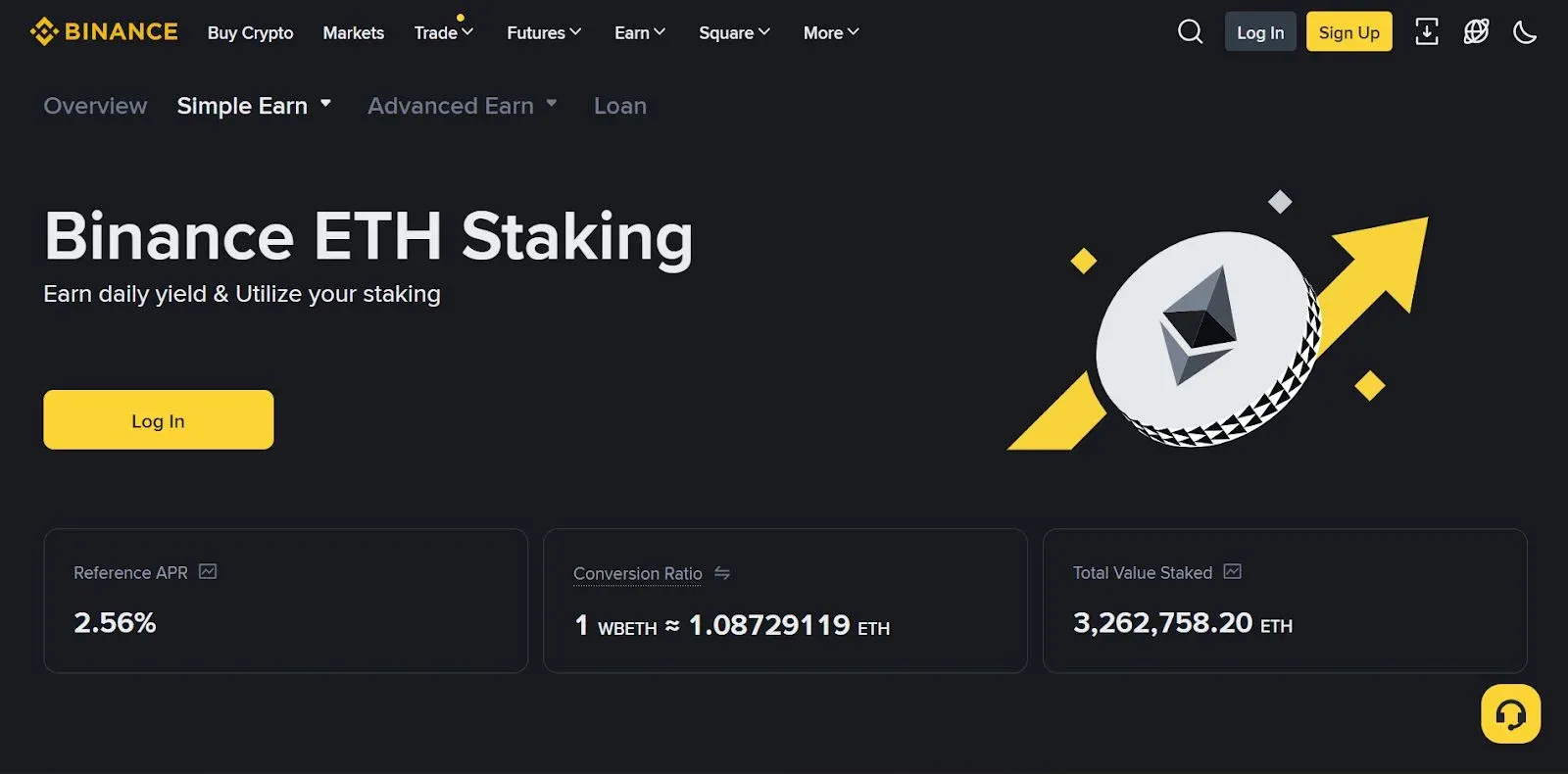
Most centralized exchanges provide a “one‑click staking” service—select the desired coin in your account and start earning rewards. This is the most user‑friendly option, but it also means the exchange retains partial control over your assets and imposes its own fee structure and policies.
Important for U.S. users: Because the global Binance platform is not available to residents of the United States, you should use Binance.US for any exchange‑based staking activities.
5. Staking‑as‑a‑Service (SaaS)
Professional firms offer end‑to‑end custodial solutions, including node deployment, monitoring, and reward distribution. Users pay a service fee while retaining ownership of their assets. This is suitable for those who want to minimize time commitment and obtain expert oversight.
6. Liquid Staking
By issuing a corresponding liquid token, stakers can lock assets while still using the derived token in DeFi protocols for trading or providing liquidity. This approach balances earning staking rewards with maintaining capital flexibility, but it is technically complex and limited to certain chains and platforms.
Steps to Start Staking
Even a complete beginner can follow a step‑by‑step process to begin staking. The following generic four‑step guide helps you get up and running quickly.
Step 1: Choose a Stakable Token
Based on your investment preferences, decide which coin you want to stake—e.g., ETH, SOL, ADA, etc. Review the official documentation or reputable news sources for that chain to learn about minimum stake amounts, expected annual percentage yields (APY), and any applicable lock‑up periods.
Step 2: Select a Staking Channel
Match your technical expertise and capital size with an appropriate method: running your own node, joining a pool, delegating to a validator, using an exchange, or contracting a professional service. Each channel has distinct fees, lock‑up terms, and flexibility levels, so compare them carefully before committing.
Step 3: Prepare Assets and Grant Authorization
If you are staking directly via a wallet, enable the staking feature in a compatible official or third‑party wallet and lock the tokens. If you are using a platform or pool, follow its instructions to transfer the tokens to the designated account or smart contract, and confirm any transaction fees or lock‑up conditions. For fiat‑based purchases, you may need to convert USD (or other local currency) via SEPA, SWIFT, or other supported payment rails before acquiring the crypto.
Step 4: Monitor Rewards and Periodically Re‑evaluate
Once staking is active, the platform will distribute rewards on a regular schedule. Log in periodically to review earnings, stay informed about network upgrades, fee changes, or validator performance, and adjust your strategy or switch validators if needed.
Common Misconceptions and Preventive Measures
Even though staking is relatively straightforward, mistakes often occur in the details. Below are frequent errors and how to avoid them.
- Insufficient platform research: Failing to assess the security and reputation of the staking service provider can lead to reduced earnings or even asset loss.
- Overlooking lock‑up clauses: Ignorance of the lock‑up period may trap you during market turbulence, preventing timely exits.
- Concentrated exposure: Allocating all capital to a single token or validator creates high‑risk concentration.
- Choosing unreliable validators: Mistakes, penalties, or exits by a validator will directly cut your rewards.
- Neglecting fees: High fees charged by staking pools or exchanges can erode net returns.
- Lack of real‑time monitoring: Not checking staking status regularly may cause you to miss reward distributions or fail to react to anomalies.
Diversifying across assets and validators, selecting reputable service providers, and maintaining ongoing oversight can dramatically reduce these risks.
Closing Thoughts
Cryptocurrency staking offers a dual benefit: it can grow your holdings while contributing to the security and efficiency of blockchain networks. It enables investors to earn continuous rewards without liquidating their positions, yet market volatility, lock‑up periods, and validator performance remain critical risk factors that must be evaluated prudently.
Before you commit, clarify your personal investment goals, thoroughly study the rules and fee structures of your chosen platform, and adopt a diversification strategy to mitigate potential losses. With proper preparation and vigilant monitoring, staking can become a powerful complement to your overall digital‑asset portfolio.
---
This article covered “What Is Cryptocurrency Staking? How to Get Started? Staking Methods, Returns, and Risks.” For deeper analyses of staking in the crypto space, please search for past articles by Bitaigen or continue browsing the related links below. Thank you for your continued interest and support!

Related Reading
- Crypto Prediction Markets: Benefits & How They Work
- Blockchain Gas Fees Explained: How They Work & Why It Matters
- Smart Contracts: Core Principles & Use Cases in DeFi & NFTs
💡 Register on Binance with referral code B2345 for the maximum trading fee discount. See Binance complete guide.



