
 Bitaigen Research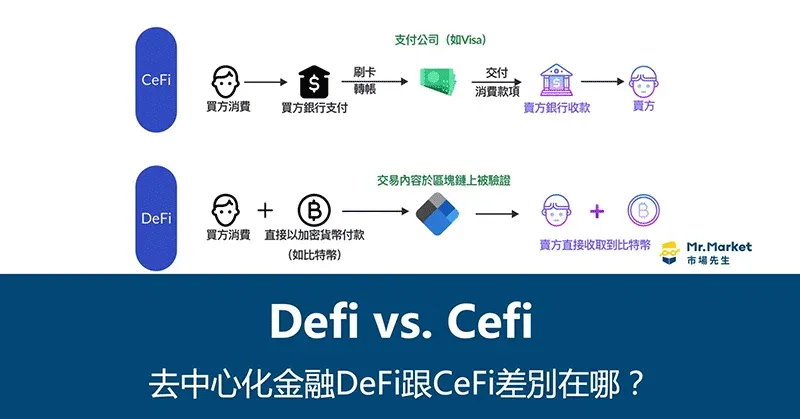
In this article we outline the core concepts of DeFi and compare its key differences with traditional centralized finance. By dissecting the technical principles and real‑world use cases, readers can quickly clarify the advantages and challenges of decentralized finance, and assess its future role in the global financial ecosystem. For more details, feel free to continue reading.
What Is DeFi?
DeFi, short for Decentralized Finance, refers to the construction of financial products and services directly on open, decentralized blockchain networks. Leveraging smart contracts and related technologies, users can perform lending, trading, insurance and other traditional financial activities on‑chain without the centralized oversight of conventional financial institutions.
Market Mr. Hint: Financial services are an extremely trust‑dependent business.
Blockchain provides a brand‑new technological foundation for that trust through an immutable ledger.
Within a DeFi ecosystem, buyers and sellers, lenders and borrowers can interact peer‑to‑peer (P2P). All actions are automatically executed by on‑chain code, eliminating the need for third‑party authorizations or approvals.
---
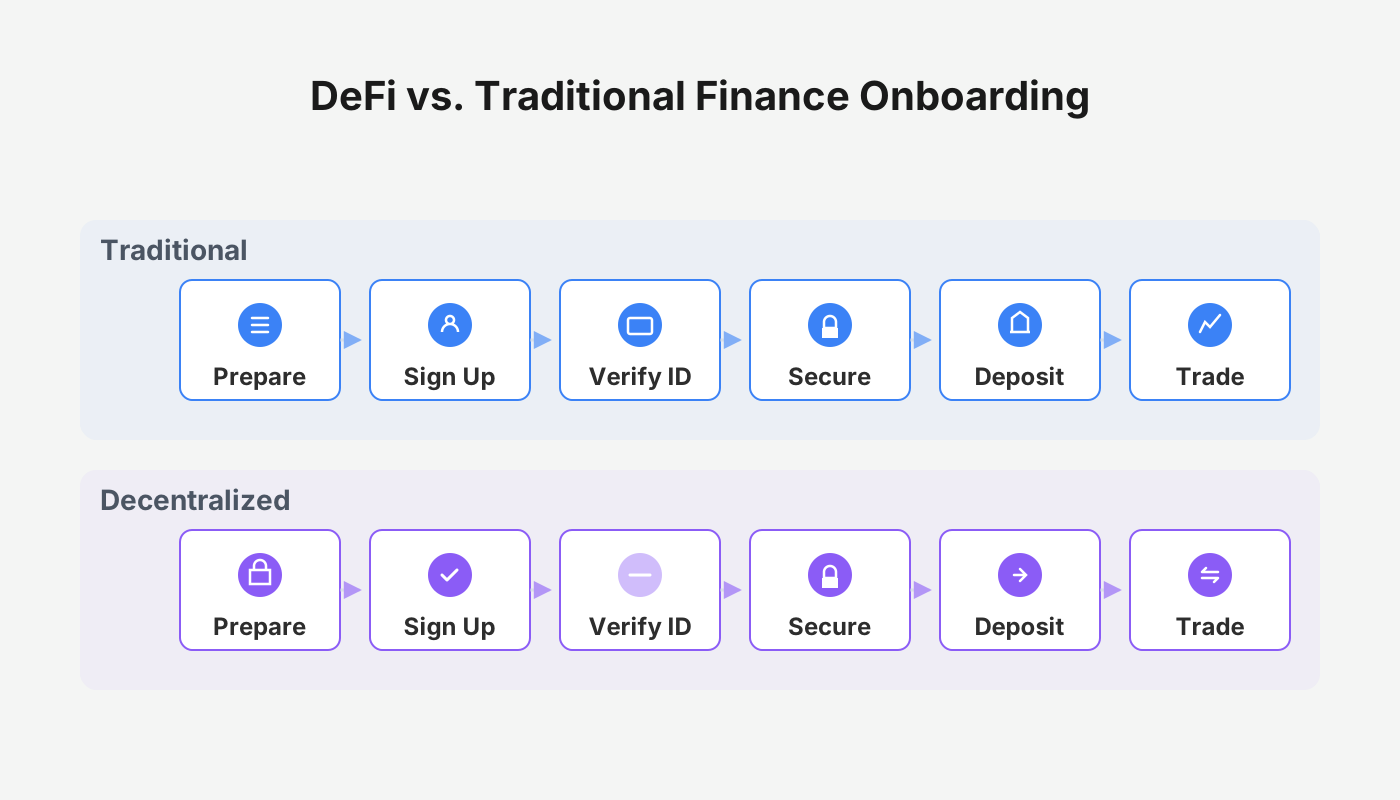
Core Differences Between DeFi and CeFi
| Item | DeFi | CeFi |
|---|---|---|
| **Authorization Rules** | Based on open‑source, permissionless blockchain networks; anyone can participate | Relies on centralized platforms; transactions require third‑party approval |
| **Asset Custody** | Assets are distributed across a decentralized ledger, with no single custodian | Assets are typically held by a regulated financial institution in a unified custody |
| **Identity Requirements** | No mandatory real‑world identity or KYC/AML proof | Must submit identity verification documents and comply with regulatory mandates |
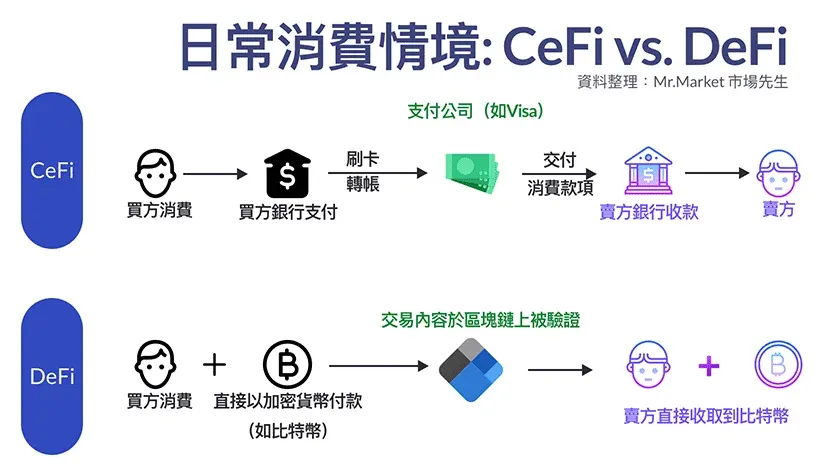
Traditional finance (CeFi) usually depends on large institutions and government regulators to build trust, whereas DeFi embeds trust mechanisms directly into the technology through decentralization. The diagram below illustrates the contrast in a typical payment scenario:
- CeFi: When you swipe a card, funds must pass through the merchant’s bank, a third‑party payment processor, the buyer’s bank, and possibly additional intermediaries, generating multiple fees.
- DeFi: The transaction is settled directly on the blockchain, the record is public and immutable, and the counterparties can complete payment without any intermediary.
---
Traditional Banking Services vs. Blockchain Payments
| Item | Traditional Banking | Blockchain (e.g., Bitcoin) |
|---|---|---|
| **Service Hours** | Weekdays 09:00 – 17:00, closed on public holidays | 365 days, 24 hours nonstop |
| **Card‑payment Fees** | International credit cards ≈ 1.5 % | Set by the transacting party, typically $0 – $50 |
| **ACH / Cross‑bank Transfer Fees** | Domestic ≈ $3 per transaction, international wire transfers incur SHA, BEN, OUR fees | Fees are miner‑determined, often as low as a few dollars |
| **Settlement Speed** | Card, ACH, and international wires usually take 24 – 48 hours | Depends on network congestion, roughly 15 minutes to 1 hour |
| **Identity Verification** | Mandatory KYC; banks retain personal data | Can participate anonymously, no ID required |
| **Privacy & Security** | Data stored centrally; a server breach can expose accounts | Transactions are traceable yet pseudonymous; security improves with more nodes. Large holders are advised to use cold wallets |
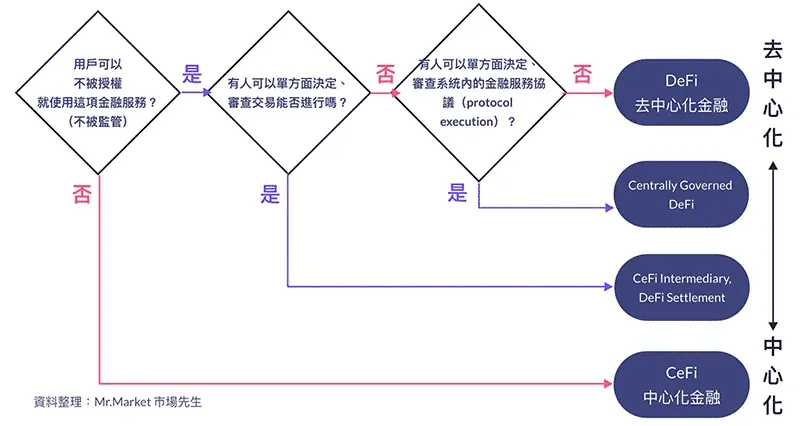
The comparison highlights how blockchain’s decentralization markedly reduces intermediary costs while enhancing transparency and censorship resistance.
---
Advantages and Value of DeFi
Before diving into DeFi’s benefits, it helps to recall the financial ecosystem that CeFi has operated for decades. Compared with traditional finance, DeFi delivers several notable advantages:
- Higher Efficiency: Eliminates rent‑seeking intermediaries, lowering transaction costs.
- Financial Inclusion: Anyone with an internet‑connected device can participate without identity checks.
- Transparent & Public: All transactions are recorded on‑chain; anyone can audit smart contracts.
- Censorship‑Resistant: Decentralized networks are not controlled by a single government or entity.
- Modular Integration: Different financial functions can be freely combined within the same protocol.
- Faster Execution: Loan approvals, fund transfers and similar processes on‑chain are typically quicker than in traditional banks.
These traits position DeFi as a new financial model that reduces layers of middle‑man exploitation, enhances user sovereignty over funds, and offers a way to diversify risk across the global economy.
---
Current Development Status and Potential Risks
As of September this year, DeFi’s Total Value Locked (TVL) has surpassed $88 billion. TVL is calculated by multiplying the amount of tokens locked in a protocol by their corresponding USD price, reflecting the total value of digital assets users have pledged across platforms.
However, TVL is not synonymous with liquidity. Some tokens have very low trading volume; despite a seemingly large locked value, they may lack active buy‑sell markets.
Risks to Watch Out For
- Scams & Fraud
Common schemes include bogus ICOs, OTC deals, and impersonated exchanges. Investors should learn how to spot cryptocurrency scams to avoid falling into traps.
- Regulatory Vacuum
DeFi is inherently cross‑border and stateless, making it difficult for any single‑jurisdiction “one‑country‑one‑regulation” framework to apply. Regulators worldwide often lack a coordinated response to cross‑border transactions and potential financial crimes.
- Smart‑Contract Vulnerabilities
While smart‑contract code cannot be altered after deployment, bugs or execution errors can cause system failures, and the question of liability remains unresolved.
Tip: Readers unfamiliar with smart contracts may consult “What Is a Smart Contract?” for a deeper understanding of its mechanics and associated risks.
Tax Note: Crypto gains may be taxable in your local jurisdiction. Users should consult a tax professional to determine reporting obligations under applicable laws.
---
Conclusion
DeFi represents a technology‑driven wave of financial innovation. While it offers more efficient, open and transparent services, it also brings challenges related to regulation, security and user education. Investors interested in exploring DeFi should avoid chasing unfamiliar projects blindly; instead, conduct thorough research, stay updated on industry developments, and make prudent decisions.
This concludes the article. For more information on DeFi, you can search the historic posts of Bitaigen or continue reading the recommended content below. Thank you for supporting Bitaigen!
*Note for U.S. readers*: When accessing cryptocurrency exchanges, use Binance.US or other U.S.-compliant platforms rather than the global Binance site.
Related Reading
- DeFi vs CeFi: Core Differences, Trust, Benefits & Risks
- Understanding TVL in DeFi: What It Means & How to Get Started
- Understanding Total Value Locked (TVL) in DeFi: A Key Metric for Crypto Projects
💡 Register on Binance with referral code B2345 for the maximum trading fee discount. See Binance complete guide.



