
 Bitaigen Research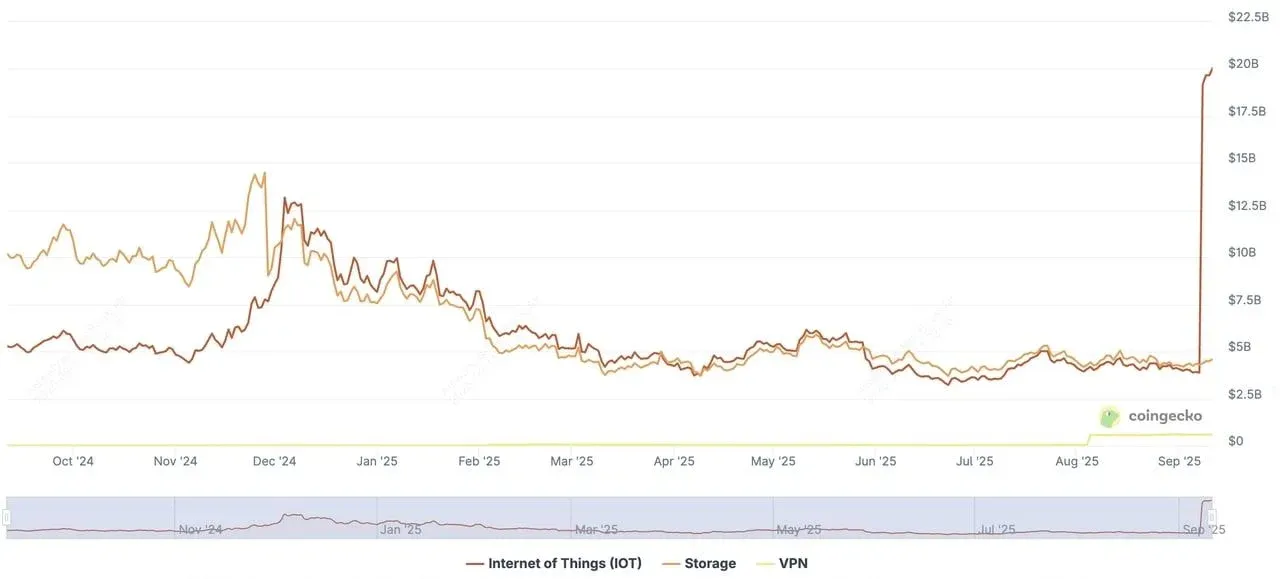
Total market cap of DePIN projects in the crypto market | Source: CoinGecko
As of September 2025, CoinGecko tracks close to 250 DePIN projects, with the combined market capitalization surpassing $19 billion, up from $5.2 billion a year earlier. The demand for compute, bandwidth and edge‑data driven by AI and the Internet of Things (IoT) continues to rise, and DePIN is rapidly emerging as a practical, cost‑effective, community‑driven alternative to traditional systems.
In this article we will explore how DePIN works, why it became a hot trend in 2025, and the ten leading DePIN projects.
In this piece we systematically outline the core concepts and operating principles of DePIN, dissect its unique advantages within a decentralized economy, and hand‑pick the most promising projects. Through case studies and technical breakdowns, readers can quickly grasp the value and development trajectory of this emerging trend—a read worth your time.

What is DePIN (Decentralized Physical Infrastructure Networks)?
DePIN (Decentralized Physical Infrastructure Networks) refers to blockchain‑based systems that use token rewards to coordinate the deployment of real‑world infrastructure. Individuals can contribute hardware, sensors, energy nodes, or compute power, creating critical infrastructure without a centralized authority. The core mechanism relies on smart contracts, on‑chain verification and token incentives to deliver a more democratic, resilient and cost‑efficient community‑owned system than traditional models.
DePIN projects generally fall into two broad categories:
1. Physical Resource Networks (PRNs)
These incentivize individuals to deploy location‑specific hardware that provides tangible real‑world services, including:
- Wireless networks: 5G, Wi‑Fi, IoT connectivity
- Mobility networks: ride‑sharing, data collection, robotics
- Energy networks: decentralized grids, energy trading
- Sensor networks: environmental monitoring, geospatial data gathering
2. Digital Resource Networks (DRNs)
These reward participants for offering replaceable digital resources such as storage, bandwidth or compute capacity, covering:
- Compute networks: transcoding, indexing, distributed processing
- AI networks: machine‑learning models, GPU marketplace
- Storage networks: databases, document archiving
- Bandwidth networks: CDN, VPN, real‑time communication
DePIN’s innovation lies in token‑driven coordination of infrastructure, enabling open participation, bottom‑up scalability, and seamless integration with other Web3 services.
How Does DePIN Operate?
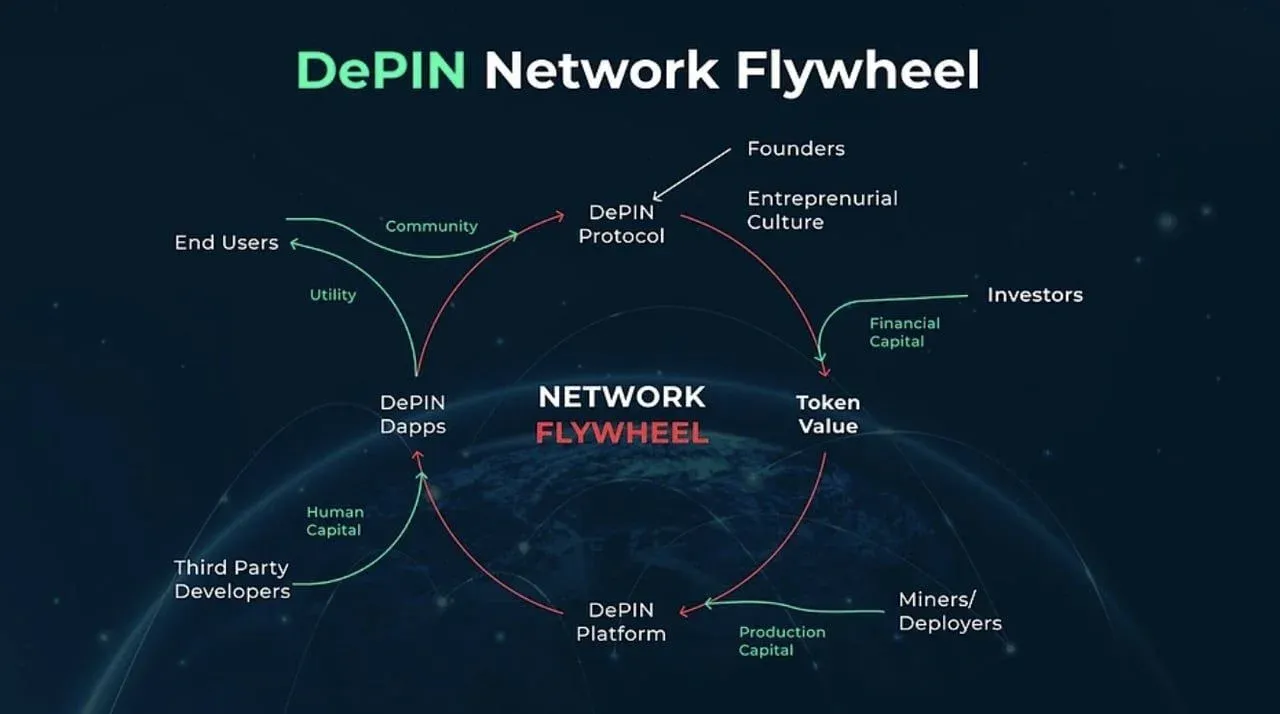
DePIN allows ordinary people to contribute infrastructure and earn rewards, breaking the monopoly of centralized firms. The operating flow is as follows:
1. Hardware deployment
Participants install or connect physical devices (e.g., Wi‑Fi hotspots, weather sensors, GPUs, routers). These devices form the tangible backbone of the network, supporting decentralized wireless, AI compute and other services.
2. Proof of Resource
On‑chain verification mechanisms (such as Proof of Coverage, Proof of Uptime, Proof of Compute) confirm that resources are genuine, active and functioning correctly, preventing fraud and ensuring fair reward distribution.
3. Token Incentives
Contributors earn the native token based on usage duration, geographic demand or other performance metrics—the higher the resource value, the larger the reward.
This model enables rapid network expansion, lowers infrastructure costs, and leverages community power to reach underserved regions.
Why Did DePIN Become a Hot Trend in 2025?
DePIN’s explosion in 2025 can be traced to four major drivers:
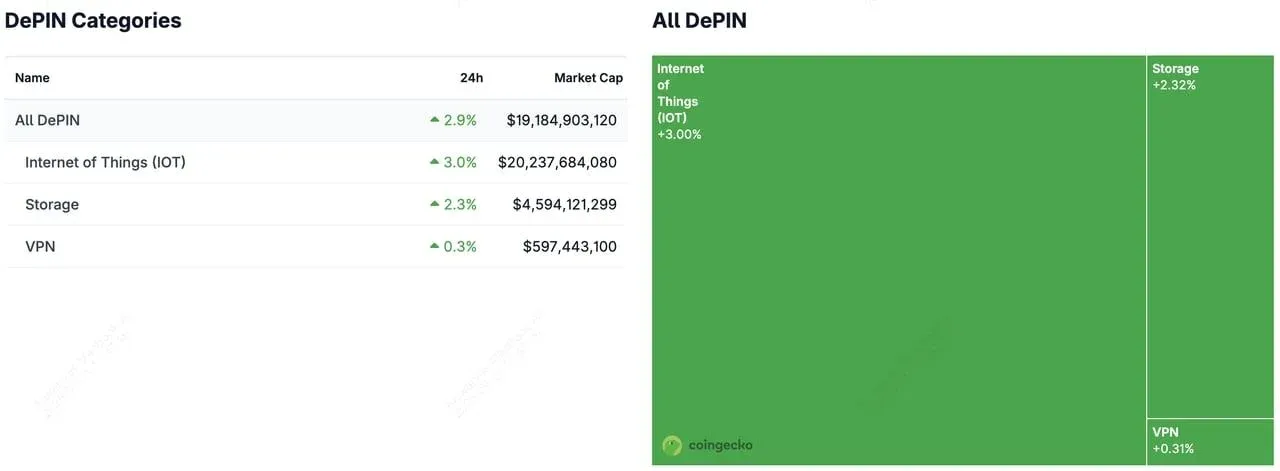
1. Market cap breaks $19.2 billion, up ~270 % YoY
CoinGecko data shows that the total market cap of DePIN‑related tokens rose from $5.2 billion last year to roughly $19.2 billion, an annual growth rate of close to 270 %. DePIN tokens now represent about 0.5 % of the overall crypto market cap, marking a shift from niche experiment to mainstream asset class.
2. Over 423 projects supporting 41.8 million devices
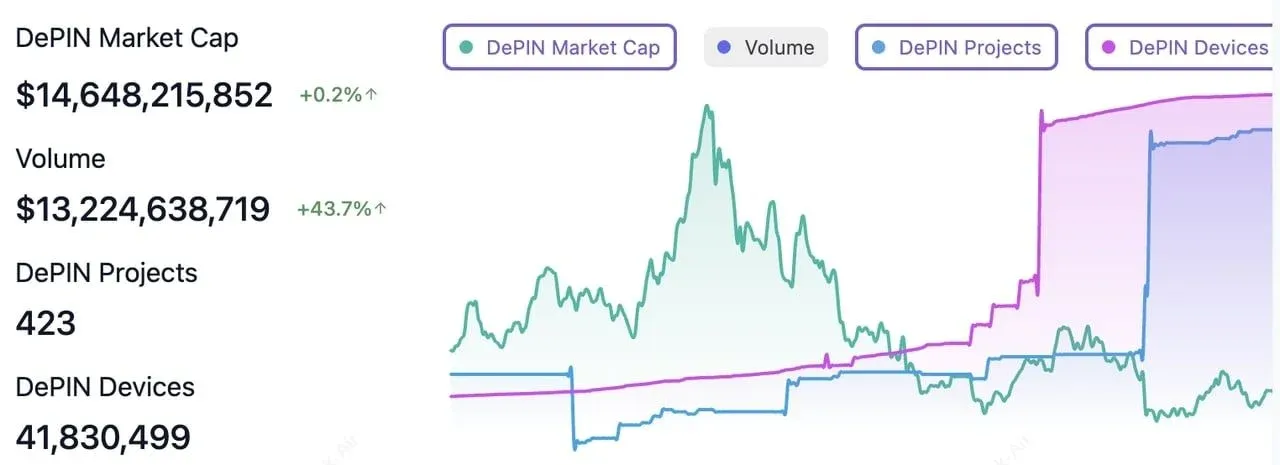
DePINscan counts 423 active projects collectively supporting more than 41.8 million devices worldwide, compared with roughly 10 million in 2023. The explosive growth in hardware deployment demonstrates that DePIN has moved from concept to concrete implementation across compute, wireless, energy, mobility, mapping and environmental sectors.
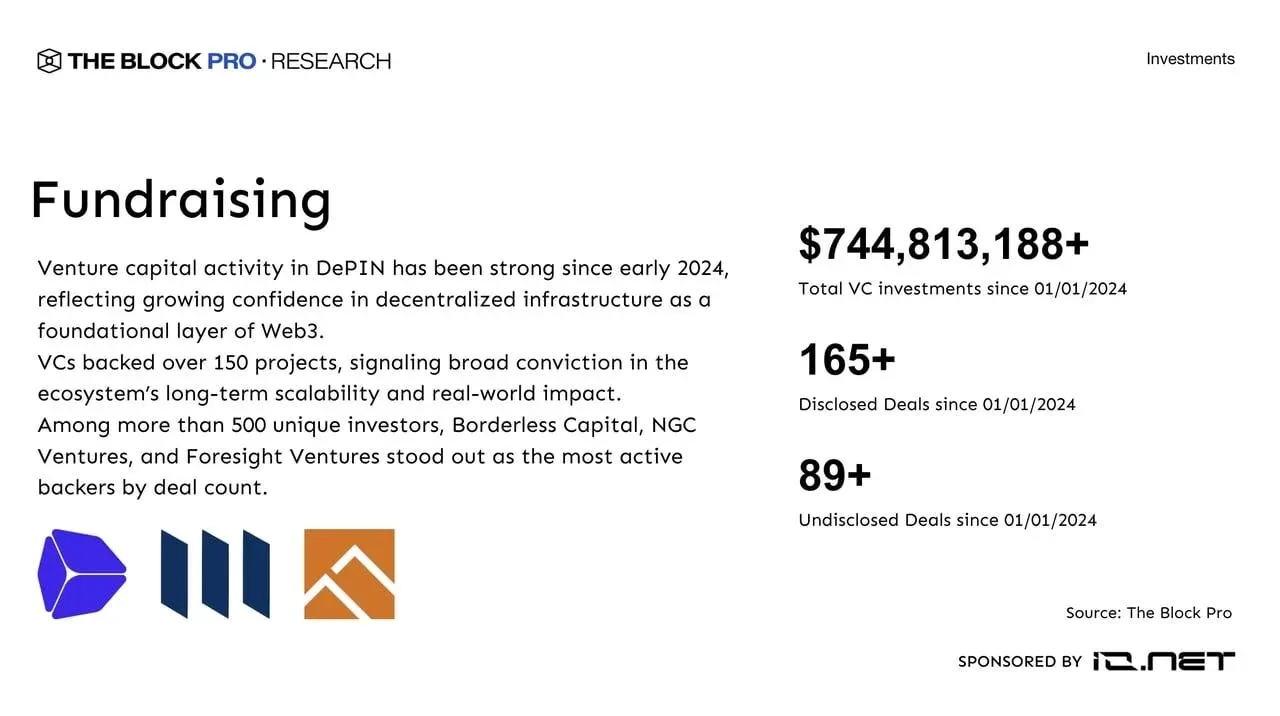
3. Cumulative funding of $744 million, driven by VCs and communities
The Block Pro Research report states that between January 2024 and July 2025, more than $744 million was invested in 165+ DePIN startups, with an additional 89 undisclosed transactions. Projects such as Bittensor, Render and Filecoin have reached multi‑billion‑dollar valuations, while Grass Network’s user base grew from 200 k to 3 million within a year, illustrating the synergistic effect of capital and community.
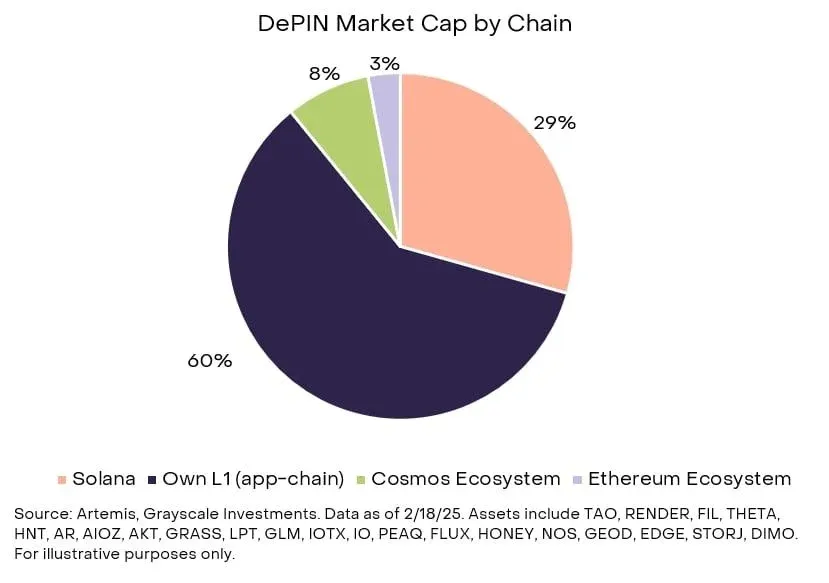
4. Solana, Ethereum L2s and Filecoin become preferred base layers
Grayscale Research notes that Solana, with its low transaction fees and high throughput, is the preferred chain for many DePIN projects (e.g., Helium, Grass, Hivemapper). Ethereum Layer‑2 solutions (Arbitrum, Optimism) are favored for compute and AI‑focused projects, while Filecoin continues to dominate decentralized storage. Multi‑chain deployments highlight DePIN’s evolution into a cross‑ecosystem infrastructure layer.
The 10 DePIN Projects Worth Watching in 2025
The following projects stand out in the physical‑infrastructure space and merit ongoing attention.
1. Bittensor (TAO)
Bittensor builds a decentralized machine‑learning network, incentivizing compute, model and data contributors through a subnet marketplace. Contributors earn TAO tokens based on measurable value. As of September 2025, the project’s market cap exceeds $3.39 billion, with about 9.6 million TAO in circulation (total supply 21 million). It hosts 50+ active subnets and over 141,000 accounts.
2. Internet Computer (ICP)
Developed by the DFINITY Foundation, ICP aims to host software, data and application processes directly on‑chain, creating a “world computer.” By September 2025 its market cap is roughly $2.65 billion, with 537 million ICP tokens circulating. The network can process more than 6 billion blocks per second and has launched AI‑auto‑building tools like Caffeine and a Solana cross‑chain bridge.
3. Render Network (RENDER)
Render is the world’s first decentralized GPU rendering platform, aggregating idle GPUs into a high‑performance compute pool for 3D rendering, generative‑AI imagery and metaverse content. Its market cap stands at about $2.03 billion, with 518 million RENDER tokens in circulation. A single network can run 300‑1,000 AI models in parallel. In July 2025 the project rebranded to RENDER and deprecated the older RNDR contract on Polygon.
4. Filecoin (FIL)
Built on IPFS, Filecoin provides a decentralized storage market supporting petabyte‑scale data for AI training, scientific research and Web3 applications. Market cap is approximately $1.74 billion, with 687 million FIL in circulation. In April 2025 the network launched Fast Finality (F3), boosting speed by 100×, and in May introduced Proof of Data Possession (PDP) to improve hot‑storage efficiency. Utilization hovers around 31 %.
5. BitTorrent (BTT)
BTT is a TRC‑20 token on the TRON blockchain that incentivizes the world’s largest decentralized file‑sharing network. Its market cap is around $634 million, with 986 trillion BTT in circulation. Through BitTorrent Speed and BTFS, bandwidth and storage are tokenized, delivering faster downloads and more reliable content distribution.
6. Aethir (ATH)
Aethir offers decentralized GPU cloud services, operating 430,000 GPUs worth over $400 million across 94 countries. Its Aethir Earth and Aethir Atmosphere products provide on‑demand compute for AI training and low‑latency cloud gaming. Market cap is roughly $560 million, with 11.4 billion ATH tokens circulating, and a $100 million ecosystem fund to support developers.
7. Helium (HNT)
Helium creates a decentralized wireless network; users deploy Hotspot devices that deliver connectivity to smartphones and IoT devices in exchange for HNT. Market cap sits at about $496 million, with 186 million HNT circulating. Over 379,000 active hotspots operate worldwide, supporting use cases such as smart agriculture and logistics tracking. A recent $50 million fund aims to expand coverage, and a partnership with Mexico’s Movistar promotes Helium Mobile.
8. Grass Network (GRASS)
Grass tokenizes idle bandwidth, allowing users to securely share it with AI or research institutions in exchange for GRASS tokens. By 2025 the user base surpassed 3 million, making it one of the fastest‑growing DePIN projects on Solana, and it has already distributed hundreds of millions of dollars in rewards for AI training.
9. JasmyCoin (JASMY)
Jasmy empowers individuals to control their IoT data, offering two core services: Secure Knowledge Communicator (SKC) and Smart Guardian, which together enable data assetization. Market cap is about $702 million, with 48.4 billion JASMY tokens circulating (total supply 5 trillion). The project is active in Japan, collaborating on sports, carbon‑credit and other verticals.
10. Akash Network (AKT)
Akash builds a decentralized cloud‑compute marketplace, connecting enterprises with idle GPUs worldwide at roughly 80 % lower cost than traditional cloud providers. Its market cap is near $330 million, with 278 million AKT tokens in circulation. The network supports NVIDIA B200 and H200 GPUs and offers plug‑and‑play AI tools such as Akash Chat and Akash Gen.
Key Considerations When Investing in DePIN Projects
When evaluating a DePIN project, pay close attention to the following dimensions:
- Infrastructure utility and adoption – number of nodes, utilization rates (e.g., Filecoin’s ~31 %), and revenue signals.
- Tokenomics and value capture – whether token distribution is sustainable and directly tied to service usage.
- Technical moat and scalability – unique innovations (e.g., Bittensor subnets, The Graph cross‑chain support) that create barriers to entry.
- Enterprise partnerships and ecosystem integration – collaborations with traditional firms or cross‑chain projects that boost real‑world demand.
- Regulatory compliance – projects involving data storage or bandwidth sharing should be examined for jurisdiction‑specific regulatory risk.
Conclusion
DePIN is bringing blockchain’s transparency and incentive mechanisms into real‑world infrastructure, unlocking vast amounts of under‑utilized digital resources across compute, storage and wireless networks. By matching supply and demand in a market‑driven way, these networks are reshaping how we acquire and use essential infrastructure. For investors focused on long‑term value, selecting DePIN projects that demonstrate technological leadership, healthy token models and genuine commercial partnerships could become foundational pillars of the Web3 physical layer.
This concludes the article. For more DePIN‑related content, search for past pieces from Bitaigen (比特根) or continue browsing the articles below. We appreciate your ongoing interest and support!
Related Reading
- Top DePIN Projects to Watch in the Crypto Bull Market
- Real‑World Asset Tokenization: Concepts, Asset Classes & Top 10 Projects
- Datagram Network (DGRAM): DePIN & AI Crypto Surge 2025‑2030
💡 Register on Binance with referral code B2345 for the maximum trading fee discount. See Binance complete guide.



