 Bitaigen Research
 We outline Kevin Warsh’s résumé and policy leanings in this article, focusing on his likely stance toward the crypto sector to help readers gauge the potential impact a new Federal Reserve chair could have on digital assets. If you want to understand why markets moved after the nomination and how Warsh’s decisions might reshape the regulatory landscape, keep reading for in‑depth insight.
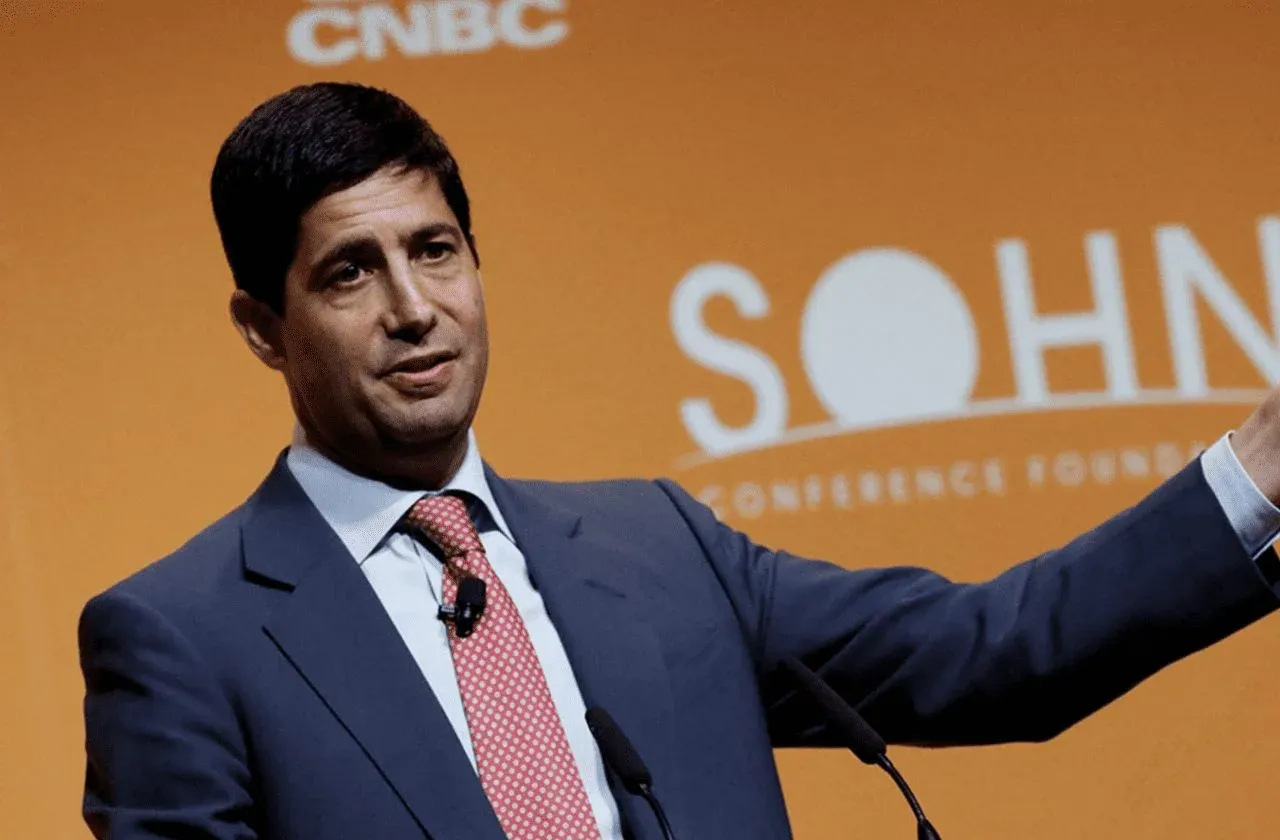
Who Is Kevin Warsh? Trump’s Nominee for the Next Federal Reserve Chair
Before Jerome Powell’s term ends in May 2026, President Trump has listed former Federal Reserve Board member Kevin Warsh as a potential successor. Once the nomination news broke, global financial markets quickly picked up the signal—investors began reassessing the future inflation path, interest‑rate trajectory, and whether the United States’ ever‑growing sovereign debt can be sustained.
Immediate Market Reaction After the Nomination
Within days of the announcement, U.S. equities, Treasury yields and the U.S. dollar index all showed volatility. Traders focused on the monetary‑policy bias Warsh might bring—whether he would stick to stricter monetary discipline or adopt a more flexible approach to spur economic growth. This expectation not only affects pricing of traditional assets but also leaves a trace on global liquidity and risk appetite.
Warsh’s Career Path and Policy Background
| Key Experience | Description |
|---|---|
| Wall Street Start | Worked on mergers and acquisitions at Morgan Stanley, gaining a hands‑on view of capital flows and financial risk |
| Bush Administration | Served as Special Assistant for Economic Policy to the President and Secretary of the National Economic Council during the early 2000s under George W. Bush |
| Fed Governor (2006‑2011) | Appointed at age 35, becoming the youngest governor in Fed history and a pivotal liaison during the 2008 financial crisis |
| Post‑Fed Roles | Visiting scholar at the Hoover Institution, lecturer at Stanford Graduate School of Business, and partner at the Duquesne family office |
| 2017 Fed‑Chair Race | Was a contender in Trump’s first term but ultimately stepped aside for Jerome Powell, whose appointment was later publicly criticized by Trump |
Warsh’s résumé spans Wall Street and government, with little formal academic pedigree. The market perspective he cultivated at Morgan Stanley gave him a distinctive outlook inside the Fed, while his time in the Bush administration supplied a practical view of macro‑policy implementation.
Monetary Stance: Short‑Term Dove, Long‑Term Hawk
Although the 2026 consensus expects Warsh to consider a short‑term rate cut to ease financial conditions, his overarching framework remains tilted toward long‑term monetary discipline. Core policy points include:
- Maintain a strong U.S. dollar
- Continue tightening liquidity
- Diminish the Fed’s hedge function against inflation
Short‑Term Logic for Rate Cuts
- AI‑driven productivity as an anti‑inflation lever: Warsh argues that structural productivity gains from artificial intelligence can create room for rate cuts without reigniting inflation.
- Critique of the incumbent chair: He contends that under Powell the pace of rate adjustments was too sluggish, imposing unnecessary high financing costs on businesses and households.
Long‑Term View: Balance‑Sheet Reduction and Forward Guidance
- Balance‑sheet runoff: Warsh proposes a gradual contraction of the Fed’s roughly $6.6 trillion balance sheet, treating asset purchases as an unconventional emergency tool only.
- Weakened forward guidance: He prefers a more flexible, less predictable communication style so the Fed can tighten quickly once inflation settles around 3 %.
Attitude Toward Cryptocurrency: Recognize the Technology, Reject Monetary Support
Warsh holds a “dual” position on digital assets—he acknowledges their legitimacy and strategic value at the institutional level, yet he does not advocate using loose monetary policy or balance‑sheet expansion to prop them up.
- Technical endorsement: He has called blockchain “the newest, coolest software in finance” and emphasized that U.S. innovation in this area is crucial for national competitiveness.
- Monetary rejection: Warsh does not view Bitcoin or similar tokens as money, nor does he support the Fed providing liquidity or rate support for them.
Positioning Bitcoin Against Gold
In Warsh’s framework, Bitcoin is a legitimate store of value, a structural alternative to gold. In a 2021 CNBC interview he said, “If you’re under 40, Bitcoin is your new gold.” In a 2025 Hoover Institution interview he added that when central‑bank credibility wanes, Bitcoin attracts capital that would otherwise flow to gold, acting as a “currency‑alert system.”
Three Potential Changes for the Crypto Market During Warsh’s Tenure
| Dimension | Short‑Term (2026) | Medium‑to‑Long‑Term (2026‑2030) |
|---|---|---|
| Liquidity | Balance‑sheet tightening curtails easy money | Markets gradually adapt to capital allocation driven by real productivity |
| Regulation | Clearer federal rules lower compliance costs | Private‑sector stablecoins benefit from a stable regulatory framework |
| Asset Performance | Higher volatility; leveraged and high‑beta tokens pressured | Fundamentally sound assets (e.g., Bitcoin) may consolidate macro‑asset status |
1. Structural Drag from Liquidity Tightening
Warsh has long warned that the Fed’s massive balance sheet distorts asset prices. After the nomination hint on January 30, Bitcoin slipped below $80,000 as markets priced in the expectation of tighter policy. If Warsh accelerates balance‑sheet runoff, the liquidity tailwind that has buoyed the crypto market could evaporate, putting extra pressure on leveraged trading and high‑beta tokens.
2. A More Transparent Regulatory Framework Without Price Support
Warsh leans toward rule‑based, market‑oriented regulation of digital assets rather than frequent enforcement interventions. This approach could lower entry barriers for institutions, ease banks’ restrictions on holding digital assets, and give private‑sector stablecoins a firmer footing at the federal level. However, these regulatory “wins” do not translate into monetary‑policy price support.
3. Bitcoin’s Macro‑Asset Narrative Becomes More Prominent
Under Warsh’s policy environment, Bitcoin will continue to be seen as an inflation‑hedge signal rather than a pure speculative vehicle. Without central‑bank liquidity backing, only crypto assets with genuine demand or technological utility can compete under a strong‑dollar, disciplined‑monetary‑policy regime.
Nomination Process and Timeline
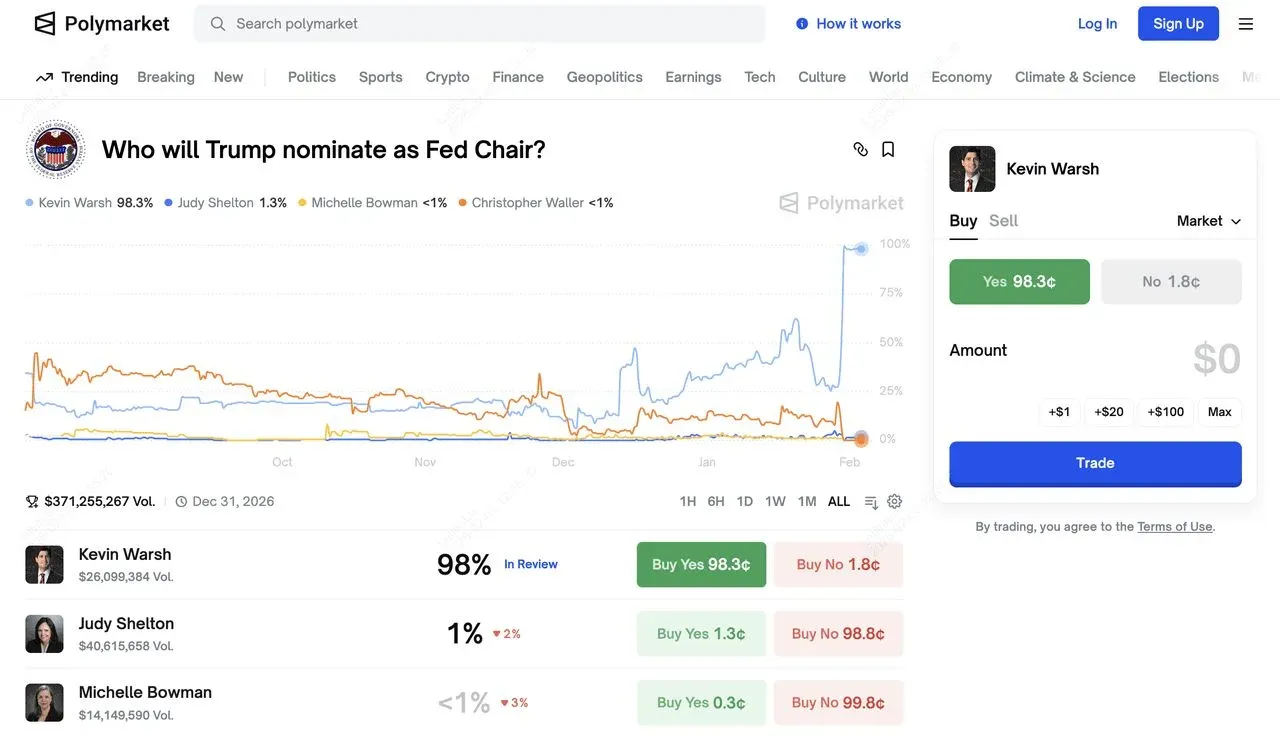
As of early February 2026, Warsh has not yet been formally confirmed as Fed chair. The nomination still requires a presidential submission followed by Senate confirmation. Market models put Warsh’s probability of becoming the next chair above 98 %, with related trading volumes in the hundreds of millions of USD.
Key Milestones
- 2026‑01‑30: White House officially submits Warsh’s nomination
- 2026‑02‑03 to March: Senate Banking Committee hearings, chaired by Tim Scott, focusing on monetary discipline, crypto regulation, and Fed independence
- 2026‑04: Full Senate vote; a simple majority (51 votes) is required for confirmation
- 2026‑05‑15: Jerome Powell’s term officially ends
- Late May 2026: Warsh is expected to be sworn in as the 17th Federal Reserve Chair
Potential Delay Factors
Although Republicans hold a slim Senate majority (53‑47), some senators may stall the vote citing unrelated issues such as Fed‑headquarters renovations. Additionally, Warsh must first be confirmed as a board member before he can assume the chairmanship.
Investment Lens: Bitcoin’s Placement Under a Warsh‑Led Fed
As of 2026‑02‑03, Bitcoin traded in the $75,000‑$79,000 range, roughly 30 % below its 2025 peak. In an environment of tighter liquidity, a stronger dollar and no central‑bank backstop, investors have shifted focus from short‑term speculation to fundamental value‑storage considerations.
Disclaimer: This article is for informational purposes only and does not constitute investment advice. Cryptocurrency prices are highly volatile and trading may result in capital loss. Please assess your personal risk tolerance and conduct independent research before making any decisions. *Note: Crypto gains may be taxable under the laws of your jurisdiction; consult a tax professional for guidance.* In the United States, residents wishing to trade cryptocurrencies should use Binance.US or other regulated U.S. platforms rather than the global Binance exchange.
Short‑Side Perspective: Immediate Impact of Liquidity Tightening
If markets anticipate that Warsh will accelerate balance‑sheet reduction, risk assets like Bitcoin could face heightened short‑term downside pressure. In such a scenario, investors might express bearish views via Bitcoin derivatives rather than liquidating spot positions outright.
Conclusion: The Crypto Ecosystem Under a Warsh Regime
Once Warsh assumes the Fed’s helm, the crypto market will enter a new phase characterized by “clear regulatory rules but no monetary support.” Bitcoin may continue to play a macro‑asset role, yet its price will rely more on technological adoption, network effects and confidence in its store‑of‑value function than on indirect stimulus from easy money. Volatility is likely to stay elevated in the short run, while stronger fundamentals could earn broader recognition over the longer horizon.
Frequently Asked Questions
1. Does Kevin Warsh support cryptocurrency?
He does not endorse using monetary policy to provide price or liquidity support for crypto assets, but he acknowledges their technological legitimacy and strategic importance at the policy level.
2. How might Bitcoin’s price react if he takes office?
In the short term, tighter liquidity could increase volatility; over the longer term, price movements will hinge more on industry fundamentals and adoption than on central‑bank actions.
3. Will Warsh offer policy support to the crypto market?
No. His Fed policy is expected to remain neutral toward digital assets, focusing on clear regulatory rules rather than monetary backing.
4. Will regulation become stricter or clearer?
Regulatory frameworks are likely to become clearer, reducing uncertainty, but they are not expected to evolve into heavier-handed intervention.
5. Does a tighter monetary stance benefit Bitcoin’s store‑of‑value narrative?
If Bitcoin can preserve value without loose monetary funding, a tighter stance might reinforce its long‑term store‑of‑value story; however, the transition period could still see heightened price swings.
6. Should investors wait until after the Senate hearings before acting?
Some investors may choose to hold off until Warsh’s testimony reveals his concrete views on rates, the balance sheet and crypto regulation, then reassess position sizing.
---
For more detailed information on Kevin Warsh, you can search past Bitaigen (比特根) articles or continue browsing the sections below. Happy reading!
💡 Register on Binance with referral code B2345 for the maximum trading fee discount. See Binance complete guide.



