
 Bitaigen Research
 In this article we systematically address the most common questions in the NFT space, covering concepts, technical characteristics, purchasing, creation, and evaluation across the entire workflow, helping newcomers clarify concepts, avoid pitfalls, and offering practical how‑to guidance. To gain a comprehensive understanding of the core points of NFTs, please continue reading.
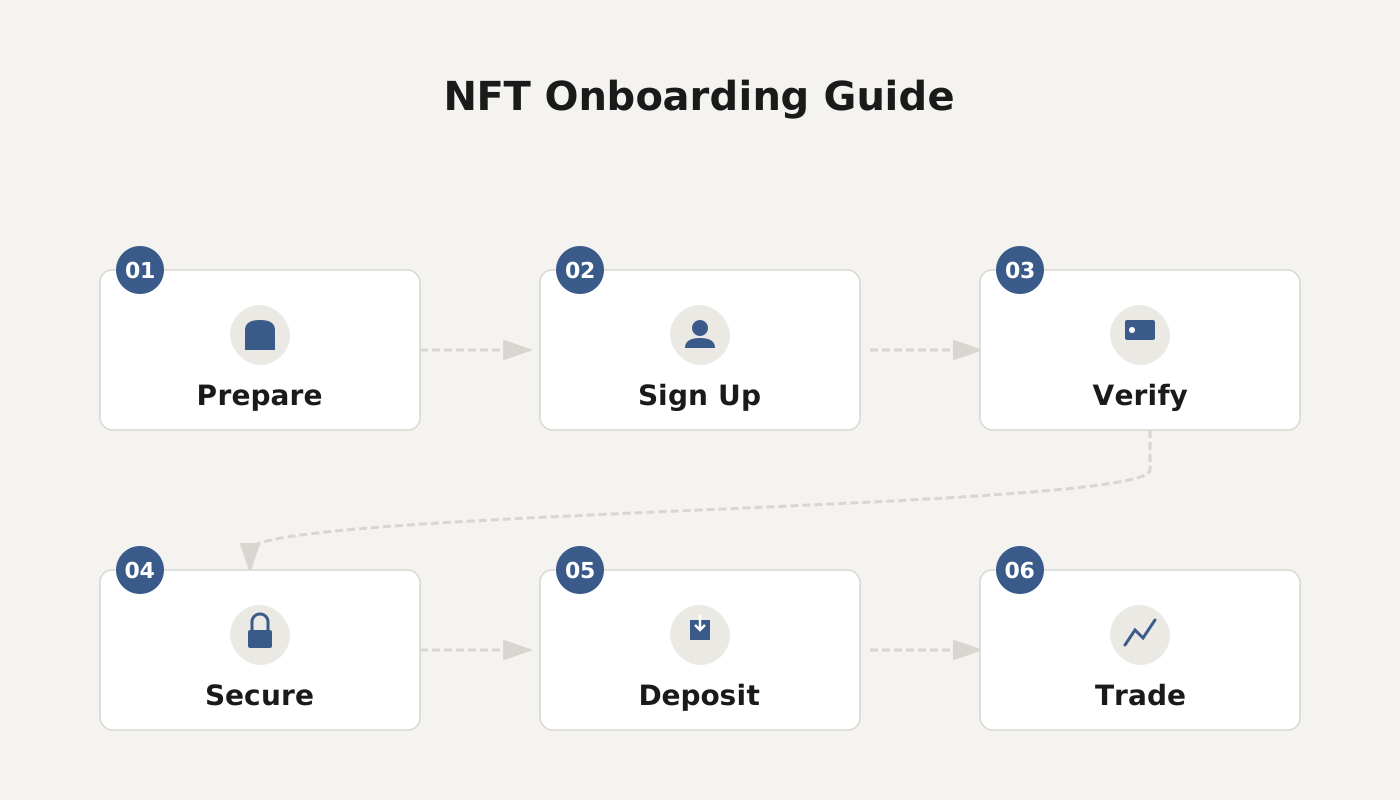
Table of Contents
- Question 1: What is a non‑fungible token (NFT)?
- Question 2: What are the characteristics of NFTs?
- Question 3: Why should one own NFTs?
- Question 4: How to purchase NFTs?
- Question 5: How to participate in NFT liquidity mining?
- Question 6: How to verify that a purchased NFT is authentic?
- Question 7: Are NFTs a recent invention?
- Question 8: What are the use cases for NFTs?
- Question 9: Are there concrete examples of NFTs in gaming?
- Question 10: How to buy NFT crypto artworks?
- Question 11: What are the mainstream NFT trading platforms?
- Question 12: What standards exist for NFTs?
- Question 13: Which tokens are associated with NFTs?
- Question 14: How have NFT‑related tokens performed?
- Question 15: How to create your own NFT?
- Question 16: How to evaluate an NFT project? Are there reference criteria?
- Question 17: What is the future outlook for NFTs?
Question 1: What is a non‑fungible token (NFT)?
NFT (full name *Non‑Fungible Token*) is a unique, verifiable digital asset that can represent GIFs, images, videos, music albums, and other media forms. Unlike fungible tokens such as Bitcoin, an NFT possesses uniqueness. For example, the 2017 CryptoKitties project nearly clogged the Ethereum network, with a single digital cat selling for 600 ETH; the more recent NBA Top Shot series is another textbook case.
Question 2: What are the characteristics of NFTs?
- Uniqueness: Every NFT carries a distinct identifier, solving the authenticity challenge for artworks and luxury goods.
- User‑owned rights: In blockchain games, assets held by players are NFTs; even if the game server shuts down, the assets remain the player’s property and can be transferred to other games.
- Indivisible and non‑interchangeable: Unlike fungible tokens, NFTs cannot be split or swapped for one another, similar to each being a unique collectible card.
Question 3: Why should one own NFTs?
- Emotional value: Like physical collectibles, NFTs can provide emotional satisfaction and a sense of identity.
- Appreciation potential: Some NFTs can rise in price on secondary markets, giving holders the opportunity to realize gains through resale.
Question 4: How to purchase NFTs?
The purchasing method depends on the platform you choose; common marketplaces include OpenSea, KnownOrigin, Rarible, among others. Using NBA Top Shot as an example, you must first join a waiting list, after which the system randomly grants purchase eligibility. Payment options also vary: some platforms accept USD via SEPA/SWIFT transfers, while others only accept cryptocurrencies.
Typical entry points:
- Select promising NFT tokens on a trading platform.
- Directly buy or sell NFT assets.
- Become a crypto artist and issue your own NFTs.
- Stake NFTs to take part in liquidity mining.
If you only wish to invest in the NFT sector, you can buy leading NFT‑related tokens on exchanges—examples include ENJIN, MANA, and SAND. To participate in the collectibles market, use platforms such as OpenSea, SuperRare, or NiftyGateway.
Question 5: How to participate in NFT liquidity mining?
Taking Aavegotchi as an example, users deposit Aave’s yield‑bearing tokens (aTokens) to mint ghost‑styled NFTs. The collateral backing these NFTs continues to generate yield over time, so users simultaneously own a unique NFT and earn interest income.
Question 6: How to verify that a purchased NFT is authentic?
- On‑chain verification: Ownership records are stored on the blockchain and can be inspected via a block explorer.
- Official channels: On marketplaces like OpenSea, prioritize stores that are officially verified by the project.
- Social‑media confirmation: Check the project’s or artist’s official social accounts for release announcements, then follow the purchase link they provide.
Question 7: Are NFTs a recent invention?
NFTs are not brand‑new. Their earliest prototype dates back to 2012’s Colored Coins, and they entered mainstream awareness with the 2017 CryptoKitties craze, gradually becoming a mainstream concept thereafter.
Question 8: What are the use cases for NFTs?
- Digital art: NFTs protect copyrights and verify authenticity of artworks.
- Gaming assets: Weapons, characters, equipment, etc., can be tokenized on‑chain, guaranteeing ownership.
- Virtual worlds: Land, buildings, and other metaverse assets.
- Sports collectibles: Digital cards such as those offered by NBA Top Shot.
- Fashion & entertainment: Anti‑counterfeit measures for luxury goods and limited‑edition releases.
- Identity verification, insurance certificates, domain names, e‑tickets, and more.
Question 9: Are there concrete examples of NFTs in gaming?
NBA Top Shot is an NFT‑based digital card game where each card captures a memorable NBA moment, issued in limited quantities. Scarcity and fan enthusiasm have driven secondary‑market prices upward. The development team, Dapper Labs, also launched the Flow public blockchain tailored for entertainment and gaming, providing broader NFT support for other titles.
Question 10: How to buy NFT crypto artworks?
Common platforms include SuperRare, MakersPlace, and KnownOrigin. These marketplaces provide artist verification, authenticity checks, and trade matching. For a deeper comparison of platform features, refer to the article “Comparison of Six Popular NFT Marketplaces,” which lists each platform’s collection categories, special functions, and fee structures.
Question 11: What are the mainstream NFT trading platforms?
- OpenSea: The world’s largest NFT marketplace, supporting multi‑chain assets and leading in trading volume.
- Rarible: Launched its governance token RARI in 2020; token holders vote on platform upgrades, fostering an active creator community.
- SuperRare: Focuses on high‑value art, offering live auctions, social profiles, and a mobile app.
Question 12: What standards exist for NFTs?
Different blockchains have their own standards:
| Blockchain | Common Standards |
|---|---|
| Ethereum | ERC‑721, ERC‑1155, ERC‑998 |
| WAX | SimpleAssets, AtomicAssets |
The most widely adopted is ERC‑721, originally proposed by CryptoKitties CTO Dieter Shirley, laying the technical foundation for modern NFTs.
Question 13: Which tokens are associated with NFTs?
- MANA (Decentraland)
- FLOW (Dapper Labs public chain)
- RARI (Rarible governance token)
These tokens can be used to purchase virtual land, pay platform fees, or participate in governance decisions.
Question 14: How have NFT‑related tokens performed?
During recent cryptocurrency market volatility, several NFT‑focused tokens have shown relative resilience. For instance, MANA has multiplied several times from its low‑single‑digit USD entry price, illustrating the robustness of the NFT ecosystem.
Question 15: How to create your own NFT?
Most platforms offer “one‑click minting” tools that do not require writing smart contracts:
- Mintbase, Mintable: Built on ERC‑721, minting costs range from roughly $2 to $32 USD.
- OpenSea: Supports free creation and even offers a gas‑free creator tool.
Typical steps: log in → click “Create” → upload media file → fill in metadata → confirm and publish.
Question 16: How to evaluate an NFT project? Are there reference criteria?
- Team credibility: Founders’ backgrounds and track record of past projects.
- Community activity: Engagement levels on Discord, Telegram, etc., and the number of genuine participants.
- Transaction history: Use public data sources such as NonFungible.com to review historical sales volume and price trends.
- Artistic merit: Visual quality and originality of the work.
- Scarcity: Total supply and any fixed‑supply mechanisms (e.g., the 10,000‑unit limit of CryptoPunks).
Question 17: What is the future outlook for NFTs?
Since 2020, NFTs have steadily moved into mainstream awareness. The market expanded dramatically in 2021, with over 30,000 respondents in a survey indicating that NFTs are the next hot trend after DeFi. As NFTs become more deeply integrated with gaming, the metaverse, and brand marketing, their application scenarios will continue to broaden, and search‑trend data shows a sustained rise in user interest.
The above constitutes a comprehensive compilation of the seventeen most frequently asked questions about non‑fungible tokens (NFTs). For further information, follow subsequent articles from Bitaigen.
*Note for U.S. readers: when converting fiat (USD) into cryptocurrency for purchases, use Binance.US or another regulated U.S. exchange. Crypto‑related gains may be subject to tax in your jurisdiction; consult a tax professional for guidance.*
Related Reading
- Blind Boxes NFT: Mystery Collectibles for Creators & Brands
- NFT Whale Interview: Beginner Guide to Asset Management
- NFT Guide for Influencers: WhaleShark's Tips to Leverage WHALE Platform
💡 Register on Binance with referral code B2345 for the maximum trading fee discount. See Binance complete guide.



