
 Bitaigen Research
In this article we systematically outline the core mechanisms of stock tokenization, common token types, and real‑world deployment scenarios, and we delve into regulatory compliance and potential risks. With clear flow‑chart illustrations and case analyses, readers can quickly assess what this technology means for their investment portfolios. Subsequent sections will provide more detailed operational guidance and risk‑mitigation points, making it well worth a thorough read.
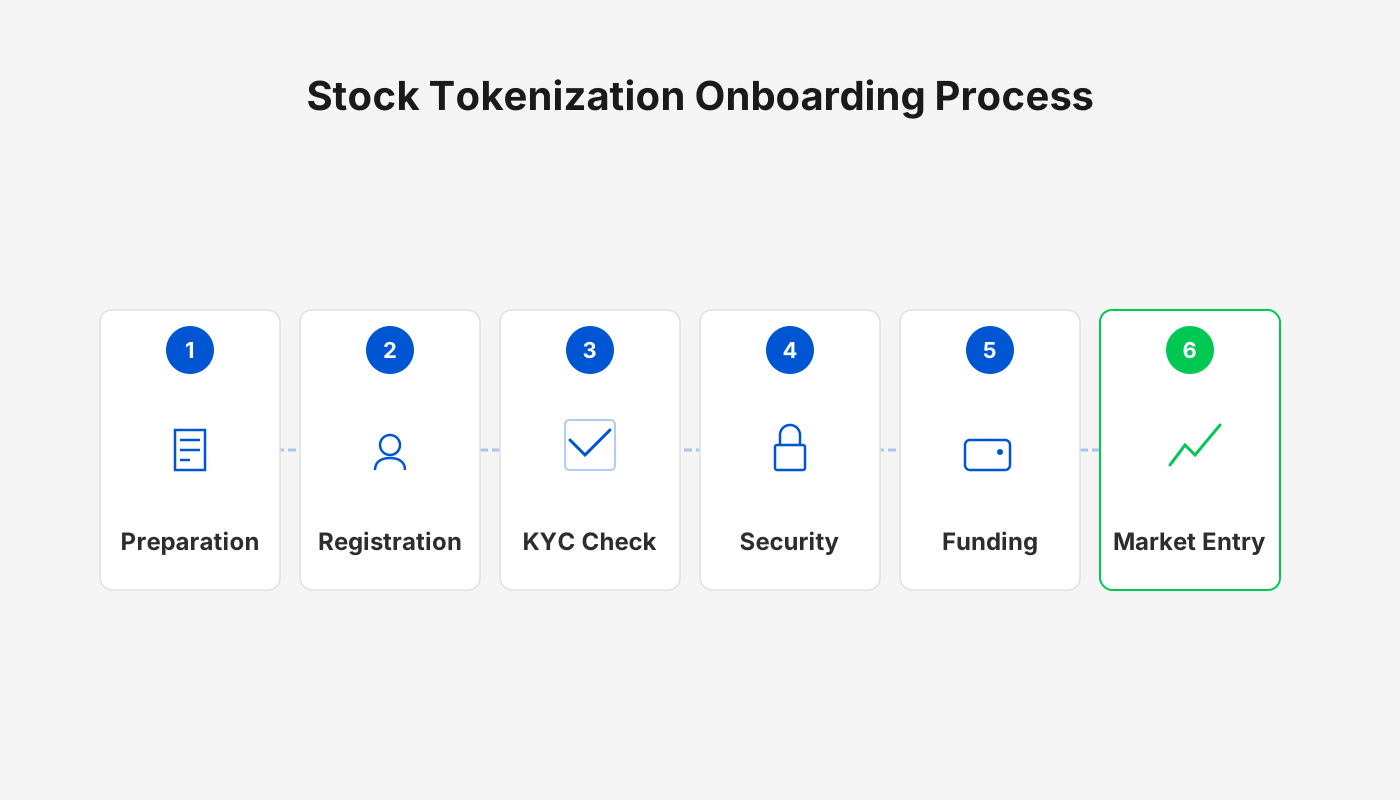
How It Works
Tokenizing a stock involves several key steps:
- Asset Selection: Identify the single or multiple stocks that will be tokenized.
- Legal Structure: The issuer establishes a legal entity that complies with the securities regulations of the relevant jurisdiction, ensuring the token’s lawful status.
- Token Minting: Use smart contracts (code that executes automatically on a blockchain) to create digital tokens that represent the corresponding shares.
- Custody Assurance: The actual shares are held by a regulated custodian, creating a one‑to‑one relationship between each token and the underlying equity.
- Platform Launch: Deploy the tokens onto a compliant trading system, allowing users to buy, sell, or transfer them on the platform.
These steps together guarantee that each token faithfully mirrors the ownership and value of the underlying stock.
Definition
Stock tokenization is the process of converting corporate equity into a tradable digital token on a blockchain. Each token corresponds to all or a portion of the rights attached to the underlying share, granting the holder the same economic value and privileges as a traditional shareholder. Unlike conventional stocks that trade only during exchange‑defined hours, tokenized stocks can be traded 24/7 and support much finer fractional units, broadening accessibility for investors. The concept is a subset of asset tokenization and can also apply to real estate, commodities, and other financial assets.
Types of Stock Tokenization
Depending on regulatory requirements and use‑case scenarios, tokenization generally falls into three categories:
- Fully‑Backed Model: Every token is backed by an actual share held by a custodian, maintaining a 1:1 ratio.
- Synthetic Model: The token reflects the price movement of the reference stock without directly owning the share, typically implemented via derivatives or collateral mechanisms.
- Fractional Ownership Model: Investors can hold minute portions of high‑price stocks, such as 0.01 share representing roughly USD 3,000‑worth of equity.
Each model emphasizes different compliance pathways and caters to distinct user needs.
Key Features and Advantages
- Low Entry Barrier: Investors can purchase tiny fractions of a stock with modest capital, often denominated in USD.
- Any‑time Trading: Eliminates the opening‑and‑closing‑time constraints of traditional markets, enabling round‑the‑clock transactions.
- Cross‑Border Convenience: The inherent decentralization of blockchain lets global users trade without intermediaries, with fiat on‑ramps typically supporting SEPA or SWIFT transfers.
- High Transparency: All transaction data is permanently recorded on an immutable ledger, improving auditability and trust.
- Process Automation: Smart contracts handle settlement and rights distribution automatically, substantially reducing operational costs.
These benefits make stock tokenization a powerful tool for both issuers and investors exploring new financial structures.
Use Cases and Real‑World Examples
- Retail Investment Platforms: Offer global retail investors the chance to hold fragmented portions of blue‑chip equities.
- Employee Stock Ownership Plans (ESOPs): Companies distribute digital equity tokens to employees as incentives.
- Private‑Market Liquidity: Start‑ups or unlisted companies use tokenization to enable secondary‑market trading of their shares.
- Cross‑Border Investment: International investors can acquire foreign stocks directly, bypassing currency conversion hassles and the need for local brokerage accounts.
These examples illustrate how tokenization bridges traditional finance and decentralized technology in practical ways.
Getting Started Guide
If you wish to learn more or experiment with stock tokenization, follow these steps:
- Master Blockchain Basics: Understand public blockchains such as Ethereum that support smart contracts.
- Learn About Digital Wallets: Distinguish between hot wallets and cold storage, and study best practices for safeguarding digital assets.
- Study Regulatory Policies: Clarify how your jurisdiction distinguishes security tokens from utility tokens and what compliance obligations apply.
- Choose a compliant platform: Prioritize platforms that hold the necessary licenses, provide custodial services, and undergo regular audits. U.S. residents should use Binance.US or other regulated U.S. exchanges rather than the global Binance platform.
With these fundamentals in place, you’ll be better equipped to comprehend how the digital finance ecosystem operates.
Security Considerations
Although tokenization brings many conveniences, you should remain vigilant about the following risks:
- Regulatory Uncertainty: Legislation on security tokens varies widely across countries; always verify the legal framework in your area before participating.
- Custody Risk: If the real shares backing the tokens are not properly secured or insured, ownership disputes may arise.
- Smart‑Contract Vulnerabilities: Coding bugs can lead to theft or misuse of assets; only tokens that have undergone professional audits should be trusted.
- Platform Reliability: Opt for exchanges that implement two‑factor authentication, encrypted communications, and transparent governance to reduce the likelihood of attacks.
Understanding and mitigating these factors helps limit potential losses when engaging with stock tokenization.
Tax Note: Gains from the sale or exchange of tokenized stocks may be taxable under the tax laws of your residence country. Consult a qualified tax professional to assess your obligations.
Conclusion
Stock tokenization represents a deep integration of traditional equity and blockchain technology. By turning real‑world shares into digital assets, it enhances the accessibility, efficiency, and transparency of financial activities. While global regulatory frameworks are still evolving, the potential to promote financial inclusion and break down cross‑border investment barriers is significant. Moving forward, selecting a compliant and secure platform for learning and experimentation will be the critical first step in exploring this emerging field.
This article ends here. For more in‑depth coverage of stock tokenization, you can search for prior Bitaigen (比特根) articles or continue reading the related links below. Thank you for your continued interest and support of Bitaigen (比特根)!
Related Reading
- Hong Kong Brokers Launch Bitcoin Trading – One‑Stop Asset Guide
- 2025 Bitcoin Holders: Nations, Companies & Ultra‑Wealthy
- On-Chain Earn Product Redemption: 3‑4 Day Timeline Explained
💡 Register on Binance with referral code B2345 for the maximum trading fee discount. See Binance complete guide.



