
 Bitaigen Research
 As blockchain continues to dominate internet discussions, fraudsters have seized the opportunity to operate under its banner, employing tactics such as issuing fake digital tokens to scam users. Below we answer the headline question directly:
Blockchain scams mainly consist of fiat‑currency transaction fraud, phishing sites, “pig‑butchering” schemes, Ponzi‑style capital pools, impersonation of platform staff, and numerous other variants.

In this article we catalog the most common fraud tactics in the blockchain space, systematically dissecting schemes ranging from fiat‑currency transactions to phishing sites and pig‑butchering operations. Practical prevention points are provided. Through case studies we help readers spot risks and raise security awareness. Subsequent sections will dive deeper into the details of each scam and outline response measures, so a careful read is recommended.
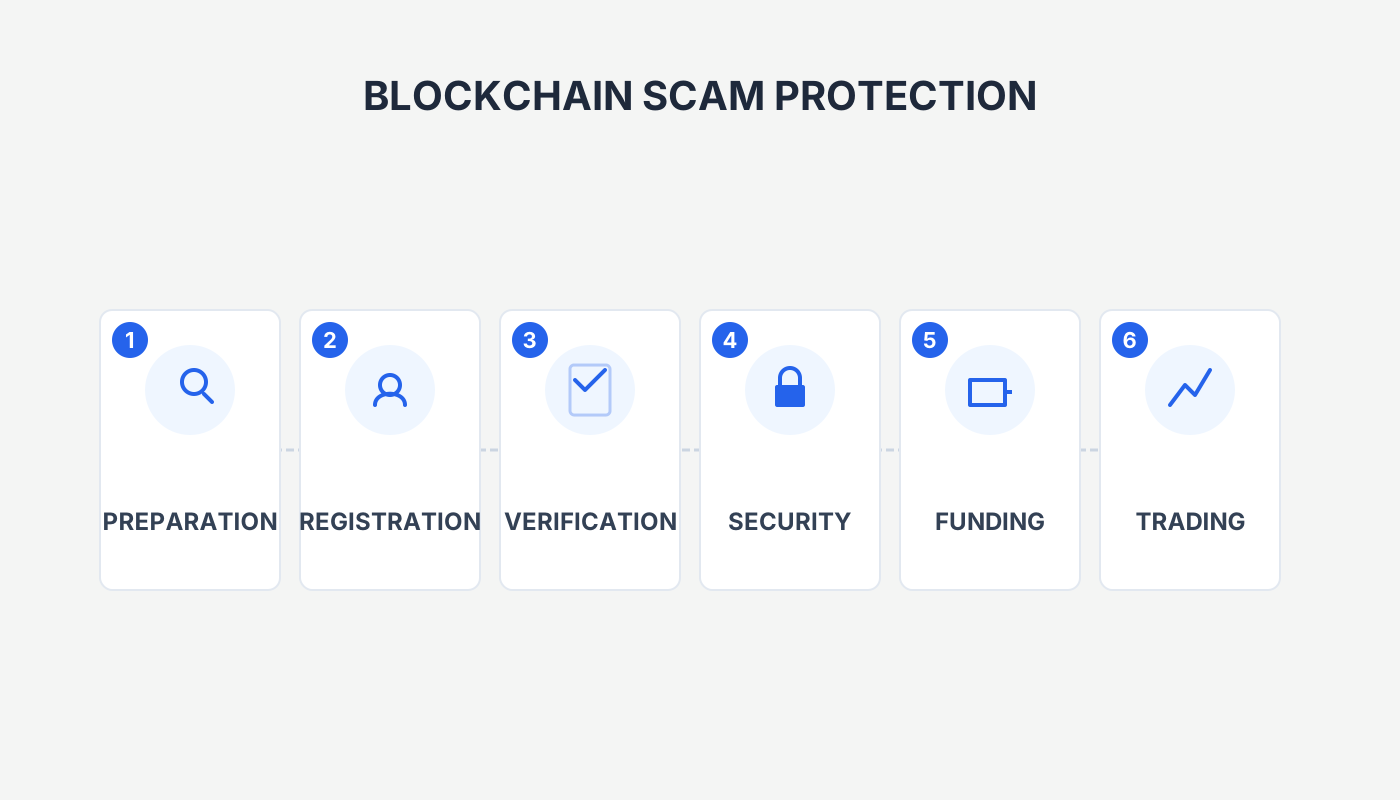
What exactly are the blockchain scams?
1. Fiat‑currency transaction fraud
Criminals use private communication channels such as WeChat, Alipay, or bank cards to lure victims into paying first. After the victim sends the money, the scammer either never transfers the promised crypto or, after receiving the crypto, refuses to pay the agreed amount, completing the fraud.
Prevention tactics
- When exchanging fiat for digital assets—or the reverse—use only large, reputable trading platforms.
- Do not release crypto or fiat until you have confirmed receipt of the counterpart’s payment.
- Unless dealing with a close personal friend you know extremely well, avoid private, off‑platform transactions.
2. Phishing‑site scams
Scammers clone well‑known exchanges, project private‑sale pages, and even forge official emails or SMS messages. When a user visits a phishing site, they are typically prompted to enter account credentials, verification codes, or transaction passwords, after which the funds are illicitly transferred.
In addition, fake official announcements often circulate in group chats under the guise of “arbitrage opportunities,” “high‑yield rebates,” “airdrop rewards,” or “new‑listing campaigns,” enticing users to click malicious links.
Prevention tactics
- Verify that the URL matches the official domain and check that the email sender’s address is genuine.
- Under no circumstances should you ever disclose your private key or transaction password.
3. Pig‑butchering / Capital‑pool schemes
- Pig‑butchering: Fraudsters pose as online dating partners or investment mentors, flaunting huge returns in social groups or finance forums. After gaining trust and obtaining contact details, they persuade the target to transfer large sums to a fake platform. Small “profits” may be shown initially to encourage further deposits, but ultimately the remaining balance becomes unwithdrawable.
- Capital‑pool (Ponzi) scheme: The project itself holds no real value and relies on recruiting new participants to bring in fresh capital. Early investors and the organizers split the later investors’ money; once the inflow stops, the structure collapses.
Prevention tactics
- Treat any unfamiliar party’s promises of high dividends or extraordinary yields with extreme skepticism.
- Do not accept “guaranteed profit” claims; verify the project’s genuine business model and regulatory compliance.
4. Impersonating platform staff or law‑enforcement officials
Scammers masquerade as exchange customer‑support agents, risk‑control teams, or even police and prosecutorial officers, contacting victims via WeChat, QQ, Telegram, phone, etc. They often claim the account is under “money‑laundering risk” or that assets must be “frozen immediately,” prompting the victim to share login details or to execute a withdrawal or transfer.
Prevention tactics
- Official staff or law‑enforcement agencies will never initiate a transfer request over the phone.
- Always verify the identity of the counterpart before proceeding with any fund‑related operation; never trust unsolicited calls.
Characteristics of blockchain‑related scams
Scams that brand themselves with the blockchain label are rarely built on genuine blockchain technology and usually share the following traits:
- Networked and cross‑border: They exploit the internet for rapid, wide‑reaching dissemination.
- Deceptive, alluring, and covert: They package themselves as sophisticated concepts, using celebrity influencers, “airdrop candy,” and other gimmicks to convince investors that risk is low and returns are high.
- Multiple legal violations: They may involve illegal fundraising, pyramid schemes, money‑laundering, and other regulatory breaches.
According to risk‑alert notices issued by China’s banking‑insurance regulator, the Cyberspace Administration, and other agencies—titled “Preventing illegal fundraising under the guise of ‘virtual currency’ or ‘blockchain’”—criminals often ride hot‑topic buzzwords, fabricate elaborate theories, and even use new acronyms such as ICO, IFO, IEO, IMO to issue tokens, creating highly concealed frauds.
Moreover, fraudsters frequently publicize “static returns” (profits from token price appreciation) and “dynamic returns” (profits from recruiting others), luring the public to inject capital and build downlines, forming massive pools that eventually turn into illegal fundraising or pyramid operations.
It is important to note that decentralization is a core attribute of blockchain, but it does not automatically make every industry suitable for a decentralized solution. Some projects misuse celebrity endorsements to mislead investors, who then overlook the underlying technology and commercial viability.
Preventive recommendations
- Review the project’s technical whitepaper, team credentials, and regulatory compliance status.
- Remain rational about “celebrity endorsements”; verify the actual level of involvement.
- Conduct a thorough risk assessment before committing any funds; avoid chasing high‑return promises blindly.
The above constitutes an in‑depth analysis of “What are the typical blockchain scam tactics?” For more case studies and protection tips, please follow other articles from Bitaigen (比特根).
*Note: In many jurisdictions, gains from cryptocurrency transactions may be subject to tax. Users should consult local tax regulations and consider filing obligations accordingly. For fiat transactions, global users typically rely on USD transfers via SWIFT/SEPA, while U.S. residents should use Binance.US rather than the global Binance platform.*
Related Reading
- Ledger Wallet Review: Security, Cross‑Chain & Usability
- Top 10 Crypto Exchange Apps 2026: Rankings & Security
- Top 10 Crypto Exchanges Review: Compliance, Depth, Security
💡 Register on Binance with referral code B2345 for the maximum trading fee discount. See Binance complete guide.



