
 Bitaigen Research
 In recent years, blockchain has moved from a niche technical term to a topic of mainstream discussion, with new jargon constantly emerging. Among them, IDO (Initial Digital Asset Offering) is a concept that many investors are still unfamiliar with. This article provides a plain‑language explanation of what a blockchain IDO entails and compares it with IPO and ICO, helping readers quickly grasp its core characteristics.
IDO (Initial Digital Asset Offering) is the method by which a blockchain project launches its digital assets for the first time. Users obtain tokens by completing tasks or contributing resources rather than by providing direct financing, and a repurchase‑offer mechanism is used to protect investors’ principal.
In this article we systematically outline the core concepts of IDOs, dissect their issuance mechanisms, and compare them with IPOs and ICOs. Through concise examples, readers will quickly clarify the fundamental differences in digital‑asset issuance, understand the key risks and opportunities when investing, and gain a complete overview of blockchain project financing methods.
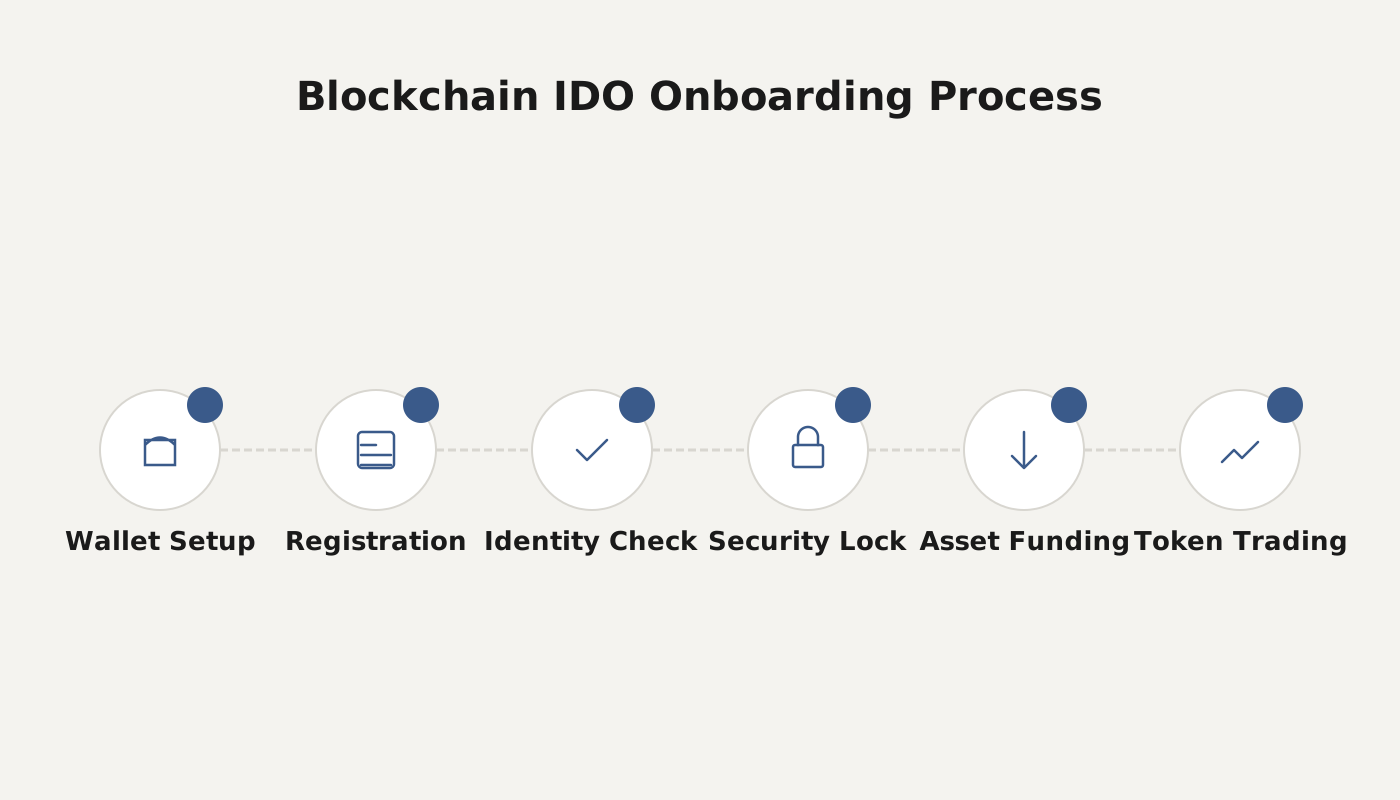
What does a blockchain IDO mean?
IDO (Initial Digital Asset Offering) refers to a project's first issuance of digital assets on a blockchain. Its core element is an “asset token.” Project teams usually publish task bounties; participants earn the project's token rewards by contributing time, skills, or attention to complete those tasks.
- Issuance model: Utilises a repurchase‑offer approach, where the issuer commits to buying back tokens under predefined conditions, thereby enhancing the safety of the invested principal.
- Difference from ICO: An ICO (Initial Coin Offering) raises funds directly by accepting major cryptocurrencies such as Bitcoin or Ethereum, whereas an IDO does not raise capital and instead relies heavily on resource contributions from community members.
Advantages of an IDO
- An upgraded version of an ICO: The project team still locks the tokens, but no cash is raised through a financing round.
- Community‑driven: Tasks related to ecosystem building are allocated to users, fostering a co‑creation environment.
- Relatively lower financial risk: Participants invest time and skills rather than direct monetary capital.
Drawbacks of an IDO
- Regulatory risk: Because no direct fundraising occurs, authorities may view IDOs as attempts to sidestep existing regulations.
- High token‑design requirements: If the economic model is poorly constructed, the IDO token could end up as a mere points system without substantive value.
IDO vs. IPO / ICO
| Dimension | **IPO** (Initial Public Offering) | **ICO** (Initial Coin Offering) | **IDO** (Initial Digital Asset Offering) |
|---|---|---|---|
| Issued asset | Corporate shares | Project tokens | Project tokens (asset tokens) |
| Funding method | Public sale of shares to raise capital | Fundraising by accepting Bitcoin, Ethereum, etc. | No fundraising; users receive tokens by completing tasks |
| Regulatory scrutiny | Strict oversight by securities regulators | Relatively lax, with some jurisdictions beginning to intervene | Regulatory gray area; often perceived as a way to evade regulation |
| Participants | Institutional investors, retail shareholders | Crypto investors, blockchain community | Project teams, enterprises, users, communities and other stakeholders |
| Source of value | Company’s operating profit | Future utility and ecosystem of the project | Community contribution value and token‑economics design |
Summary of core differences
- IPO focuses on capital‑market financing by issuing corporate equity.
- ICO focuses on token financing, where investors swap crypto assets for project tokens.
- IDO removes the financing step entirely, emphasizing task‑based rewards that let users “invest” time and skills to obtain tokens; the primary risk is the resource commitment rather than monetary loss.
Conclusion
A blockchain IDO is a digital‑asset issuance model centered on task incentives. Participants acquire tokens by contributing resources, while the project team safeguards principal through a repurchase‑offer mechanism. Compared with traditional IPO and ICO, an IDO places greater emphasis on community co‑building and resource sharing, with regulatory risk and token‑design quality being the pivotal considerations.
For more practical case studies and in‑depth analyses of blockchain IDOs, stay tuned to future articles from Bitaigen.
*Note for global readers:* When dealing with fiat transactions related to token purchases or sales, the standard currencies are expressed in USD, and cross‑border transfers typically use SEPA (for Euro‑zone participants) or SWIFT networks. Users located in the United States should conduct any trading on Binance.US rather than the global Binance platform. Additionally, while this article does not delve into tax matters, keep in mind that cryptocurrency gains may be taxable under the laws of your local jurisdiction.
Related Reading
- What Is DeFi? A Beginner's Guide to Decentralized Finance
- Huobi Exchange Review: Timeline, Services, Token Ecosystem
- Why Bitcoin Is a Top Investment Choice for Beginners
💡 Register on Binance with referral code B2345 for the maximum trading fee discount. See Binance complete guide.



