
 Bitaigen Research
 We break down the most closely watched TVL concept in the DeFi space, explain how it reflects a protocol’s health, and systematically outline the typical routes newcomers take—such as lending and liquidity mining. With clear metric explanations and hands‑on guidance, readers can get up to speed quickly and make more rational project choices. Later sections will expand on the details, so keep reading.
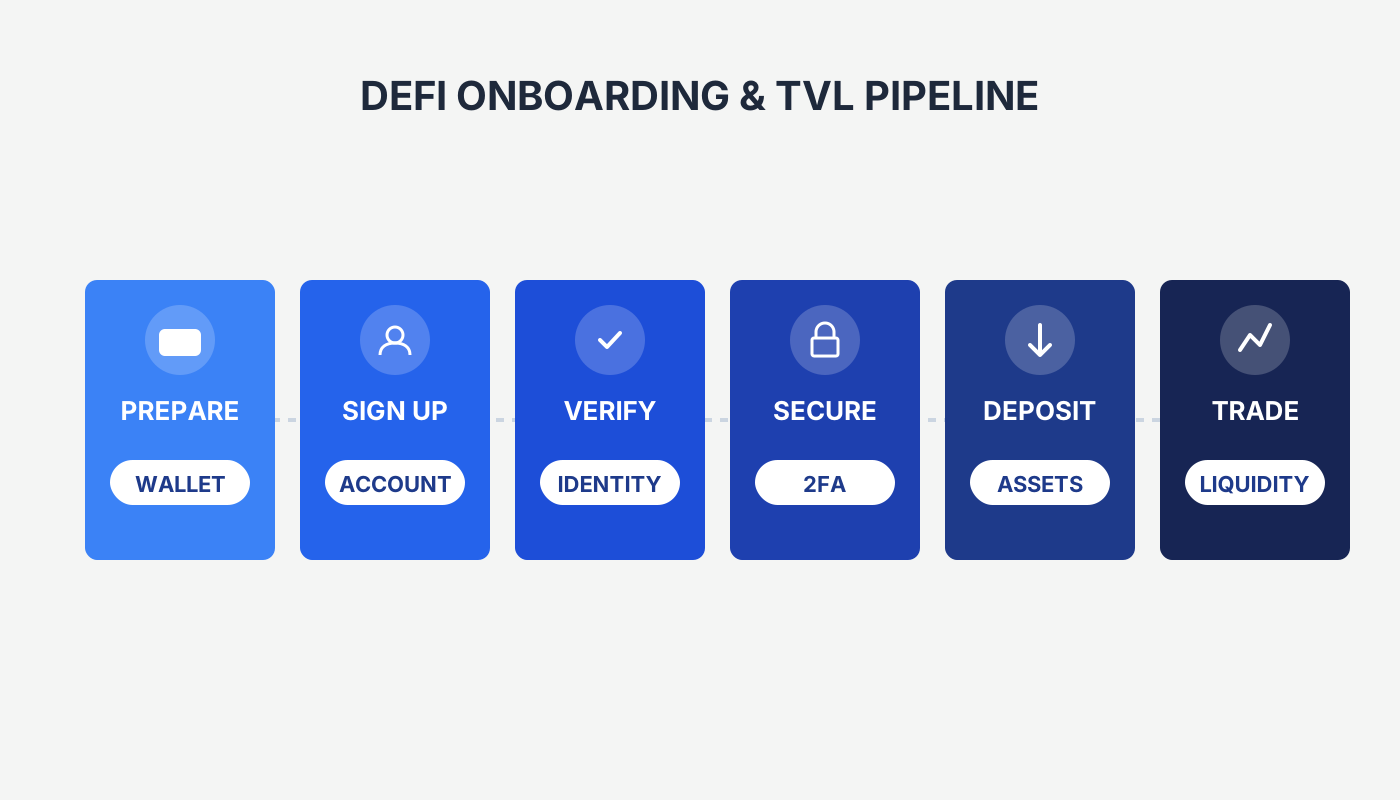
What Does TVL Mean in Blockchain DeFi? How to Participate in DeFi Projects?
TVL (Total Value Locked) refers to the total value of assets locked inside a DeFi protocol. Participation can be achieved through lending, providing liquidity, or using stablecoins, among other methods.
From 2020 to 2021, DeFi became a hot topic in the crypto world. Many investors only understood the “decentralized” label while lacking knowledge of key metrics and project types. Below we will systematically explain the meaning of TVL and present the most common entry paths for DeFi beginners.
What Does TVL Mean in Blockchain DeFi?
- TVL (Total Value Locked) measures the total amount of crypto assets that are locked in decentralized finance (DeFi) scenarios such as lending platforms and liquidity pools.
- The metric is equivalent to the entire liquidity residing in a pool and provides an intuitive view of the overall health and scale of the DeFi market.
- By looking at TVL, investors can compare the market share of different protocols and see which platforms attract the most capital.
To monitor TVL in real time, visit data aggregators such as Defi Pulse, which display the amount of assets locked on Ethereum and other chains, giving a snapshot of the current state of liquidity mining. TVL can be denominated in ETH, USD, BTC, or other units; each denomination offers a distinct market perspective.
How to Participate in DeFi Projects?
For DeFi newcomers, the following four product categories represent the most common entry points, allowing a quick and practical start.
1. Open‑Lending Protocols
- Definition: Blockchain‑based platforms that enable digital‑currency lending, similar to a traditional bank or a money‑market fund. Users deposit assets into the protocol, borrowers take loans, and depositors earn interest.
- Core Advantages: Smart contracts replace intermediaries, reducing costs and increasing transparency. Users can earn relatively higher yields while having a clear view of the associated risks.
- Leading Protocols:
- MakerDAO – interest rates are set by votes from MKR token holders; rates have moved from 2.5 % to 19.5 % within a single month in the past.
- Dharma – offers fixed‑rate brackets typically ranging from 2 % to 13 %.
2. Stablecoins
- Definition: Crypto tokens pegged to a fiat currency (e.g., the US Dollar) or another asset (e.g., gold) with the goal of maintaining a relatively stable value.
- Typical Example: Dai (issued by MakerDAO) is the most representative decentralized stablecoin. It is solely backed by the protocol itself as the lender, offering censorship resistance and the ability to be used with leverage.
3. Decentralized Exchanges (DEX) and Open Markets
- Advantages: No centralized identity verification is required; assets remain custodial on‑chain throughout the trade.
- Evolution: Early DEXs relied on order‑book models, which limited user experience. In recent years, the Automated Market Maker (AMM) model has risen, with Uniswap becoming the industry benchmark. Other notable AMMs include Balancer, Bancor V2, and the upcoming MensaProtocol, which employs an M‑LIN algorithm to reduce impermanent loss.
4. Issuance and Investment‑Management Platforms
- Functionality: Provide services for token issuance, regulatory compliance, and portfolio management.
- Representative Projects:
- tZERO (also operates an exchange)
- Melonport (asset management built on smart contracts)
- Polymath, Harbor (security‑token issuance platforms supporting standards such as ST‑20 and R‑Token)
Recommended Path for Beginners
Among the options above, stablecoins and open‑lending protocols present the lowest barriers and the most straightforward operations. Small‑scale investors can start by depositing assets into a lending protocol to earn interest, and simultaneously hold stablecoins to provide liquidity in mining pools—preserving capital while generating additional returns.
Tip: Before committing capital to any DeFi project, be sure to review the protocol’s TVL, risk mechanisms, and contract audit reports. Understanding these factors helps avoid blind or overly risky actions.
*Note*: Crypto gains may be subject to taxation in your local jurisdiction; consult a tax professional for guidance. In regions where fiat transfers are needed, transactions are typically conducted via USD, SEPA, or SWIFT channels.
Closing Thoughts
Grasping TVL and the various categories of DeFi products is the first step toward entering decentralized finance. Once these foundational concepts are clear, investors can make more reasoned decisions within the emerging financial ecosystem. For deeper analysis of DeFi TVL and project participation, stay tuned to the upcoming series from Bitaigen.
Related Reading
- Understanding Total Value Locked (TVL) in DeFi: A Key Metric for Crypto Projects
- XRPL EVM: Ethereum-Compatible Sidechain for DeFi, NFTs
- Cryptocurrency Yield Farming Guide: Maximize DeFi Returns
💡 Register on Binance with referral code B2345 for the maximum trading fee discount. See Binance complete guide.



