
 Bitaigen Research
 BSC (Binance Smart Chain) is a high‑performance public blockchain that is compatible with Ethereum. Common questions include the difference between BSC and Binance Chain, how to query information, wallet usage, and ways to acquire tokens. Representative projects include DeFi platforms such as PancakeSwap, Venus, Autofarm, and NFT projects like BakerySwap and Alice.
We have carefully compiled a panoramic overview for BSC beginners, covering typical on‑chain doubts, mainstream DeFi and NFT projects, and essential wallet‑usage points. This guide will help you get started quickly and deepen your understanding of the ecosystem. The following sections will dissect key issues one by one—please continue reading.
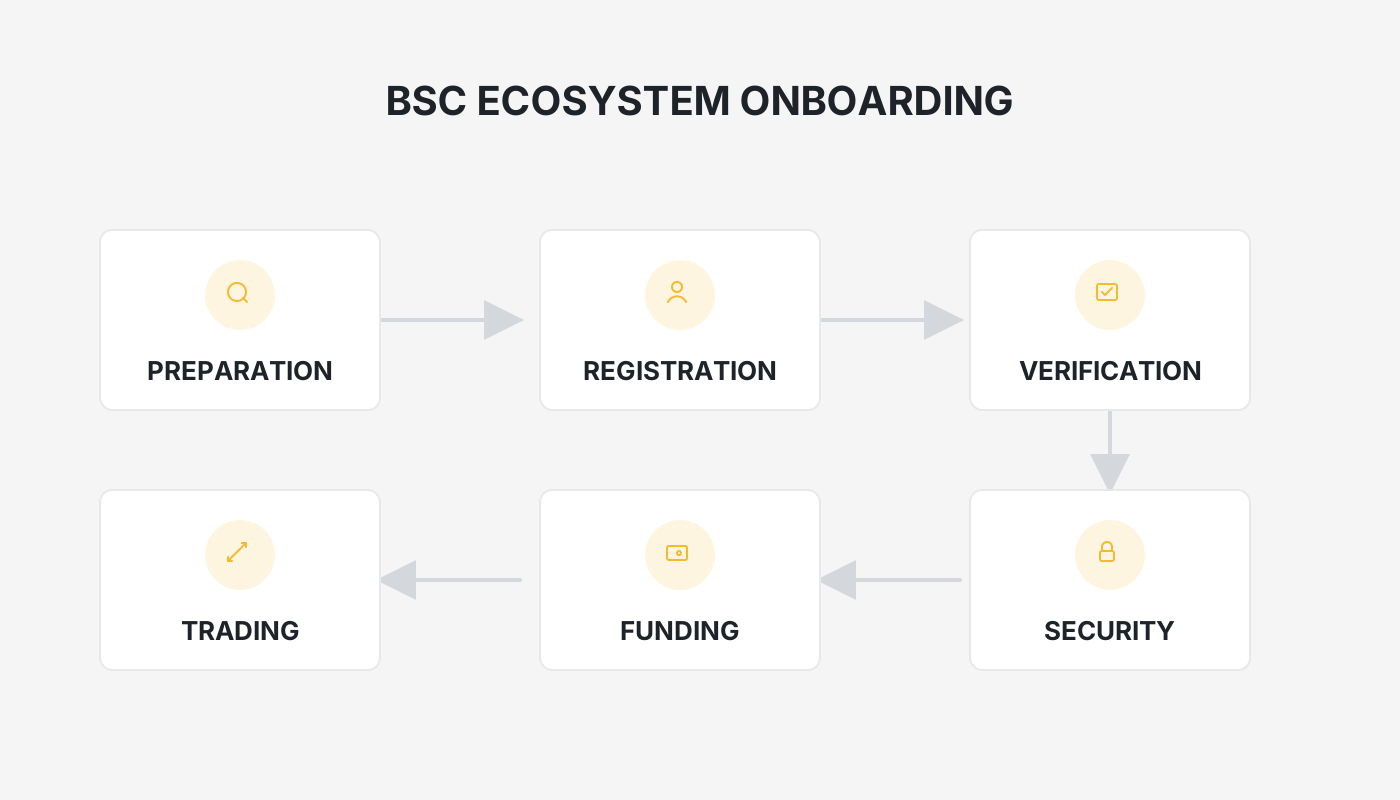
1. Overview of BSC’s Ecosystem Development
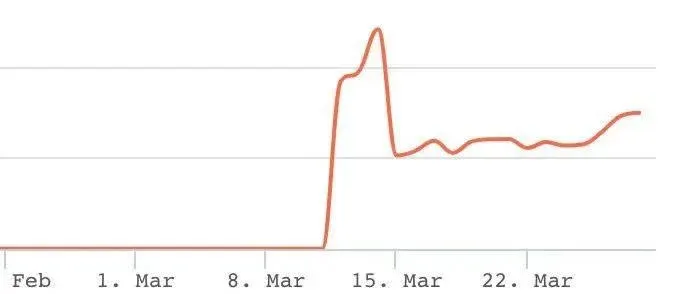
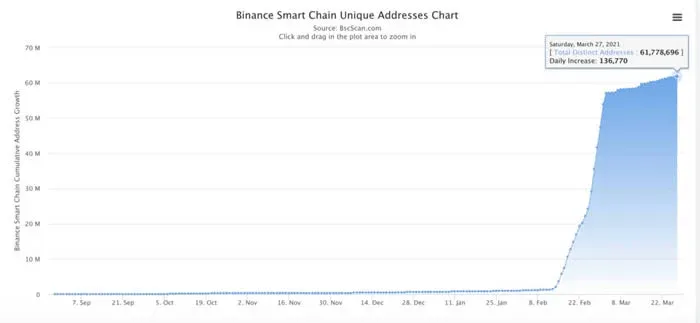
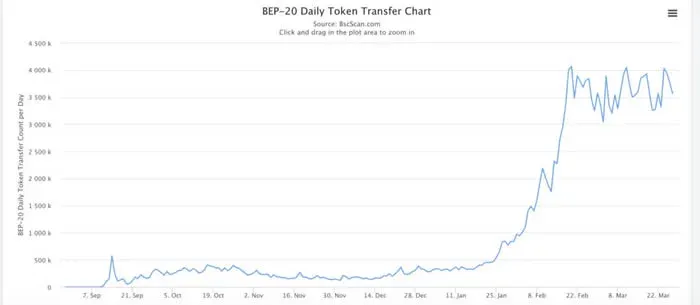
Since its launch in early 2020, BSC has experienced explosive growth in user base, token‑transfer volume, and DeFi‑project activity. On February 14 the total number of wallets stood at 2.06 million; just half a month later it had risen to 57.7 million – an increase of roughly 27 times. Daily BEP‑20 (the BSC counterpart of ERC‑20) token‑transfer figures have shown a similarly rapid upward trend.
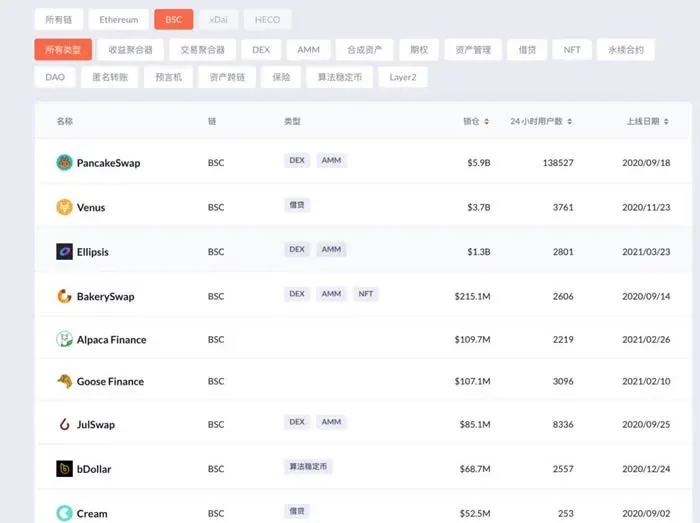
In the DeFi arena, flagship projects PancakeSwap and Autofarm have performed outstandingly and are now regarded as part of the first‑tier DeFi ecosystem. According to data from DeBank, when measured by total value locked (TVL), both PancakeSwap and Venus rank among the top ten on their respective chains, and PancakeSwap’s TVL has even surpassed that of Uniswap.
This article is intended solely as an informational reference for BSC newcomers and does not constitute investment advice. New projects carry higher risk, and readers should conduct their own due diligence. In many jurisdictions, gains from cryptocurrency transactions may be subject to tax; please consult a tax professional regarding local tax obligations.
2. Differences Between Binance Smart Chain and Binance Chain
Binance Chain is optimized for simple transfer transactions; its functionality is relatively limited and it cannot support complex scenarios such as DeFi or NFT applications. In the first half of 2020, Binance launched the Binance Smart Chain (BSC), which officially went live in September. The two chains operate independently; when interacting with BSC projects you must use a BSC address rather than a Binance Chain address.
BSC is an Ethereum‑compatible (EVM‑compatible) chain, meaning that existing DeFi or Ethereum DApps and tools can be migrated without friction—much like the implementation approaches taken by HECO and OKEx.
Operational Mechanism
BSC employs a Proof‑of‑Staked‑Authority (PoSA) consensus model, with an average block time of about 3 seconds. Validators must stake BNB, and the network currently runs 21 block‑producing nodes. Validators earn fees solely from transaction costs; there is no native token inflation.
Development Value
BSC’s rapid expansion is largely fueled by the backing of Binance’s exchange liquidity, user base, and early‑stage project incentives, creating a self‑reinforcing ecosystem. When Ethereum becomes congested and gas fees soar, BSC offers a low‑fee, high‑throughput alternative that attracts a large number of users and project teams.
3. How to Obtain BSC‑Related Information
BSCScan
BSCScan is a blockchain explorer launched by the Etherscan team, available at https://www.bscscan.com/
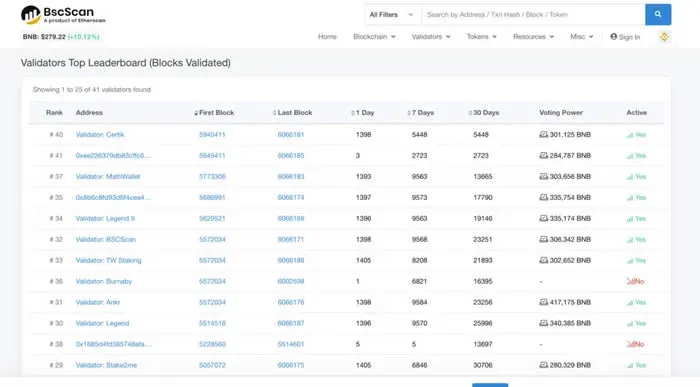
The interface mirrors Etherscan, supporting queries for blocks, transactions, token holders, and more, with essentially no learning curve for users already familiar with Etherscan.
DeBank and DappRadar
- DeBank lists BSC ecosystem projects together with their locked value, user counts, and brief descriptions. It also provides a free DEX price‑comparison tool covering PancakeSwap, 1Inch, BakerySwap, and others. URL: https://debank.com/projects?chain=bsc
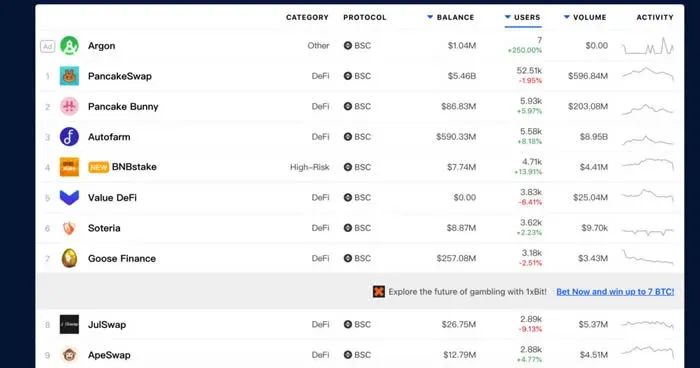
- DappRadar also offers a BSC project directory, often with an even broader selection of dApps.
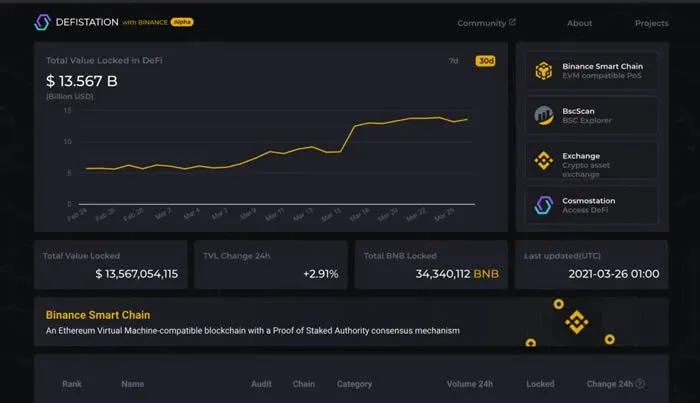
In addition, DeFiStation (https://www.defistation.io) and the built‑in dApp browsers of many wallets are useful channels for discovering BSC projects.
BSCPad: BSC’s IDO Platform
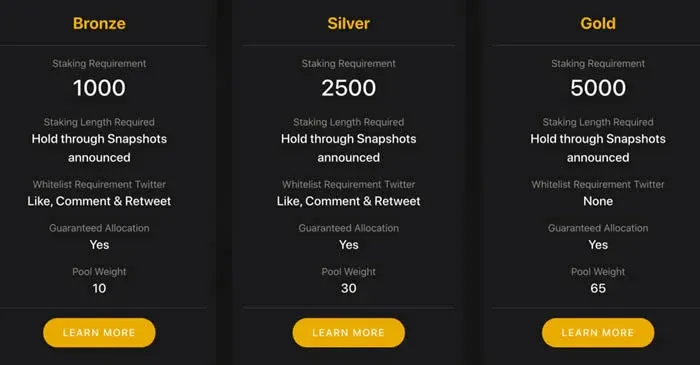
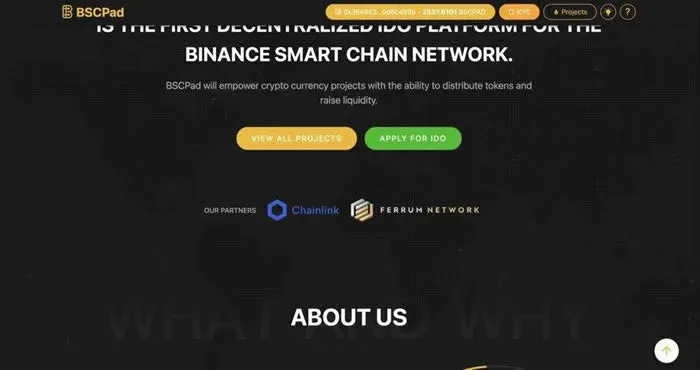
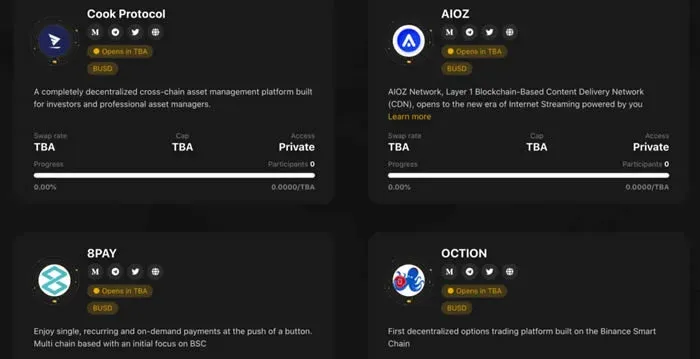
BSCPad is the first decentralized IDO (Initial DEX Offering) platform on BSC, aimed at incentivizing token holders in a fair and low‑barrier manner. The platform uses a two‑round allocation mechanism: the first round distributes quota based on the amount of tokens a user has locked, while the second round follows a first‑come‑first‑served model. URL: https://bscpad.com/
4. How to Start Using BSC
Wallet Selection
Because BSC is EVM‑compatible, it works with the same wallet ecosystem as Ethereum. Common choices include:
- Browser‑extension wallets:
- MetaMask – simply add a custom network with BSC parameters to start using it.
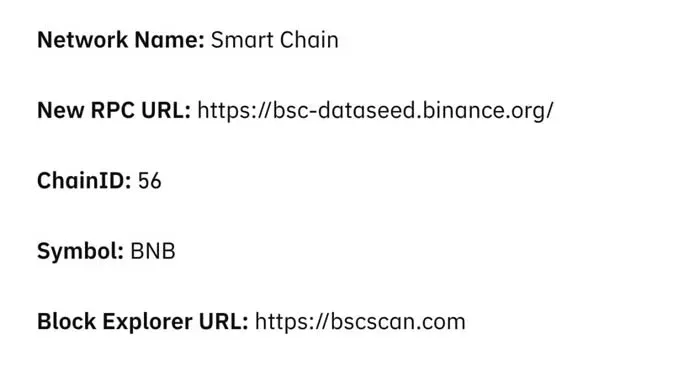
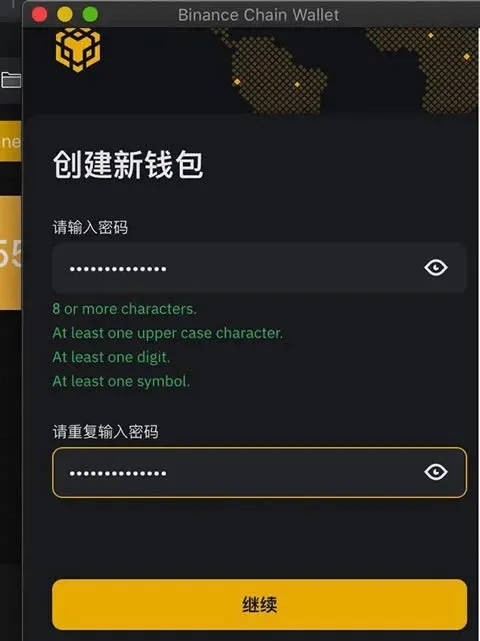
- Binance Chain Wallet – binds to a Binance exchange account and operates in a similar fashion.
- Mobile wallets: Popular options are TokenPocket (TP), Mizo Wallet, Trust Wallet (officially supported by Binance), as well as Bitkeep, ONTO, SafePal, Arkane, and others.
Acquiring Tokens
There are two primary ways to move assets from Binance to BSC:
- Direct withdrawal – select the BSC network when withdrawing and provide your BSC address from the chosen wallet.
- Binance Bridge – a cross‑chain bridge that supports anchoring of assets such as Ethereum, TRON, BTC, USDT, ATOM, and many others onto BSC. The bridge can be accessed at https://www.binance.org/en/bridge.
Note for U.S. users: Binance.com’s services are not available in the United States. U.S. residents should use Binance.US for fiat on‑ramps and withdrawals, and may still access the Binance Bridge via Binance.US where supported.
5. Quick Look at Representative Projects
PancakeSwap
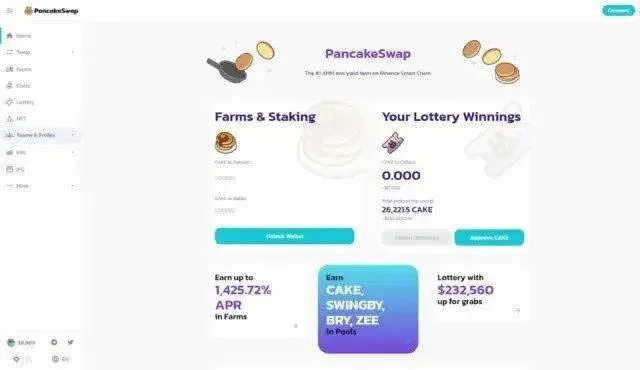
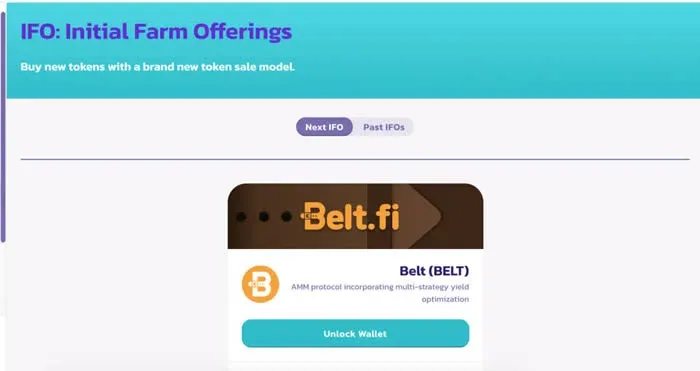
PancakeSwap is a fork of Uniswap deployed on BSC. Thanks to low gas fees and liquidity‑mining incentives, its total value locked has overtaken Uniswap. Users can trade tokens, provide market‑making liquidity, participate in lotteries, claim NFTs, and join IFO (Initial Farm Offering) events on the platform.
PancakeBunny
PancakeBunny is a yield‑aggregator. Users can deposit the LP tokens they obtain from PancakeSwap to earn automatically compounding returns. The team plans to add cross‑chain mining capabilities in the future.
1inch, DODO, IDEX, Multichain.xyz
- 1inch – the leading DeFi aggregator on Ethereum, now integrated with BSC to provide optimal routing with lower transaction costs.
- Multichain.xyz – a cross‑chain bridge connecting Ethereum, BSC, Fantom, Polygon, and many other networks.
Venus: The Aave‑Style Lending Protocol
Venus offers a decentralized money market that supports borrowing and lending of BEP‑20 tokens, as well as the issuance of the VAI stablecoin. Its functionality resembles a blend of Compound and MakerDAO. URL: https://venus.io

Autofarm: BSC’s “Machine‑Gun” Pool
Autofarm operates on both BSC and HECO, positioning itself as an automated yield‑farm similar to yEarn.
Yieldwatch: One‑Stop DeFi Dashboard
Yieldwatch aggregates a user’s positions and earnings across multiple DeFi protocols, currently focusing on mining‑related data visualization. URL: https://yieldwatch.net
6. BSC’s NFT Ecosystem
Alice: My Neighbor Alice
Alice is a virtual‑life game that already has a limited‑time demo on Steam; the blockchain version will launch on BSC. The in‑game token ALICE supports NFT issuance, staking, and lock‑up mining. URL: https://www.myneighboralice.com/

BakerySwap
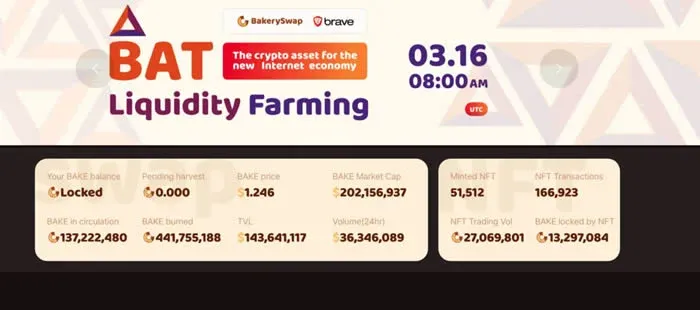
BakerySwap combines token swapping, mining, NFT creation, and IDO functions, and even allows NFTs and tokens to be staked against each other. URL: https://www.bakeryswap.org/#/exchange/new-artworks
Seascape
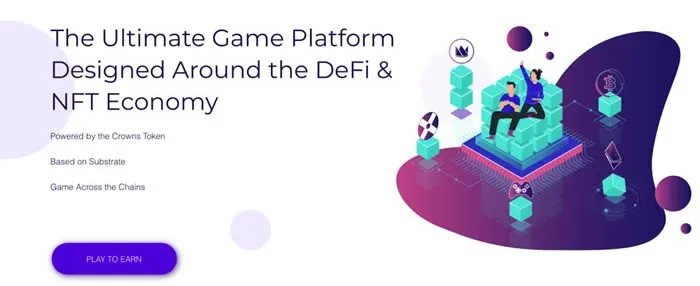
Seascape launched its first game, “Crown Circus”, simultaneously on BSC and Ethereum. Within a month the game attracted over 10,000 players, processed more than 50,000 transactions, achieved a TVL exceeding $10 million USD, and minted over 15,000 NFTs. The platform blends DeFi and NFT elements and has secured investment from Binance and other institutions.
Other NFT projects are omitted for brevity.
7. Reflections on BSC’s Development
BSC exhibits a relatively high degree of centralization, yet its CeFi + DeFi hybrid model provides a valuable case study. Key drivers include:
- Binance’s sizable support fund (approximately $100 million USD) that helps projects achieve rapid deployment.
- High Ethereum gas fees and network congestion create external pressure that makes BSC’s low‑cost, high‑throughput offering attractive.
- Low transaction fees and fast block confirmations draw users who perform small‑value transfers, encouraging Ethereum‑centric dApps such as 1Inch to expand onto BSC.
- Generous liquidity‑mining rewards further accelerate ecosystem growth.
8. Summary
In today’s multi‑chain competitive landscape, BSC leverages low fees, fast transaction finality, and Binance’s resource backing to carve out a pronounced advantage in both DeFi and NFT sectors. While debates over centralization and security risks remain, users who wish to benefit from low‑cost and potentially high‑yield opportunities should still exercise prudent risk management and adopt appropriate safeguards.
The content above constitutes the BSC Beginner’s Guide, offering detailed explanations of common questions and flagship projects. For additional BSC onboarding material, please follow the upcoming articles from Bitaigen (比特根).
: Cross‑Chain, PoSA & Ethereum
- Binance Smart Chain (BSC): High‑Performance EVM Blockchain
- BSC Overview: Core Features, BEP‑20 Tokens & Top DApps
💡 Register on Binance with referral code B2345 for the maximum trading fee discount. See Binance complete guide.



