
 Bitaigen Research
 We examine imToken from three perspectives—security, functionality, and cross‑platform usage—to determine whether it offers a desktop version and what the actual experience is like. This helps you decide if using this mainstream wallet on a computer is worthwhile. We also discuss the protection mechanisms of its Security Center and outline key risk‑management points for desktop usage. Read on for the full details.
Today we will introduce the digital wallet imToken, a lightweight wallet primarily used on mobile devices and well‑known in the cryptocurrency community. Investors favor it mainly because of its relatively high security.
imToken has its own Security Center, which can reduce the risk of theft by roughly 90 % within ten minutes. If an issue arises, the wallet provides step‑by‑step troubleshooting guidance.
Many users wonder: Does imToken have a desktop version? What is the desktop experience like? Below we answer these questions in detail.
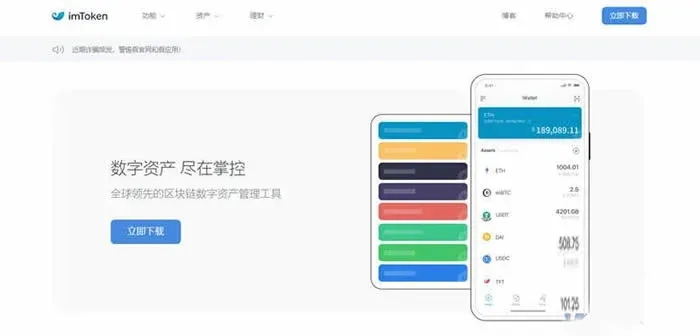

imToken Wallet for Android v2.15.7 (official Android release)
- Category: Banking & Finance
- Size: 66.4 MB
- Language: Simplified Chinese
- Last updated: 2024‑02‑04
Does imToken have a desktop version?
Yes, imToken does provide a desktop client.
imToken is positioned as a lightweight mobile‑first wallet app, designed to give ordinary users a secure, easy‑to‑use, feature‑rich tool for managing digital assets.
Core features
- Self‑custody of private keys
- Light‑wallet operation (no need to download the full blockchain)
- Support for a variety of digital assets
- Real‑time market data from major global exchanges with optional price alerts
Founded in March 2016, imToken had amassed more than 7 million users across over 200 countries and regions by October 2018.
Despite its large user base, the claim of decentralisation raises questions: Is imToken truly decentralised, and can users safely store their cryptocurrency there?
In the crypto ecosystem, assets reside on the blockchain; the wallet merely stores the private key that controls the corresponding account. Possessing the private key proves ownership and enables transfers. Hence, a wallet is essentially a tool for managing and safeguarding private keys, while the address is derived from the public key.
imToken does not store sensitive user information—such as private keys or seed phrases—on its servers. Those data remain exclusively on the user’s device and are never synced to imToken’s backend. By default, cloud‑sync features like iCloud are disabled to maximise privacy protection.
All core operations—wallet creation, import, key storage, seed‑phrase backup, and transaction signing—are performed locally on the device without contacting imToken’s servers.
Note for fiat interactions: When converting crypto to fiat through third‑party services, transactions are typically settled in USD and processed via SEPA or SWIFT networks. Users in the United States should use Binance.US rather than the global Binance platform.
How does the desktop imToken wallet perform?
imToken is a light‑wallet that is not open‑source. It supports two‑factor authentication but does not offer multi‑signature capabilities. It is compatible with HD wallets and supports assets such as ETH, BTC, and ERC‑20 tokens, and runs on both Windows and macOS. Private keys are never stored on the platform’s servers; the platform also develops its own exchange‑like functionality.
As one of the most recognizable wallets in the Ethereum ecosystem, the international version of imToken 2.0 builds on the earlier ETC series and adds a Bitcoin wallet. However, the BTC wallet only supports a single coin and lacks some advanced features found in dedicated Bitcoin wallets, such as isolated verification addresses and sophisticated multi‑address management.
Key improvements in the 2.0 release focus on transaction capabilities: a Kyber‑protocol‑based instant swap and a Tokenlon DEX built on the 0x protocol. Decentralised exchanges can enhance security to a degree, yet they still have room for improvement regarding trade speed and throughput. Future updates are expected to address these limitations.
Overall, imToken stands out as a representative ETH‑focused wallet, with comprehensive ERC‑20 support being a major advantage. Its interface is clean and its feature set restrained, making it suitable for users who primarily engage with the Ethereum ecosystem.
Important reminder: imToken can only store tokens that comply with the ERC‑20 standard. Non‑ERC‑20 assets (e.g., Bitcoin) cannot be held in the same wallet. Before selecting a digital wallet, always verify that it supports the specific coins or tokens you intend to manage.
The above provides a thorough answer to “Does imToken have a desktop version? How does the desktop imToken wallet work?” For more information on the desktop version of imToken, please refer to reports from Bitaigen (比特根).
Tax disclaimer: Crypto‑related gains may be subject to taxation in your jurisdiction. Users should consult local tax regulations or a professional advisor to ensure compliance.
💡 Register on Binance with referral code B2345 for the maximum trading fee discount. See Binance complete guide.



