
 Bitaigen Research
 In this article we systematically review the three‑tier cloud‑edge‑endpoint architecture of SDN networks, explaining its core mechanisms and value under the convergence of blockchain, cloud computing, and edge computing. By dissecting the functions of the cloud management platform, edge servers, and endpoints, readers can grasp the full technical picture of decentralized networks and lay the groundwork for exploring subsequent use cases.
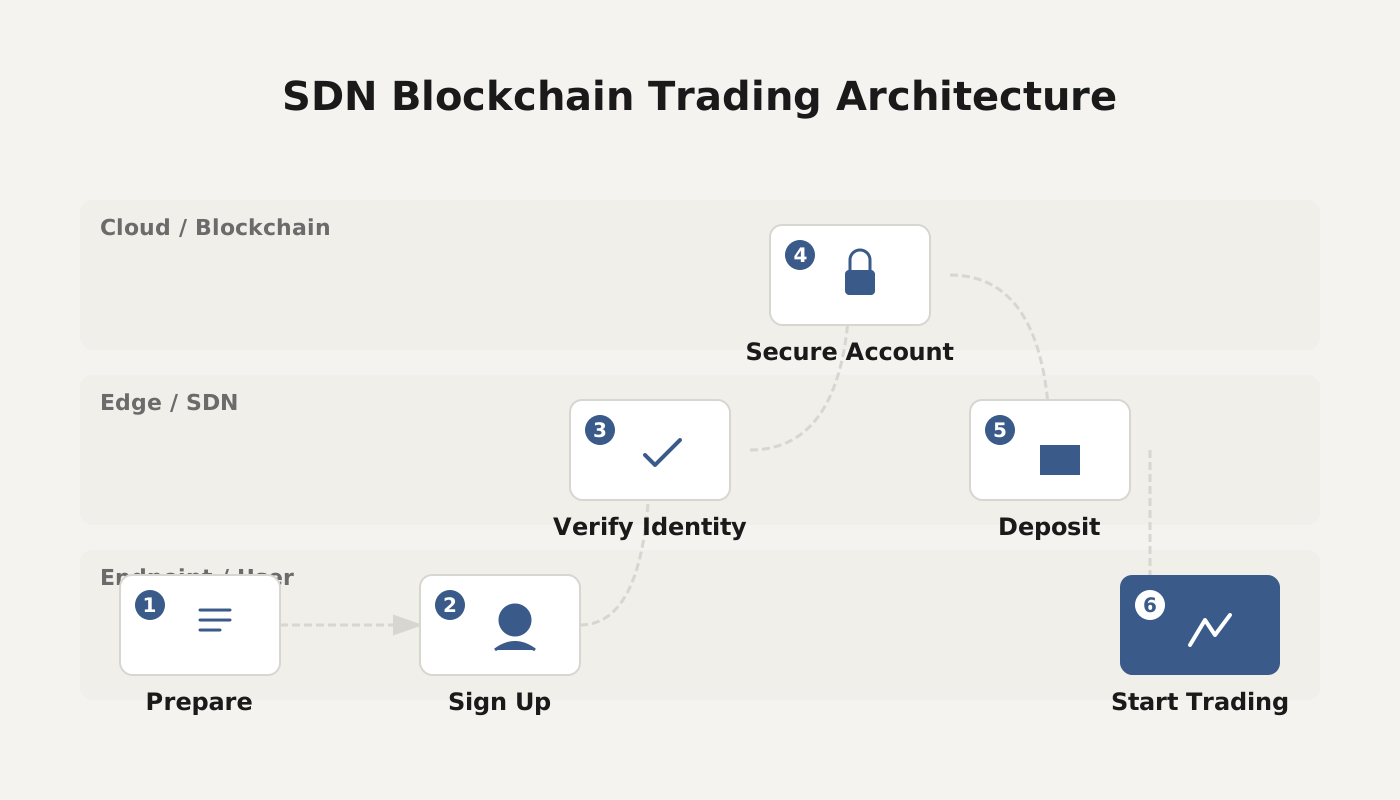
SDN Cloud‑Edge‑Endpoint Three‑Tier Architecture
Cloud: Cloud Management Platform
The cloud management platform provides fundamental capabilities such as account authentication, policy configuration, network forwarding, storage, application services, cloud computing, and cloud‑to‑cloud integration, ensuring a consistent experience for users, hardware providers, and software developers.
Edge: Edge Server
Edge servers act as hubs for data and networking, hosting multiple applications and delivering “one‑stop” data solutions to end users, including NAS‑style storage, intelligent routing, edge computing, and remote collaboration.
Endpoint
Cross‑platform client applications cover smartphones, PCs, Macs and other devices, allowing personal endpoints to conveniently read, share, and manage data.
---
What Is an SDN Network?
An SDN network is a decentralized network system that places Software‑Defined Networking (SDN) at its core and integrates blockchain, cloud computing, and edge computing to cover the “cloud‑edge‑endpoint” continuum. It supplies essential data, network, and compute support for a wide range of scenarios, marking the shift of the Internet from pure data transmission to the free flow of data value.
---
Global‑Scale SDN Technology
Software‑Defined Networking (SDN) introduces technologies such as multi‑code packet encryption, multi‑layered architecture, network slicing, distributed ledger technology (DLT), and next‑hop routing on top of traditional physical networks. This enables rapid creation of secure private virtual networks that operate point‑to‑point, point‑to‑network, and network‑to‑network over the Internet. The technology guarantees high‑speed, reliable, and secure interconnection between people and devices, allowing data to flow accurately and promptly from producers to designated consumers.
---
Enabling High‑Speed Data Flow
Within the high‑speed environment built by SDN, every user is both a data producer and an owner, able to offer services to individuals or organizations that need them. Data consumers obtain the required information through various applications, achieving direct sharing of data among users and enhancing the liquidity of data value.

---
Secure Distributed Edge Storage
Global SDN nodes can share idle storage space with other users, realizing a distributed, edge‑centric, sharded, and secure storage model. Even if a hard drive on a single node fails, the shredded data can be recovered from other nodes in the network, reducing the cost of building centralized cloud infrastructure. Leveraging distributed edge storage, data is encrypted both in transit and at rest, so users do not need to worry about leakage risks on cloud platforms.
---
Open Network Platform
The SDN network supports cross‑regional, cross‑carrier connections between nodes that function similarly to private lines. Users can access resources on any edge server regardless of their location, effectively eliminating the geographic constraints of traditional networking. Applications built on SDN can seamlessly transfer and process data, preventing the formation of information silos.
The above provides a detailed exposition of SDN networks and their technical architecture. For more related content, follow Bitaigen (比特根) for future articles.
Related Reading
- Blockchain DAO Explained: Governance, Tech & Use Cases
- What Is an NFT? Understanding Non‑Fungible Tokens Explained
- ALGO Outlook: Security, Scalability & Decentralization
💡 Register on Binance with referral code B2345 for the maximum trading fee discount. See Binance complete guide.



