
 Bitaigen Research
 DeFi, NFTs, and other mainstream blockchain applications all rely on smart contracts to operate. A smart contract is a piece of code deployed on a blockchain that can automatically execute and settle an agreement when predefined conditions are met, achieving full automation of the protocol without human intervention, while guaranteeing transparency and immutability.
We systematically review the core principles of smart contracts from both technical and application perspectives, explain the mechanisms that enable protocol automation on the blockchain, and objectively assess their advantages and limitations. Read on to quickly grasp their practical value in ecosystems such as DeFi and NFTs.
What Is a Smart Contract?
A smart contract is a computer program recorded on a blockchain in code form that can automatically verify, execute, and settle the terms of an agreement without the need for banks, governments, or other third‑party intermediaries. The concept was first proposed by computer scientist Nick Szabo in 1994, but only entered the public eye after the launch of Ethereum in 2015.
Example: Two friends place a bet on a soccer match. Once the result is confirmed by a trusted data source, the smart contract automatically transfers the prize to the winner, with no manual involvement required.
How Do Smart Contracts Operate?
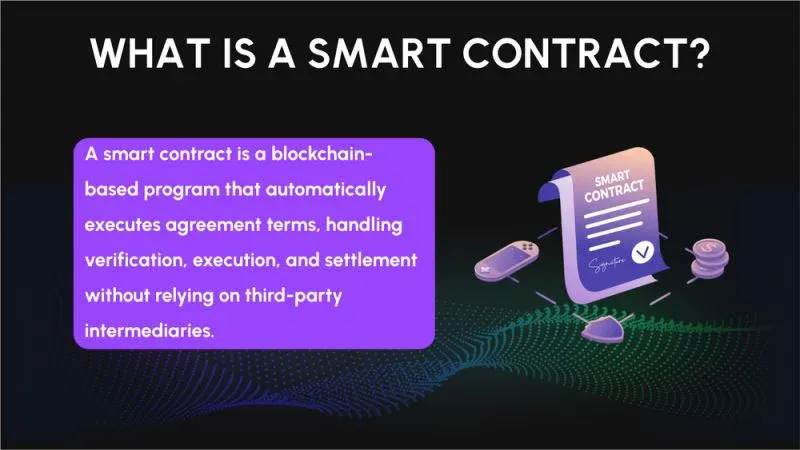
The execution logic of a smart contract is similar to that of a vending machine, following “if … then …” conditional statements.
Step 1: Write the Code
After the parties reach an agreement, developers translate the terms into code using languages such as Solidity (Ethereum), Rust (Solana), Move (Aptos, Sui), etc. For example: “If A sends 1 ETH to B, then B transfers ownership of a digital asset to A.”
Step 2: Deploy to the Blockchain
Once the code is deployed on networks like Ethereum, Solana, or Aptos, it becomes immutable, ensuring that the rules are fixed and tamper‑proof.
Step 3: Automatic Triggering and Settlement
When the predefined conditions (e.g., a deadline or external data supplied by an oracle) are satisfied, the contract automatically activates and executes. The transaction is permanently recorded on the blockchain, guaranteeing transparency and irreversibility.
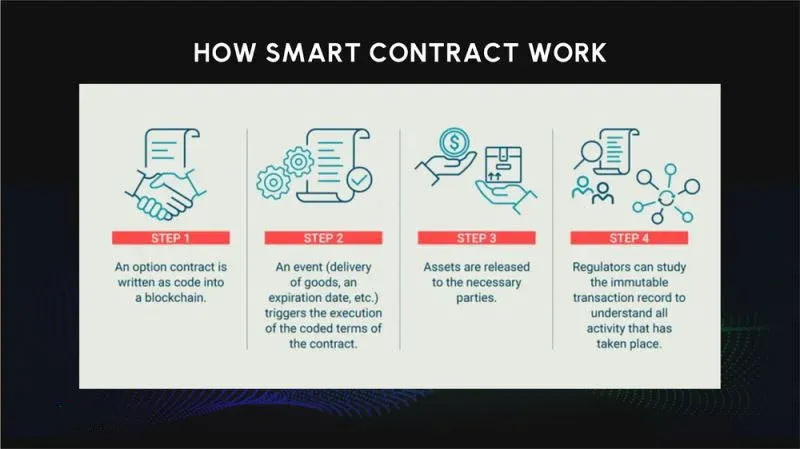
Example: When user A swaps token X for token Y on a decentralized exchange, they send a transaction to a smart contract. The contract checks pricing, fees, liquidity, and other rules; once verified, it instantly completes the swap. Nodes validate the transaction according to the contract logic, rejecting illegal trades, and misbehaving nodes may be penalized.
Key Characteristics of Smart Contracts
- Immutability: The code cannot be edited after deployment, keeping the rules unchanged.
- Transparency: Both the code and transaction records are public, allowing anyone to audit them.
- Self‑Execution: Conditions trigger automatic execution, eliminating the need for manual intervention.
- Decentralization: Thousands of nodes collectively validate, removing single points of failure.
- Trustless: Trust is derived from the publicly verifiable code itself rather than from any intermediary.
Leading Smart‑Contract Platforms
According to CoinGecko and industry research, the current leading platforms include:
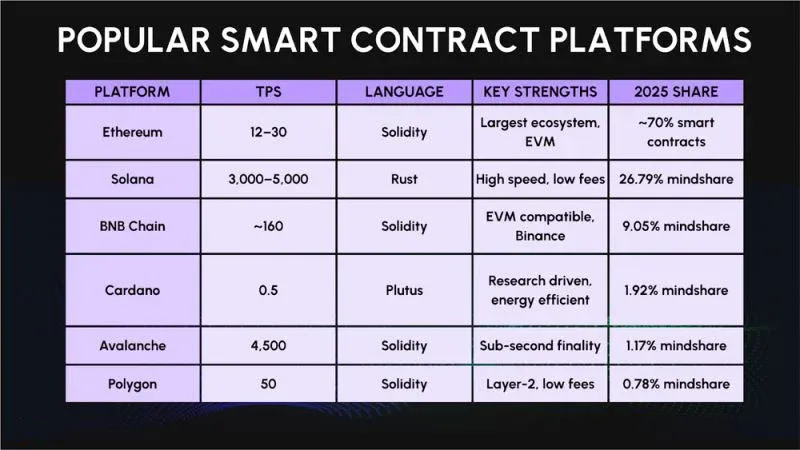
- Ethereum: A mature ecosystem with an active developer community, accounting for roughly 50‑70 % of market share (Precedence Research 2024, AInvest 2025).
- Solana: Known for fast transaction speed and low fees, projected to capture 26.79 % of market share by 2025 (CoinGecko Research, Dec 2025).
- Other rapidly growing platforms include Aptos, Sui, Polygon, and several Layer‑2 solutions.
Real‑World Applications of Smart Contracts
Smart contracts serve as the foundational layer for decentralized innovation across multiple industries, automating agreements and removing intermediaries to enable trustless execution.
1. Decentralized Finance (DeFi)
- Lending: Protocols such as Aave and Compound use contracts to automatically calculate interest rates and liquidate collateral.
- DEXes: Uniswap’s automated market‑making model is fully contract‑based, requiring no order book.
- Yield Farming: Lido leverages contracts to manage staking and liquid‑staking token flows.
Market Data
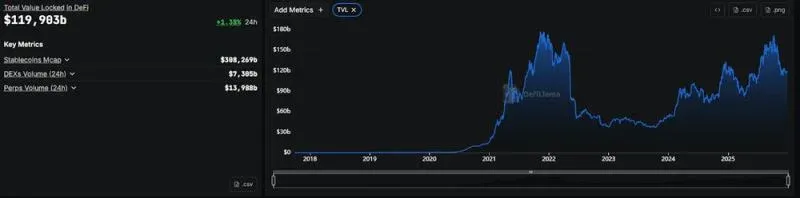
- In November 2021, DeFi total value locked (TVL) reached US$177 billion, a 590‑fold increase from US$300 million at the end of 2018 (DefiLlama).
- By the end of 2024, TVL recovered to US$133 billion, representing a 150 % year‑on‑year growth (Coinspeaker, Dec 2024).
- As of September 2025, TVL approached US$161 billion, nearing the 2021 peak.
2. Real Estate
Traditional property transactions can take 30‑60 days to close. Smart contracts can compress settlement time to minutes and enable tokenization for fractional ownership.
- Instant Settlement: Ownership is transferred immediately once payment is confirmed.
- Tokenization: A single property can be split into thousands of tokens, lowering the entry barrier for investors.
- Fraud Prevention: Immutable blockchain records eliminate title disputes.
Market Size
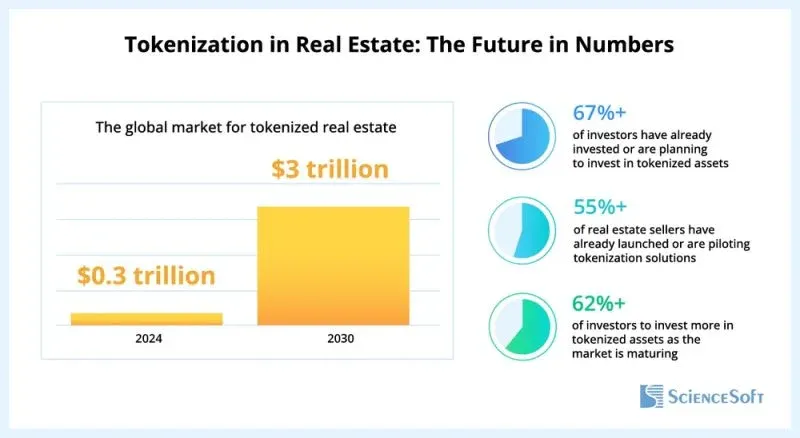
- CMI Research estimates the global tokenized real‑estate market at US$3.5 billion in 2024, projected to reach US$19.4 billion by 2033 (CAGR 21 %).
- Deloitte forecasts that tokenized private‑fund assets could total US$1 trillion by 2035.
- As of June 2024, 12 % of real‑estate firms had already tokenized assets, while 46 % were piloting the technology (Deloitte).
- BCG expects the market to grow from US$120 billion in 2023 to US$3.2 trillion by 2030 (CAGR ≈ 49 %).
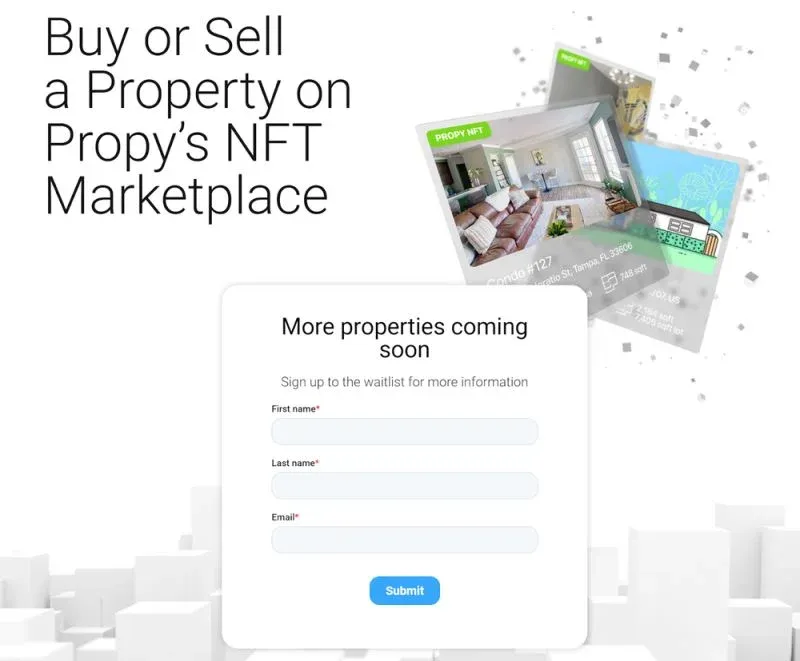
Case Study: Propy executed the first blockchain‑based property sale in California in 2018 and, by 2025, offered on‑chain instant loans in Hawaii, eliminating the traditional 30‑day escrow period.
3. Supply‑Chain Traceability
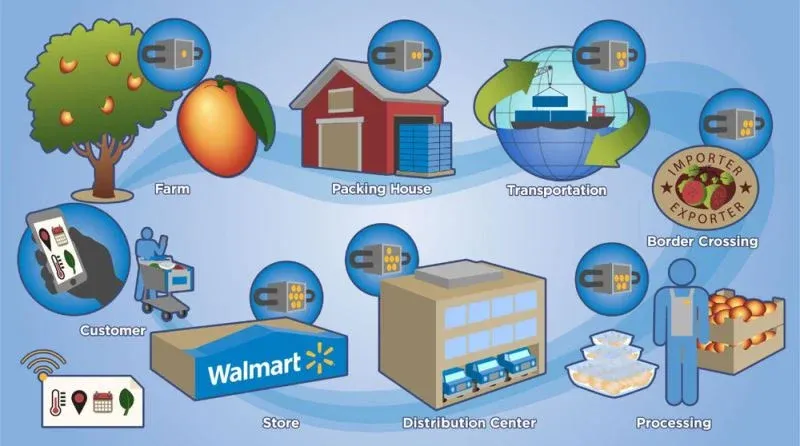
Conventional supply‑chain traceability can take 6 days 18 hours 26 minutes; blockchain‑based smart contracts can reduce the same query to 2.2 seconds (IBM Food Trust).
- Transparent Records: Every step from farm to table is recorded on‑chain.
- Rapid Recalls: Precise batch identification reduces food waste and protects consumers.
Adoption Highlights
- Walmart tracks 25+ product categories across 5+ suppliers using blockchain.
- IBM Food Trust has onboarded 300+ suppliers and buyers, covering millions of food items.
- Major participants include Nestlé, Unilever, Tyson Foods, Carrefour.
- In 2020, Walmart mandated that fresh leafy‑green suppliers use blockchain for provenance.
4. Insurance
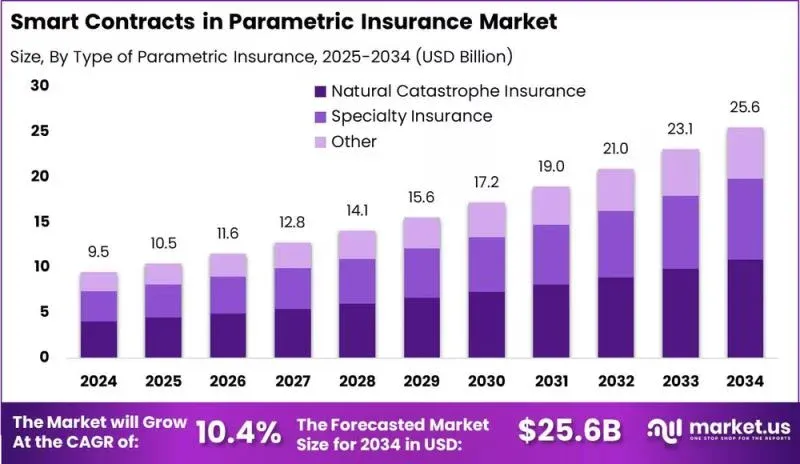
Parametric insurance leverages contracts to automatically pay out when trigger conditions are met, bypassing traditional claims processing.
- The market was valued at US$9.5 billion in 2024 and is projected to reach US$25.6 billion by 2034 (CAGR 10.4 %), with 55.6 % of that volume driven by blockchain contracts.
- Example: Etherisc’s FlightDelay contract automatically credits travelers’ wallets after a flight is delayed by 45 minutes; a partnership with ACRE Africa provides low‑premium crop insurance to 17,000 Kenyan farmers.
5. NFTs and Digital Ownership
Smart contracts underpin NFTs by providing provenance verification, automatic royalties, and programmable functionality.
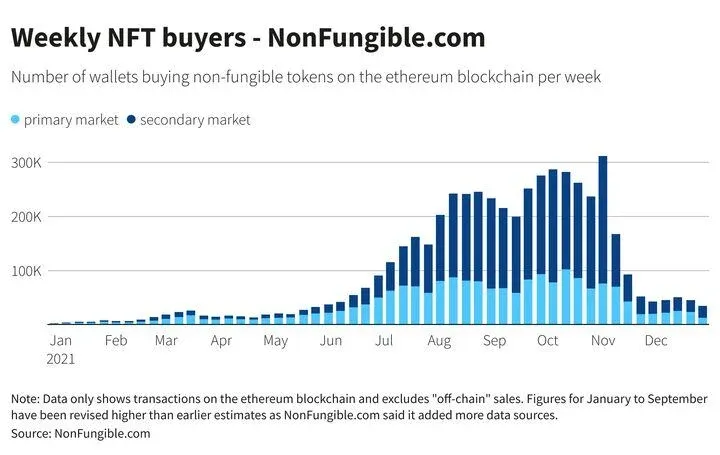
- 2021 NFT sales reached US$24.9 billion, a 262‑fold increase from US$94.9 million in 2020 (DemandSage).
- The number of active wallets rose from 545,000 (2020) to 28.6 million (2021).
- The highest‑price NFT to date is Pak’s “The Merge,” sold for US$91.8 million (Dec 2021).
Key marketplaces: OpenSea, Blur, LooksRare, Foundation, Rarible.
6. DAOs and On‑Chain Governance
Decentralized Autonomous Organizations (DAOs) use smart contracts to implement transparent, programmable governance mechanisms.
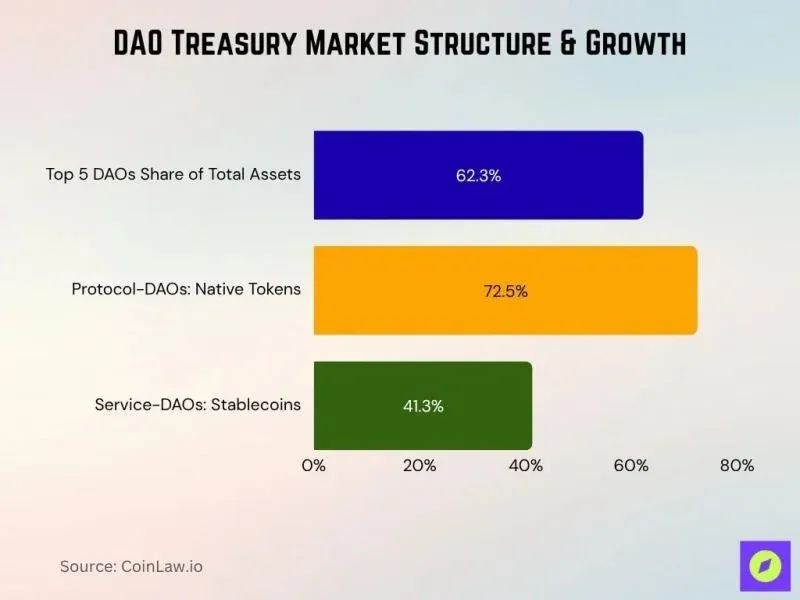
- Global DAO treasury assets are estimated at US$24‑35 billion (DeepDAO, CoinLaw, 2025).
- Uniswap DAO controls a US$5.4 billion treasury, with roughly 356 k token holders and 35.6 k active voters.
- Between 2021 and 2024, the number of DAOs grew at a ≈30 % compound annual rate, resulting in 13,000+ organizations, of which 6,000+ are active.
Contract‑Enabled Governance
- Proposals & Voting: On‑chain voting results are publicly visible.
- Fund Management: Multi‑signature wallets (e.g., Gnosis Safe) require multiple approvals.
- Automatic Execution: Approved proposals trigger on‑chain actions instantly.
Security Challenges
In 2024, the Compound DAO suffered an attack where a malicious actor used a large amount of COMP tokens to force a transfer of US$24 million, underscoring the importance of robust governance safeguards.
7. Enterprise Payments and Stablecoins
Traditional enterprises are embedding smart contracts into payment systems to accelerate settlement and reduce costs.
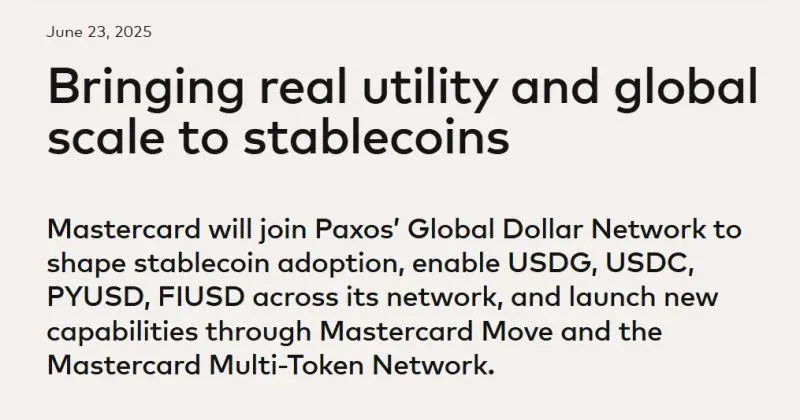
- In April 2025, Mastercard launched an end‑to‑end stablecoin payment solution covering 150 million merchants.
- By June 2025, the network supported multiple stablecoins including USDC, PYUSD, USDG, and FIUSD, offering a programmable payment layer (MTN).
- In November 2025, Mastercard partnered with Thunes to enable near‑real‑time cross‑border payments across 200+ markets and 150+ currencies.
Pros and Cons of Smart Contracts
Advantages
- Automation: Execution occurs automatically when conditions are met, eliminating paperwork and manual review.
- Transparent & Immutable: All actions are recorded on‑chain and can be audited publicly.
- Cost & Time Efficiency: Processing times can be reduced by 50 %, cross‑border payments shortened by 80 %, and real‑estate transaction costs cut by 50 %.
- Globally Accessible: Anyone with an internet connection—from Kenyan farmers to worldwide investors—can participate.
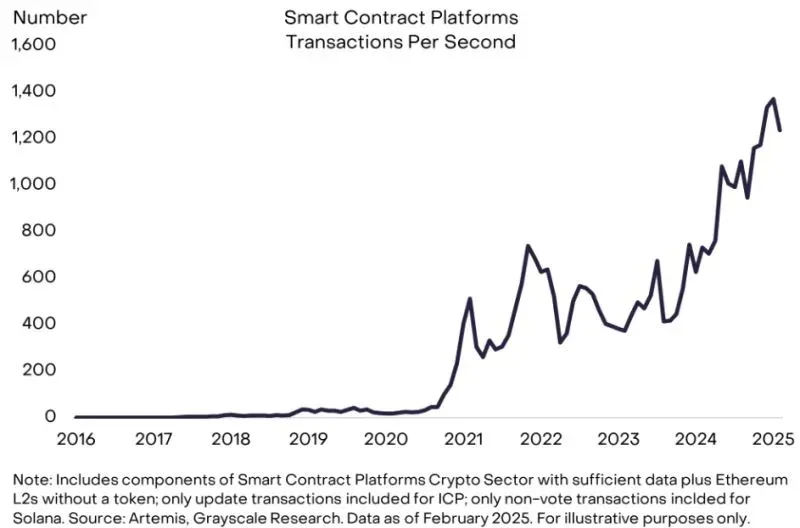
Limitations
Code Vulnerabilities
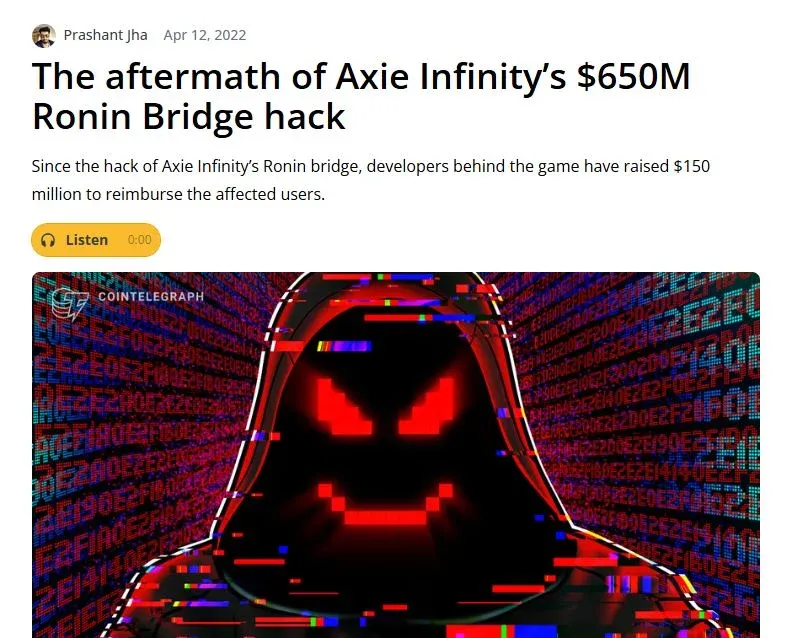
Smart contracts, like any software, may contain bugs, and once deployed they cannot be altered. A notable example is the 2022 Ronin Bridge hack, which resulted in a loss of US$620 million after the attacker exploited whitelist permissions to forge withdrawal proofs.
Lack of Flexibility
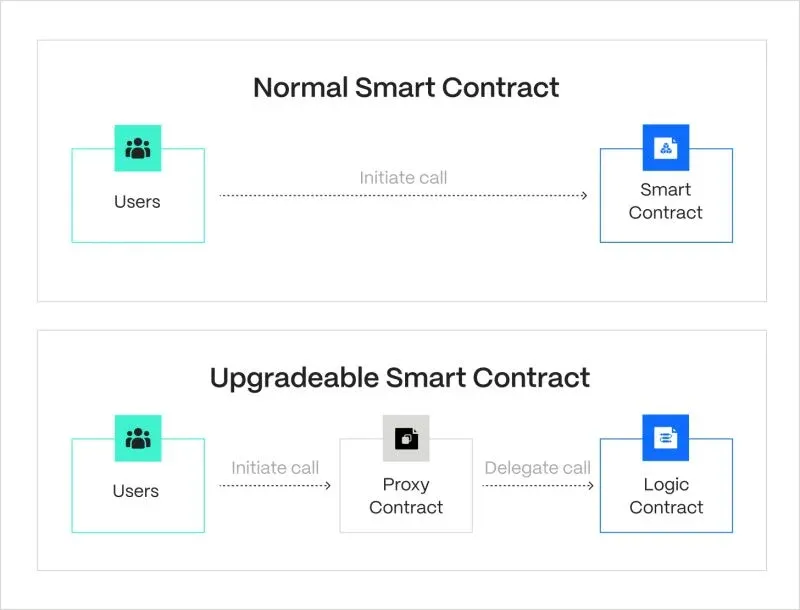
- Unfixable Bugs: Remediation requires deploying a new contract and migrating users.
- Regulatory Changes: Contracts cannot automatically adapt to new tax laws, KYC/AML requirements, or other regulatory updates.
- Renegotiating Commercial Terms: Adjustments often necessitate redeployment or the use of proxy patterns, which re‑introduces a degree of trust risk.
Oracle Dependence
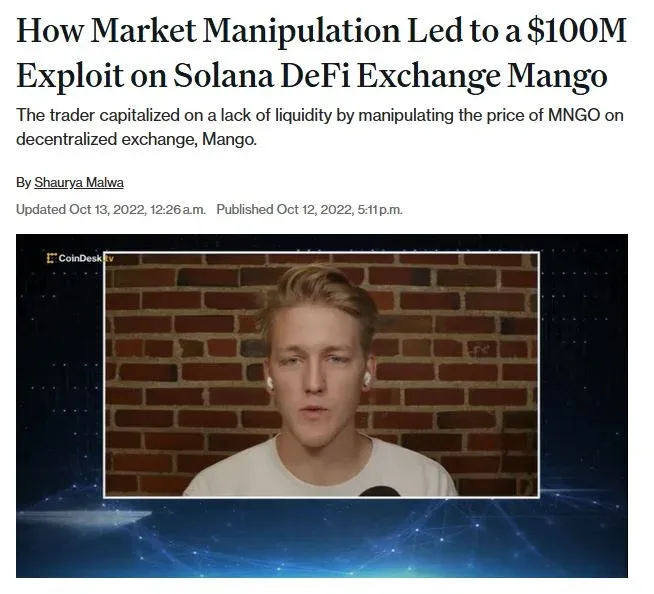
Smart contracts cannot directly access off‑chain data; they must rely on oracles. If an oracle provides erroneous or manipulated data, the contract will act on that misinformation. In 2022, Mango Markets suffered a US$117 million loss due to oracle price manipulation.
Conclusion
Smart contracts transform traditional agreements into automated, trustworthy, and efficient digital systems. While challenges remain—particularly around security, flexibility, and oracle reliability—the rapid iteration of technology and maturation of ecosystems continue to drive decentralized transformation across many sectors.
Frequently Asked Questions
Q1. Do smart contracts have legal force?
A smart contract is a technical tool; its legal enforceability depends on the jurisdiction’s legal framework, digital signature regulations, and whether it is linked to off‑chain legal documents.
Q2. Can smart contracts be hacked?
The underlying blockchain is resistant to tampering, but vulnerabilities in contract code, logical flaws, or poor governance can still be exploited. Risks stem mainly from programming and governance layers.
Q3. How long does it take to write a smart contract?
Development time varies with complexity: simple contracts may take a few hours to a few days, while financial or enterprise‑grade contracts often require weeks of development, testing, and formal
Related Reading
- USDC Stablecoin Guide: Origin, Tech, Compliance & Use Cases
- USDC兑换人民币全攻略:火币、币安等平台操作步骤与注意要点
- Understanding TVL: What Total Value Locked Means in Crypto
💡 Register on Binance with referral code B2345 for the maximum trading fee discount. See Binance complete guide.



