
 Bitaigen Research
 In practice, many users notice that withdrawing USDT via the TRC20 network incurs virtually no fee, and some platforms even waive the charge entirely. So, what exactly does “TRC20” refer to? How does it differ from ERC20, Omni, and other protocols? Below we compare the three from the perspectives of transaction speed, cost, and security, and answer common questions one by one to help you better understand how TRC20‑USDT works.
We systematically analyze TRC20 and ERC20 performance in USDT withdrawals across three dimensions—transaction cost, confirmation time, and security—so you can quickly decide when to use the low‑fee, high‑speed Tron network or when to stick with Ethereum. The full article offers an in‑depth side‑by‑side comparison and is worth a careful read.
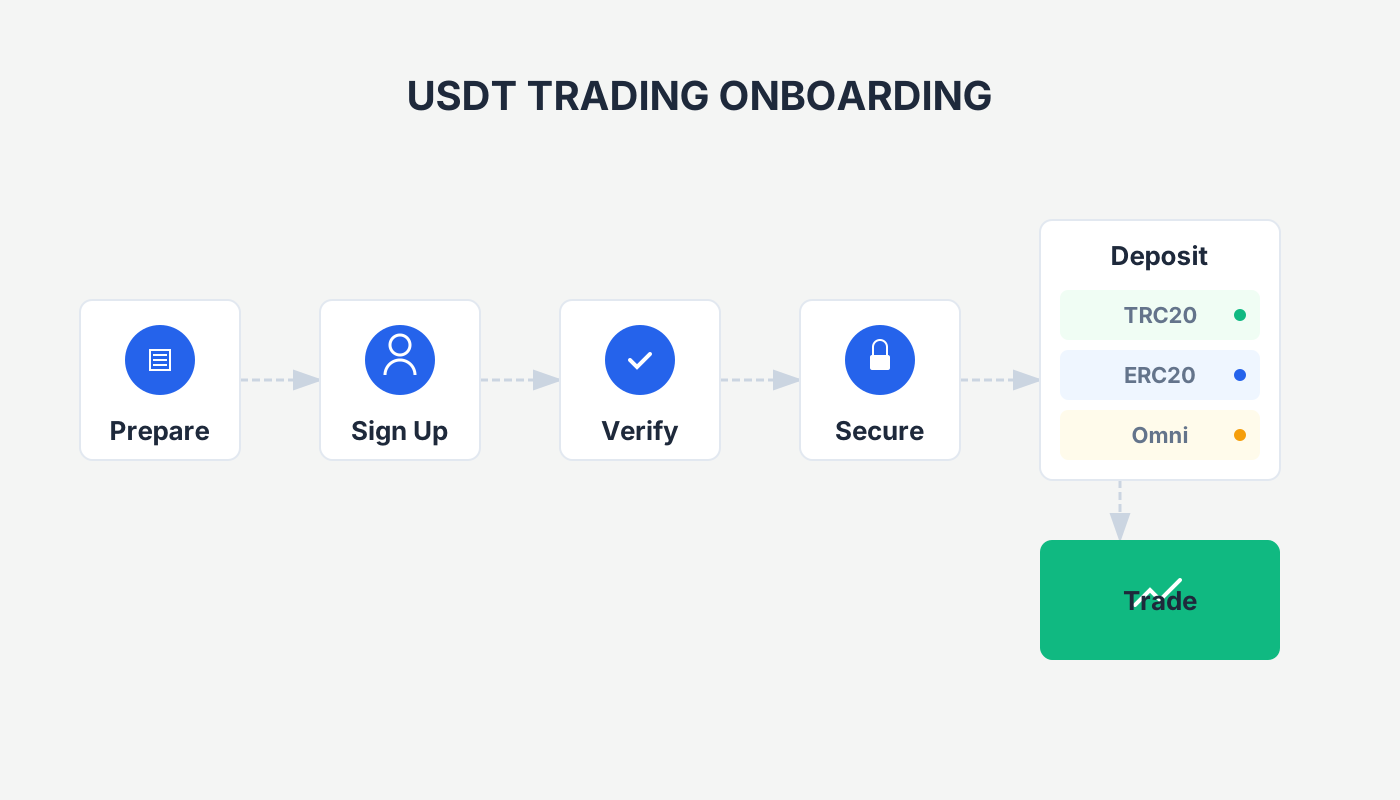
Comparison of Transaction Timeliness, Fees, and Security for TRC20, ERC20, and Omni
Basic Characteristics
| Protocol | Underlying Chain | USDT Address Prefix | Issuer |
|---|---|---|---|
| TRC20‑USDT | Tron (TRON) chain | Starts with **T** | Tether |
| ERC20‑USDT | Ethereum chain | Starts with **0x** | Tether |
| Omni‑USDT | Bitcoin chain (Omni layer) | Starts with **1 / 3** | Tether |
Performance Comparison
- Transaction speed: TRC20 > ERC20 > Omni
- TRC20 confirmations typically occur within 1 minute, often in just a few seconds.
- Fees: TRC20 < ERC20 < Omni
- In most cases, the withdrawal fee for TRC20 is waived or a nominal charge of about $1 is applied.
- Security level: Omni > ERC20 > TRC20
- Because they rely on different base blockchains, Omni benefits from Bitcoin’s strongest security guarantees, ERC20 is next, and TRC20 is comparatively lower.
A more detailed breakdown of these three versions will be published later in a dedicated article titled “In‑Depth Comparison of the Three USDT Implementations”.
What Is TRC20?
Initially I mistakenly thought TRC20 was merely a cross‑chain remittance method. In fact, it is a technical standard for issuing tokens on the Tron blockchain. Any developer who follows the specification can create their own token on the Tron network.
Tether uses the TRC20 standard to mint TRC20‑USDT on Tron, which is the version most commonly seen on exchanges and wallets labeled “TRC20‑USDT”. Therefore, TRC20 refers to a token‑issuance protocol, while TRC20‑USDT is the specific USDT implementation built on that protocol.
Frequently Asked Questions
Q1: Why do I see three options—TRC20, ERC20, and Omni—when withdrawing or depositing USDT?
Tether has issued USDT on three distinct blockchains:
- Tron (TRC20 protocol) → TRC20‑USDT
- Ethereum (ERC20 protocol) → ERC20‑USDT
- Bitcoin network (Omni protocol) → Omni‑USDT
Users can choose the chain that best matches their needs for speed, cost, and security. The differences among the three chains are summarized above.
Q2: Why don’t I need to specify a chain when buying USDT on a centralized exchange, but I must choose one when withdrawing or depositing?
Centralized exchanges keep an internal ledger that records balances off‑chain. When you purchase USDT, the asset remains within the exchange’s internal system, so no blockchain is involved and no chain selection is required.
However, once you move the asset to an external wallet or another platform, the transaction must be broadcast on a real blockchain. At that point you must specify whether the transfer uses TRC20, ERC20, or Omni; otherwise the funds may be sent to an incompatible address, potentially resulting in loss. Recovery, if possible, often incurs additional costs and is not guaranteed.
Tip: Before initiating a withdrawal or deposit, verify that the receiving wallet or platform supports the same protocol; otherwise your funds could become locked.
Summary
- TRC20 is the token‑issuance standard on the Tron chain, and TRC20‑USDT is the USDT token built under that standard.
- Compared with ERC20 and Omni, TRC20 offers clear advantages in speed and cost, but its security is slightly lower than the other two.
- Internal transfers within a centralized exchange do not involve a blockchain, so no chain selection is needed; however, withdrawals or deposits must explicitly state the protocol to avoid asset loss.
With this overview, you should now have a more comprehensive understanding of the concept, benefits, and practical considerations of TRC20‑USDT. We wish you smoother experiences when handling digital assets.
Related Reading
- TRC20 vs ERC20: Comparing TRON and Ethereum Token Standards
- TRC20 vs ERC20 USDT Transfer: Fees, Speed & Congestion
- USDT on Tron vs Ethereum: ERC‑20 vs TRC‑20 Fee Comparison
💡 Register on Binance with referral code B2345 for the maximum trading fee discount. See Binance complete guide.



