
 Bitaigen Research
 As we have seen with Bitcoin, improving the scalability of first‑layer networks is extremely challenging.
To address this issue, developers have built second‑layer protocols on top of first‑layer networks to provide security and consensus. Bitcoin’s Lightning Network is a classic example of a second‑layer protocol.
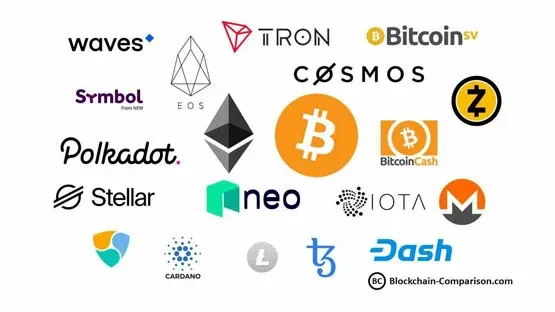
In this article we systematically review the most closely watched Layer 1 projects on the market today, dissecting their technical roadmaps, consensus mechanisms, and ecosystem layouts, and comparing their strengths and challenges. With a clear structure, readers can quickly build a complete mental framework; subsequent sections will further explore the integration and development trends of second‑layer solutions, making it well worth a thorough read.
Which coins are Layer 1?
- ETH
Ethereum is an open‑source public blockchain platform that supports smart contracts. Its native token, Ether (also called “ETH”), provides the execution environment for the Ethereum Virtual Machine (EVM), enabling peer‑to‑peer contract processing.
Binance’s token BNB is a digital asset originally issued on Ethereum’s decentralized blockchain. The total supply is fixed at 200 million tokens, and the platform burns BNB each quarter based on trading volume. Burn records are published immediately, and users can verify them via a blockchain explorer to ensure transparency.
- SOL
Solana was founded at the end of 2017 by engineers formerly at Qualcomm, Intel, and Dropbox. It uses a single‑chain Delegated Proof‑of‑Stake (DPoS) mechanism and aims to achieve high scalability without sacrificing decentralization or security. Its core scaling solution is “Proof of History” (PoH), which solves the lack of a unified, trustworthy time source in distributed networks by employing a distributed clock.
ADA is the native token of the Cardano protocol and can be used to send and receive digital assets. Cardano is more than a cryptocurrency; it is a technology platform capable of running financial applications used worldwide by individuals, organizations, and governments. The platform adopts a layered architecture that enhances flexibility and maintainability, and upgrades are performed via soft forks.
The Polkadot community voted to approve a 100‑fold split of DOT, which has now been completed. Polkadot’s goal is to build a fully decentralized internet that gives users complete control over their identity and data, preventing any centralized entity from intervening.
- LUNA
Terra is an algorithmic stable‑coin platform that uses a Proof‑of‑Stake (PoS) consensus built on Tendermint. LUNA is Terra’s platform token, responsible for issuing stablecoins (Terra SDRs), maintaining price stability, and governing the network. Users can exchange LUNA for Terra SDRs and vice versa.
Avalanche (AVAX), formerly known as Ava/AVA, is an open‑source platform designed to support highly decentralized applications, new financial primitives, and interoperable blockchains. Its breakthrough consensus protocol can finalize transactions within a second, is compatible with the full suite of Ethereum development tools, and makes it feasible to run millions of full nodes.
- ALGO
Algorand was developed under the leadership of MIT professor Silvio Micali, a recipient of both the Gödel Prize and the Turing Award. The project raised USD 4 million in its seed round, with investors that include prominent venture‑capital firms Pillar and Union Square Ventures.
- TRX
Tron (TRX) strives to decentralize the internet by building the underlying infrastructure for a decentralized web. The Tron protocol is one of the world’s largest blockchain‑based decentralized application operating systems, offering high throughput, high scalability, and high reliability for on‑chain DApps.
Scalability is one of the key factors hindering worldwide crypto adoption. As demand for cryptocurrencies grows, the pressure to scale blockchain protocols intensifies.
Because both first‑layer and second‑layer solutions have limitations, future approaches may involve building protocols that simultaneously satisfy security, decentralization, and scalability—the so‑called “blockchain trilemma.”
Two concise strategies address the bottleneck: either alleviate the scaling problem directly, or seek viable alternative solutions. Layer 1 projects aim to become the category‑defining crypto initiatives, i.e., engineering organizations that directly contribute to open‑source protocol development.
💡 Register on Binance with referral code B2345 for the maximum trading fee discount. See Binance complete guide.



