
 Bitaigen Research
In this article we systematically outline BDAG’s development trajectory over the coming years, focusing on how network adoption, dApp activity, liquidity, and token distribution may influence its price. We combine industry trends with multiple scenario analyses to help readers comprehensively assess the project’s growth potential.
Key Takeaways
Direct answer: BDAG could experience an upward trajectory between 2026 and 2030, but its price is influenced by a combination of network adoption rate, decentralized‑application (dApp) activity, liquidity, and token distribution. No specific price level can be guaranteed.
- In an optimistic scenario, based on adoption, smart‑contract activity, and ecosystem expansion, BDAG could reach $0.30 by 2030.
- Network adoption, dApp deployments, developer activity, exchange liquidity, pre‑sale distribution, and partnerships are the primary drivers of BDAG’s price.
- Although BDAG’s fundamentals are strong, early‑stage Layer‑1 networks are highly volatile; price swings after listing are inevitable, and long‑term returns will depend on sustained market acceptance and network usage.
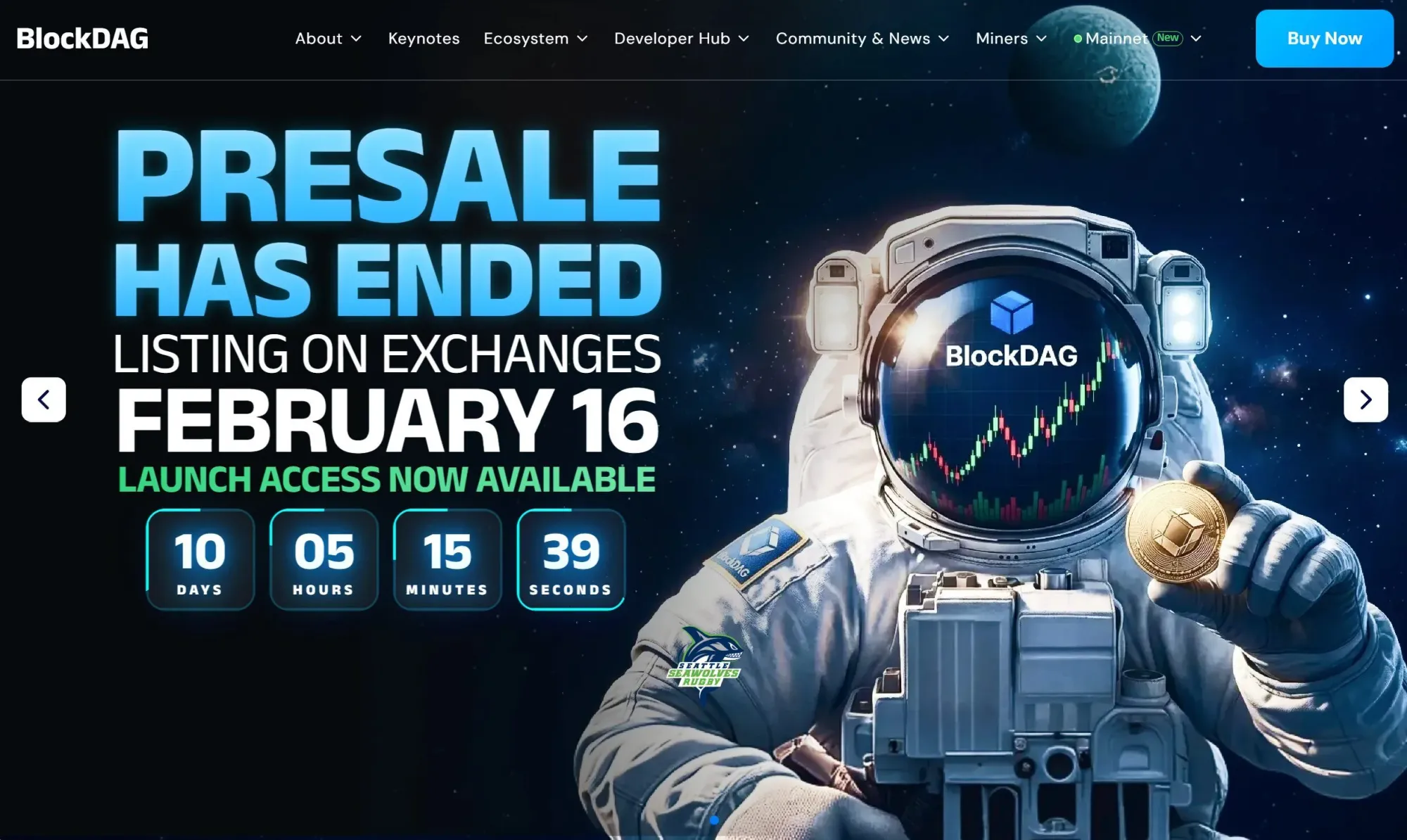
BlockDAG (BDAG) raised more than $452 million in its recently concluded pre‑sale and is slated to list on exchanges on February 16 2026. The amount raised exceeds that of any single token pre‑sale to date, drawing intense interest from traders and early investors.
As attention on BlockDAG continues to rise, investors can easily be blinded by hype and enter the market blindly. This article systematically examines the key factors affecting BlockDAG’s price, provides both technical and fundamental perspectives, and forecasts its price path from 2026‑2030, helping readers form a more rational judgment.
Overview of BlockDAG (BDAG)
BlockDAG is a Layer‑1 blockchain built on a Directed Acyclic Graph (DAG) architecture rather than a traditional linear chain. Unlike conventional block‑by‑block production, the network can process multiple blocks in parallel, eliminating orphan blocks and markedly improving overall efficiency.
- Throughput: Under optimal conditions, the protocol targets a throughput of 100+ blocks per second.
- Hybrid model: The network simultaneously supports the UTXO (Unspent Transaction Output) model for fast lightweight payments and EVM (Ethereum Virtual Machine)‑compatible smart contracts, catering to decentralized‑application needs.
BDAG is the native utility token of the network, used for transaction fees, miner rewards, and ecosystem governance. As with most early Layer‑1 tokens, BDAG’s value hinges on mainnet stability, developer participation, and the real‑world scale of on‑chain activity.
For investors, BlockDAG is a high‑risk, high‑reward proposition. Its theoretical outlook is bright, but future price performance ultimately depends on whether the project can move beyond early hype, deliver a fully functional and competitive blockchain, and stand out amid a crowded field of Layer‑1 contenders.
BlockDAG Price History and Performance
BlockDAG (BDAG) completed its pre‑sale recently, raising over $450 million. The token is scheduled for exchange debut in February, and current public liquidity is limited; price data from various crypto portfolio trackers are inconsistent.
- Pre‑launch trading activity: The early stage exhibited low‑liquidity characteristics, including sharp short‑term swings and a thin order book. Price movements were driven more by market sentiment than fundamentals.
- Key inflection points: Price discovery is expected to occur when the mainnet goes live, major exchanges list the token, and sustained network usage materialises. These events will shape the long‑term trajectory for 2026 and beyond.
- Historical limitations: BlockDAG has not yet completed a full market cycle, so historical price data are scarce. Existing valuations are largely based on forward‑looking expectations of mainnet operation, throughput performance, and ecosystem growth rather than verified demand.
Early‑stage tokens often experience pronounced volatility before settling into a structural range. BlockDAG can be compared with low‑liquidity tokens in previous market cycles, referencing existing price‑prediction reports such as meme‑token volatility analyses within the Solana ecosystem.
Current BDAG Market
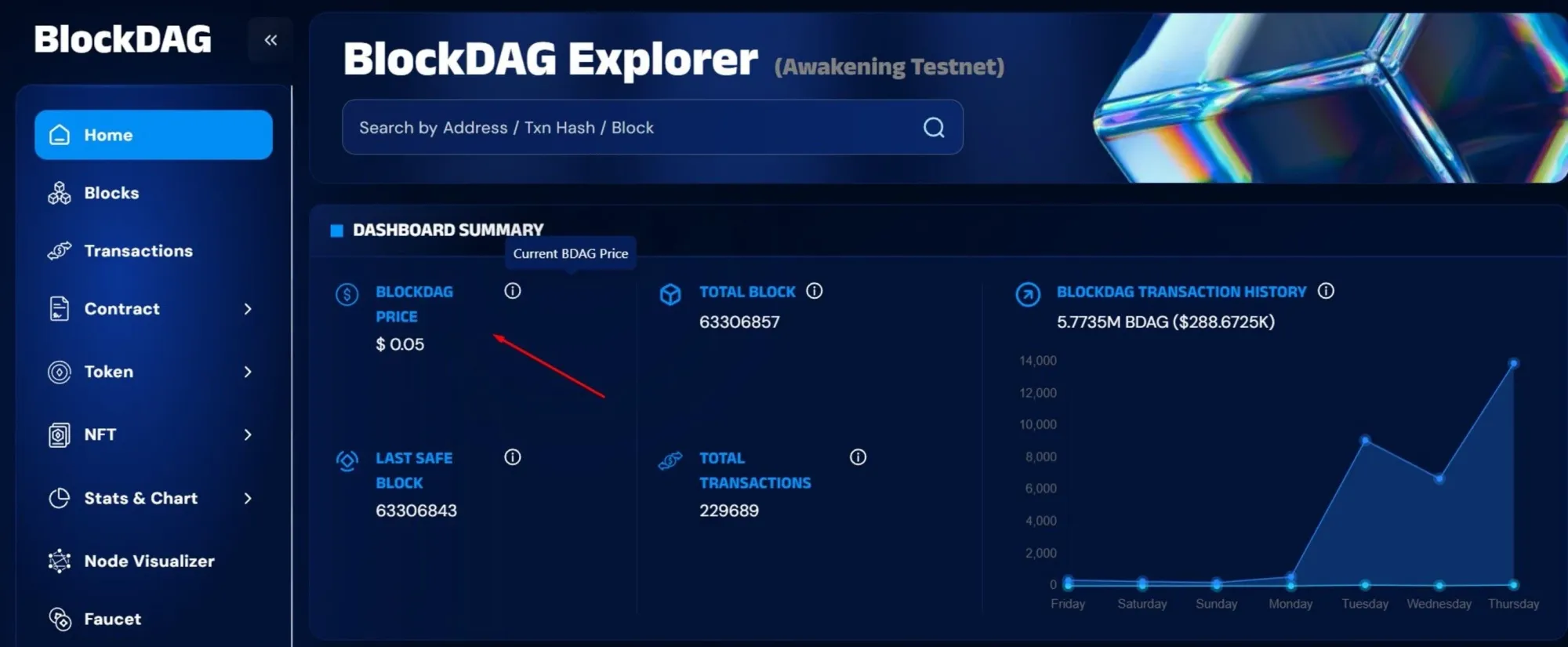
- Current price: Approximately $0.05‑$0.06, reflecting its status as an early‑stage Layer‑1 still in the pre‑adoption phase.
- Estimated market cap: Roughly $120‑$180 million (based on the current circulating supply).
- Circulating supply: 50 billion BDAG.
- Maximum supply: 150 billion BDAG.
- Market structure: Liquidity ranges from low to moderate, with high volatility—a typical profile for nascent Layer‑1 tokens.
Until broader exchange listings, mainnet performance data, and continuous on‑chain usage emerge, the token’s price is likely to remain range‑bound and highly sensitive to the overall crypto market environment.
How NFTPlazas Experts Forecast BlockDAG’s Price
Our BDAG outlook emphasizes the market’s reaction as the token transitions from pre‑sale to public trading, rather than relying solely on historical chart patterns.
- Post‑listing market dynamics: Track the official listing price, exchange liquidity, order‑book depth, and the selling pressure from pre‑sale holders to gauge the speed of price formation.
- Adoption signals: Network performance, developer activity, and actual transaction usage determine whether demand is sustainable or merely speculative.
- Structural analysis: Examine volume trends, support/resistance zones, volatility shifts, and relative performance against Bitcoin and high‑beta altcoins.
- Supply dynamics: Tokenomics (circulating supply, unlocking schedule, inflation rate) are core drivers for early‑stage assets. See our “What Is Tokenomics?” guide for detailed coverage.
Please note that all forecasts are for reference only and do not constitute any guarantee.
BDAG Technical Analysis
BDAG will commence trading on February 16 2026. Early technical patterns will be heavily influenced by post‑listing liquidity and market sentiment, with expectations of sharp volatility.
Key Price Levels
| Range Type | Price Range (USD) |
|---|---|
| Trading range (post‑listing speculation) | 0.05 – 0.08 |
| Critical pivot | 0.055 (holds support) |
| Immediate resistance | 0.07 – 0.08 (requires volume confirmation) |
Support Levels
| Level | Price (USD) |
|---|---|
| S1 | 0.05 |
| S2 | 0.045 |
| S3 | 0.040 |
| S4 | 0.035 |
| S5 | 0.030 |
Resistance Levels
| Level | Price (USD) |
|---|---|
| R1 | 0.060 |
| R2 | 0.065 |
| R3 | 0.070 |
| R4 | 0.075 |
| R5 | 0.080 |
Note: The above zones are speculative post‑listing ranges; actual price action will depend on early holder adjustments and market interest.
BDAG 2026‑2028 Monthly Price Forecast (Range)
| Year/Month | Low | Avg | High |
|---|---|---|---|
| 2026‑02 | 0.05 | 0.06 | 0.07 |
| 2026‑03 | 0.055 | 0.065 | 0.075 |
| 2026‑04 | 0.058 | 0.07 | 0.08 |
| 2026‑05 | 0.06 | 0.072 | 0.082 |
| 2026‑06 | 0.062 | 0.075 | 0.085 |
| 2026‑07 | 0.065 | 0.078 | 0.09 |
| 2026‑08 | 0.067 | 0.08 | 0.092 |
| 2026‑09 | 0.07 | 0.082 | 0.095 |
| 2026‑10 | 0.072 | 0.085 | 0.097 |
| 2026‑11 | 0.075 | 0.087 | 0.10 |
| 2026‑12 | 0.078 | 0.09 | 0.12 |
| 2027‑01 | 0.085 | 0.095 | 0.105 |
| 2027‑02 | 0.088 | 0.098 | 0.11 |
| … | … | … | … |
| 2028‑12 | 0.152 | 0.162 | 0.175 |
The figures above assume current liquidity conditions; real‑world market movements may deviate.
Long‑Term Outlook: 2026‑2030 Annual Price Ranges
| Year | Forecast Price (USD) |
|---|---|
| 2026 | 0.07 |
| 2027 | 0.12 |
| 2028 | 0.16 |
| 2029 | 0.22 |
| 2030 | 0.30 |
Key Factors Influencing BlockDAG’s Price
1. Smart‑Contract and dApp Adoption
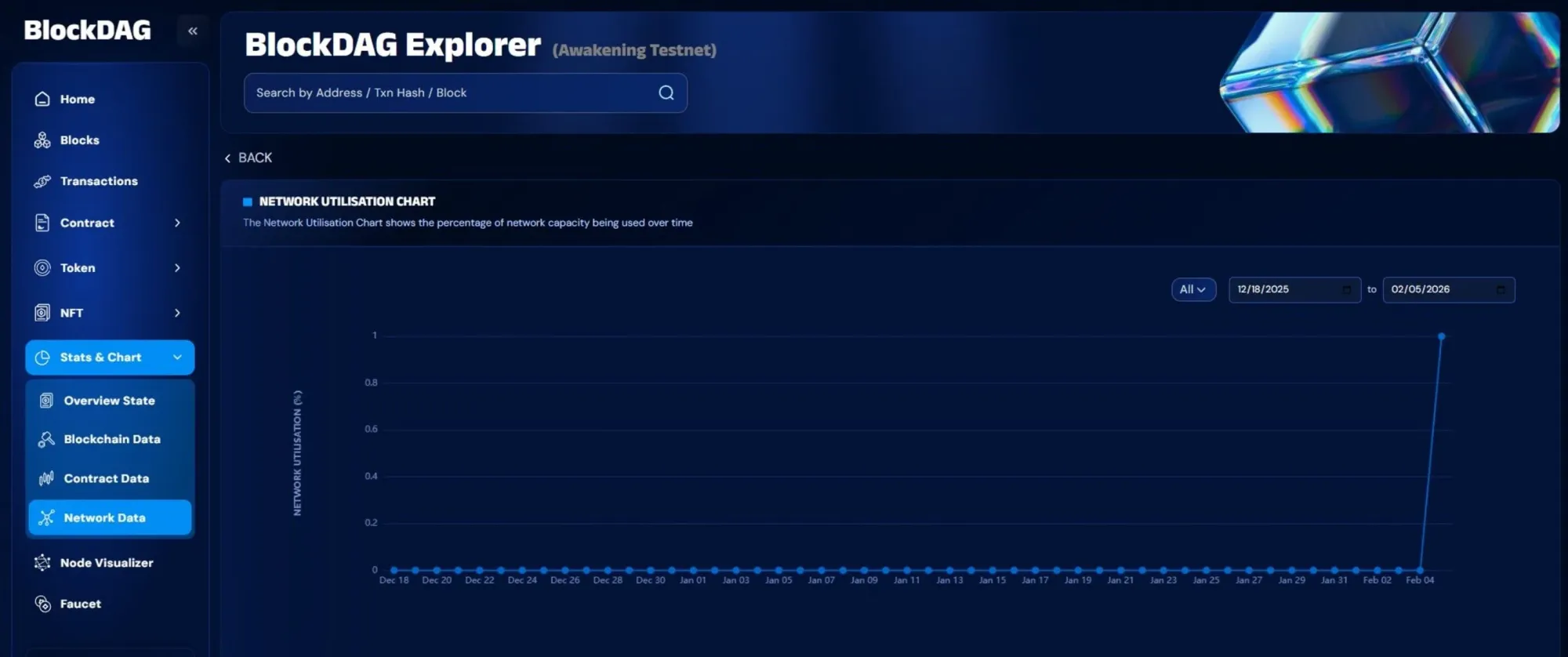
BDAG supports EVM‑compatible smart contracts, allowing developers to deploy DeFi, NFT, and payment solutions. The greater the number of dApps running on the network, the higher the transaction demand, creating network effects that can boost token demand and potentially lift the price.
2. Successful Exchange Listings
The first‑round exchange debut on February 16 2026 will be a major price catalyst. Post‑listing liquidity, order‑book depth, and the activity of pre‑sale holders will shape the initial market price. A smooth listing with solid trading volume could lay a foundation for subsequent growth.
3. Real‑World Usage Metrics
Metrics such as daily active addresses, on‑chain transaction count, and total transaction volume provide a direct view of network health. Consistent growth in these indicators typically signals broader use‑case adoption, which may translate into upward price pressure.
4. Pre‑sale and Token Distribution
The pre‑sale raised $452 million, making token allocation a critical driver of early price dynamics. Unlock schedules, sell‑offs, or holding patterns will directly affect short‑term support and resistance zones. For example, a large‑scale sell‑off could temporarily depress the price even if fundamentals remain strong.
Conclusion
BlockDAG (BDAG) is slated to list on February 16 2026, entering a pivotal market‑validation phase where early trading volatility is expected to be pronounced. Its long‑term value will depend on genuine network adoption, smart‑contract utilization, and the stability of its parallel‑block architecture—not on short‑term hype or social‑media sentiment.
The successful $452 million pre‑sale demonstrates strong investor confidence, yet token unlocks and post‑listing liquidity may still induce temporary price swings. Traders should closely monitor network performance, developer activity, and on‑chain transaction growth in the coming months.
Tax note: Cryptocurrency gains may be taxable in your jurisdiction. Consult a tax professional to understand your obligations.
Frequently Asked Questions
Is BDAG a good long‑term investment?
If the BDAG network fulfills its technical promises, gains real user adoption, and builds an active ecosystem, it could have long‑term potential. Its hybrid UTXO‑EVM design and high throughput are attractive, but success hinges on user activity, developer engagement, and ecosystem development rather than pure speculation. As with all early Layer‑1 tokens, the risk profile is high and it is suitable only for investors who can tolerate significant volatility.
Can BDAG reach $5 per token?
A $5 price would imply a market cap far beyond the current scale, requiring massive trading volume, widespread dApp usage, and deep market recognition. Given the token’s enormous supply and early‑stage characteristics, reaching $5 by 2030 appears overly optimistic.
What is the expected value of BDAG in 2030?
Assuming moderate‑to‑optimistic adoption, liquidity growth, and network usage, a neutral‑to‑bullish market sentiment could place the 2030 price in the $0.20‑$0.30 range. A bear market could push it below this band, while an exceptionally strong ecosystem might push it slightly above the upper bound.
How accurate are BlockDAG price forecasts?
The forecasts are derived from reasonable estimations of fundamentals, market trends, supply dynamics, and volatility. They are intended for planning and risk‑management purposes only. Always conduct your own research and consider your risk tolerance before making any investment decisions.
---
For further analysis of BlockDAG (BDAG) price forecasts 2026‑2030: Will BDAG rise?, you may explore prior Bitaigen (BitRoot) articles or continue browsing the related links below. Thank you for your continued interest and support!
💡 Register on Binance with referral code B2345 for the maximum trading fee discount. See Binance complete guide.



