
 Bitaigen Research
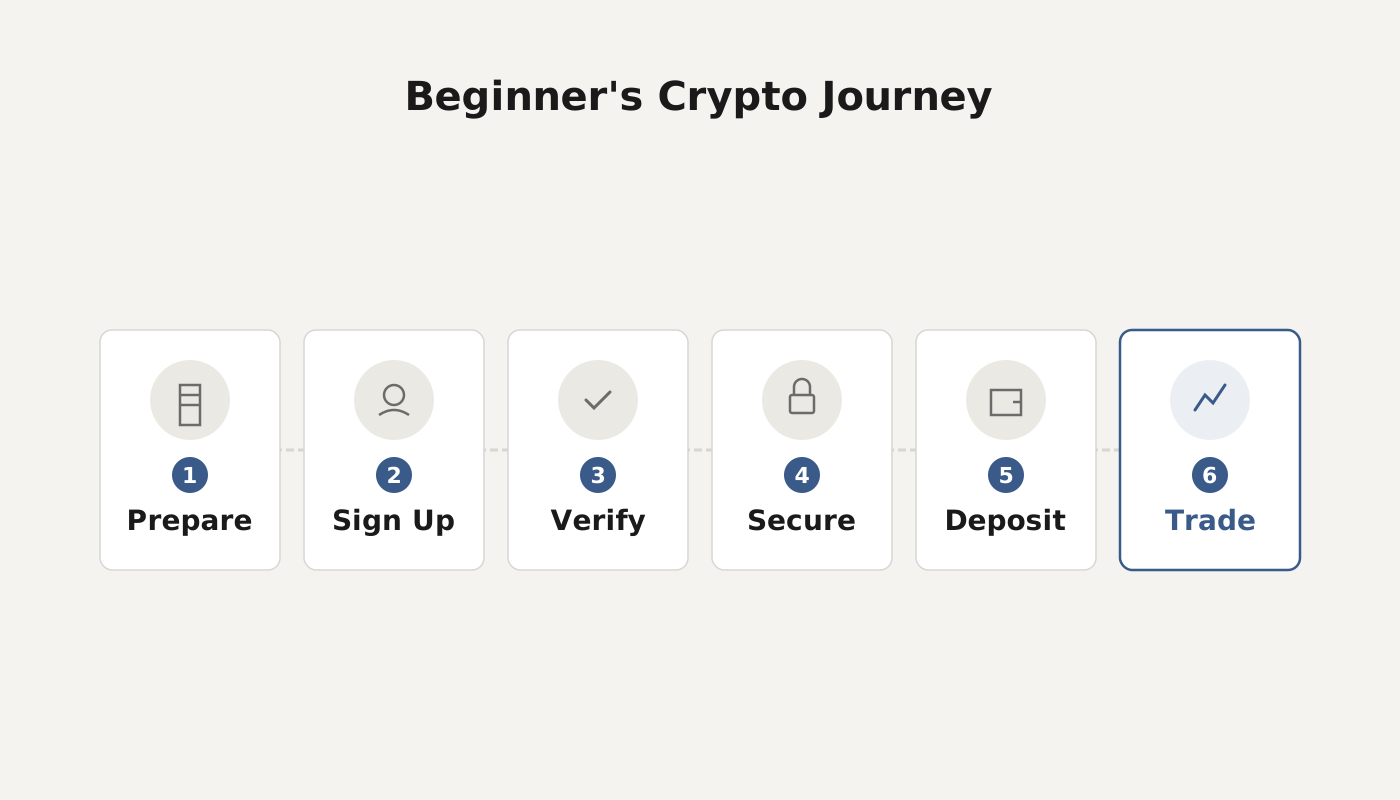
 We have organized a complete step‑by‑step guide for newcomers to the crypto space, covering wallet selection, exchange account creation, and the first purchase. In addition, we analyze the policy and sentiment factors that drive Bitcoin’s price, helping you understand the risks while quickly mastering the basics. Subsequent sections will provide practical tips and security recommendations, so the article is worth reading in full.
How Does a Complete Beginner Start Trading Crypto? Step‑by‑Step Tutorial for Newbies
A complete beginner should first set up an electronic wallet, choose a reputable exchange and open an account, complete identity verification, purchase a small amount of Bitcoin, store it safely, and regularly follow market news and risk alerts.
1. Assess the Outlook and Gather Information
- The price of Bitcoin is influenced by both regulatory policies and market sentiment. Two Hong Kong investors born in the 1990s, Ma Guangjian (KK) and Liu Shengjun (Harvey), point out that although stricter domestic regulation can cause short‑term crashes, rapid rebounds often follow, suggesting some upside potential.
- Traditional financial institutions such as JPMorgan remain cautious about Bitcoin, claiming it lacks intrinsic investment value. Industry insiders note that some bankers are “afraid” that the underlying technology of Bitcoin could disrupt the conventional financial system.
2. Open an Electronic Wallet to Store Assets
- After downloading a wallet, the app generates a personal account number or a dedicated QR code that will be used for subsequent buying and selling.
- Wallet Types
- Hot wallet: An online wallet that is convenient to use and can be downloaded for free on a smartphone or computer. The popular Blockchain Wallet has recorded more than 100 million transactions, but because it remains online, the security risk is relatively higher; it is therefore recommended only for small‑value holdings.
- Cold wallet: An offline hardware device comparable to a bank safe deposit box. Trezor and Ledger Nano are the mainstream models, offering superior security and are suitable for storing large amounts. When using a cold wallet, keep the hardware with you and store the private keys securely.
3. Choose the Appropriate Trading Method
| Method | Key Features | Ideal Users |
|---|---|---|
| **Bitcoin ATM** | Insert cash on‑site to buy, anonymous transaction, some machines print the private key | Users who want speed and do not wish to register an account |
| **Face‑to‑face trade** (LocalBitcoins) | Matches buyers and sellers based on geographic location, cash and Bitcoin exchanged on the spot | Users who prefer offline interaction and trust local deals |
| **Exchange trade** | Multiple global exchanges offer fiat‑to‑crypto pairs, support small‑size purchases | Investors who need formal KYC and want to use a variety of payment methods |
Common exchanges include Huobi, Binance, OKEx, Bitfinex, Bitstamp, Gemini and Gatecoin. As an example, Gatecoin’s trading fees range from 0.02 % to 0.35 %. You can purchase as little as 0.1 Bitcoin without committing a large amount of capital.
Note for U.S. residents: Binance’s global platform is not available in the United States; you must use Binance.US or another U.S.-compliant exchange.
4. Prepare Documentation and Complete Account Opening
Before you can open an exchange account, you will need to upload the following documents for identity verification (KYC):
- Government‑issued ID (passport or national ID card)
- Proof of residential address dated within the last three months (e.g., utility bill)
- Bank account details (for fiat deposits/withdrawals via USD, SEPA or SWIFT)
- Valid mobile phone number
- A selfie holding the ID document
After submission, verification typically takes a few days. Once you receive a confirmation email, you can fund the account and start trading.
5. Risk Warnings
- Price volatility: Cryptocurrencies are high‑risk assets; daily price swings can be extreme.
- Regulatory risk: Some jurisdictions still consider crypto illegal, offering limited investor protection.
- Security risk: Exchanges can be targeted by hackers; for instance, Bitfinex suffered a theft of roughly $65 million worth of Bitcoin last year. Using a cold wallet and enabling two‑factor authentication can mitigate such risks.
- Tax consideration: Gains from cryptocurrency transactions may be taxable in your local jurisdiction; consult a tax professional to ensure compliance.
Summary of Crypto‑Trading Tips
- Use surplus funds only; never borrow to invest.
- Select assets with genuine utility, and devise a sensible allocation strategy.
- Scale‑in on pullbacks: add to positions gradually rather than committing all capital at once.
- Diversify: avoid concentrating all assets in a single coin.
- Stay informed: monitor crypto news and broader financial developments.
- Think contrarian: do not blindly follow large holders; trade with the market trend.
- Derivatives: keep leverage between 20× and 50×; avoid extreme leverage such as 100×.
- Strict position sizing: if uncertain, stay on the sidelines to lower operational risk.
- Maintain a healthy mindset: recognize both bottoms and tops mentally; emotional control outweighs technical execution.
Tip: In the crypto community, herd behavior often leads to losses. Many newcomers rush to sell after seeing “dump” or “price about to fall” messages in group chats, only to be tricked into low‑price sales before the market rebounds, resulting in avoidable loss. Investment decisions should be based on your own analysis, not on others’ opinions.
The above outlines the beginner’s step‑by‑step process and common tactics for crypto trading. For more practical information, follow the upcoming articles from Bitaigen.
Related Reading
- Huobi Global: Mobile Registration & Verification Guide
- HODLing vs Crypto Trading: Why Long-Term Holding Wins
- BLT Token Price, Security & Governance Overview
💡 Register on Binance with referral code B2345 for the maximum trading fee discount. See Binance complete guide.



