
 Bitaigen Research
 In real life there are banks, and a cryptocurrency bank exists in the blockchain world. Its functions resemble those of a traditional bank, offering deposit, withdrawal, lending and other standard financial services, but the currency used is crypto assets such as Bitcoin or Ethereum rather than fiat currencies like the US Dollar or the Chinese Yuan. A cryptocurrency bank is distinct from a regular crypto wallet or exchange; the following sections explain its definition and how it operates.
A cryptocurrency bank is an institution that uses crypto assets as the medium for deposits, loans and wealth‑management products, operates under a regulatory licence, provides services comparable to those of a conventional bank, and leverages blockchain technology to achieve transparency and efficiency.
In this article we outline the concept and operational mechanisms of cryptocurrency banks, analyse how they deliver deposit, lending, wealth‑management and other services similar to traditional banks within a regulatory framework, and explore their unique value in the digital economy. If you want to understand the practical functions of these new‑type institutions and their industry outlook, keep reading.
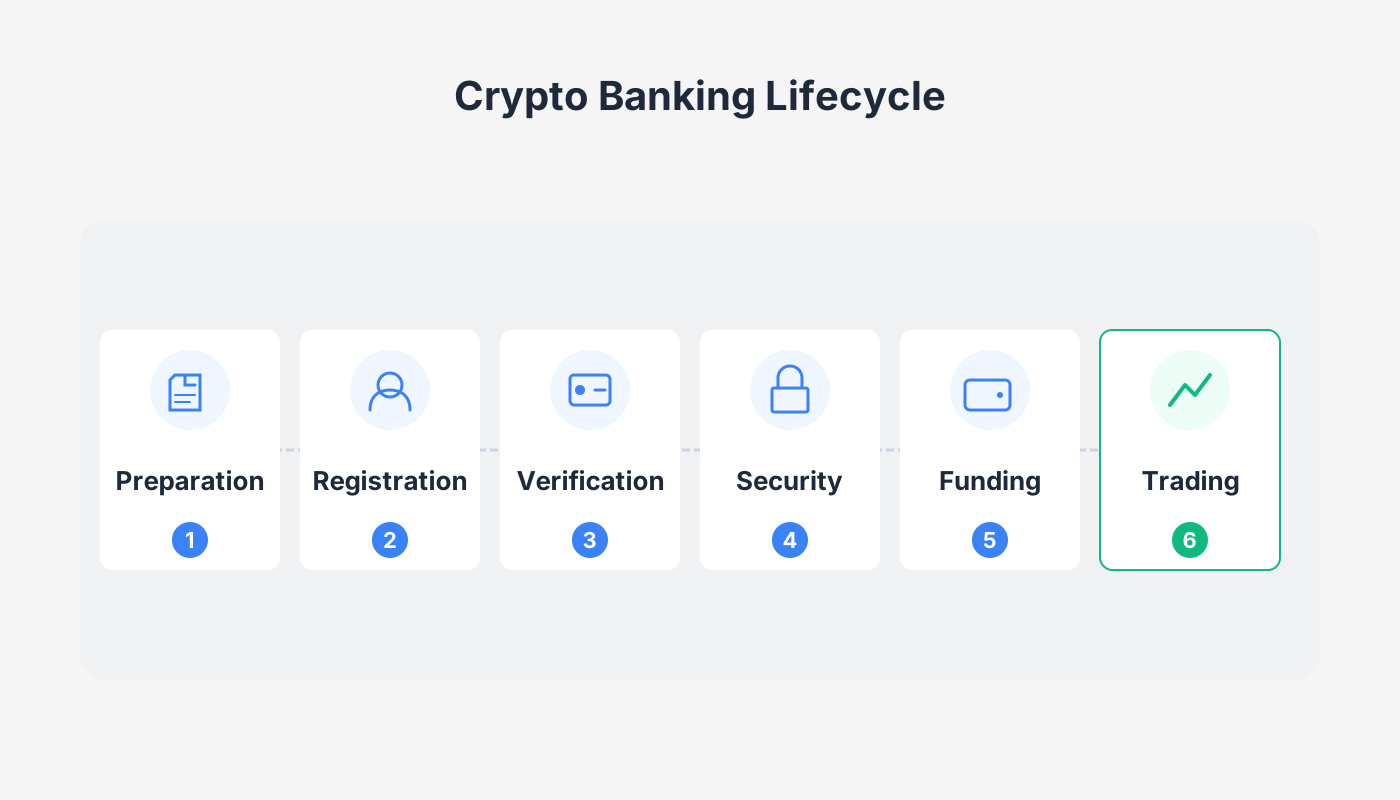
What Kind of Bank Is a Cryptocurrency Bank?
Cryptocurrency banks are a type of financial institution that carries out standard money‑related activities, including:
- Deposits and withdrawals: Users can place Bitcoin, Ethereum and other digital assets into an account and retrieve them at any time.
- Savings and wealth‑management: They offer yield‑generating products such as staking, liquidity mining and similar schemes.
- Loans and borrowing: Crypto assets can be used as collateral to obtain loans denominated in fiat (e.g., USD) or other cryptocurrencies.
- Investment tools: Clients can participate in derivatives, index‑fund style products and other market activities.
These services mirror those of a traditional bank, but the underlying assets are cryptocurrencies. Regulatory authorities must grant an operating licence to ensure compliance.
Blockchain technology faces a “dual challenge”: it must operate within a regulatory framework while also relying on local talent to deliver mature, trustworthy technical solutions. In jurisdictions with relatively progressive regulation—such as Germany—companies that hold both fiat and digital assets can easily engage with the decentralized economy through a cryptocurrency bank. Institutions like Bitwala and Spot9 are gradually becoming bridges between fiat and crypto.
Bitwala is supervised by Germany’s Federal Financial Supervisory Authority (BaFin). Its deposits are covered by the German Deposit Protection Fund (Einlagensicherungsfonds) up to €100,000 (approximately USD 113,000). The bank also partners with SolarisBank, which is regulated at the EU level, allowing users to perform payments, rent, bill settlement, currency exchange, inter‑bank transfers (via SEPA/SWIFT) and seamless saving in both fiat and crypto just as they would with a conventional bank.
Why Do Cryptocurrency Banks Go Bust?
The factors that can lead a cryptocurrency bank into insolvency are similar to those affecting traditional banks, but they are amplified by risks unique to the crypto sector. The main five causes are:
- Market volatility
Crypto asset prices can swing dramatically. If a bank’s balance sheet is heavily weighted toward highly volatile tokens, short‑term price swings may create a mismatch between assets and liabilities, potentially triggering bankruptcy.
- Security breaches
The industry has long been exposed to hacking, phishing and other cyber‑threats. A failure of security controls that results in stolen customer funds directly erodes the bank’s ability to meet its obligations.
- Regulatory uncertainty
Ambiguous or missing regulations can allow improper conduct to flourish, leading to legal disputes that may culminate in a shutdown.
- Poor management
Bad strategic decisions, insufficient risk controls and weak internal governance can push an institution into an irreversible financial crisis.
- Lack of transparency
Because the sector is relatively new, some firms do not provide investors and regulators with enough information, sowing doubt about their financial health and sparking a trust crisis.

Does It Challenge Traditional Banks?
Decentralised Finance (DeFi) has become a hot topic. DeFi offers decentralized lending, trading and savings platforms that serve as alternatives to traditional banking services. Although DeFi mimics many bank functions, it still lacks several core values that banks traditionally provide:
- Statutory deposit insurance
- Regulator‑approved clearing mechanisms
- Mandated protection of user assets
Skrill CEO Lorenzo Pellegrino told *Cointelegraph*: “Many companies that call themselves banks operate inside the crypto ecosystem, but maintaining the ‘bank’ title in a regulated environment is very difficult because that implies safety and regulatory guarantees, which their products often lack.”
Consequently, such entities cannot accept fiat deposits nor provide fiat withdrawal channels, and they lack legally‑backed debt‑repayment mechanisms. When a smart contract defaults, there is no investor‑protection scheme in place. At present, the number of institutions that truly meet the definition of a “cryptocurrency bank” remains limited, but as regulation becomes clearer, blockchain solutions are being adopted by both sides of the financial industry.
A Convincing Yet Still Immature Model
Because of the distinctive attributes of blockchain finance, some large crypto companies have begun to offer bank‑like services to enterprises, even though these services have not yet received explicit regulatory approval. For example, in the United States the U.S. Securities and Exchange Commission (SEC) has not classified such activities as financial services that can be directly integrated with the banking system; they are currently treated more like investment funds.
Coinbase Custody is one of the most sophisticated examples. Without a regulatory licence to act as a bank, it can only provide custodial services. Serious investors and corporations that must operate under continuous tax and regulatory supervision still need to handle reporting and compliance themselves in order to legally move fiat into tokens held by Coinbase Custody. The service includes:
- Isolated cold‑storage vaults
- Seamless integration with the Coinbase Pro exchange
- Deposit insurance (subject to the applicable regulator)
- Customisable reporting and third‑party audit capabilities
Note: Crypto‑related gains may be taxable in your jurisdiction; users should consult local tax advisers and ensure proper reporting, especially when interacting with custodial services.
The Globally Expanding BTC‑Bank Landscape
In the United States, Coinbase’s custodial solution, while offering reliable storage and trading capabilities, cannot be used directly to pay bills or issue payroll. Users must first convert Bitcoin into fiat (USD) and then route the funds through a connected bank to complete the transfer. This workflow reflects the current regulatory stance that does not yet permit a direct swap between fiat and crypto within a single licensed institution.
Pellegrino adds: “Cryptocurrencies will play an important role in future payment systems, but they are more likely to complement existing infrastructure rather than replace it entirely.” Traditional payment providers will therefore remain crucial in bringing these applications to market.
The Tension Between Regulation and Transferability
Cryptocurrencies possess monetary attributes such as scarcity, durability, divisibility and fungibility, yet regulators often restrict their transferability, weakening their full utility as money. Take MyCryptoBank as an example: the platform uses a stablecoin pegged to fiat to enable cross‑border payments, spending and investment. However, when a user wishes to hold actual USD or equities, regulatory barriers may prevent the free flow of funds, limiting the practical use of the crypto asset.
Tagging the Banking Industry
Relying solely on derivative products or unstable debit cards cannot build a robust financial system. A recent McKinsey report notes that, without regulatory approval, blockchain‑based financing still adheres to the 3‑5‑day settlement cycles of conventional fiat markets. The report states: “If counterparties exchange crypto assets directly, payments could settle in minutes rather than the several days required by today’s system.”
Economies with a permissive regulatory environment are poised to benefit first as cryptocurrencies gain wider acceptance as stores of value and means of transfer. Although crypto assets remain on the periphery of the mainstream financial system, their path to full mainstream adoption will still require time.
---
The above provides a comprehensive answer to the question “What is a cryptocurrency bank? How do they work?” The value‑transfer and storage functions of crypto are gradually being recognised, yet challenges remain in the areas of regulation, transparency and transferability. Over the next few years, jurisdictions with lighter‑touch regulation are likely to reap the greatest benefits, while mainstream integration of major cryptocurrencies such as Bitcoin into the traditional financial system will still have a long road ahead.
*For U.S. residents, services that operate under the Binance US brand must be used instead of the global Binance platform.*
*Please remember that any gains from crypto transactions may be subject to tax in your local jurisdiction; proper reporting is essential.*
Related Reading
- Understanding Liquid Staking: Concepts & Operational Flow
- Tokenized US Stocks Rise, Crypto Brokers Disrupt Brokers
- Asset Tokenization: Tokenized Stocks & Real‑World Assets
💡 Register on Binance with referral code B2345 for the maximum trading fee discount. See Binance complete guide.



