
 Bitaigen Research
 Liquidity mining involves providing tokens to a decentralized exchange to earn transaction fees and platform token rewards, while staking mining consists of locking tokens on‑chain to participate in consensus and receive block rewards. The two approaches differ in purpose, revenue sources, and risk profile.

In this article we systematically outline the core differences and underlying connections between liquidity mining and staking mining, helping readers quickly identify the income model that best fits them across dimensions such as returns, risk, and operational difficulty. Through intuitive charts, you can more clearly grasp the appropriate use‑cases for each mining method. Subsequent sections will dive deeper into common risk‑mitigation techniques, making a thorough read worthwhile.
Localization note: When converting crypto proceeds to fiat, USD is the most common reference currency, and transfers are typically conducted via SEPA (for euros) or SWIFT. Residents of the United States should use Binance.US rather than the global Binance platform.
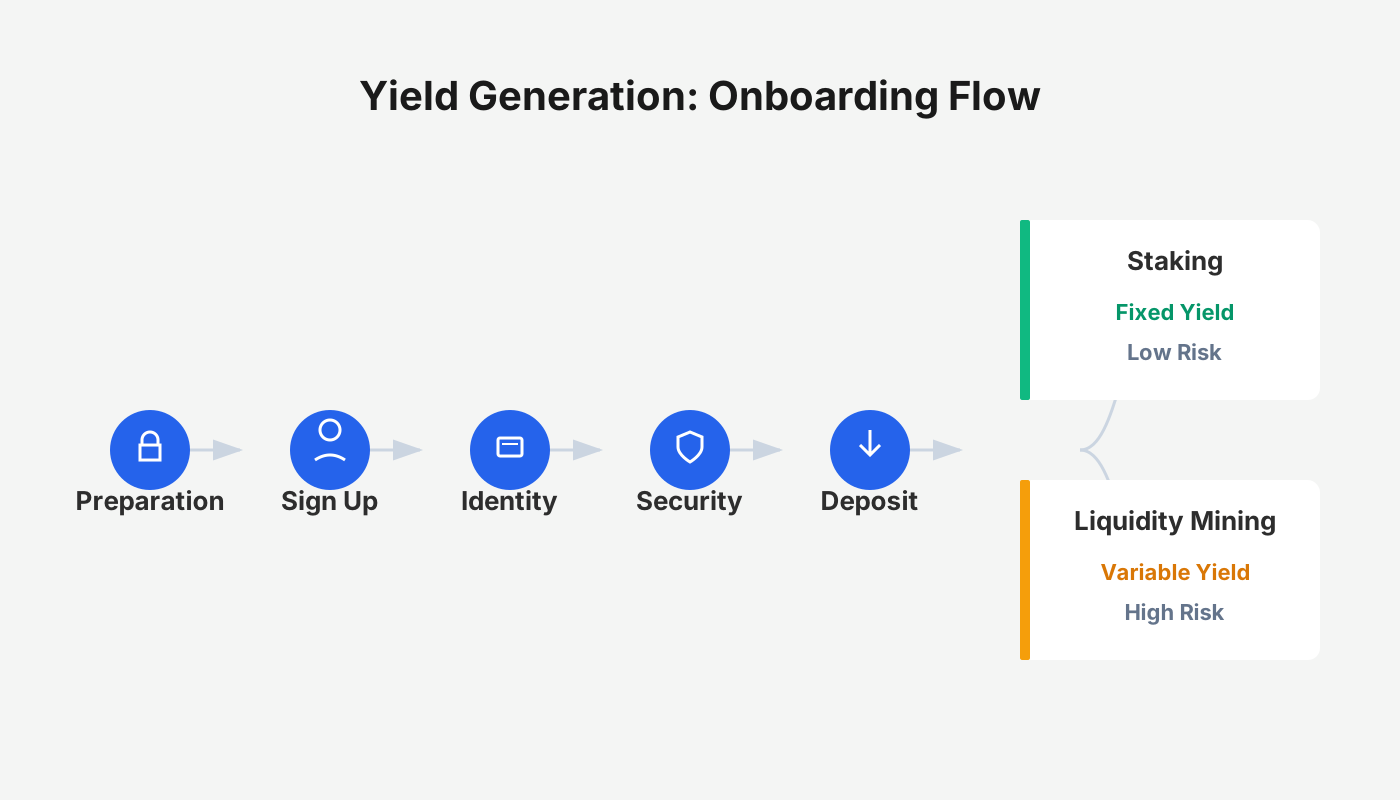
Differences and Connections Between Liquidity Mining and Staking Mining
Both liquidity mining and staking mining are ways to generate passive income from crypto assets, but they emphasize different aspects. The former carries relatively higher risk with greater upside potential, while the latter offers more stable returns and is suited for long‑term holding. Below is a comparison across seven dimensions.
| Dimension | **Liquidity Mining** | **Staking Mining** |
|---|---|---|
| **Profitability** | Earns revenue from transaction fees and platform token incentives; APY is heavily influenced by pool activity. | Primarily receives on‑chain block rewards and fees, with APY typically ranging from 5%‑14%. |
| **Risk Level** | Higher exposure to price volatility, impermanent loss, and contract risks of newer projects. | Affected by chain‑level attacks or slashing mechanisms; overall risk is comparatively lower. |
| **Operational Complexity** | Requires selecting trading pairs, supplying equivalent assets, and possibly rebalancing frequently. | Only needs to pick a staking pool and lock tokens; the process is relatively straightforward. |
| **Liquidity** | Assets remain in the pool and can be withdrawn at any time, though withdrawals may incur slippage. | Tokens are locked for a defined period; withdrawal must wait for the unlock window. |
| **Inflation Impact** | Rewards often come from platform governance tokens, potentially adding extra inflation pressure. | Rewards are mainly newly minted PoS tokens, with earnings rising in line with inflation. |
| **Security** | Dependent on the security of smart contracts; newer protocols carry higher risk. | Protected by the underlying consensus mechanism, offering relatively higher security. |
| **Impermanent Loss** | Temporary value decline can occur during sharp price swings. | No impermanent loss is generated. |
1. Profitability
Liquidity mining returns are usually expressed as APY and are significantly affected by trading volume and platform incentive policies; staking mining yields are more fixed, stemming primarily from network block rewards.
2. Risk Level
The main risks for liquidity mining include impermanent loss caused by price volatility and potential contract bugs in emerging DeFi projects. Mature PoS networks present lower risk, with stakers mainly concerned about possible network attacks or slashing events.
3. Complexity
Staking merely involves locking tokens in a smart contract, which is simple; liquidity mining requires users to determine the optimal trading pair, provide balanced assets, and may involve frequent rebalancing.
4. Liquidity
Although both strategies need a certain asset scale to generate meaningful returns, assets in a liquidity pool are not forcibly locked and can be withdrawn at any moment; staking, on the other hand, obliges participants to respect a lock‑up period.
5. Inflation Factors
Rewards for PoS tokens typically originate from newly minted coins, so stakers’ earnings grow in step with inflation. Liquidity mining incentives may include platform‑issued governance tokens, which also exert inflationary pressure.
6. Security
Stakers directly take part in the underlying blockchain’s consensus process, with security guaranteed by the chain’s consensus algorithm. Liquidity mining relies on DeFi contracts that, if flawed, become attractive targets for hackers.
7. Impermanent Loss
During periods of extreme price movement, liquidity providers may suffer impermanent loss as asset ratios shift; staking does not involve asset ratio adjustments, so this loss type does not apply.

What Distinguishes Liquidity Mining from Staking Mining?
Both methods involve locking crypto assets to earn rewards, yet they differ fundamentally in mechanism, objectives, and sources of return.
Related Reading
- Top Cryptocurrency Investing Strategies for 2026
- CELO Explained: Crypto Basics, Mechanism & How to Buy
- Cryptocurrency Staking Basics: Guide, Returns, Risks for Beginners
💡 Register on Binance with referral code B2345 for the maximum trading fee discount. See Binance complete guide.



