
 Bitaigen Research
 According to different attributes, blockchains can be classified into several types, with public blockchains and private blockchains being the two most common categories, and a hybrid category known as consortium (or alliance) blockchains sitting between them.
Public blockchains are open, decentralized networks accessible to anyone; private blockchains are controlled by specific institutions and are centralized. The two differ markedly in openness, governance, and transaction performance.
Below we will explain in detail the concepts and differences of public blockchains, private blockchains, and consortium blockchains, and provide a ranking of common public‑chain tokens together with a step‑by‑step buying and selling guide.

In this article we systematically outline the core concepts of public, private, and consortium blockchains, dive deep into their key differences in openness, governance, and performance, and curate a ranking of mainstream public‑chain tokens along with practical trading instructions. The goal is to help readers quickly build a complete understanding; subsequent sections will elaborate on each topic in detail.
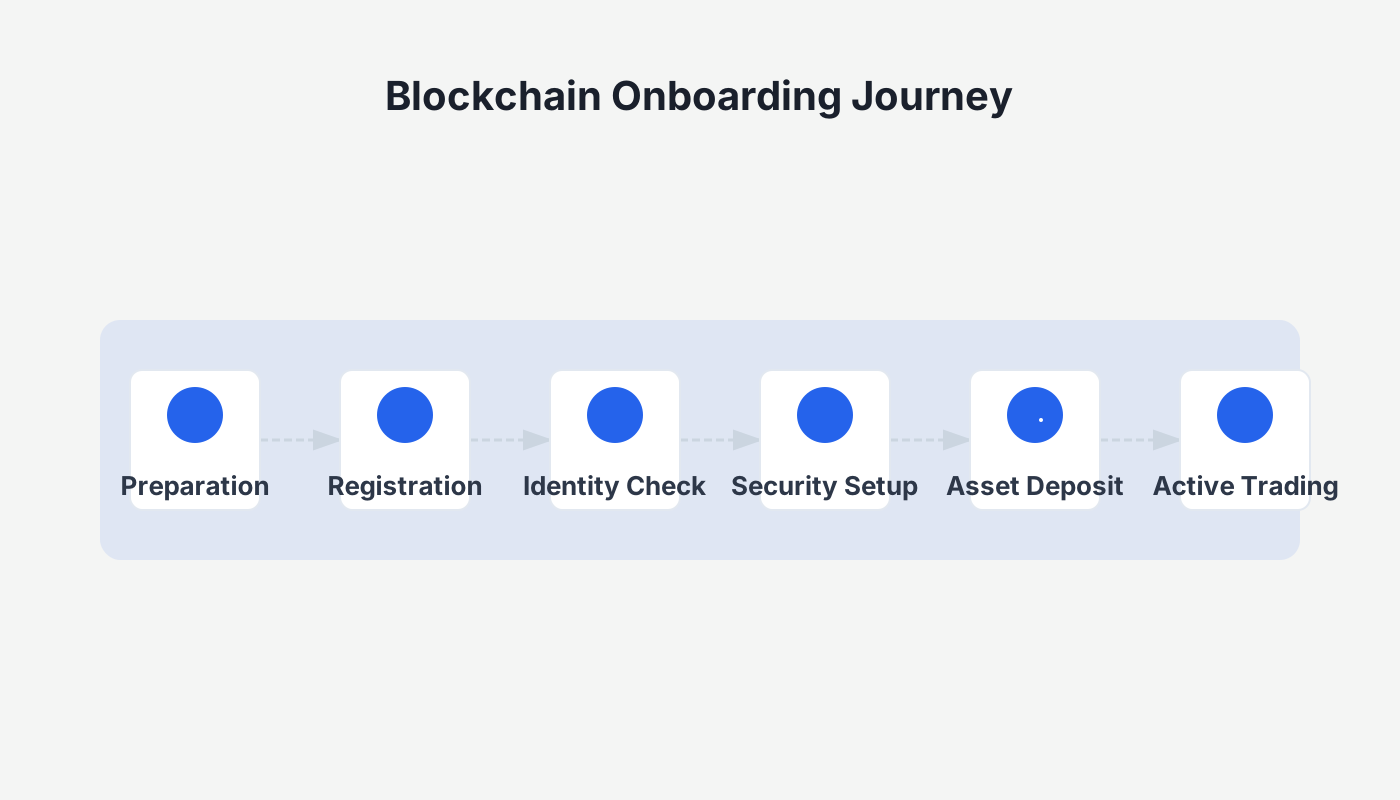
What Is a Public Blockchain?
Public Blockchain refers to a blockchain network that anyone can freely access, participate in, and use. Users can transfer assets, execute transactions, and develop various decentralized applications (DApps) on a public chain without restriction by any single person or organization.
- Core Role: Similar to a mobile operating system (Android, iOS), a public blockchain serves as the underlying infrastructure of the blockchain ecosystem; all applications must be built on top of it to be usable.
Who Maintains a Public Blockchain?
The security and correctness of a public blockchain are upheld by unspecified participants through a consensus mechanism, and they receive appropriate rewards for their work. Common consensus mechanisms include:
- Proof of Work (PoW) – the fastest miner obtains the right to write the next block.
- Proof of Stake (PoS) – holders who lock up (stake) their tokens gain the right to validate blocks.
The more participants there are, the fiercer the competition, and the higher the overall security of the network.
Limitations of Public Blockchains
- Low Operational Efficiency – Decentralization means transaction confirmation must wait for a majority of nodes to compete, resulting in delays such as Bitcoin transfers that can take several minutes.
- Weak Privacy – All transaction data is public; anyone can query each transaction and the total assets held by a wallet.
- Wallet Anonymity – Although an address is not directly linked to a real‑world identity, if the address becomes associated with personal information the assets can be traced.
Mainstream Public‑Chain Examples
| Public Chain | Notable Feature |
|---|---|
| **Bitcoin** | Highest security, relatively limited application flexibility |
| **Ethereum** | Richest ecosystem of smart contracts and DApps |
| **Cardano** | Academically driven development, strong focus on scalability |
| **BNB Smart Chain** | High throughput, low fees, compatible with the Ethereum ecosystem |
What Is a Private Blockchain?
Private Blockchain is a blockchain that is fully controlled by a single institution or organization, representing a highly centralized network where only qualified users may join or use it.
- Analogy: Think of it as the blockchain version of a bank account or a service like LINE Pay—access is granted only under specific rules.
Advantages of Private Blockchains
- Fast Transaction Speed – Because a centralized authority confirms transactions directly, they are completed almost instantly.
- Low Fees – Internal transfers cost virtually nothing, as funds remain within the same institution.
Risks Associated with Private Blockchains
- Restricted Use – The controlling institution can limit or revoke user permissions at any time.
- Potential for Tampering – Centralized managers have the ability to modify transaction records.
- Low Transparency – Transaction details are not publicly disclosed, making independent verification difficult for users.
Typical Private‑Chain Example
- Central Bank Digital Currency (CBDC) – Issued and managed by a government; eligibility and issuance volume are determined by the state.
Consortium (Alliance) Blockchains: The Middle Ground
Consortium Blockchains combine the decentralization benefits of public chains with the efficiency of private ones. They are maintained by a group of trusted entities, distributing power among members while keeping participation limited to that group.
- Operating Model: Similar to a council of elders, multiple entities jointly decide on network rules, preventing a single party from monopolizing control.
- Performance: Because consensus involves only a handful of nodes, transaction speed is high and costs are low.
- Degree of Centralization: Membership must be vetted, making it a restricted form of centralization.
Consortium chains are often employed in corporate alliances, inter‑bank transaction records, and other scenarios that require shared information and joint governance.
Public vs Private vs Consortium Blockchains – Comparison Table
| Aspect | Centralization Level | Participation Eligibility | Transaction Speed | Transaction Fees | Primary Use Cases |
|---|---|---|---|---|---|
| **Public** | Low | Anyone | Slow | Relatively high | Whole blockchain ecosystem, decentralized applications |
| **Private** | High | Restricted | Fast | Low | In‑house enterprise processes, financial institutions |
| **Consortium** | Medium | Restricted (members) | Fast | Low | Corporate alliances, bank‑to‑bank settlement |
Public‑Chain Rankings and How to Query Them
To gauge the scale of a public blockchain’s ecosystem, visit CoinMarketCap to view rankings and the number of on‑chain protocols, which helps assess each chain’s activity level.
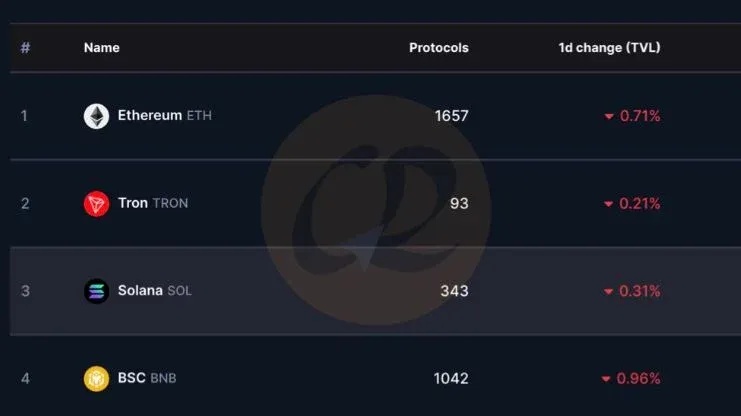
Current Public‑Chain Ranking (as of writing)
- Ethereum
- Tron
- Solana
- BNB Smart Chain
Note: Different ranking criteria can shift positions. For example, if you rank solely by the number of protocols, BSC may climb to the second spot.
Functions of Public‑ and Private‑Chain Tokens
Most public blockchains issue a native token (e.g., Bitcoin’s BTC, Ethereum’s ETH). These tokens serve several roles within their ecosystems:
- Pay Network Fees – Users spend the native token to cover transaction costs.
- Reward Validators – Nodes that maintain the network receive tokens as incentives.
- Governance Rights – Token holders can vote on on‑chain proposals and protocol upgrades.
Private blockchains sometimes do not issue a tradable token; instead, they may use points or other internal accounting units. Always read the project’s whitepaper carefully before participating.
How to Buy and Sell Public‑ and Private‑Chain Tokens
The most convenient method is through a cryptocurrency exchange. After registering an account, you can place orders within minutes.
- Example Platform: The globally used Binance Exchange, which serves over 300 million users worldwide and offers more than 400 trading pairs.
Important for U.S. residents: Use Binance.US instead of the global Binance platform to comply with local regulations.
If you have not yet registered, you can use the link below and the accompanying app download page, then follow the video tutorial for guidance.
- Registration link: Binance official registration
- Android app download: Binance Android App
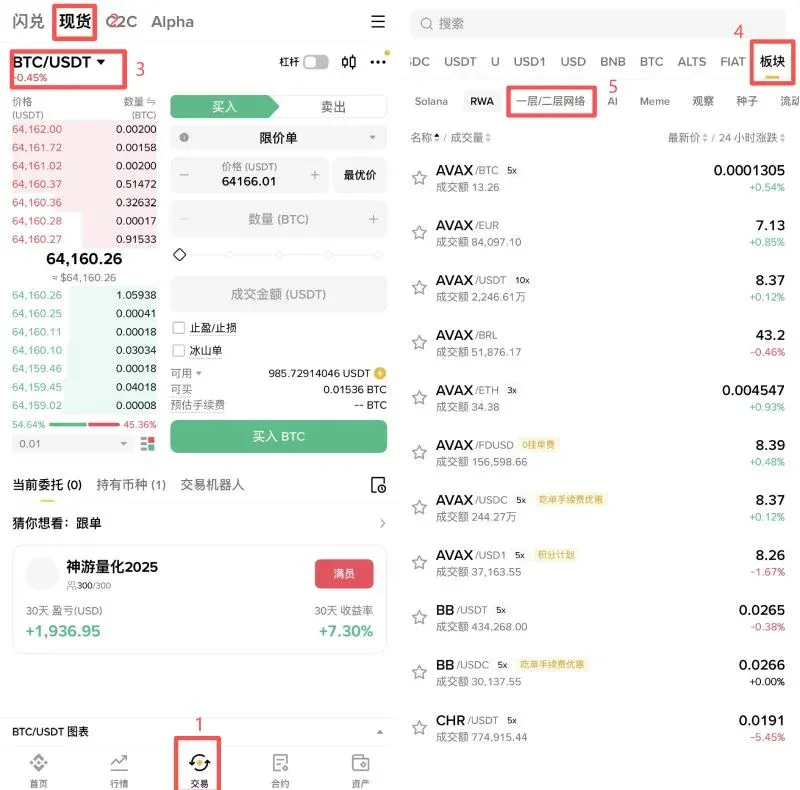
On the exchange’s “Trade” page, select the token list in the upper‑left corner and use stablecoins such as USDT or USDC for swift purchases and sales. By filtering the “Category” to “Layer‑1 / Layer‑2 Networks,” you can quickly locate tokens related to public blockchains.
Frequently Asked Questions
Is the operation of a public blockchain completely decentralized?
In theory, yes, but in practice a small number of entities may control a large share of validation power, leading to a de‑centralization drift. For instance, when Bitcoin’s hash power is concentrated in a few countries, transaction validation can be influenced by those jurisdictions.
Are public blockchains always better than private ones?
Not necessarily. Each type has its own strengths and appropriate use cases; the choice depends on specific business requirements and regulatory considerations.
---
Tax reminder: Gains from cryptocurrency transactions may be taxable in your local jurisdiction. Consult a qualified tax professional to understand your obligations.
That concludes the complete coverage of “What are public and private blockchains in cryptocurrency? How do they differ? Rankings of common public‑chain tokens and a practical buying/selling guide.” For more blockchain‑related news, search for past articles on Bitaigen (比特根) or continue browsing the related posts below. Thank you for your support and attention!
Related Reading
- OKChain: Transaction-Optimized Public Blockchain Design
- Why Machines Need Tokens More Than Humans in Blockchain
💡 Register on Binance with referral code B2345 for the maximum trading fee discount. See Binance complete guide.



