
 Bitaigen Research
 We systematically analyze the core concept of stock tokenization and its operation on the blockchain in this article. By explaining how smart contracts automate ownership records, dividend distribution, and cross‑border transactions, readers can understand how this technology brings liquidity and transparency to traditional finance. We then assess risks and use cases, and introduce CoinEx’s role in driving innovation, guiding you to grasp the direction.
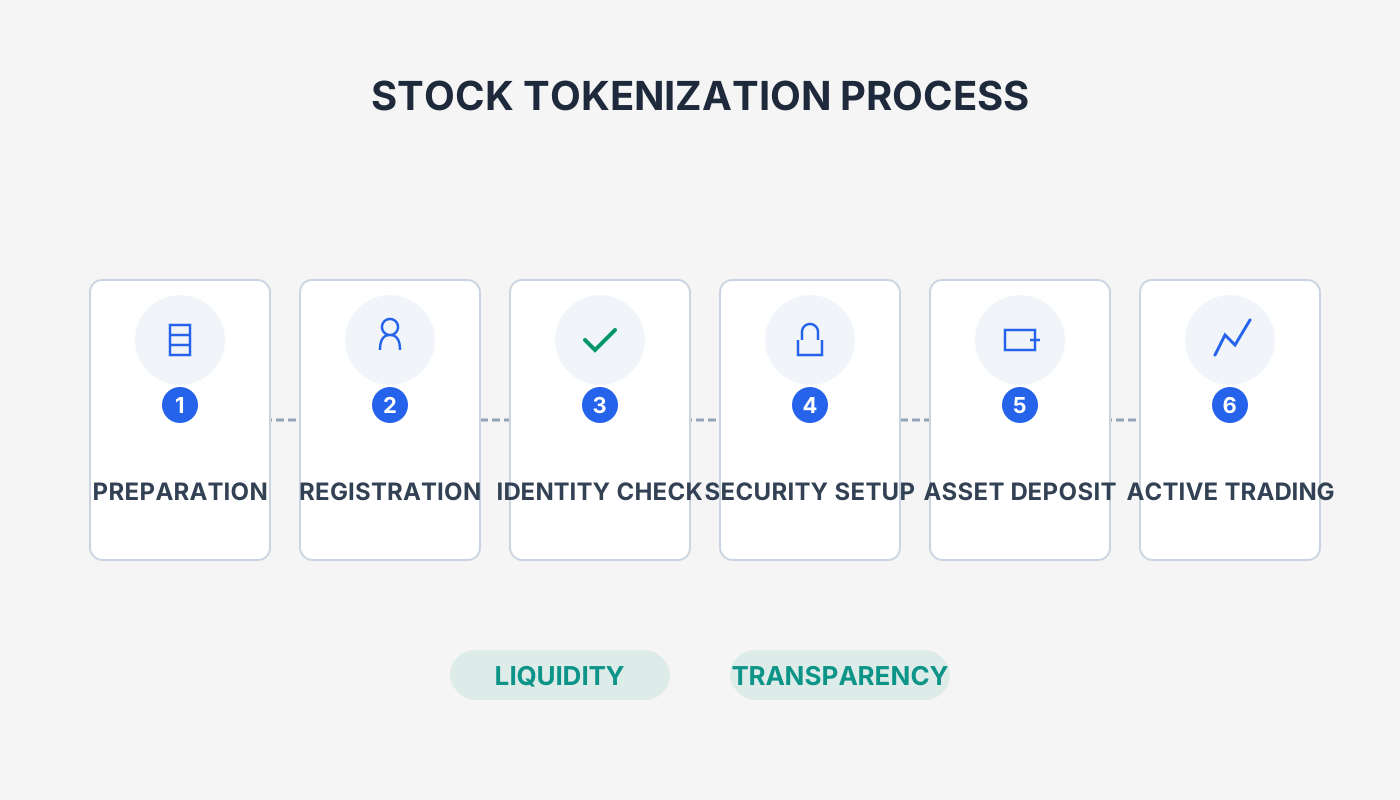
Brief Summary
- Stock tokenization is the process of converting traditional equities into digital tokens on a blockchain.
- These tokens represent the same ownership as ordinary shares but are easier to trade and fractionalize.
- Blockchain technology and smart contracts automate transactions, increasing speed and transparency.
- CoinEx supports crypto‑native innovation and education related to tokenization, focusing on native digital assets.
- Stock tokenization opens new investment opportunities, especially appealing to crypto users and regions with limited financial services.
Stock tokenization transforms conventional shares into digital tokens on a blockchain, using smart contracts to record ownership, distribute dividends, and automate trading, enabling global, anytime transactions.
Introduction
Stock tokenization is becoming a key pathway for blockchain technology to reshape the financial sector. It converts the traditional shares you purchase on a securities exchange into digital tokens on a blockchain network. This innovation brings the advantages of cryptocurrency—fast, global transactions and fractional ownership of high‑value assets—into the equity market.
Cryptographic technology paves the way for new financial products, and stock tokenization sits at the core of this movement. This article explains the concept of stock tokenization, how it functions within the crypto ecosystem, its benefits and risks, real‑world use cases, and the role CoinEx plays in this space.

What Is Stock Tokenization?
Stock tokenization refers to creating a digital representation of a traditional equity on a blockchain. Imagine you own shares of Apple or Tesla; instead of holding paper certificates or entries in a broker’s system, you possess a token on the blockchain that represents those shares (Coingecko, 2025).
These tokens carry the same economic rights as the underlying stock, including dividends, voting rights, or capital gains (depending on the specific asset). It is important to note that stock tokenization tokens are directly backed by actual shares, whereas the broader term security tokens may represent a wider array of financial instruments or contracts.
Unlike conventional share registries stored in centralized databases, tokenized stocks reside on a decentralized ledger—the blockchain—offering transparency and security, and enabling faster, lower‑cost, always‑on trading.
While several platforms provide trading services for tokenized stocks, CoinEx focuses on crypto‑native assets and, through education and infrastructure, helps the community explore asset tokenization within the broader blockchain ecosystem rather than directly issuing tokens backed by real‑world equities.
How Stock Tokenization Works in the Crypto Space
- Custody of the underlying shares: A trusted custodian or institution holds the actual shares of the target company in traditional form, ensuring each issued token is backed by a physical asset.
- Issuance of digital tokens: For every share held, a corresponding digital token is minted on the blockchain, encoding ownership equivalent to the original share.
- Blockchain record layer: All token ownership transfers are written to the blockchain, guaranteeing transparency and immutability.
- Smart‑contract automation: Self‑executing code on the chain automatically manages ownership transfers, dividend payouts, and voting rights without manual intervention.
- Regulatory compliance and KYC: Because stocks are regulated, platforms typically require users to complete identity verification (KYC) to meet local legal requirements.
Real‑world examples can be found in decentralized protocols (e.g., Synthetix, 2025), which allow users to trade tokenized stocks 24/7 across borders, providing flexibility that traditional markets lack.
Advantages of Stock Tokenization
- 24/7 market access: Blockchain tokens are not limited by exchange closing times and can be bought or sold at any hour.
- Fractional ownership: Investors can hold a piece of an expensive stock without buying a whole share, lowering the entry barrier.
- Borderless trading: Geographic restrictions are eliminated, enabling global participation.
- Reduced fees: Smart contracts cut out intermediaries, lowering brokerage and settlement costs.
- Instant settlement: Token trades settle almost instantly, compared with the multi‑day settlement cycles of legacy markets.
- Transparency and security: A public, tamper‑proof ledger enhances trust.
- Enhanced liquidity: Illiquid or hard‑to‑trade stocks gain secondary‑market liquidity through tokenization.
Note: When converting fiat to crypto for token purchases, users typically employ USD transfers via SEPA or SWIFT channels, depending on their location.
Risks and Limitations
- Legal and regulatory uncertainty: Jurisdictions differ widely in how they treat tokenized stocks, and regulations can evolve rapidly.
- Counterparty risk: If the custodial institution mishandles or misappropriates the underlying shares, token holders may suffer losses.
- Technical vulnerabilities: Smart contracts may contain bugs that expose tokens to hacking attempts.
- Market manipulation: Tokens with low liquidity are more susceptible to price manipulation.
- Jurisdictional barriers: Some countries prohibit or heavily regulate tokenized stocks, restricting lawful participation.
Tax reminder: Crypto‑related gains, including those from tokenized equities, may be taxable in your local jurisdiction. Consult a tax professional to ensure compliance.
Use Cases for Stock Tokenization
- Portfolio diversification: Crypto investors can add tokenized stocks to their digital‑asset mix, achieving broader asset allocation.
- Tokenized ETFs and indices: Baskets of stocks can be tokenized, allowing exchange‑traded funds to be bought and sold freely on a blockchain.
- Access to global markets: Investors in regions with limited brokerage options can directly purchase tokenized stocks.
- DAO and DeFi integration: Decentralized autonomous organizations and decentralized finance platforms can incorporate tokenized stocks to provide programmable equity and dividend streams.
- Institutional interest: Institutions are exploring programmable equity to streamline asset management and automate compliance.
How It Works – Step‑by‑Step
The stock tokenization workflow involves several critical steps:
- Asset identification: Select the individual stock or portfolio to be tokenized.
- Legal structure design: The issuing entity creates a framework that complies with local securities laws.
- Token creation: Smart contracts mint digital tokens that represent the underlying shares.
- Custody and backing: A regulated custodian holds an equal amount of real shares, providing a 1‑to‑1 backing.
- Exchange integration: Tokens are listed on compliant exchanges, enabling users to buy, sell, or transfer them.
These steps ensure each token precisely mirrors the ownership rights and value of the original equity.
Types of Stock Tokenization
- Fully backed tokens: Each token is supported 1:1 by actual shares held by the custodian.
- Synthetic tokens: Reflect the price movement of a stock without direct ownership, often built on derivatives or collateralized mechanisms.
- Fractional ownership tokens: Allow investors to hold minute portions of high‑price stocks (e.g., 0.01 share).
Different types cater to varying regulatory environments and user preferences.
Key Features / Benefits
- Easy access: Low‑minimum capital lets users purchase fractional shares.
- Round‑the‑clock trading: Overcomes traditional market time constraints.
- Global reach: Cross‑border trades occur without centralized intermediaries.
- High transparency: An immutable ledger facilitates auditability and trust.
- Efficiency gains: Smart contracts shorten settlement times and cut administrative costs.
These attributes make stock tokenization an attractive alternative for issuers and investors seeking modern financial solutions.
Application Scenarios / Real‑World Cases
- Retail investment platforms: Offer fractional shares of blue‑chip stocks to a worldwide audience.
- Employee stock ownership plans (ESOPs): Companies distribute compensation as digital equity tokens.
- Private‑market liquidity: Startup or private‑company shares are tokenized, enabling secondary‑market trading.
- Cross‑border investment: International investors can access foreign equities without currency conversion or local broker requirements.
These examples illustrate how tokenization bridges the gap between traditional finance and decentralized technology.
CoinEx and the Future of Asset Tokenization
CoinEx is a crypto‑native exchange dedicated to supporting blockchain‑based financial instruments and innovation. While CoinEx does not currently issue tokenized versions of real‑world stocks, it actively promotes tokenization education and provides infrastructure that empowers the community to engage in asset tokenization across the broader blockchain ecosystem.
The platform’s mission is to build a decentralized financial system that enhances global access, transparency, and economic inclusion. CoinEx’s ongoing investments lay the groundwork for the next wave of breakthroughs in asset tokenization and blockchain finance.
Frequently Asked Questions
What is stock tokenization?
Stock tokenization is the process of converting a company's traditional shares into digital tokens on a blockchain. Each token represents ownership of the underlying asset (e.g., a fraction of a share) and can be traded or managed on digital platforms. The goal is to improve liquidity, lower transaction costs, and enable fractional ownership. Blockchain provides transparency and security, though regulatory compliance and market adoption remain challenges.
Is stock tokenization legal in every country?
No. Legal status varies by jurisdiction. Some countries allow tokenized stocks under specific regulatory frameworks, while others restrict or prohibit such activities. Users should verify the applicable laws in their own region before participating.
How are tokenized stocks backed?
Most tokenized stocks are backed by a custodian or trust that holds the real shares on a 1:1 basis, ensuring token holders receive rights equivalent to the underlying equity.
Conclusion
Stock tokenization is redefining how investments are made by merging traditional equity ownership with the benefits of blockchain technology, delivering greater accessibility, transparency, and efficiency for investors worldwide.
Blockchain’s role in modern financial markets continues to grow—enabling faster settlement, fractional ownership, and cross‑border coverage. CoinEx aligns with this trajectory by fostering crypto‑native innovation, education, and infrastructure, supporting the future of decentralized finance and asset tokenization.
The above provides a comprehensive explanation of “What is stock tokenization? How does it operate in the cryptocurrency space?” For more information on stock tokenization, please follow additional articles from Bitaigen (比特根).
Related Reading
- Stock Tokenization Explained: Principles, Types, Uses & Risks
- What Is a Blockchain Oracle? Definition, Function & Limits
- What Is ERC‑20? Complete Guide to the Ethereum Token Standard
💡 Register on Binance with referral code B2345 for the maximum trading fee discount. See Binance complete guide.



