
 Bitaigen Research
 TVL in the Crypto Space
The crypto‑space TVL, short for Total Value Locked, refers to the total value of crypto assets that users have locked in decentralized finance (DeFi) protocols to provide liquidity or serve as collateral. It is expressed in USD (or can be transferred via SEPA/SWIFT for fiat) and is commonly used to assess a project's scale and health.
TVL (Total Value Locked) denotes the aggregate value of crypto assets that users have deposited into various smart contracts within the DeFi (decentralized finance) sector. These assets are typically used as collateral or to supply liquidity, supporting the operation of a wide range of DeFi applications. TVL serves as a metric for measuring the amount of capital stored across all DeFi protocols or within a single project.

In this article we analyze TVL from concept and function to practical usage, giving readers a quick grasp of the core metric for evaluating DeFi project size. This foundation helps you cut through the noise of crypto‑space information and make clearer value judgments. Subsequent sections will dive deeper into calculation methods and risk considerations, so the article is worth a thorough read.
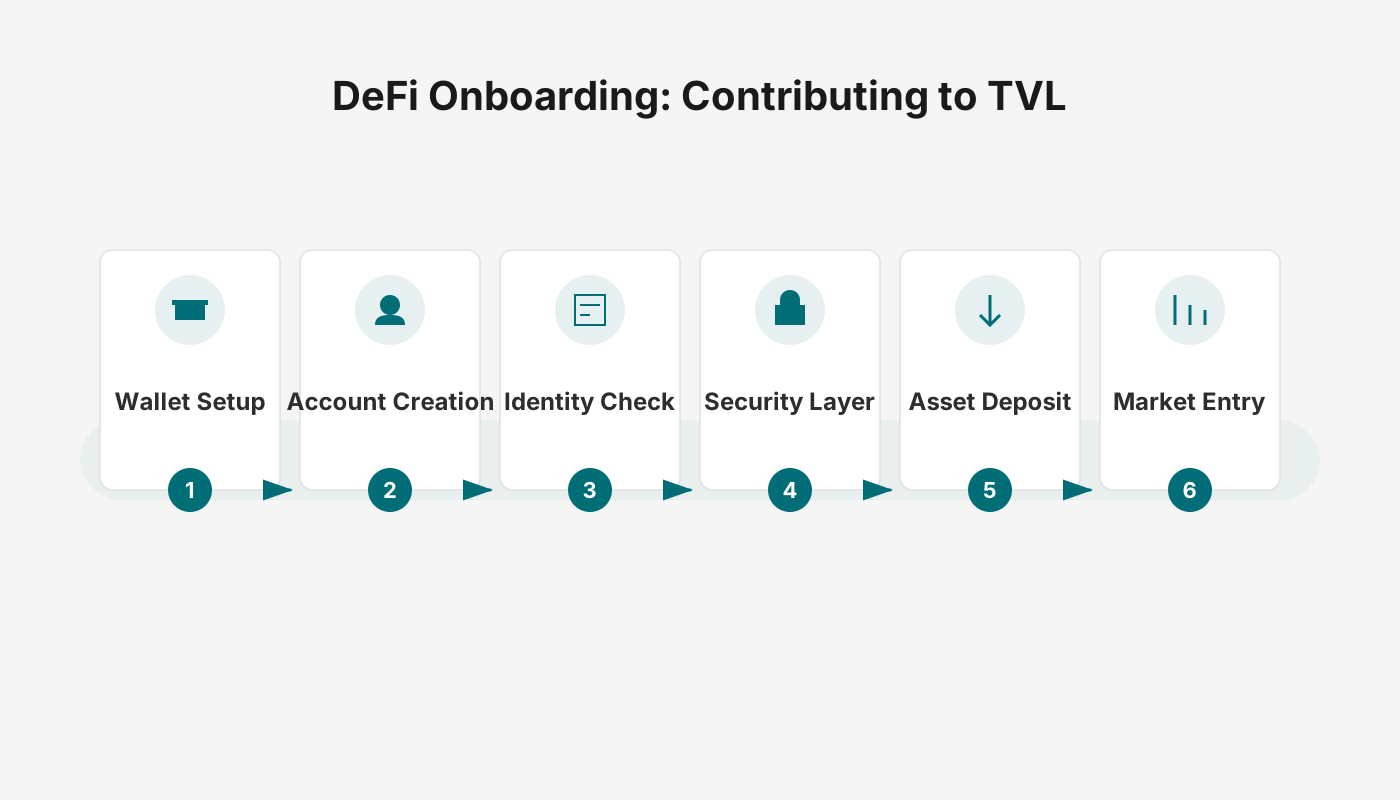
What Does TVL Mean in the Crypto Space?
TVL stands for Total Value Locked.
- Definition: TVL represents the total amount of liquidity assets held in a DeFi protocol (or platform), usually quoted in USD.
- Purpose: Investors often use it to quickly gauge a DeFi project's market size, share, and relative competitiveness.
- Comparison: By comparing the TVL of different protocols, one can evaluate each project's potential value.
TVL is a key indicator of the size and health of the DeFi ecosystem. A higher TVL generally signals greater user trust and participation, providing the protocol with more liquidity and capital support. However, TVL is not the sole evaluation criterion; market volatility, smart‑contract security, and the behavior of liquidity providers can all affect its movement.
Through TVL, investors can understand the capital capacity a protocol can handle, helping them decide whether to borrow, lend, or provide liquidity on that protocol to earn corresponding returns. Consequently, the magnitude of TVL becomes an important reference when determining whether to allocate funds.
Can TVL Be Returned After a Maturity Date?
Whether TVL can be returned at maturity depends on the design of the specific DeFi project and its smart contracts. In general, TVL is not a simple “lock‑up”; it is used to supply liquidity or serve as collateral so users can participate in various financial activities.
- Asset Retrieval: In most cases users can withdraw their locked assets at any time, but they may need to meet certain conditions:
- The lock‑up period must have ended before assets can be unlocked;
- A unlocking fee may need to be paid, or platform‑specific procedural requirements must be satisfied.
- Risk Notice: Some DeFi projects are exposed to smart‑contract bugs, liquidity runs, or market swings, which could prevent timely asset return or cause losses. Before participating, be sure to understand the project's operational mechanics, risk points, and unlocking rules, and adopt appropriate asset‑protection measures.
---
The above content answers “What does TVL mean in the crypto space?” TVL is one of the most widely used metrics in DeFi, measuring the asset scale of a protocol. However, TVL alone cannot fully assess a project's value; a comprehensive analysis should also consider financial functionality, lending services, token types, and price volatility.
*Note: For users in the United States, access to Binance services should be via Binance.US rather than the global Binance platform. Crypto gains may be taxable in your jurisdiction, so consult a tax professional for guidance.*
Related Reading
- TVL in Crypto: Benefits, Risks & Investment Guide
- Intent‑Based Trading: Simplifying DeFi for Users
- Solana Token Launchpad Comparison 2024: Features, Fees & Launch Dates
💡 Register on Binance with referral code B2345 for the maximum trading fee discount. See Binance complete guide.



