
 Bitaigen Research
 In this article we outline the core principles of yield aggregators and their role within the DeFi ecosystem, helping readers understand how smart contracts achieve automatic rebalancing, unified settlement, and the mechanisms behind yield generation. Through case studies, you will grasp the key considerations when selecting an aggregation platform; subsequent sections will discuss risks and best practices, making it worth a careful read.
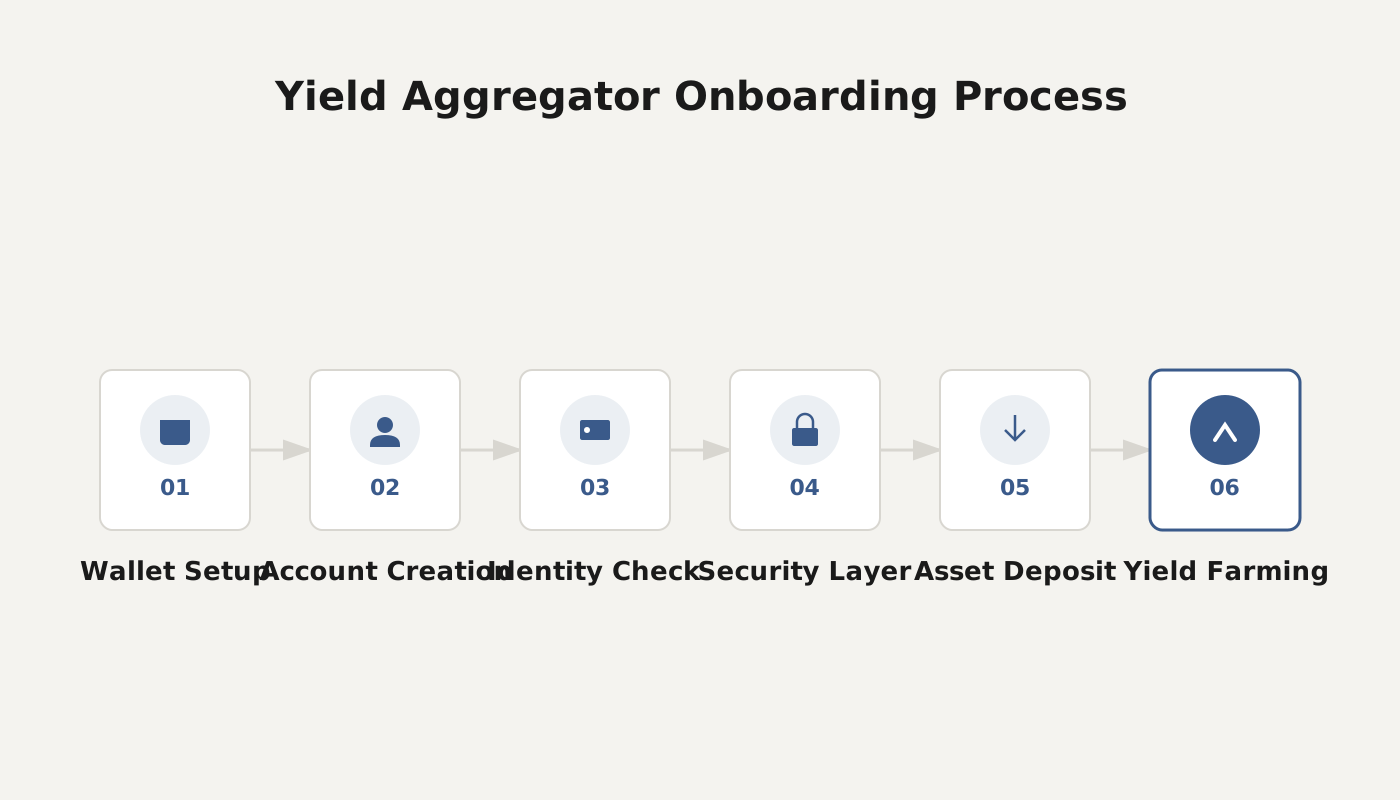
Since the second half of 2020, DeFi has grown explosively, with total value locked surpassing US $12 billion, establishing itself as a major component of the broader cryptocurrency space.
A yield aggregator is an aggregation platform that uses smart contracts to automatically allocate assets across multiple DeFi protocols in order to capture the highest possible return, and then consolidates the generated earnings for distribution to users.

What Is a Yield Aggregator?
A yield aggregator refers to a platform that integrates a variety of DeFi protocols. Its core functions are:
- Automatic reallocation – When a user deposits assets (most commonly USD‑pegged stablecoins) into the aggregator, the smart contract scans liquidity‑mining, lending and other DeFi projects to find the highest annual percentage yield (APY) and automatically moves the funds accordingly.
- Unified settlement – All earnings generated are pooled into a single public vault and then allocated to users according to predefined rules.
- Decentralization – The traditional fund manager’s discretionary team is replaced by code‑based smart contracts, delivering fully on‑chain asset management without human intervention.
The aggregator itself does not provide lending services, but its contracts can connect to external lending protocols. Once assets are supplied, the contract selects the most profitable lending market to provide liquidity and earn interest.
In addition, aggregators can hook into DeFi trading projects (such as AMMs and derivatives platforms). These projects require continuous liquidity to keep markets functional; in return they distribute trading fees or native tokens to liquidity providers. The aggregator’s smart contracts can automatically participate in these opportunities and capture the associated revenue.
Consequently, a yield aggregator functions as an automated investment‑strategy product, helping users pick the optimal returns across lending‑type and trading‑type projects, while reducing operational complexity, cutting costs, and boosting overall profitability.
Note: Crypto‑related gains may be subject to taxation in the holder’s jurisdiction. Users should consult local tax regulations or a qualified professional to ensure compliance.
Where Do the Yields Provided by a Yield Aggregator Come From?
1. Lending Yield
- As demand for crypto‑asset loans rises, lending protocols raise their rates, delivering higher interest income to capital providers.
- During bull markets, speculators are often willing to borrow at elevated rates to leverage long positions and capture price differentials. In April 2021, the stable‑coin APYs on platforms like Aave and Compound briefly reached roughly 10 %.
2. Liquidity‑Mining Rewards
- Early participants frequently receive the protocol’s governance token, which carries both voting rights and intrinsic incentive value.
- By supplying liquidity, users earn additional token rewards; typical examples include SushiSwap and Yearn Finance.
3. Revenue‑Sharing Mechanisms
- Some tokens are designed with a profit‑sharing model, such as AMM LP tokens, SushiSwap’s xSUSHI (which distributes 0.05 % of trading revenue to holders), and Vesper Finance’s VSP (which allocates 95 % of trading fees to stakers).
Definition: A revenue‑sharing token is one that entitles its holders to a proportional share of the protocol’s fees or other income streams.
Why Use a Yield Aggregator?
- Lower operational costs – Users no longer need to manually shuttle assets between multiple protocols; all rebalancing is performed automatically by the smart contract.
- Reduced transaction fees – By batching operations and identifying the most efficient execution path, aggregators can compress gas and fee expenditures.
- Enhanced overall returns – Continuous monitoring of protocol APYs and dynamic reallocation enables the aggregator to capture higher yield opportunities on the fly.
Over the past year, the number of yield‑aggregator protocols has exploded. While the underlying architecture remains similar, each implementation introduces distinct strategies and user‑experience tweaks, allowing investors to achieve passive asset growth without actively crafting their own strategies.
The above outlines the concept of a yield aggregator and the sources of its returns. To explore more related topics, follow the other articles published by Bitaigen (比特根).
Global‑market considerations:
- When converting fiat to stablecoins, users typically rely on SEPA or SWIFT transfers for USD deposits.
- U.S. residents should use Binance.US (or other regulated U.S. exchanges) rather than the global Binance platform to comply with local regulations.
Related Reading
- CE Metaverse: NFTs, Smart Contracts & Immersive Economy
- AI赋能DeFi:实时分析、自动化策略与风险管理
- DeFi Insurance: Athena Ins & ATEN Token Overview
💡 Register on Binance with referral code B2345 for the maximum trading fee discount. See Binance complete guide.



