
 Bitaigen Research
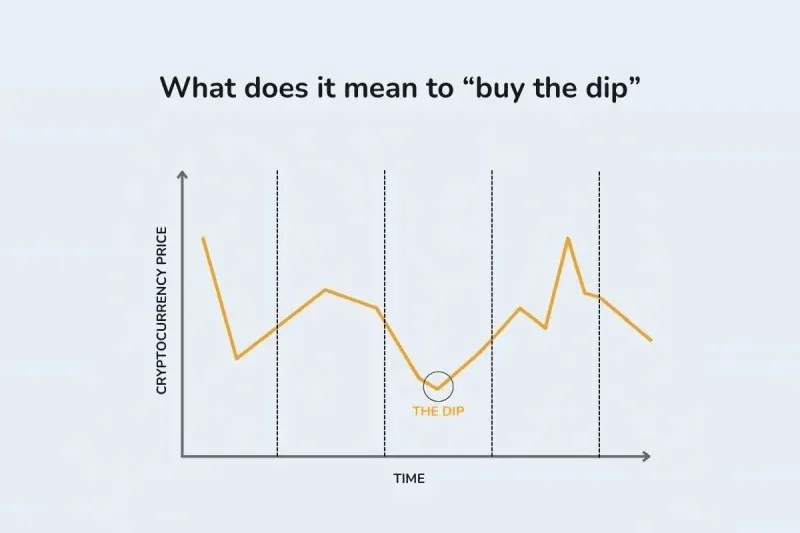
 Buying Bitcoin on the Dip May Sound Simple: purchase when the price falls because you expect a rebound. This notion has become a core meme in crypto culture and can sometimes generate impressive profits. However, mistaking a temporary pull‑back for a trend reversal, or letting leveraged liquidations turn a normal decline into a cascade, often leads to “getting slashed”.
Buying Bitcoin on the dip means buying in batches when the price pulls back, commonly using three methods: dollar‑cost averaging (DCA), tiered limit‑order ladders, and trend‑filtered entries.
In this article we systematically outline the core ideas and practical steps for buying Bitcoin on the dip, dissect the three typical techniques—cost averaging, laddered limit orders, and trend filtering—and remind readers to differentiate short‑term pull‑backs from deep corrections. Through case studies and tool recommendations, we aim to help investors position themselves prudently amid volatility. Subsequent sections will expand on the details, so a careful read is worthwhile.
Key Takeaways
- Definition: Buying on the dip refers to purchasing Bitcoin after a price decline, based on the expectation that the price will eventually rebound.
- Historical Risk: Bitcoin’s high volatility means that “downturns” are often deep‑cycle events; since 2014, major corrections have averaged about an 80 % drop from peak to trough.
- 2026 Market Context: Influenced by the U.S. spot Bitcoin ETF, institutional demand flows, and macro‑policy expectations, buying on the dip is no longer an exclusive retail strategy.
- Classification of Decline Magnitude:
| Type | Pull‑back Size | Characteristics |
|---|---|---|
| Micro dip | 2 %‑5 % | Intraday/weekly normal volatility |
| Standard correction | 5 %‑12 % | Oscillating range |
| Retracement | 12 %‑30 % | Requires caution; may accompany policy shifts |
| Crash / liquidation | >30 % | Leverage cascades, macro shocks, or structural pressure |
- “Knife‑Fall” Warning: Traders must distinguish a temporary pull‑back from a knife‑fall (a sharp sell‑off triggered by massive leverage unwind or adverse macro catalysts); the latter carries very high purchase risk.
Why “Buying on the Dip” Has Become a Bitcoin Trading Habit
The logic behind buying on the dip rests on mean‑reversion: after a steep price drop, a rebound is likely because sellers run out of supply, new buyers step in at lower levels, or leveraged shorts are forced to cover. The 24/7 trading environment, high speculation ratios, and the presence of perpetual futures and leveraged products amplify this dynamic, accelerating both declines and rebounds.
Since 2014, Bitcoin has repeatedly experienced corrections exceeding 50 %, with the largest average drawdown around 80 %. Such deep‑cycle swings differ markedly from the typical 5 % pull‑backs seen in traditional equity indices and demand a higher risk tolerance.
Bitcoin’s cyclical declines usually revolve around halving events. Major peaks occurred in 2011, 2013, 2017, and 2021, each followed by roughly a 75 %+ correction. The most recent halving took place on 20 April 2024 (block height 840,000), reducing the block reward from 6.25 BTC to 3.125 BTC. The market broadly views this as a pivotal supply‑structure shift.
The market structure of 2024‑2026 changed after the approval of the U.S. spot Bitcoin ETF on 10 January 2024. The ETF and its associated options gave institutions new hedging and speculative tools, making buying on the dip a common behavior across the broader ecosystem.

What Exactly Does a “Decline” in Bitcoin Price Mean?
Most traders loosely label any red candlestick as a decline, which is inaccurate. A more scientific approach defines a decline based on pull‑back magnitude, context, and market structure.
In traditional markets, a “pull‑back” denotes a 10 %‑20 % drop, while a “bear market” refers to a decline beyond 20 %. For Bitcoin, the four‑tier classification above should be used to avoid judgments based on a single candlestick.
For example, Reuters reported in February 2026 that Bitcoin fell to roughly $63,295, its lowest level since October 2024, and about $1 billion of Bitcoin positions were liquidated within 24 hours, illustrating how a “decline” can quickly turn into “forced selling”.
The key point is that a decline is not only relative to the previous day’s price but also relative to a prior reference point, and it requires assessment of whether the market structure still supports a rebound.
Three Methods to Buy Bitcoin on the Dip
There is no single “best” approach; the choice depends on investment horizon, personality, and execution capability.
1. Dollar‑Cost Averaging (DCA)
Dollar‑Cost Averaging involves investing a fixed amount of fiat (typically USD) at regular intervals, regardless of price, thereby reducing timing‑related emotional pressure. It is a disciplined strategy that keeps buying even during market slumps, avoiding a lump‑sum entry at a peak.
- Pros: Mitigates panic‑driven or missed‑opportunity decisions.
- Cons: During a strong uptrend, a single larger purchase could yield higher returns.
To adapt DCA for dip buying, add threshold‑based top‑ups to the regular schedule: increase the regular amount by 0.5× when the price drops 10 %, and by 1× when it drops 20 %, and so on.
Note on fiat handling: When funding a DCA plan, most global exchanges accept USD via SEPA or SWIFT transfers. U.S. residents should use Binance.US rather than the global Binance platform to remain compliant with local regulations.
2. Tiered Limit‑Order (“Ladder”) Purchases
Laddered buying places several limit orders below the current market price, each for a modest amount. It works well when:
- Clear support zones, volume nodes, or psychological price levels have been identified;
- You anticipate heightened volatility and are willing to buy at deeper levels;
- You accept that some orders may never be filled.
This method is safer than “buy the whole position on a single red candle” because it spreads the risk of exhausting capital while searching for the bottom.
3. Trend‑Filtered Dip Buying
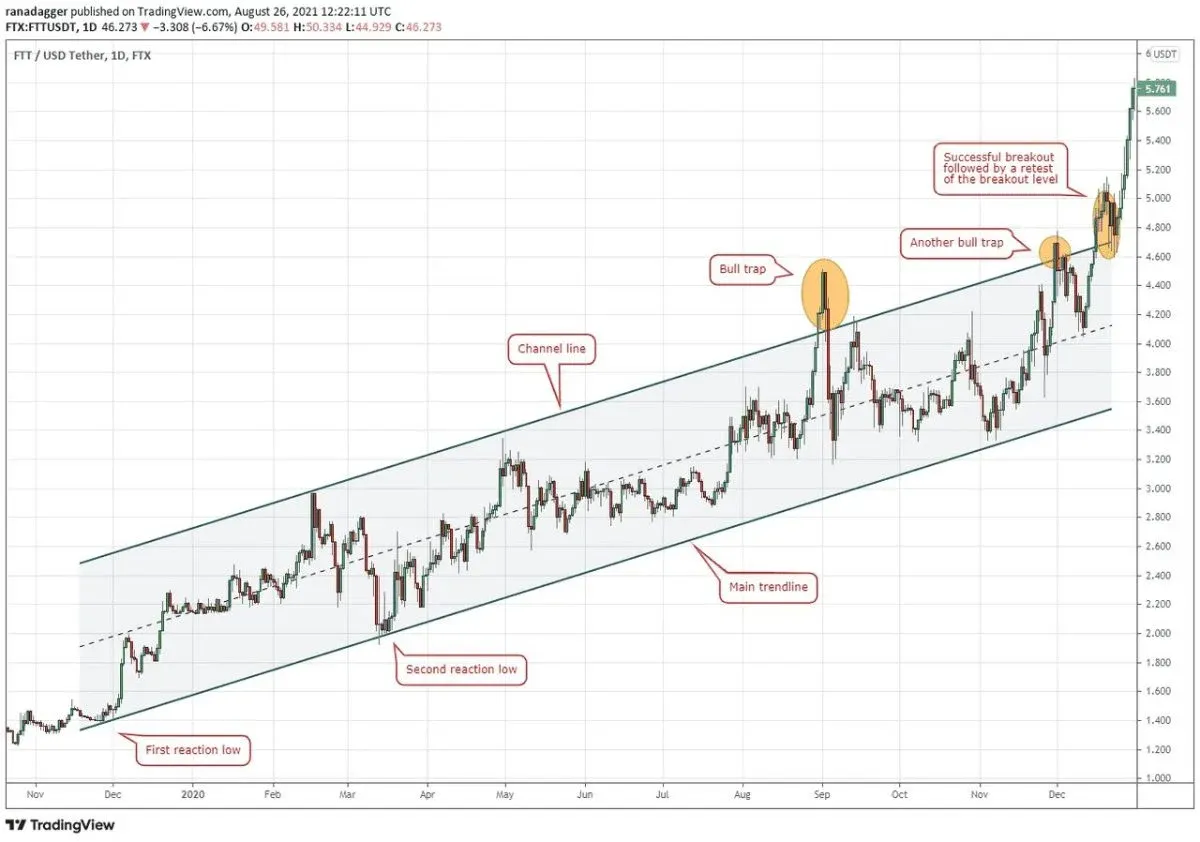
This strategy treats dip buying as a subset of trend following: only buy low when the overall trend remains upward; avoid buying in a downtrend. Common filters include:
- Price above a long‑term moving average (e.g., 200‑day MA) or forming higher highs/higher lows;
- On‑chain profitability metrics (such as MVRV) not showing deep divergence.
By applying trend filters, the probability of repeatedly buying into a sustained decline is reduced.
A Safer “Buy the Dip” Framework for 2026
A comprehensive framework should combine three perspectives: market structure, liquidity/leverage, and valuation/profitability.
1. Market‑Structure Perspective
- Pull‑backs Within an Uptrend: Price holds support, then quickly rebounds as selling pressure wanes, often multiple times.
- Break‑out Crashes: Price breaks a key support, forms lower highs, and is accompanied by macro or capital‑outflow catalysts.
2. Liquidity & Leverage Perspective
Leverage magnifies price swings. Reuters reported a $1 billion liquidation event in February 2026 as a classic example. Liquidation chains create a negative feedback loop: price drops → forced liquidations → further drops.
- If liquidations are still ongoing, the so‑called “cheap price” may keep falling;
- Once liquidations subside, prices often rebound sharply.
Monitoring funding rates on perpetual futures provides insight into how leveraged positions are anchoring spot prices.
3. Valuation & Profitability Perspective
Bitcoin has no corporate earnings, but on‑chain metrics can gauge market heat. MVRV (Market‑Cap‑to‑Realized‑Value) is a widely used tool; extreme deviations often signal tops or bottoms.
- In an overheated market, most holders are still in profit, so buying low could later generate sell pressure;
- In a cooled market, many holders are underwater, reducing immediate sell pressure and making purchases relatively safer.
Risk Management: Preventing “Dip Buying” from Turning Into a Disaster
- Define the purchase purpose: Rules for short‑term trading differ sharply from those for long‑term accumulation; avoid forcing the same strategy across unsuitable timeframes.
- Treat “knife‑fall” as a real risk: Leverage liquidations, macro shocks, or exchange outages can cause sudden crashes. On 7 February 2026, a Korean exchange experienced a system glitch that mistakenly issued a large volume of Bitcoin, triggering a brief plunge followed by a rapid rebound—an archetypal knife‑fall scenario.
- Set an acceptable maximum drawdown: If a 50 % drop would be intolerable, do not allocate funds that you intend to hold long‑term.
- Tax compliance: In the United States, brokers have been required since January 2025 to issue Form 1099‑DA for digital‑asset transactions; frequent traders should maintain detailed records for local tax reporting. (Tax obligations vary by jurisdiction, and gains may be taxable.)
- Rule‑over‑emotion checklist (keep on your phone’s notes app):
- What type of decline am I facing (micro dip, correction, retracement, crash)?
- Is the prevailing trend up, down, or uncertain?
- Are liquidations or panic sentiment driving the current move?
- Do I already have a pre‑planned ladder or DCA schedule?
- Which signals suggest my assessment could be wrong (break of key support, trend reversal, etc.)?
A dip‑buy without rules is equivalent to “panic‑buying a red candle”.
Case Study: 2024‑2026
The ETF Era Reshaped the Dip‑Buying Narrative
On 10 January 2024, the U.S. spot Bitcoin ETF received approval and began trading, marking a milestone after years of rejection. The ETF introduced new demand for brokerage accounts, creating an additional layer of trade‑flow‑driven activity.
That same month, the SEC’s official Twitter account was hacked, disseminating a false ETF approval announcement that caused a brief Bitcoin swing. The episode reminded investors that news‑driven “pump‑and‑dump” can generate “fake dips” that lack substantive buying rationale.
February 2026: Recession or Regime Change?
Reuters reported in February 2026 that Bitcoin fell to roughly $63,000, triggering massive liquidations and a sharp contraction in overall crypto market capitalization. A short‑lived rebound followed, leading to a choppy sideways market.
- Planned accumulators (via DCA or laddered orders) and those with a long‑term outlook were able to buy calmly amid panic.
- Leverage‑chasing “BTFD” participants often faced liquidation or were forced to sell at the bottom.
The lesson: if you intend to buy on the dip, you must pre‑define a response plan for scenarios where a decline escalates into a cascade.
Frequently Asked Questions
Is buying Bitcoin on the dip a good strategy?
It depends on market conditions and execution. Bitcoin has historically produced deep pull‑backs; within a long‑term uptrend, dip buying can be effective, but frequent buying during a sustained downtrend carries higher risk.
What does BTFD stand for?
BTFD means “Buy the *[expletive]* Dip”, a more aggressive version of “Buy the dip”, encouraging large purchases during sell‑offs. Its risk profile is markedly higher than a disciplined, staged‑buy approach.
How can I avoid getting “slashed” by a knife‑fall?
Use staged purchases (DCA or laddered orders), combine them with trend filters or key‑price confirmations, and steer clear of high‑leverage positions.
Which indicators help with dip buying?
- On‑chain: MVRV, realized price;
- Sentiment: Crypto Fear & Greed Index;
- Technical: support/resistance levels, breakout confirmation, volume spikes.
Is DCA safer than bottom‑fishing?
DCA aims to lessen timing pressure and keep investors consistent amid volatility. Research shows that in many historical scenarios a lump‑sum entry outperforms DCA, yet for investors who struggle with timing, DCA can reduce regret risk.
Conclusion
Buying on the dip can be a rational method for accumulating Bitcoin, but it must be treated as a structured risk‑management process rather than a blind rallying cry. Bitcoin’s history is peppered with sizable corrections; today, the landscape is further layered with ETF‑driven capital flows, leverage liquidations, and news‑induced volatility.
To craft a sustainable 2026 dip‑strategy, focus on controllable factors: DCA or laddered investing, trend filtering, risk caps, and emotional discipline. The decline itself is not an opportunity; the plan is what turns a potential opportunity into a measured execution.
That concludes this comprehensive guide on how to buy Bitcoin on the dip and what methods are available. For more related content, search for Bitaigen’s previous articles or continue browsing the links below. We appreciate your ongoing interest and support for Bitaigen!
Related Reading
💡 Register on Binance with referral code B2345 for the maximum trading fee discount. See Binance complete guide.



