
 Bitaigen Research
 TRC20 USDT transfers incur virtually no fees and are confirmed on‑chain in about 3 seconds; ERC20 transfers carry relatively higher fees, take roughly 15 seconds for on‑chain confirmation, and fees fluctuate with network congestion.
We compare TRC20 and ERC20 from two main perspectives—technical characteristics and usage costs—examining their on‑chain fee structures, confirmation latency, and ecosystem traits. This helps users pick the most suitable network for their transactions. Read the full article for practical evaluation points.
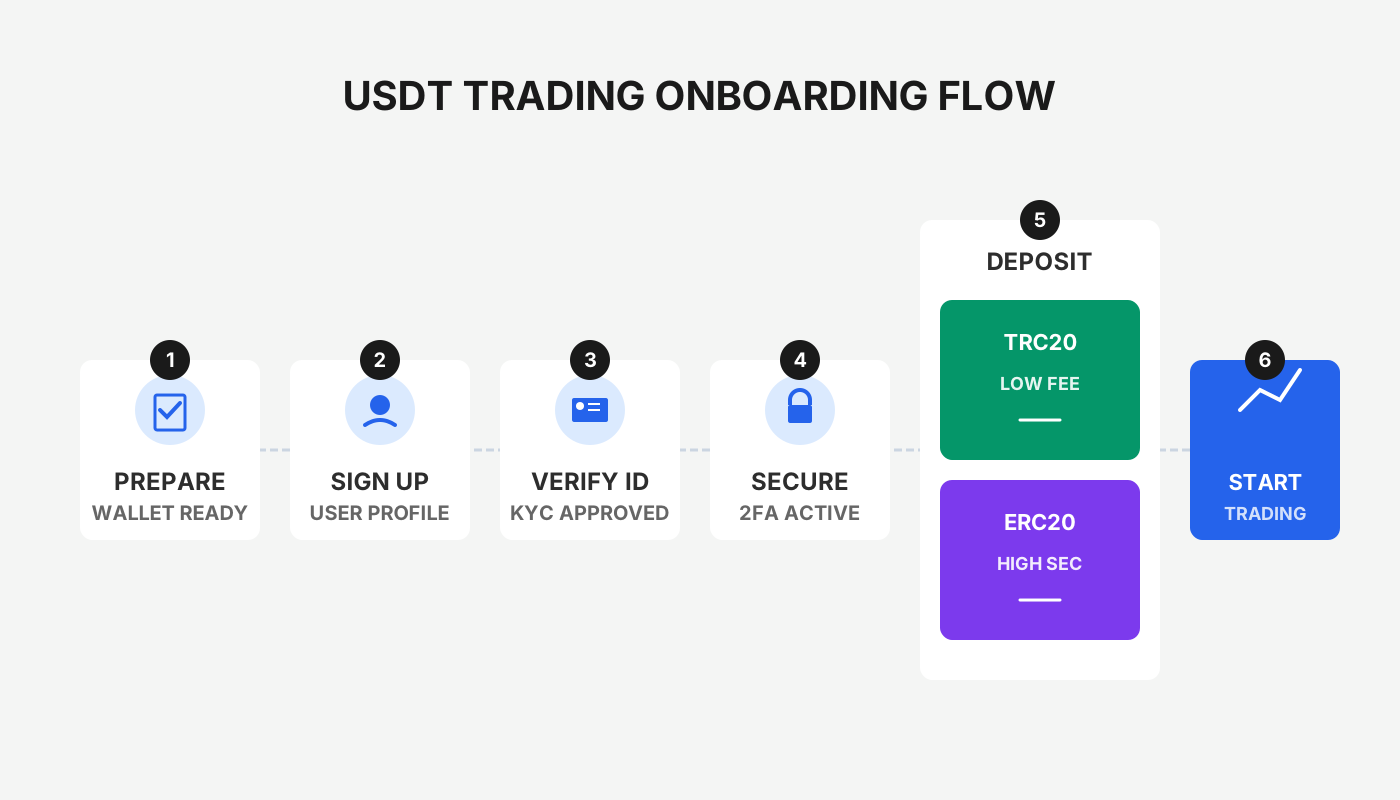
TRC20 on the Tron Blockchain
TRC20 is a token standard built on the TRON blockchain. Tron was founded by Justin Sun, and its native coin is TRX. When transferring USDT via TRC20, the transaction fee is virtually zero, which stands out in today’s environment of elevated ERC20 fees.
- Advantages
- Fees can be zero.
- Block time is roughly 3 seconds, leading to fast confirmations.
- Supports high throughput, so network congestion is unlikely.
- Controversy
Some industry observers claim Tron merely copies Ethereum, but its technical roadmap—employing a DPoS (Delegated Proof‑of‑Stake) consensus—differs markedly from Ethereum’s PoW/PoS evolution, and it has already cultivated an independent ecosystem.
Relationship Between USDT, TRC20, and ERC20
USDT (Tether) is a stablecoin pegged 1:1 to the U.S. dollar, issued by Tether Limited. USDT can be minted on several blockchains; the most common implementations are TRC20, ERC20, and Omni. Their value is identical; they differ only in the transfer channel, cost, and speed—much like a single remittance that can be sent through different payment networks with varying fees and settlement times.
Quick USDT Primer
- Full name Tether, issued by Tether Limited.
- Initially claimed each USDT was fully backed by a USD‑equivalent asset; since 2019 it has been backed by a combination of cash and loans from multiple financial institutions.
- The issuer is linked to BitFinex (registered in the British Virgin Islands) and generally enforces relatively strict KYC procedures.
- *Note for U.S. users:* When using centralized exchanges, be sure to trade USDT on Binance.US rather than the global Binance platform, as the latter is not available to U.S. residents.
What Is ERC20?
ERC20 is the token standard on the Ethereum blockchain. Ethereum originally used PoW consensus and has since transitioned to PoS, producing a new block approximately every 15 seconds. USDT issued as an ERC20 token requires ETH to pay the transaction (gas) fee.
- Characteristics
- Transaction fees vary with network congestion; high gas prices have become common recently.
- Each transaction typically needs about 15 seconds to be confirmed.
- Addresses start with `0x`; always verify this prefix before sending funds to avoid loss.
- *Tax reminder:* In many jurisdictions, gains or losses from converting, selling, or otherwise disposing of USDT may be subject to capital‑gains tax. Users should consult local tax regulations.
What Is TRC20?
TRC20 (TRC20 Token Standard) is a smart‑contract‑based token specification on the TRON blockchain. Tron employs DPoS (Delegated Proof‑of‑Stake) consensus, achieving block times of roughly 3 seconds and delivering high throughput, scalability, and reliability.
- Core Benefits
- Low latency; fees are free or extremely low.
- Integrated with the BitTorrent protocol, capable of handling about 40 % of global daily internet traffic.
- Supports a wide range of decentralized applications (DApps), resulting in an active ecosystem.
Comparing TRC20 and ERC20
| Item | USDT Issuing Chain | Block Time | Confirmation Time | Fee (Typical on‑exchange) | Common Wallet Prefix |
|---|---|---|---|---|---|
| **TRC20** | Tron | ~3 seconds | ~3 seconds | Free or negligible | T‑ (e.g., `T...`) |
| **ERC20** | Ethereum | ~15 seconds | ~15 seconds | Higher (depends on gas price) | 0x‑prefixed |
When to Choose TRC20?
- You need the lowest possible fee and the fastest arrival.
- You store USDT in a cold wallet (e.g., Ledger Nano X); TRC20 can automatically split balances, making management easier.
When to Choose ERC20?
- Your operations are already deep within the Ethereum ecosystem and you need to interact with other ERC20 assets (DeFi tokens, NFTs).
- Advanced functionality that relies on Ethereum smart contracts is required; ERC20 offers broader compatibility.
Conclusion
If cost and speed are your primary concerns, TRC20 provides a superior solution for moving USDT. However, if your workflow depends on the broader Ethereum ecosystem—its contracts, DeFi protocols, or NFT marketplaces—ERC20 remains indispensable. The final decision should reflect the specific needs and use‑case scenarios of individual users or institutions.
For more in‑depth analysis of TRC20 versus ERC20 USDT transfers, follow Bitaigen and explore its related topic articles.
Related Reading
- TRC20 vs ERC20: Sending TRC20 Tokens to an ERC20 Address
- TRC20 USDT vs ERC20 & Omni: Speed, Cost, and Security Compared
- TRC20 vs ERC20: Comparing TRON and Ethereum Token Standards
💡 Register on Binance with referral code B2345 for the maximum trading fee discount. See Binance complete guide.



