
 Bitaigen Research
 In this article we outline the core principles and distinctive features of ConsenSys’s Layer‑2 solution Linea, analyze its technical implementation for cost reduction and throughput improvement, and provide an overview of its ecosystem, token mechanics, and potential airdrop information, helping readers quickly grasp the essentials. This is worth a thorough read.
What Is Linea?
Linea is a Layer‑2 scaling solution for Ethereum launched by ConsenSys, designed to increase transaction throughput and lower fees while preserving the security guarantees of the Ethereum mainnet. It processes the bulk of transactions off‑chain and then submits compressed proofs to the main chain, achieving faster confirmations and reduced costs. Because it implements an execution environment equivalent to the Ethereum Virtual Machine (EVM), existing contracts and development tools can be migrated to the network without any modifications.
Overview of How It Works
Linea’s operation can be likened to a high‑speed highway leading to Ethereum, with the main flow as follows:
- Transaction Initiation
After signing a transaction in a wallet (e.g., MetaMask), the user sends it to the Linea network, where it awaits acceptance.
- Batch Processing
The network aggregates transactions from multiple users, validates them according to protocol rules, and packs them into a new block. Once completed, the wallet immediately displays a confirmation, typically visible within two seconds.
- Zero‑Knowledge Proof Generation
To prove to Ethereum that these transactions were executed correctly, Linea generates the corresponding zk‑proof.
- Batch On‑Chain Submission
Proofs for multiple blocks are combined into a single batch and submitted to the Ethereum mainnet. Ethereum only needs to verify this succinct proof to confirm the validity of all included transactions.
- Final Security
Once Ethereum finalizes the batch, the transactions become permanent and enjoy the same security level as if they had been executed directly on Ethereum.
Key Features
Zero‑Knowledge Rollups (zk‑Rollups)
- Security: Ethereum validates the zk‑proof, ensuring on‑chain data cannot be tampered with.
- Efficiency: Transactions settle within seconds, far faster than traditional on‑chain processing.
- Scalability: Supports high‑frequency use‑cases such as DeFi, NFTs, and gaming.
- Privacy: Confirmation occurs without revealing user‑level details.
Compared with optimistic rollups, zk‑Rollups eliminate the lengthy challenge period, delivering finality more quickly.
Full EVM Compatibility
- Any smart contract that runs smoothly on Ethereum can be deployed to Linea and retain identical performance.
- Developers can continue using familiar toolchains like Hardhat, Remix, and Truffle.
- Major wallets (Coinbase Wallet, MetaMask, Ledger, etc.) already support Linea natively.
This equivalence dramatically lowers migration barriers and reduces project risk.
Low Transaction Fees
During Ethereum network peaks, a single transaction can cost $5‑$50 USD, whereas most operations on Linea require only a few cents. This makes everyday activities such as token swaps, NFT minting, and micro‑transactions far more affordable.
High Throughput and Scalability
Linea can process thousands of transactions per second, employing parallel batch processing so that even a surge in users remains smooth. The network’s scaling mechanisms ensure performance does not degrade as usage grows.
Security Rooted in Ethereum’s Model
All critical data ultimately lands on the Ethereum mainnet. Even if Linea experiences a failure, users can recover assets via Ethereum, preserving fund safety.
Comparison With Other Layer‑2 Solutions
| Feature | Linea | Optimism | Arbitrum | zkSync |
|---|---|---|---|---|
| **EVM Compatibility** | Fully equivalent | Highly compatible | Highly compatible | Partially compatible |
| **Rollup Type** | zk‑Rollup | Optimistic Rollup | Optimistic Rollup | zk‑Rollup |
| **Transaction Finality** | Seconds | ~1 week | ~1 week | Seconds |
| **Fee Level** | Low | Medium | Medium | Low |
| **Ecosystem Size** | Growing | Mature | Mature | Rapidly expanding |
Linea’s core proposition is speed, zero‑knowledge security, and full EVM compatibility, blending the strengths of multiple L2 technologies.
Advantages and Potential Risks of Using Linea
Advantages
- Ethereum‑grade security + lower gas: Fees are reduced while retaining mainnet security.
- Zero‑code migration: Existing contracts can be deployed unchanged.
- New business models: Low costs make frequent trading, in‑game economies, and NFT minting more feasible.
- Backed by ConsenSys: Benefits from ecosystem assets such as MetaMask and Infura.
- Robust tooling: Wallets, bridges, and oracles (e.g., Chainlink) are already integrated.
Risks
- Technical maturity: As a relatively new L2, software bugs or upgrade challenges may still arise.
- Bridge security: Moving assets between Ethereum ↔ Linea relies on smart‑contract bridges; vulnerabilities could lead to loss of funds.
- Degree of decentralization: Early operation is overseen by a limited set of nodes; full decentralization is still in progress.
Ecosystem Overview
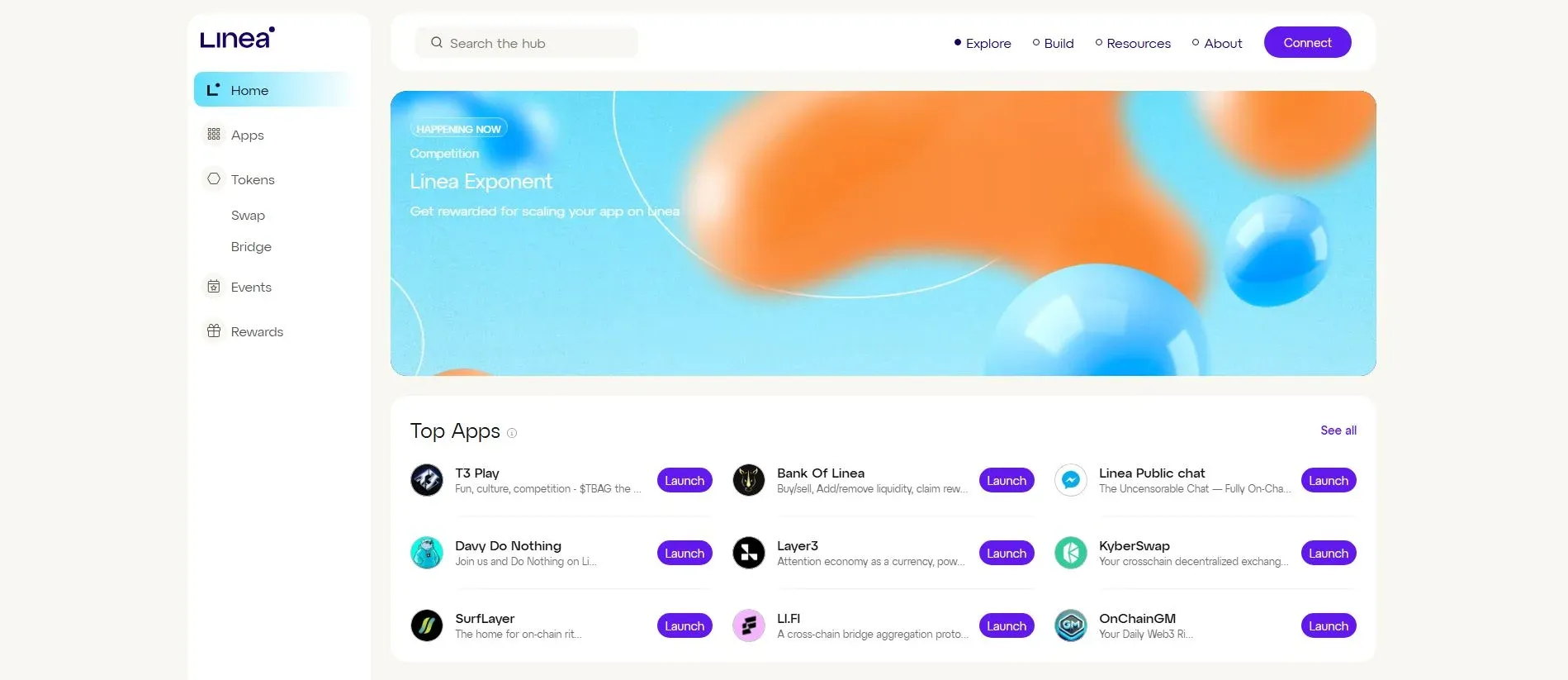
Linea’s ecosystem is being built around practicality, with emphasis on the following categories:
- DeFi: Low fees make lending, swapping, and yield aggregation more economical, especially for small‑value trades.
- NFT Marketplaces: Creators can mint NFTs at a fraction of the usual cost, and collectors can buy or sell with near‑zero gas fees.
- Developer Tools: Full EVM compatibility allows existing contracts to migrate with minimal changes; accompanying IDEs and testing frameworks remain unchanged.
- Wallet Support: MetaMask, Coinbase Wallet, Ledger, and others natively support Linea, lowering the entry barrier for users.
- Cross‑Chain Bridges: Official and third‑party bridges enable free movement of assets among Linea, Ethereum, and other chains.
Together, these components form an easy‑to‑use, cost‑friendly environment tightly coupled with Ethereum.
How to Operate on Linea (Step‑by‑Step Guide)
- Prepare a Compatible Wallet
Ensure your wallet (MetaMask, etc.) is updated to the latest version to avoid signing or network errors.
- Add the Linea Network
Manually input Linea’s RPC endpoint and chain ID in your wallet’s network list, or use a trusted network‑list tool for one‑click import.
- Bridge Assets
Use the official bridge or an audited third‑party bridge to transfer ETH or other tokens from Ethereum to Linea. For a first‑time move, it is advisable to test with a small amount.
- Maintain Sufficient ETH for Gas
Although fees are minimal, you still need a modest amount of ETH on Linea to cover gas costs.
- Interact with DApps
Visit DeFi, NFT, gaming, or other Linea‑based applications to experience second‑level confirmations and low fees.
- Monitor Transactions
Use a compatible block explorer to check transaction status, gas usage, and contract interaction details.
LINEA Token and Airdrop
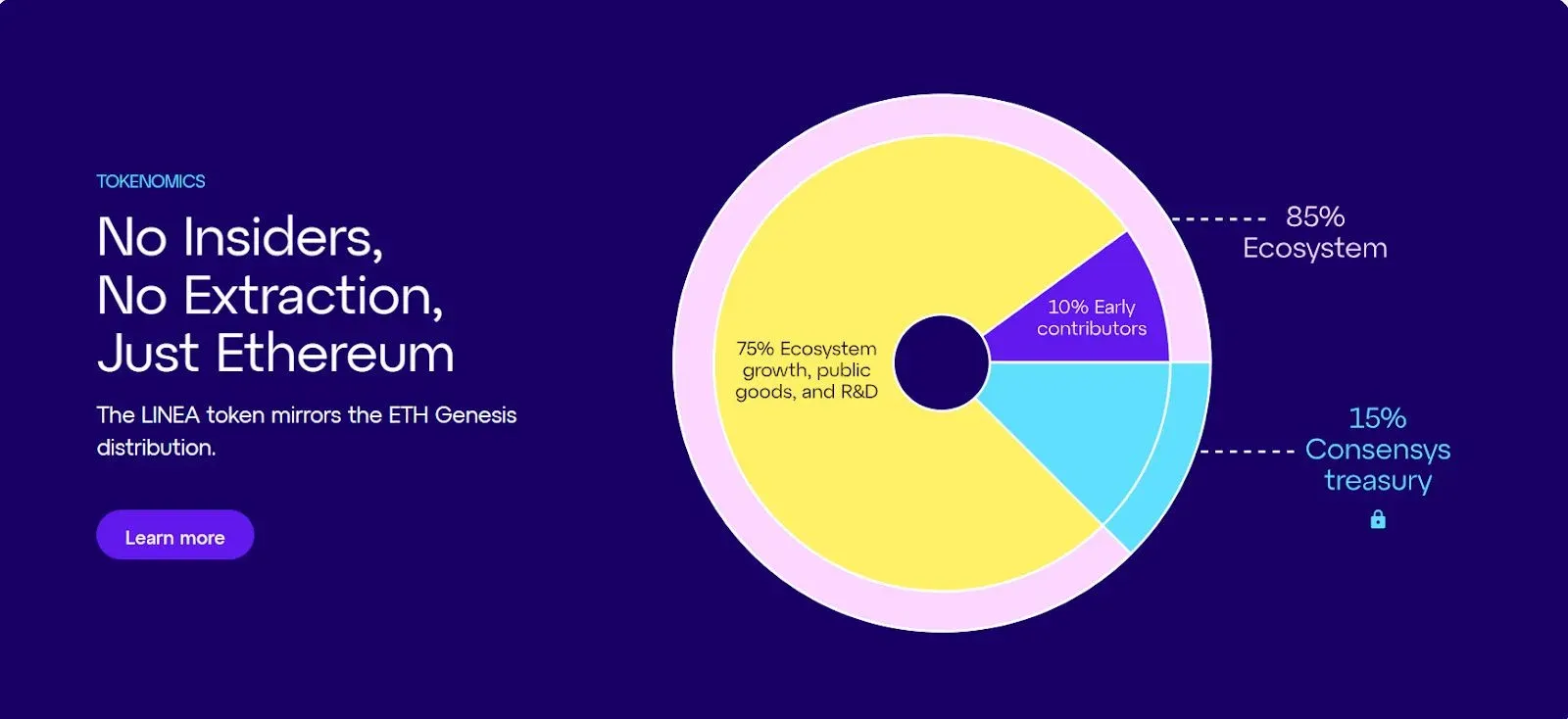
The LINEA token was officially issued in September 2025 through a token generation event, with a fixed total supply of 72 billion tokens. 10 % of this supply is distributed via an airdrop to early active users. Eligibility criteria include bridging assets, using DApps, completing the Linea Voyage and Linea Park programs, among others. The airdrop claim window lasts 90 days, closing on December 9 2025. Users can verify their allocation through official channels and withdraw the tokens to a personal wallet; unclaimed tokens are transferred to an ecosystem fund after the deadline for future incentives and development.
The tokenomics aim for long‑term value support. All transaction fees on the network are paid in ETH, with a portion of the fees automatically burned. As on‑chain activity rises, the circulating supply of both ETH and LINEA will gradually decrease, enhancing scarcity.
Outlook
Linea’s roadmap is tightly aligned with Ethereum’s broader scaling plans. The goal is to achieve Type‑1 zkEVM equivalence in Q1 2026, enabling any Ethereum contract to run on Linea without modification. This will further lower migration costs for developers and cement Linea’s role as a durable Layer‑2 scaling solution.
ConsenSys, as the core backer, leverages the user bases of MetaMask, Infura, and other products to funnel traffic to Linea. Seamless integration with existing tooling also accelerates user adoption.
While competition is fierce—Arbitrum, Optimism, Base, and others already host mature ecosystems—Linea must continue attracting high‑quality projects, increasing decentralization, and strengthening security to secure a lasting place in the Layer‑2 market.
Conclusion
Linea offers Ethereum users and developers a low‑fee, high‑speed, and secure pathway. Its zero‑knowledge rollup technology, full EVM compatibility, and strong ConsenSys endorsement make it a Layer‑2 network worth watching. As the ecosystem expands and the technology matures, Linea is poised to play a significant role in Ethereum’s scaling landscape, providing a more user‑friendly environment for decentralized applications.
Frequently Asked Questions
What is the core mission of the Linea network?
To boost Ethereum’s transaction throughput, lower fees, and alleviate mainnet congestion while maintaining full compatibility with Ethereum smart contracts.
Is investing in the LINEA token worthwhile?
The token has potential upside, especially as network usage grows and the burn mechanism takes effect. However, all crypto assets carry market volatility and technical risk; investors should conduct their own assessment.
Can I bridge ETH to Linea?
Yes. Using the official bridge or an audited third‑party bridge, you can transfer ETH and other assets from the Ethereum mainnet to Linea to enjoy lower gas fees and faster confirmations.
What are the primary use‑cases for Linea?
Running Ethereum smart contracts, accessing DeFi services, trading tokens, and participating in NFT minting and marketplaces—all benefit from Linea’s low cost and high speed.
Related Reading
- Bitcoin Hyper: $29M Funded Layer‑2 Boosting DeFi
- Binance Alpha: Earn Points, Claim Rewards & Access TGEs
- Binance ENSO Token Airdrop Guide: Purchase BNB & Tokenomics
💡 Register on Binance with referral code B2345 for the maximum trading fee discount. See Binance complete guide.



