
 Bitaigen Research
In this article we systematically outline Litecoin’s core characteristics, its halving mechanism, and recent price performance. We also assess its future development potential from the perspectives of technical roadmap, ecosystem partnerships, and industry trends. By deeply analyzing historical data and market sentiment, readers can better understand LTC’s position within the digital‑asset landscape and the possible opportunities it may present. Keep reading for more details.
Litecoin (LTC) Quick‑Reference Table
Project|Information
---|---
Name|Litecoin
Ticker|$LTC
Market Capitalisation|≈ US$6.45 billion (≈ $6.45 B)
Fully‑Diluted Valuation (FDV)|≈ US$7.17 billion (≈ $7.17 B)
Market‑Cap Rank|≈ #20 (according to CoinMarketCap’s live ranking)
Category|Public‑chain token / Layer 1
Issuing Chain|Litecoin mainnet
Circulating Supply|≈ 75.55 million LTC (75.55 M LTC)
Maximum Supply|84 million LTC (fixed cap)
Official X (Twitter) Account|https://x.com/LTCFoundation
Official Website|https://litecoin.com/
Block Explorer|https://blockchair.com/litecoin
*Source: CoinMarketCap (data as of March 2025)*
What Is Litecoin (LTC)?
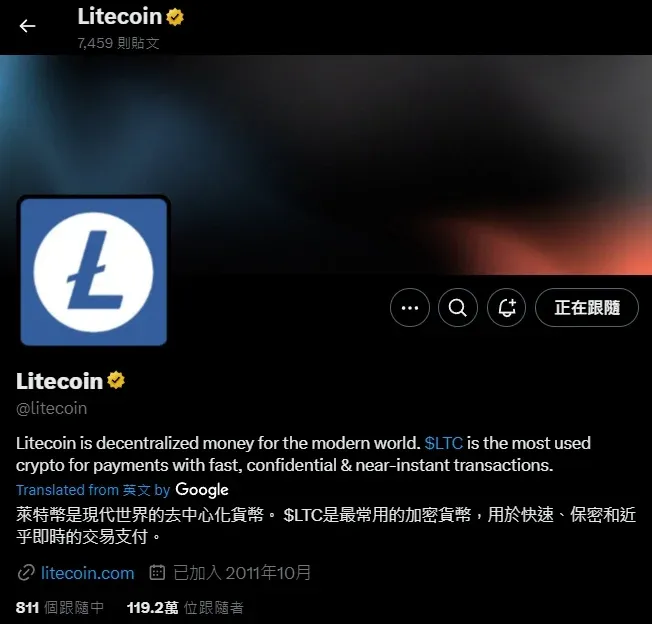
Litecoin (LTC) is a cryptocurrency that launched in 2011, inspired by Bitcoin (BTC) and also using a proof‑of‑work (PoW) mining algorithm. Compared with Bitcoin, Litecoin shortens the block‑generation interval to roughly 2.5 minutes, resulting in faster transaction confirmations and generally lower fees. Because of these traits the community often nicknames it “digital silver,” complementing Bitcoin’s moniker of “digital gold.”
Key Points About Litecoin (LTC)
- As one of the older digital assets, LTC debuted in 2011. Technically it is close to Bitcoin but optimises block time and fees, making transactions more efficient.
- The total supply cap is 84 million coins, with about 75.55 million currently circulating. Approximately every four years a halving occurs, cutting the block reward in half. The most recent halving took place in August 2023; the next is expected around September 2027 (some sources cite July 2027).
- After several bull‑and‑bear cycles, LTC has achieved a certain level of market consensus, with some use‑cases treating it as a payment medium. However, unlike Bitcoin, which many institutions regard as a store‑of‑value asset, Litecoin’s real‑world adoption remains relatively limited. Historical price spikes typically coincide with broader market up‑turns or heightened interest in the halving narrative.
What Are Litecoin’s Use Cases?
Since its inception, LTC has leveraged its fast transaction speed and low fees to position itself as an efficient digital payment tool. The main application scenarios include:
- Everyday Payments & Transfers
With a block time of about 2.5 minutes and near‑zero fees, LTC is suitable for day‑to‑day purchases, peer‑to‑peer transfers, and cross‑border remittances. In 2022, Gucci accepted LTC payments at several U.S. stores, demonstrating its feasibility in retail environments.
- Cross‑Border Remittances & Micropayments
Because LTC does not rely on traditional financial intermediaries, international transfers are cheap and fast, making it ideal for many small‑value cross‑border transactions such as freelance payouts or low‑value e‑commerce settlements.
- Digital Platform Integration
As of March 2025, Litecoin is supported in the Telegram wallet feature, allowing users to send and receive LTC directly within chat windows. This expands its presence in social platforms and the broader digital‑payment ecosystem.
Litecoin (LTC) Price History
Litecoin’s maximum supply is 84 million coins, with roughly 72 million currently in circulation. Like Bitcoin, LTC’s issuance is driven by mining hardware; every 840,000 blocks (about four years) a halving reduces the block reward. The last halving occurred in August 2023, and the upcoming one is projected for July 2027 (or September 2027). A live countdown can be found at the ViaWallet Halving Tracker.
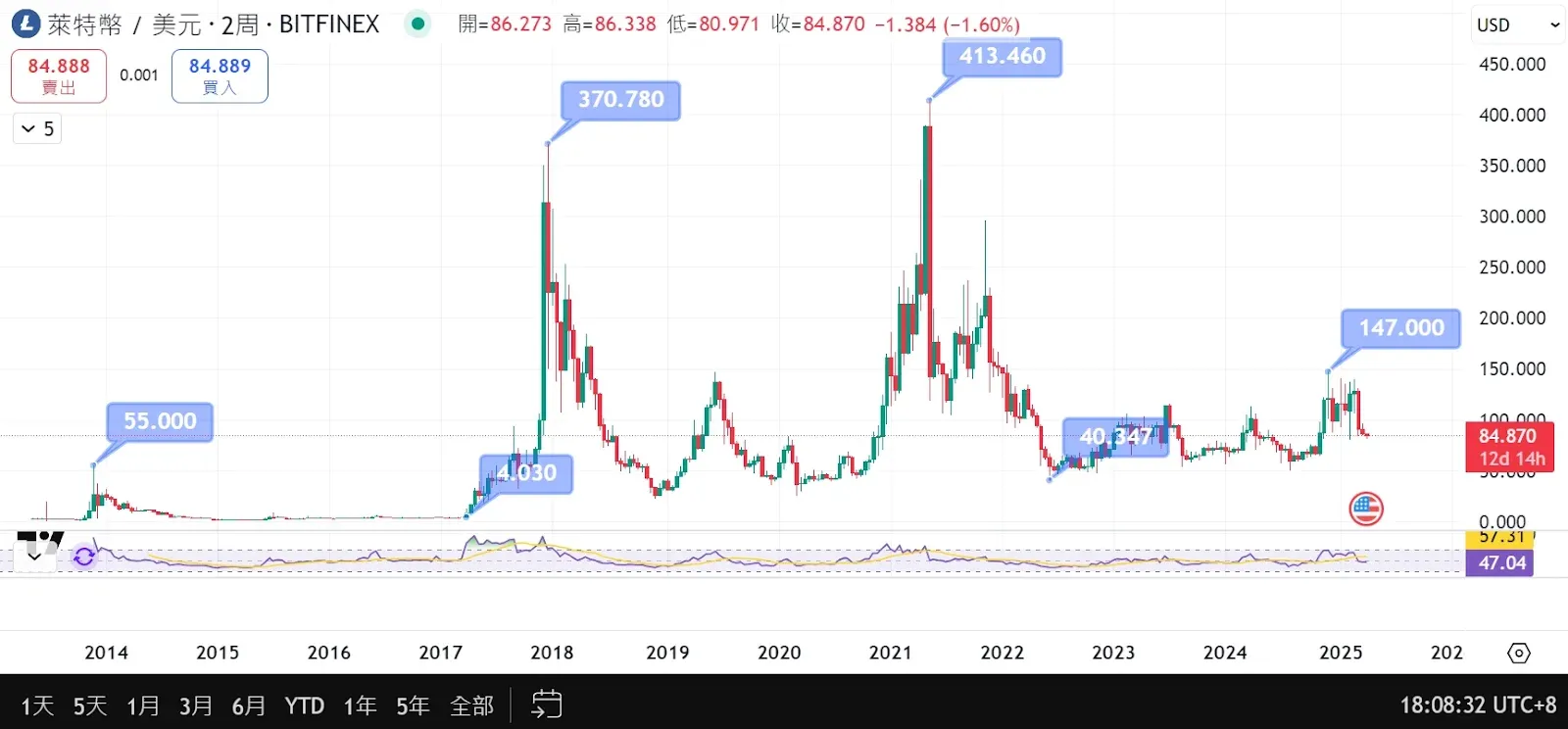
Reviewing historical price movements, LTC’s rallies often align with a market‑wide shift from bearish to bullish sentiment or appear roughly six months before a halving event. In periods lacking a clear catalyst or when overall market conditions are weak, LTC typically does not generate independent upward momentum.
Tax Note: Crypto gains, including those from LTC, may be taxable in your jurisdiction. Consult a local tax professional to understand your obligations.
How to Buy Litecoin (LTC)?
Virtually every major exchange lists LTC. The three platforms below offer deep liquidity and fast execution, making them good starting points:
- Binance (global platform) – Register here
- OKX – Register here
- Bybit – Register here
Important for U.S. Residents: Use Binance.US rather than the global Binance site to stay compliant with U.S. regulations.
Simplified Purchase Flow (Three Steps)
- Create an account on the chosen exchange (e.g., Binance) and complete the KYC/AML verification.
- Deposit fiat (via credit‑card, SEPA, or SWIFT) or stablecoins such as USDT.
- Trade your USDT for LTC (the original text mistakenly mentioned “ETC”; retain the intended LTC purchase).
📌 Friendly Reminder: Avoid trading on unknown or unregulated platforms, as they pose heightened risks to your funds.
Recent Litecoin News & Developments
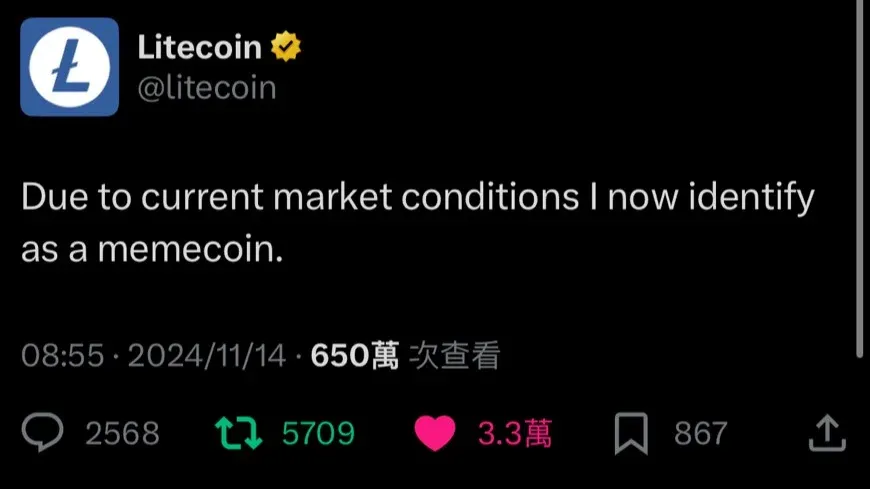
- November 2024: The official Litecoin X (formerly Twitter) account playfully labeled itself a MEME coin, sparking a wave of community imitation. On 15 November the account posted “Now acknowledging LTC as a MEME coin,” which briefly stirred discussion and nudged the price upward.
- Late 2024: Multiple firms submitted applications for a spot‑ETF that would hold LTC. U.S. regulators have already classified Litecoin as a commodity, laying the groundwork for ETF compliance. If approved, an LTC‑based ETF could launch in traditional financial markets by 2025, marking a significant step toward mainstream adoption.
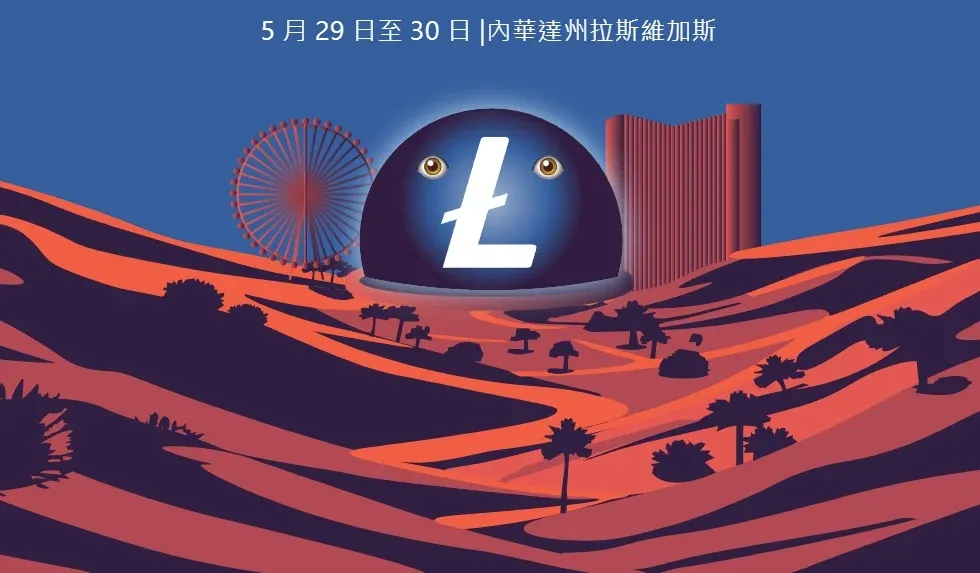
- May 2025: The Litecoin Foundation announced an annual crypto summit scheduled for 29‑30 May in Las Vegas, USA. The event will bring together developers, industry experts, and community members to discuss privacy innovations, digital payments, and blockchain policy, showcasing the ongoing evolution of the Litecoin ecosystem.
Closing Thoughts
Litecoin (LTC) is one of the long‑standing projects in the cryptocurrency space, featuring a stable technical foundation and a fixed supply design. After having undergone several halving cycles, it still commands a measurable level of attention in the market. Whether LTC continues to attract interest will depend on broader blockchain industry trends, regulatory developments, and the real‑world rollout of payment use cases.
To stay up‑to‑date with the latest LTC news and fundamentals, regularly monitor the official site (litecoin.org), community channels, and any relevant regulatory announcements. Keeping informed is essential for understanding how this asset evolves over time.
This concludes the article. For deeper analyses of Litecoin, you can refer to previous pieces published by Bitaigen, or follow the related links below. Thank you for supporting Bitaigen!
Related Reading
- Litecoin (LTC) Technical Analysis, Upgrades & Future Outlook
- Litecoin (LTC) Zero Risk? 2026 Technical & Market Review
- Litecoin (LTC) Spot ETF 2025: Proof‑of‑Work Digital Silver
💡 Register on Binance with referral code B2345 for the maximum trading fee discount. See Binance complete guide.



