
 Bitaigen Research
 We systematically examine the ten most representative decentralized storage blockchain projects from the perspectives of technology, ecosystem, and token economics. By deeply analyzing each project's core principles, use cases, and token functions, readers can quickly grasp industry trends and assess potential value. To learn about each project's unique advantages and development paths, please continue reading.
What tokens belong to decentralized storage blockchain projects?
Currently, the ten mainstream decentralized storage blockchain project tokens are BTT, FIL, HOT, SC, AR, ANKR, STORJ, CVT, LAMB, and CRU.
What tokens belong to decentralized storage blockchain projects?
1. BTT
- Market cap (circulating): $11.562 billion
- Circulating supply: 989.938 billion BTT
- 24‑hour trading volume: $4.473 billion
BitTorrent (BTT) will first be implemented in the Windows‑based µTorrent Classic client. The µTorrent Classic version with BTT support remains 100 % compatible with other clients that use the BitTorrent protocol and adds bandwidth bidding, a cryptocurrency wallet, and a bidding engine that work together.
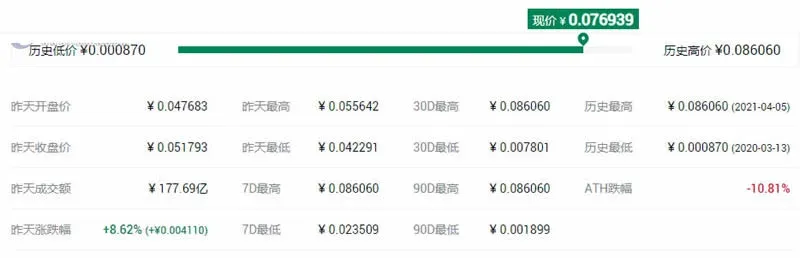
2. FIL
- Market cap (circulating): $11.375 billion
- Circulating supply: 63.5892 million FIL
- 24‑hour trading volume: $2.873 billion
Filecoin is a token built on top of IPFS. Users earn rewards by contributing idle hard‑drive space. It uses a Proof‑of‑Work (PoW) mechanism where the larger the storage capacity, the greater the FIL rewards.
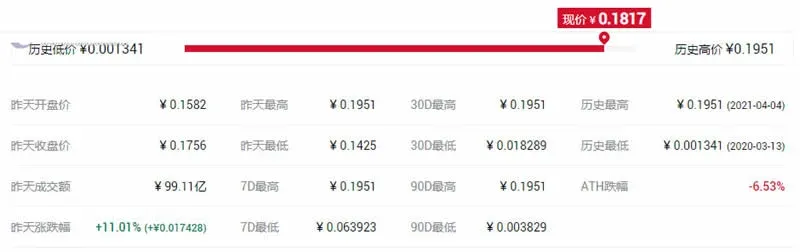
3. HOT
- Market cap (circulating): $4.677 billion
- Circulating supply: 168.438 billion HOT
- 24‑hour trading volume: $1.156 billion
Holo provides a distributed peer‑to‑peer (P2P) hosting platform for Holochain applications (hApps). It is seen as a bridge to a new internet, aiming to replace traditional blockchains as the data storage and transaction layer for dApps.
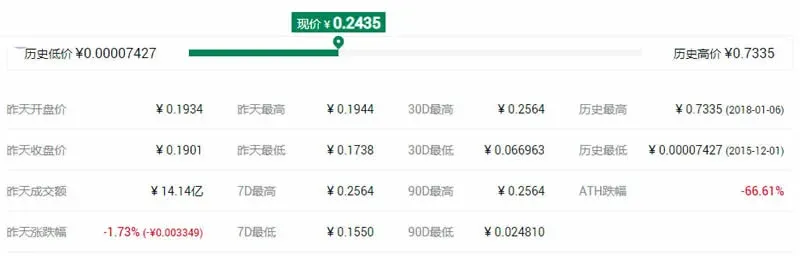
4. SC
- Market cap (circulating): $1.765 billion
- Circulating supply: 47.267 billion SC
- 24‑hour trading volume: $898 million
Sia is a decentralized cloud storage platform that leverages blockchain technology. Compared with traditional cloud services, Sia offers more secure, faster, and lower‑cost storage.
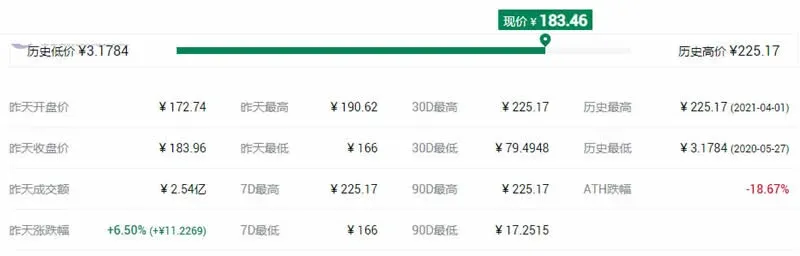
5. AR
- Market cap (circulating): $1.222 billion
- Circulating supply: 43.8256 million AR
- 24‑hour trading volume: $33.221 million
Arweave proposes a novel blockchain storage solution that addresses scalability, data availability, and cost, aiming to become a “permanent, readable web” for the internet.
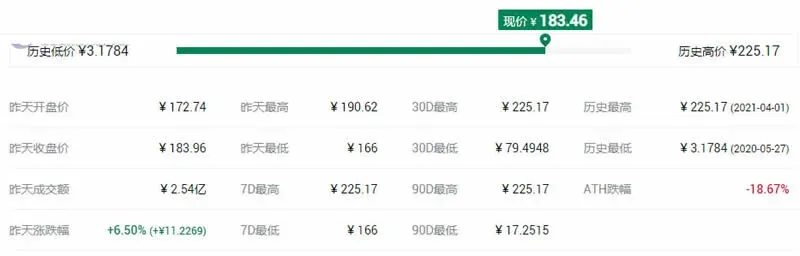
6. ANKR
- Market cap (circulating): $1.175 billion
- Circulating supply: 6.996 billion ANKR
- 24‑hour trading volume: $338 million
Ankr aggregates idle compute power from data centers, personal computers, and edge devices to build a distributed computing platform. Its compute market, based on containers, Kubernetes, blockchain, and trusted hardware, offers users cheaper and more secure cloud services.
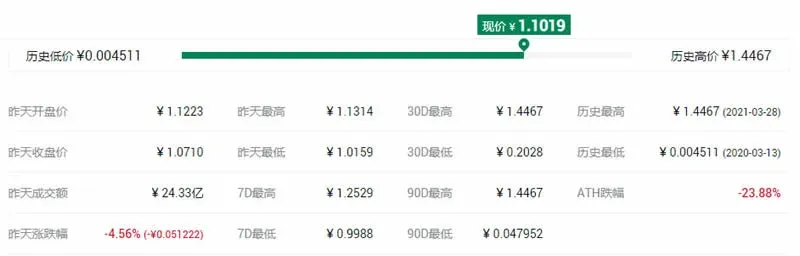
7. STORJ
- Market cap (circulating): $420 million
- Circulating supply: 143 million STORJ
- 24‑hour trading volume: $355 million
Storj aims to create a censorship‑resistant, surveillance‑free, highly available decentralized cloud storage network. The platform uses encryption, public/private keys, and hash functions to ensure secure storage and transmission of data.
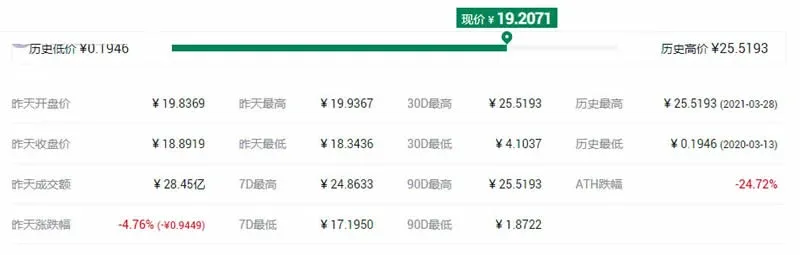
8. CVT
- Market cap (circulating): $285 million
- Circulating supply: 1.06 billion CVT
- 24‑hour trading volume: $8.4442 million
CyberVein (数脉链), launched by the Singapore‑based CVTechnology Foundation, targets global smart‑city development and provides decentralized city‑data services.
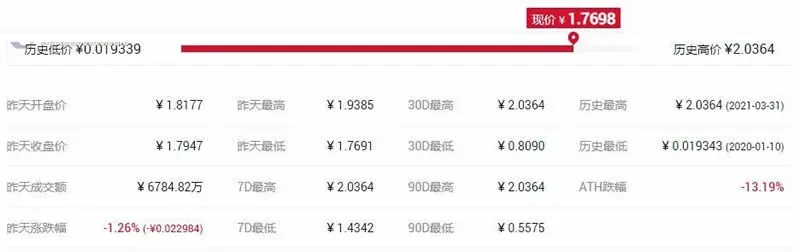
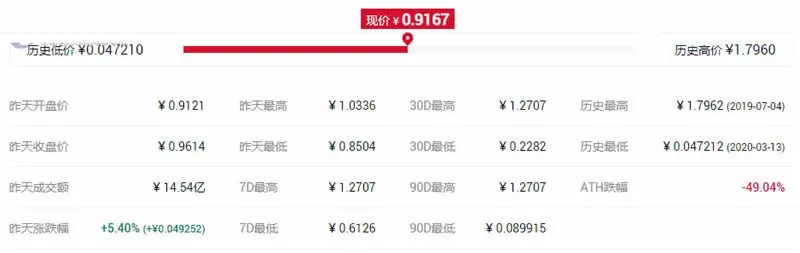
9. LAMB
- Market cap (circulating): $137 million
- Circulating supply: 987 million LAMB
- 24‑hour trading volume: $139 million
Lambda is a high‑speed, secure, and scalable blockchain infrastructure project. Its native token LAMB is used to bill and incentivize memory and storage resources for on‑chain nodes.
10. CRU
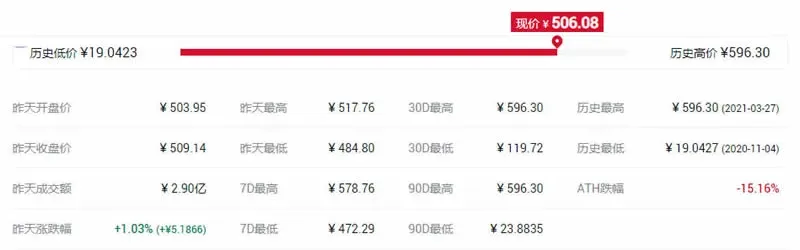
- Market cap (circulating): $125 million
- Circulating supply: 1.6241 million CRU
- 24‑hour trading volume: $36.8889 million
Crust offers a decentralized storage network that supports multiple protocols such as IPFS and is compatible with a decentralized compute layer. Its goal is to build a distributed cloud ecosystem that emphasizes data privacy and ownership.
Friendly reminder: When selecting digital assets, avoid projects that have already shown signs of exit scams, pyramid schemes, or “air” tokens. Consider focusing on tokens that have remained relatively stable during bull markets or have been ranging for a long period, as such assets often possess stronger underlying potential.
>
*Trading volumes and market caps are typically quoted in USD on global exchanges; European users may use SEPA or SWIFT for fiat on‑ramps. U.S. residents should use Binance.US (not the global Binance platform) to stay compliant with local regulations.*
>
*Please note that cryptocurrency gains may be taxable in your jurisdiction; consult a tax professional for guidance.*
The above provides a detailed overview of the ten decentralized storage blockchain project tokens. For more information on blockchain project tokens, follow Bitaigen (比特根) and its related columns.
Related Reading
- AI-Chain Blockchain Projects 2024: Bittensor & DeepSnitch
- What Is the MSV Protocol (MSVP) Token? How It Works, Economics & Airdrop
- Boost (BOOST) Token: Design, Economics & Investment Outlook
💡 Register on Binance with referral code B2345 for the maximum trading fee discount. See Binance complete guide.



