
 Bitaigen Research
 We systematically analyze Unitas Labs’ UP token in this article, emphasizing its innovative USSD + Yield infrastructure, synthetic stablecoin mechanism, and token economics. By outlining core advantages, cross‑chain deployment, and participation procedures, readers can quickly grasp the project’s characteristics and potential value. Subsequent sections will provide practical guidance—please continue reading.
What Is the Unitas Labs (UP) Token?
Unitas Labs is dedicated to building a brand‑new “USSD + Yield” infrastructure on blockchain, aiming to launch a stablecoin that is native to the crypto ecosystem. Unlike conventional stablecoins that depend on banks and fiat reserves, this project creates USDu—a synthetic USSD backed by a delta‑neutral strategy—thereby effectively avoiding price volatility of the collateral assets.
USDu is softly pegged to the U.S. dollar with an over‑collateralization ratio of roughly 105 %. Its staked version, sUSDu, compounds automatically, so the token’s value increases over time without any extra action required from users. The protocol is currently deployed primarily on Solana and Binance Smart Chain (BSC), with plans to expand to additional EVM‑compatible chains.
Core Advantages of the Project
- Delta‑Neutral Arbitrage: Leverages JLP (Jupiter Liquidity Provider tokens) on Solana’s Jupiter Perps platform to capture about 75 % of trading fees, delivering market‑neutral returns.
- Off‑Chain Settlement (OES): Utilizes two custodial partners, Ceffu and Copper, to safely hold collateral assets, reducing gas costs and accelerating mint‑/redeem‑speed while diversifying counter‑party risk.
- Revenue Sources: Primarily derived from trading fees and financing rates, the yields are uncorrelated with overall market direction.
The project has secured investments from several institutions, including Amber Group, Blockchain Builders Fund (Stanford University), Bixin Capital, MEV Capital, Big Brain Holdings, and 57Blocks. The seed round concluded in June 2025, raising US $3 million.
---
UP Token Overview
UP is the native token of the Unitas ecosystem, serving both governance functions and profit‑sharing rights. Holders can engage in protocol parameter decisions through the stUP mechanism, influencing aspects such as yield distribution ratios, risk limits, and the approval of new revenue strategies.
- Token Name: Unitas Labs
- Symbol: UP
- Blockchain: Planned issuance on Solana
Token Allocation Structure
| Purpose | Percentage |
|---------|------------|
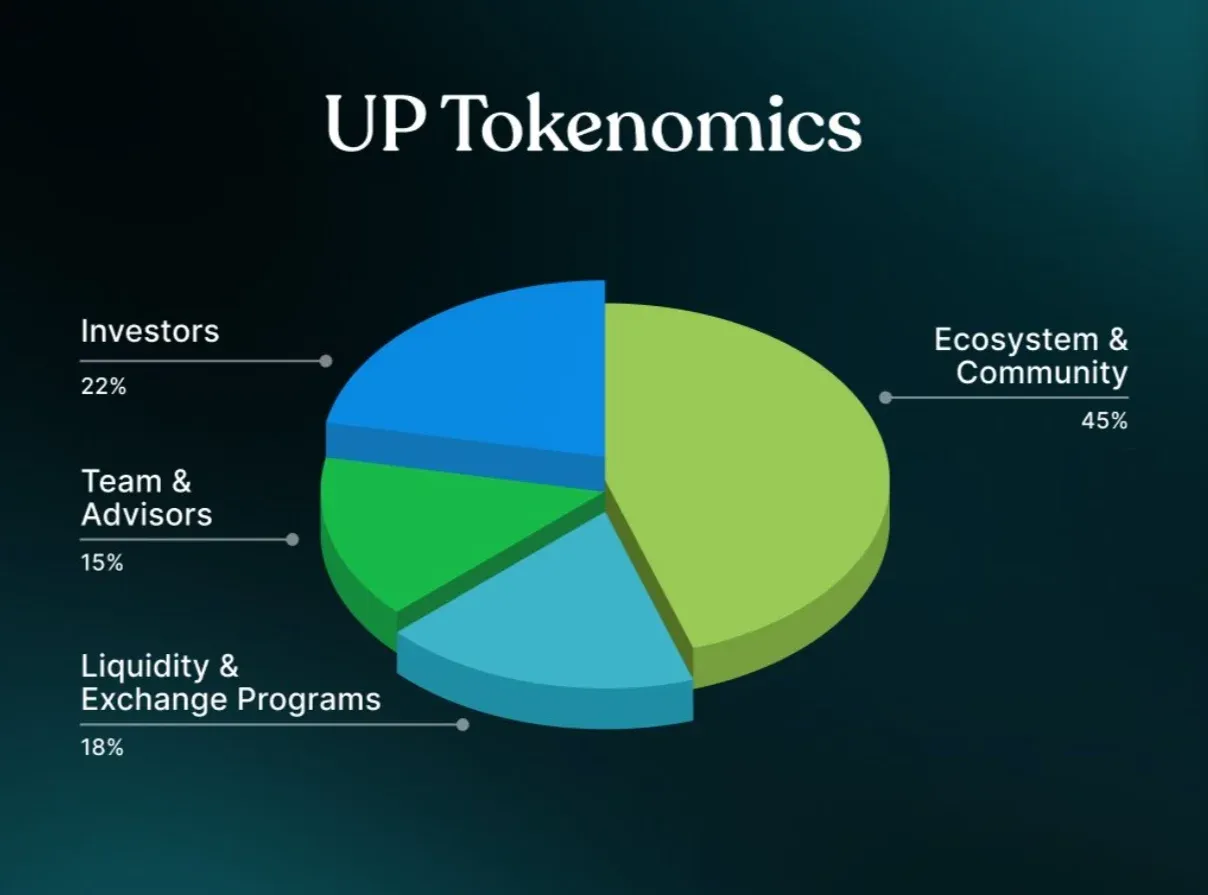
| Ecosystem & Community | 45 % |
| Liquidity & Redemption Programs | 18 % |
| Investors | 22 % |
| Team & Advisors | 15 % |
UP holders may also earn yields via reward programs, staking, or specific protocol functions, and future upgrades will enable full DAO governance.
---
Unitas Labs TGE (Token Generation Event) Details
- Subscription Window: 13 March 2026, 08:00 – 10:00 UTC
- Eligibility: Users who possess Binance Alpha points (U.S. participants must use Binance.US)
- Total Rewards: 10,000,000 UP (TGE) + 10,000,000 UP (additional activities)
- Initial Price: US $0.005 per UP
- Maximum Deposit per User: 3 BNB
Participation steps:
- Visit the dedicated TGE page inside your Binance Wallet and confirm that you hold enough Alpha points.
- During the subscription window, deposit the desired amount of BNB. The system will calculate each user’s final UP allocation based on their share of the total pool.
- After the subscription ends, the UP tokens will appear under the Assets tab; any unused BNB will be automatically returned to the user’s wallet.
---
Practical Uses and Yield Mechanism of the UP Token
- Governance Voting: Holders can vote on critical protocol parameters such as fee structures and the list of accepted collateral assets.
- Yield Acquisition: Users obtain yields by staking stUP, joining reward schemes, or utilizing exclusive protocol features.
- Value Appreciation: The protocol’s market‑neutral strategy, together with future expansion into real‑world assets (RWAs) like tokenized equities or gold, is expected to generate additional profit‑sharing for UP holders.
UP’s revenue streams consist of:
- Trading fees and funding rates generated by JLP.
- Future profit flows from the RWA layer.
These profits are funneled into the staking pool as stUP, directly enhancing the return value for participants.
---
USDu Minting and sUSDu Staking Workflow
Minting Steps
- Whitelisted Addresses (liquidity managers, protocol accounts) deposit USDC as collateral.
- 80 % of the deposited USDC is used to purchase JLP, which is locked in an on‑chain multi‑sig contract; the remaining 20 % is transferred to custodial partner Ceffu as margin for perpetual contracts.
- While establishing a delta‑neutral position, the protocol captures fees and financing income from Jupiter Perps.
Revenue Distribution
- 80 % of the funds flow into the staking contract, boosting the value of sUSDu.
- 20 % is allocated to the protocol treasury and insurance fund to provide a risk buffer.
Regular users obtain USDu on secondary markets (e.g., the Unitas app or decentralized exchanges) and can subsequently stake it to receive sUSDu.
Staking and Unlocking
- Staking: Users deposit USDu into the staking contract and receive an equivalent amount of sUSDu. JLP‑derived earnings are periodically transferred into the contract, raising the sUSDu/USDu exchange ratio.
- Unlocking: Burning sUSDu triggers a withdrawal of the underlying USDu to a redemption contract, which enforces a 7‑day cooling period before the assets can be transferred back to the user’s personal wallet.
---
Core Pain Points Addressed by the Project
Delta‑Neutral Hedging
The delta‑neutral approach balances collateral assets (e.g., SOL, ETH, WBTC, USDC) with corresponding short perpetual contracts, allowing USDu to stay close to the $1 peg even during highly volatile market conditions. Compared with traditional CDP models, this design:
- Eliminates directional market risk entirely.
- Improves capital efficiency, reducing the amount of assets that must be locked.
- Achieves high scalability through on‑chain liquidity, without relying on real‑world assets or banking infrastructure.
Off‑Chain Settlement (OES)
By partnering with custodians Ceffu and Copper, the protocol stores assets off‑chain in a secure manner while still maintaining connectivity to centralized exchange liquidity. Main benefits include:
- Assets remain owned by users at all times, held in segregated accounts.
- Lower gas fees and faster mint‑/redeem cycles.
- Multi‑platform connections mitigate counter‑party concentration risk associated with a single exchange.
---
Milestones and Future Outlook
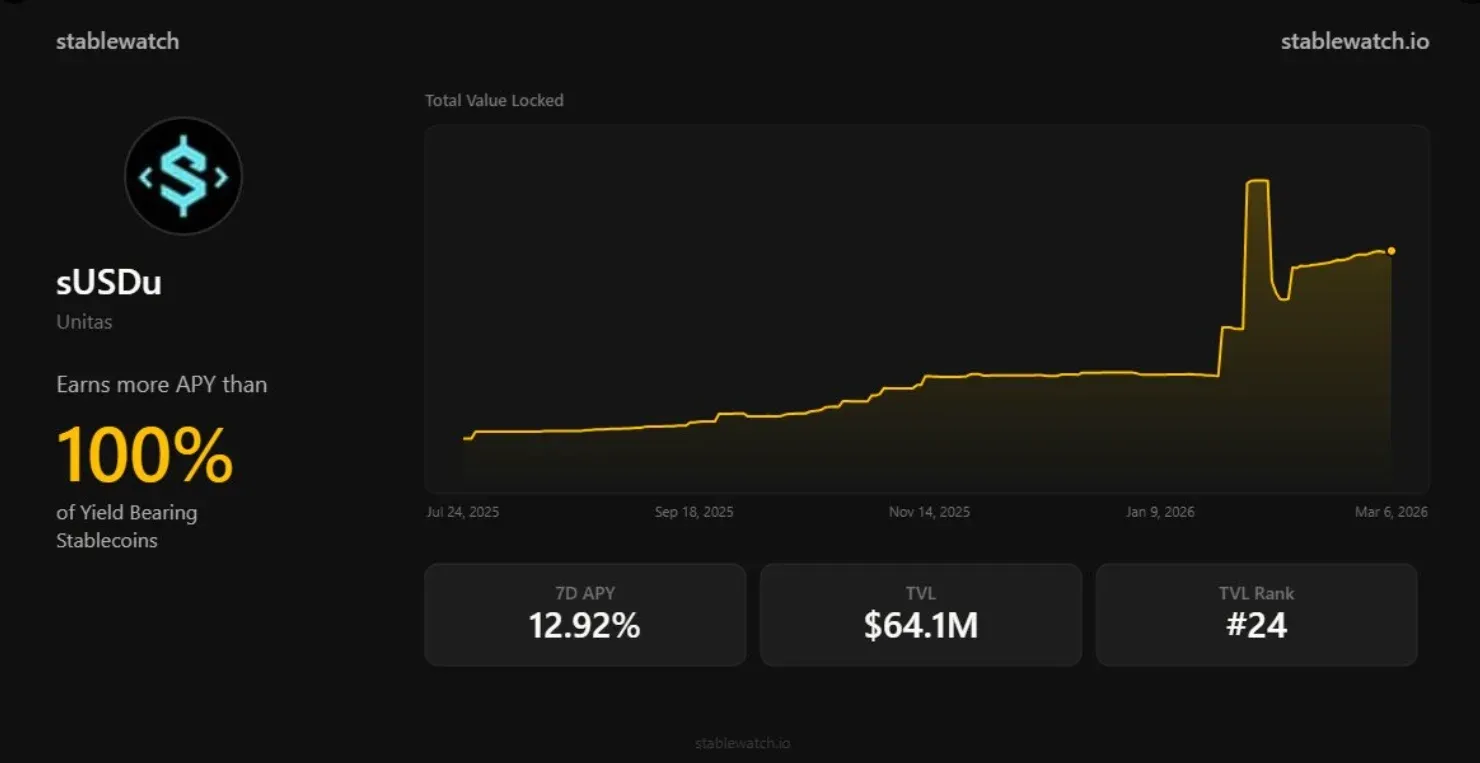
- Collaboration with Stablewatch to publicly disclose the total value, annualized yield, and actual performance of sUSDu.
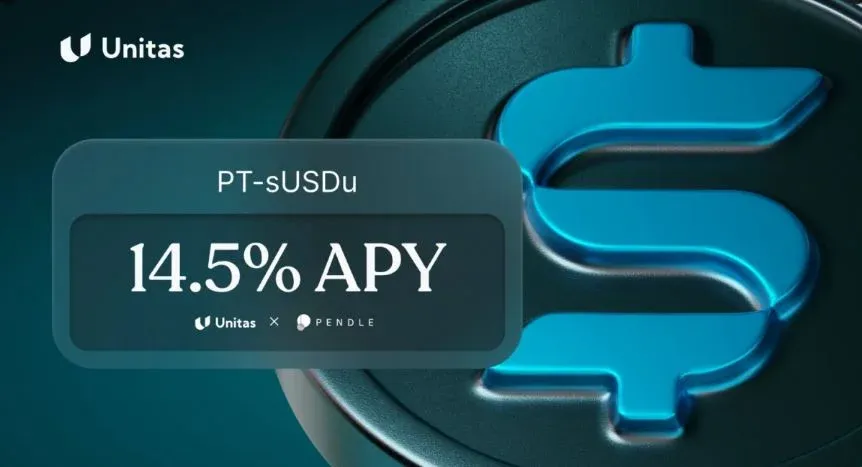
- Since launch, sUSDu has maintained an approximate 12‑13 % annualized return, with cumulative distributed earnings exceeding US $780,000.
- Current Total Value Locked (TVL) surpasses US $25 million, encompassing over 80,000 interacting wallets and more than 83,000 users.
The project plans to officially release the UP token in 2026, at which point it will broaden revenue sources, attract additional participants for governance, and expand profit‑sharing mechanisms.
Tax Note: Cryptocurrency gains may be subject to taxation in the holder’s jurisdiction. Users should consult local tax regulations and, if necessary, seek professional advice.
---
This completes the comprehensive introduction to Unitas Labs (UP) Token, covering project overview, token specifics, participation procedures, tokenomics, and core technical solutions. For further details, stay tuned to Bitaigen’s upcoming reports.
💡 Register on Binance with referral code B2345 for the maximum trading fee discount. See Binance complete guide.



