
 Bitaigen Research
 Coinbase is a U.S.-originated, compliance‑focused cryptocurrency exchange that offers spot, futures, perpetual contracts and, starting in 2026, a new stock‑trading feature.
Below, the Bitaigen editorial team provides a thorough introduction to Coinbase, along with a step‑by‑step guide to the latest 2026 registration and usage procedures.
We will analyse Coinbase from the perspectives of regulatory compliance, product lineup, and newest features, and walk you through the 2026 registration flow and usage tips. The article also offers an objective assessment of its competitive position among global exchanges, helping you get started quickly and make a rational choice. Continue reading for details.

Global Ranking of Coinbase Exchange
Coinbase ranks second among worldwide exchanges, trailing only Binance. The table below shows the top ten exchanges as weighted by CoinMarketCap based on web traffic, average liquidity, trading volume and other factors (updated monthly):
| Rank | Exchange | 24‑h Volume (USD) | Avg. Liquidity | Weekly Visits | Markets | Fiat Support |
|---|---|---|---|---|---|---|
| 1 | **Binance** | 53,794,832,157 | 9,019 | 724,086 | 225 | 3,609 currencies (ARS, AUD, BRL, etc. – 86 + countries) |
| 2 | **Coinbase Exchange** | 7,362,805,719 | 772 | 29,527 | 479 | 358 currencies (USD, AED, ARS, etc. – 61 + countries) |
| 3 | Upbit | 6,479,376,550 | 532 | 1,724,028 | 666 | 302 KRW |
| 4 | OKX | 10,166,772,809 | 785 | 4,823,517 | 979 | 356 EUR, BRL, AUD, etc. – 3 + |
| 5 | Bybit | 59,287,933,096 | 514 | 3,421,086 | 123 | 4,722 BRL, CHF, CZK, etc. – 72 + |
| 6 | Bitget | 8,484,524,708 | 664 | 4,192,447 | 127 | 5,714 EUR, MXN, ZAR, etc. – 12 + |
| 7 | Gate | 13,666,180,686 | 724 | 4,294,420 | 283 | 2,084 EUR, BRL, KES, etc. – 61 + |
| 8 | KuCoin | 17,196,883,970 | 699 | 4,387,026 | 169 | 11,034 CHF, HRK, MXN, etc. – 67 + |
| 9 | MEXC | 14,928,179,016 | 723 | 4,676,114 | 311 | 12,000 EUR, GBP, CHF, etc. – 2 + |
| 10 | HTX | 16,575,244,038 | 427 | 2,847,417 | 897 | 688 USD, EUR, AED, etc. – 45 + |
Note for U.S. users: When accessing Binance‑related services, you must use Binance.US rather than the global Binance platform to stay compliant with U.S. regulations.
What Is Coinbase?
Coinbase is a regulated cryptocurrency exchange founded in 2012 by Brian Armstrong in the United States. It is also the primary backer of the Base L2 chain, which aims to bring real‑world assets (RWA) onto blockchain. Acting as a bridge between traditional finance and digital assets, Coinbase offers spot and futures trading in the U.S., and via its international version it provides perpetual contracts. A stock‑trading module is slated for integration in 2026 to satisfy both institutional and retail demand.
Overview of Coinbase’s Development
In April 2021, Coinbase successfully listed on the NASDAQ, marking a major milestone for the crypto industry’s mainstream acceptance. By early 2026, Coinbase has evolved from a single‑purpose trading platform into a full‑stack crypto‑financial infrastructure, with business performance no longer tied solely to Bitcoin price swings.
Investing in COIN Stock vs. Directly Holding Bitcoin
- Beta effect: COIN’s beta typically exceeds 3, meaning that when overall market sentiment is positive, COIN’s price tends to rise more than the broader market, while downside moves can be sharper.
- ETF custody revenue: As a custodian for institutions such as BlackRock, Coinbase earns stable custody fees from spot‑ETF inflows; this revenue stream correlates closely with the adoption rate of crypto assets.
US Version vs. International Version
To satisfy different regulatory regimes, Coinbase offers separate US and International platforms:
| Item | US Version | International Version |
|---|---|---|
| Target Users | US retail and institutional | Non‑US institutions, selected regional retail users |
| Trade Types | Spot, US‑regulated futures | Spot, perpetual contracts |
| Leverage | Futures up to 50× (some 25×) | Perpetuals up to 50× |
| Settlement Currency | USD, USDC, EUR, etc. | USDC as the unified settlement token |
| Regulator | SEC / CFTC | Bermuda Monetary Authority |
| Stock Trading | Added in 2026 (US version) | Not supported (as of 2026) |
Feature Overview
1. Simple Buy‑Sell (Beginner‑Friendly)
- How it works: Similar to online shopping; you input the amount you want to spend and the system automatically handles conversion and order placement.
- Payment methods: Credit cards or bank‑account debits are supported in certain jurisdictions.
- Fees: Spread and commission range from roughly 1.5 %–4 % (relatively high compared with professional‑grade platforms).
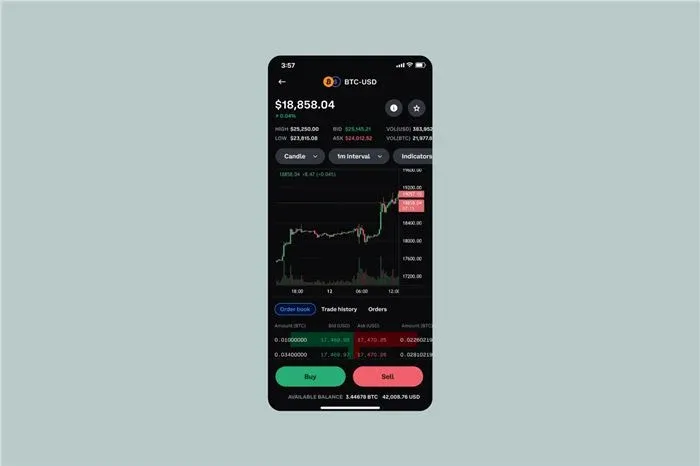
2. Advanced Trading (Experienced Users)
- Former name: Coinbase Pro, now fully integrated into the main app.
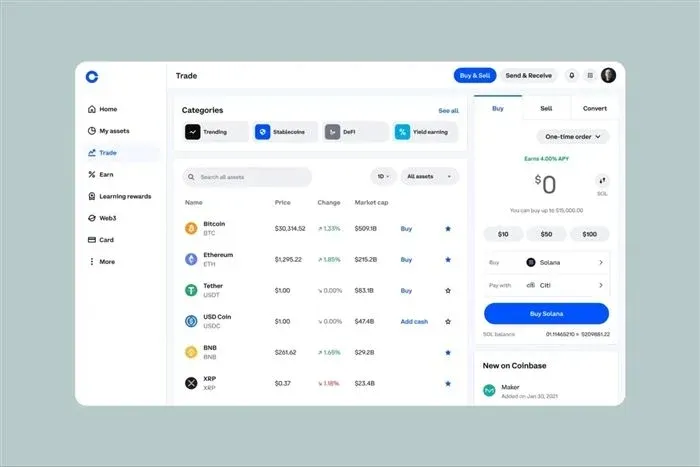
- Tools: Order book, depth chart, limit orders, stop‑loss orders and other professional features.
- Fee advantage: Maker fees are lower than those for Simple Buy‑Sell, making it suitable for longer‑term positions.
3. Learn & Earn
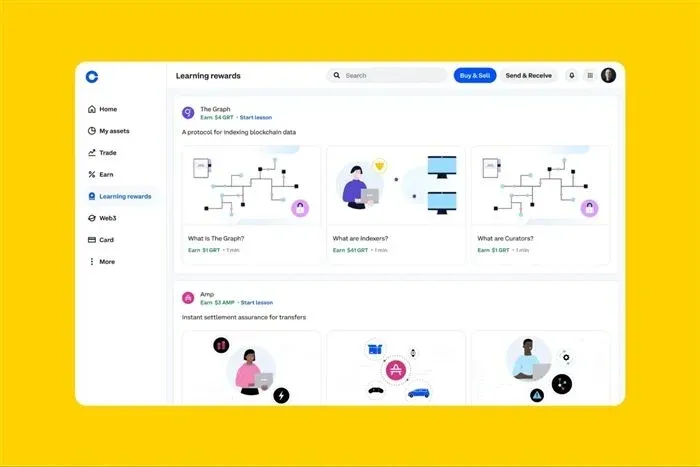
- Mechanism: Coinbase partners with emerging projects to produce educational animations.
- Rewards: After watching and answering a short quiz, users receive free tokens worth $1–$3 each.
- Value: Individual payouts are modest, but accumulated earnings can become a noticeable asset while also familiarising users with new projects.
4. Staking & Yield
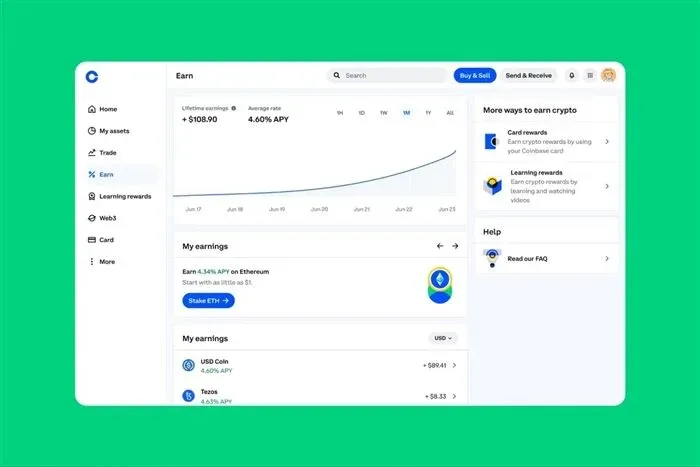
- ETH staking: Deposit Ether into Coinbase’s validator nodes to receive cbETH, which accrues a regular annualised return.
- USDC staking: Deposit USDC to earn on‑chain interest; yields stem from platform subsidies or U.S. Treasury returns.
5. Base L2 Chain
- Low fees: Transactions on Base typically cost less than $0.10.
- No native token: Base currently has no separate chain token; gas is paid with ETH.
- Rich ecosystem: Numerous decentralized social apps and meme tokens are active on Base.
Spot Trading Guide
Coinbase offers two spot‑trading modes that you can switch between based on experience:
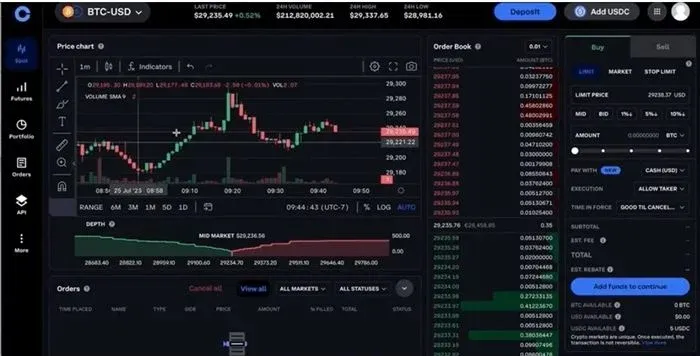
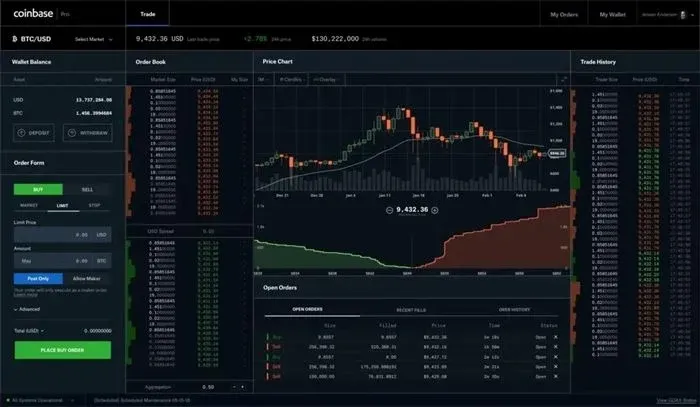
- Simple Trading: UI resembles a food‑delivery app, enabling rapid purchases; however, the spread costs about 0.5 %–2 %. Ideal for users who don’t mind minor price differences and want quick entry.
- Advanced Trading: Formerly Coinbase Pro, provides candlestick charts and an order book, allowing custom limit orders. Fees are transparent with no hidden spreads.
Derivatives Trading
Coinbase’s derivative products are subject to U.S. regulatory constraints and are split into two categories:
Micro Futures
- Regulation: CFTC‑regulated compliant futures.
- Contract size: A *Nano Bitcoin* contract equals 0.01 BTC; a *Nano Ether* contract equals 0.1 ETH.
- Expiration: Monthly settlement, either auto‑liquidated or cash‑settled.
- Who can use it: U.S. residents or investors seeking hedging in a highly regulated environment.
Perpetual Contracts
- No expiry: Positions can be held indefinitely as long as margin requirements are met.
- Funding rate: Periodic payments exchanged between long and short sides to keep the contract price aligned with spot.
- Leverage: Up to 50× on major assets.
- Settlement: Fully collateralised in USDC; no need to hold the underlying cryptocurrency.
- Access restrictions: Not available to U.S. users; Taiwanese users must access via the International version.
Launchpad (Early‑Project Allocation)
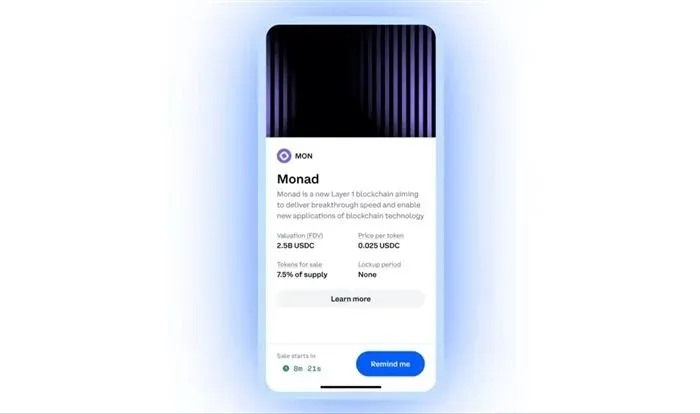
Launchpad provides a compliant avenue for U.S. retail investors to participate in early‑stage token sales. The workflow is straightforward:
- Complete KYC and obtain a Coinbase account.
- Deposit USDC (no fees are charged during the subscription process).
- Submit your allocation request within the designated window.
- The platform uses a bottom‑up allocation algorithm to ensure small‑scale investors also receive tokens.
- Tokens are credited directly to your account.
Coinbase Card (Crypto‑Linked Debit Card)
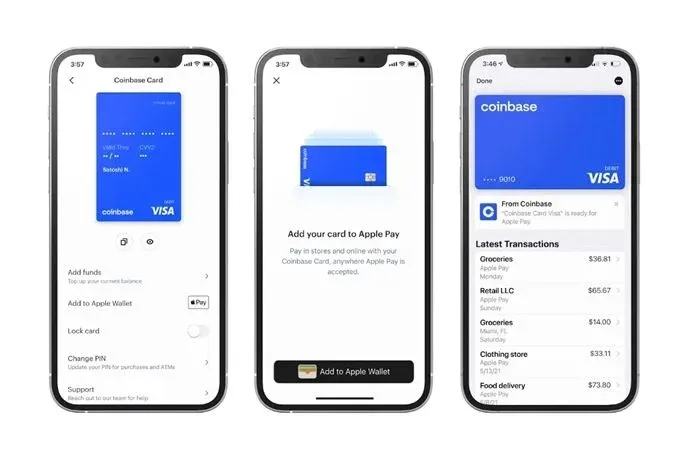
The Coinbase Card links directly to your account, allowing purchases without first converting crypto to fiat:
- USDC payments: Deducted in USDC; the platform charges no fee, effectively functioning like a USD transaction.
- Other crypto assets: When paying with BTC, ETH, etc., the system instantly sells the asset for fiat and levies a ~2.49 % settlement fee.
- Rewards: Crypto‑backed rebates ranging from 1 %–4 %, credited within minutes.
Trading Fee Structure
Fees depend on 30‑day trading volume and order type (Taker / Maker):
| 30‑Day Volume (USD) | Taker Fee | Maker Fee |
|---|---|---|
| $0 – $10 K | 0.60 % | 0.40 % |
| $10 K – $50 K | 0.40 % | 0.25 % |
| $50 K – $100 K | 0.25 % | 0.15 % |
| > $400 M | 0.05 % | 0.00 % |
Official Channels
- Website: <https://www.coinbase.com>
- Mobile apps: Available on Google Play Store and Apple App Store.
Registration & Deposit Guide (Policy Note for Mainland China Users)
1. Official Account‑Opening Restrictions
- Restricted jurisdictions: Coinbase’s Terms of Service list Mainland China as a “restricted region,” prohibiting users who hold a Mainland Chinese passport or reside within the territory from opening an account or trading directly. The platform employs multi‑factor checks—including IP address, identity documents and address verification—making it difficult to pass the initial review.
- High‑risk work‑arounds: Registering with a Hong Kong passport, Taiwanese ID, or an overseas address can technically bypass the restriction, but this is considered non‑compliant. If Coinbase discovers that the actual residence is Mainland China, it may freeze the account and lock assets.
2. Functional Limitations
Even if a non‑compliant registration succeeds, the account will be heavily limited:
- Fiat‑on‑ramp blocked: You cannot buy or sell using RMB or other local fiat; crypto can only be stored as a wallet asset.
- Withdrawal hurdles: You may be required to provide overseas bank details, elevate your verification tier, and possibly face high fees or prolonged review periods.
Compliance‑Friendly Alternatives & Risk Warning
- Prefer domestic regulated platforms: For example, exchanges holding a Hong Kong financial licence such as HashKey Exchange, though they still enforce strict regional and identity checks.
- Legal risk: According to the People’s Bank of China’s “Notice on Preventing Risks of Token Issuance and Financing,” providing crypto‑trading services to Mainland residents is prohibited and could result in frozen funds or legal liability. Attempting to circumvent regional limits via “fq” registrations or offshore accounts may also breach foreign‑exchange regulations, exposing users to illegal remittance or capital‑outflow penalties.
3. Registration Steps (Using the US Version as Example)
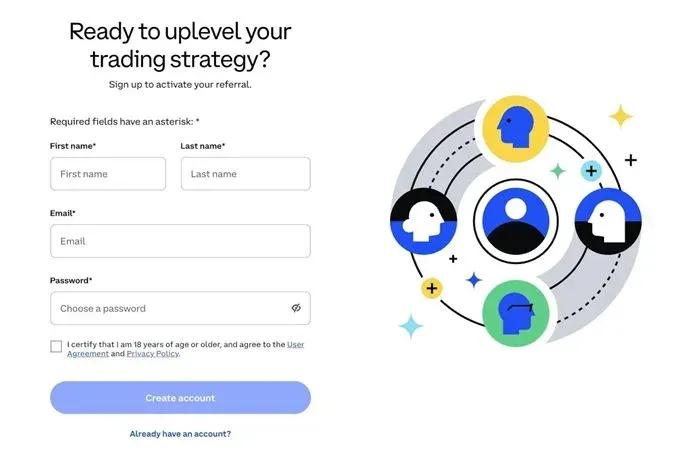
1. Create an Account
- Visit the Coinbase website or download the app, then click Sign Up.
- Enter your legal name, set a password, and you may use Google or Apple for quick sign‑in.
- Agree to the terms and submit.
2. Verify Email & Phone
- Coinbase sends a verification email; click the link to activate.
- Provide a mobile number, then enter the SMS code you receive.
3. Complete KYC
- The platform automatically selects the appropriate verification flow based on your login location.
- For Taiwanese users, only a passport is accepted; you must also upload a paper utility bill dated within the past six months to prove
Related Reading
- Coinbase vs Binance: Which Crypto Exchange Is Right for You?
- Top Crypto Exchange Apps: Binance & OKX Registration Guide
- 2026 Top 10 Domestic Crypto Exchanges Trusted by Users
💡 Register on Binance with referral code B2345 for the maximum trading fee discount. See Binance complete guide.



