
 Bitaigen Research
 In this article we systematically outline the core differences between the emerging MXC Matcha exchange and the established OKEx platform in terms of positioning, product offerings, regulatory compliance, and fee structures. The goal is to help investors quickly determine which type of platform best matches their trading habits. Detailed side‑by‑side comparisons follow in the subsequent sections—please continue reading.
What Are the Differences Between the Emerging MXC Matcha Digital Asset Exchange and OKEx, and Which Is More User‑Friendly
Introduction: MXC (also known as Matcha) and OKEx are two of the most closely watched digital‑asset trading platforms on the market today, representing the divergent development paths of a rising second‑tier exchange and a veteran top‑three exchange.
Direct Answer: MXC Matcha is a high‑quality second‑tier exchange that emphasizes spot trading and regulatory compliance; OKEx is one of the three legacy platforms, with a more mature derivatives business. Their positioning differs, and which one is “better” depends on your specific trading needs.
Main Differences Between Matcha Exchange and OKEx
- Development Stage:
- MXC Matcha was founded relatively recently, classifying it as a new second‑tier exchange, yet it already ranks around 15th globally among crypto exchanges.
- OKEx launched in 2013 and is widely regarded as an industry veteran, often listed among the “top three” exchanges.
- Core Business:
- MXC Matcha focuses primarily on spot (spot‑market) trading and has been actively applying for licences in various jurisdictions to advance its compliance agenda.
- OKEx centers on derivatives trading, with over‑the‑counter (OTC) and spot services playing a secondary role.
- Traffic Sources:
- MXC Matcha initially attracted users through new‑token offerings (ICO/IEO) and has gradually shifted toward mainstream coins and a compliance‑first approach.
- OKEx provided fiat (USD, SEPA/SWIFT) buying and selling of BTC, LTC and other assets before the private‑sale boom, later expanding into a wide array of futures and perpetual contracts. *(U.S. users should access similar fiat services via Binance.US rather than the global Binance platform.)*
- Fee Structure:
- MXC Matcha charges a flat 0.20 % trading fee, which is slightly below the industry average of 0.25 %.
- OKEx’s fees vary according to contract leverage and membership tier, generally staying on par with the broader market.

Which Platform Is More Suitable for You
| Use‑Case Scenario | Recommended Platform | Reasoning |
|---|---|---|
| Spot‑only trading, compliance‑focused | **MXC Matcha** | Lower fees, extensive licensing, broad coin coverage |
| Need for contracts and leveraged trading | **OKEx** | Wide range of derivatives, deep liquidity, established reputation |
| Want to try new tokens and fast listings | **MXC Matcha** | Rapid onboarding, first to list assets such as SHIB |
| Prioritize platform history and security record | **OKEx** | Long operating history, seasoned regulatory experience |
MXC Matcha Exchange Global Ranking and Fees
- Global Ranking: As of the latest data, MXC Matcha sits at 15th place among worldwide cryptocurrency exchanges.
- Trading Fees: Each spot trade incurs a fixed 0.20 % fee, undercutting the sector average of roughly 0.25 % and giving the platform a competitive edge on cost.
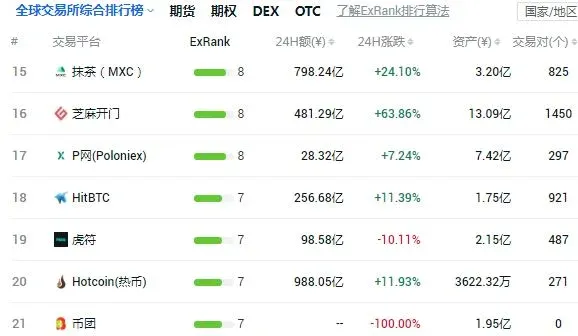
The comparison above outlines the key distinctions between MXC Matcha and OKEx, helping you select the trading venue that aligns best with your individual requirements.
Related Reading
- OKB Overview: OKEx Token Fees, Governance & Financing
- Where to Buy SHIB: Top Exchanges Ranked 2024
- OKX Crypto Guide: User‑Friendly Entry for Beginners
💡 Register on Binance with referral code B2345 for the maximum trading fee discount. See Binance complete guide.



