
 Bitaigen Research
 We start from an industry‑wide perspective, outlining the core technical principles of privacy‑coins, analyzing how they strike a balance between regulatory compliance and data sovereignty, and highlighting the standout newcomer projects poised for potential in 2026. This in‑depth analysis aims to help readers grasp the pulse of the sector and uncover hidden opportunities.
Market Overview
In 2025, privacy‑coins delivered remarkable performance, posting a cumulative annual gain close to 290 %, clearly outpacing mainstream chain assets such as Bitcoin and Ethereum. By early January 2026, the total market capitalization of the privacy‑coin segment fluctuated between $22.7 billion and $24.0 billion, indicating a relatively stable size range.
The Essence and Operating Mechanism of Privacy‑Coins
If Bitcoin’s transaction record is likened to a public postcard, a privacy‑coin resembles a specially encrypted letter—an external observer finds it difficult to discern the contents inside the envelope.

The core technologies involve cryptographic tools such as ring signatures, stealth addresses, and zero‑knowledge proofs, which can conceal or obfuscate the sender, receiver, and transferred amount on‑chain. Early “1.0” implementations (e.g., Monero’s mandatory anonymity and Zcash’s optional privacy) focused on anonymizing single transfers; the subsequent “2.0” phase introduced the concept of privacy computation, providing technical support for more complex financial use cases. In short, the value proposition of privacy‑coins lies in “hiding” and “mixing,” while attempting to achieve a balance of data sovereignty within a compliant framework.
Opportunities and Risks Coexist
In 2025, Zcash’s market‑cap surged by nearly 1,100 %, and shielded transactions now represent 23 % of its total supply, reflecting strong market demand for anonymous transfers. At the institutional level, Grayscale’s Zcash Trust holdings have surpassed $100 million, injecting substantial liquidity into the privacy‑infrastructure ecosystem. Moreover, the deep integration of AI and Web 3 is expected to further accelerate innovation in privacy technologies.
Nevertheless, the regulatory environment remains the primary challenge for privacy‑coins. The European Union’s Anti‑Money‑Laundering Regulation explicitly restricts financial institutions from handling “anonymously enhanced assets,” prompting major exchanges such as Binance and OKX to delist assets like Monero, thereby compressing liquidity. Whether future projects can reconcile privacy protection with compliance requirements will be decisive for their sustained development.
Note: Crypto gains may be taxable in many jurisdictions. Users should consult local tax advisors and consider filing requirements, especially when converting crypto to fiat via SEPA, SWIFT, or other banking channels.
Three Dark‑Horse Projects Worth Watching in 2026
Railgun: Plug‑and‑Play Privacy Layer for DeFi
Railgun does not create a new blockchain; instead, it leverages zero‑knowledge proofs as a bridge to deliver a privacy middleware for existing ecosystems such as Ethereum and Polygon. When users interact with any DeFi application, their address, amount, and transaction path can be hidden.
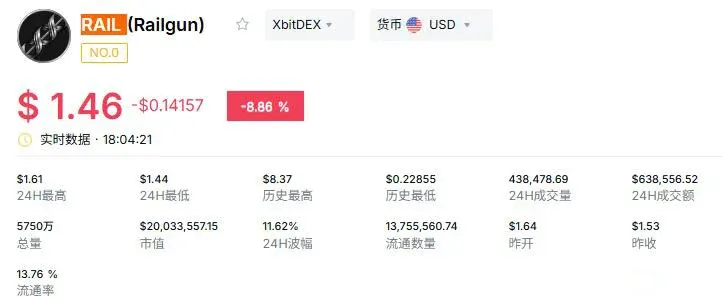
To date, Railgun’s cumulative transaction volume has exceeded $4.49 billion, with daily shielded‑token trades on an upward trend and a single‑day peak of 328 transactions. Notably, Ethereum co‑founder Vitalik Buterin used Railgun for a donation to avoid on‑chain tracing, providing strong endorsement of the technology’s reliability. Railgun’s advantage lies in “empowering rather than rebuilding,” allowing the existing ecosystem to adopt privacy functions quickly.
Arcium: Full‑Stack Privacy‑Computing Network for AI and Finance
Arcium combines Multi‑Party Computation (MPC), Fully Homomorphic Encryption (FHE), and Zero‑Knowledge Proofs (ZKP) into a unified framework, enabling sensitive data to be processed while remaining encrypted end‑to‑end. The project launched its mainnet Alpha on Solana on February 2, and received official recognition from NVIDIA’s Inception program.

Arcium’s ambition goes beyond mere monetary anonymity; it aims to provide a “confidential conference room” for the future of data‑as‑a‑resource, allowing AI and financial applications to collaborate on data while maintaining strict privacy safeguards.
Humanity Protocol: Redefining Private Identity Verification
Humanity Protocol merges palm‑print biometrics with zero‑knowledge proofs to confirm that a user is a real human without exposing any biometric data, effectively mitigating Sybil attacks. The project has partnered with Mastercard to integrate into open‑finance systems, and its native token H has been added to the asset vault of Nasdaq‑listed company Prenetics. The token price jumped from $0.026 to $0.40, a rise of roughly 14 ×.
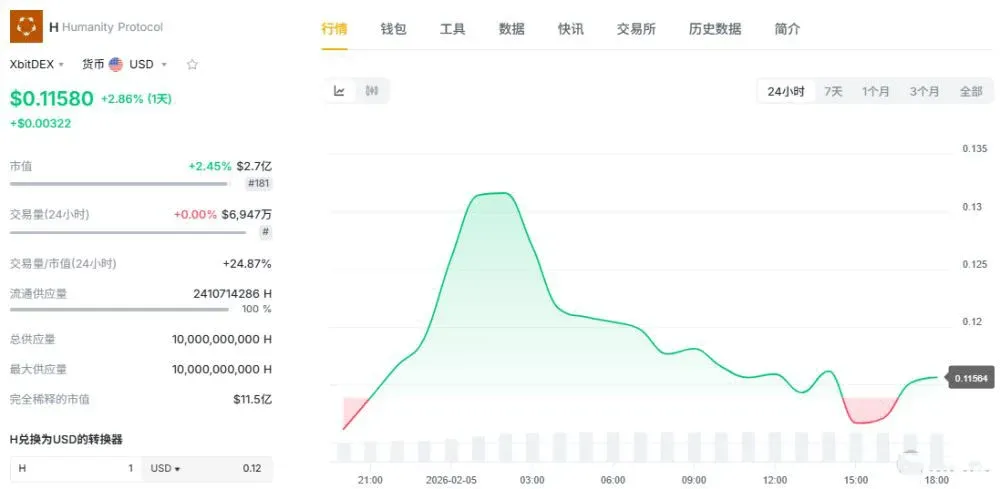
This case demonstrates that solving the “who are you?” identity problem could grant control over the next generation of internet access points.
Closing Thoughts
Entering 2026, privacy‑coins are gradually finding a symbiotic relationship within regulatory frameworks. Railgun offers a plug‑and‑play privacy layer for the DeFi ecosystem, Arcium pushes technical boundaries with a full‑stack privacy‑computing network, and Humanity Protocol reshapes the value of privacy through a novel identity‑verification model. Together, they advance the underlying infrastructure for privacy protection and point to the direction of future industry development.
For a deeper dive into “What are privacy‑coins? How do they work? Which dark‑horse projects should be on your radar in 2026?” follow Bitaigen (比特根) and its related series of articles.
Related Reading
- Stablecoin Safety Analysis: USDC, USDT, EURC & USDe Compared
- Definitive EDGE Token Review: Utility, Market Data & Outlook
- Crypto Whale Explained: Definition, Spotting & Market Impact
💡 Register on Binance with referral code B2345 for the maximum trading fee discount. See Binance complete guide.



