
 Bitaigen Research
 Bitget Exchange Deposit Methods – Detailed Guide (2026 Edition)
Bitget offers three primary ways to fund your account: transferring from another exchange, buying crypto instantly with a credit card, and sending from a cryptocurrency wallet. To avoid failed deposits, always verify the token, blockchain network, and address details.
Bitget (official site: https://basebiance.com/bitget/ | download: https://basebiance.com/bitget/) is a global cryptocurrency exchange founded in 2018 and headquartered in Singapore. The platform has surpassed 20 million users, handles daily trading volume of over US$10 billion, and consistently ranks within the top ten on CoinMarketCap. Its innovative copy‑trading feature lets beginners replicate the strategies of professional traders, while a partnership with football star Lionel Messi has boosted brand visibility.
Below is a comprehensive walk‑through of Bitget’s deposit options and the key points to prevent deposit failures.
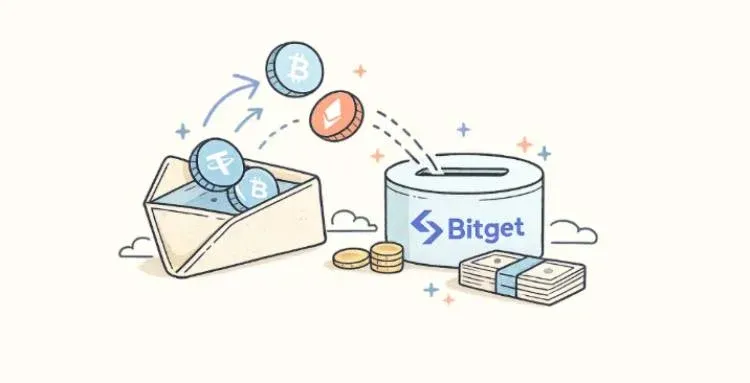
In this article we systematically outline Bitget’s latest funding channels, provide practical checklists for common tokens, networks, and address verification, and compare the fees and processing times of credit‑card purchases versus direct wallet transfers. This helps you choose the most efficient method for your trading needs while minimizing the risk of failed deposits.
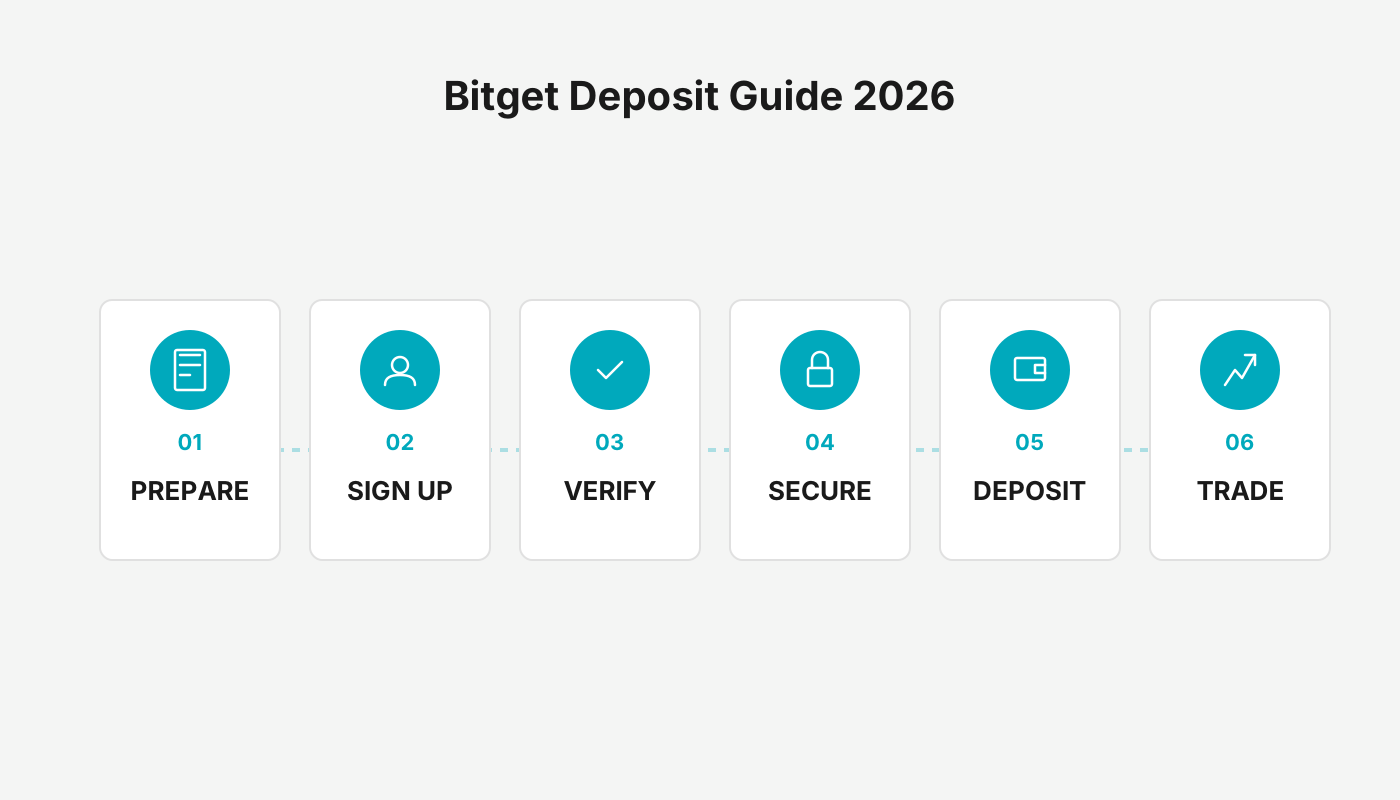
Primary Deposit Methods and Step‑by‑Step Procedures
Due to regulatory constraints, Bitget deposits currently support the three methods below. Each has its own advantages and drawbacks; select the one that best matches your personal requirements.
1. Transfer from Another Exchange (Recommended for Beginners)
This method is safe, low‑cost, and ideal for users who are using Bitget for the first time.
Steps
- On a compliant exchange (e.g., Binance – for U.S. users use Binance.US, or OKX) purchase USDT and keep it in your exchange wallet.
- Log in to Bitget, go to Assets → Deposit, select USDT, and make sure you choose the same blockchain network as the source exchange.
- Copy the USDT deposit address that Bitget generates.
- In the source exchange’s withdrawal page, paste the copied address, double‑check that the network type matches, then submit the withdrawal.
- Wait for blockchain confirmations (typically 5‑10 minutes).
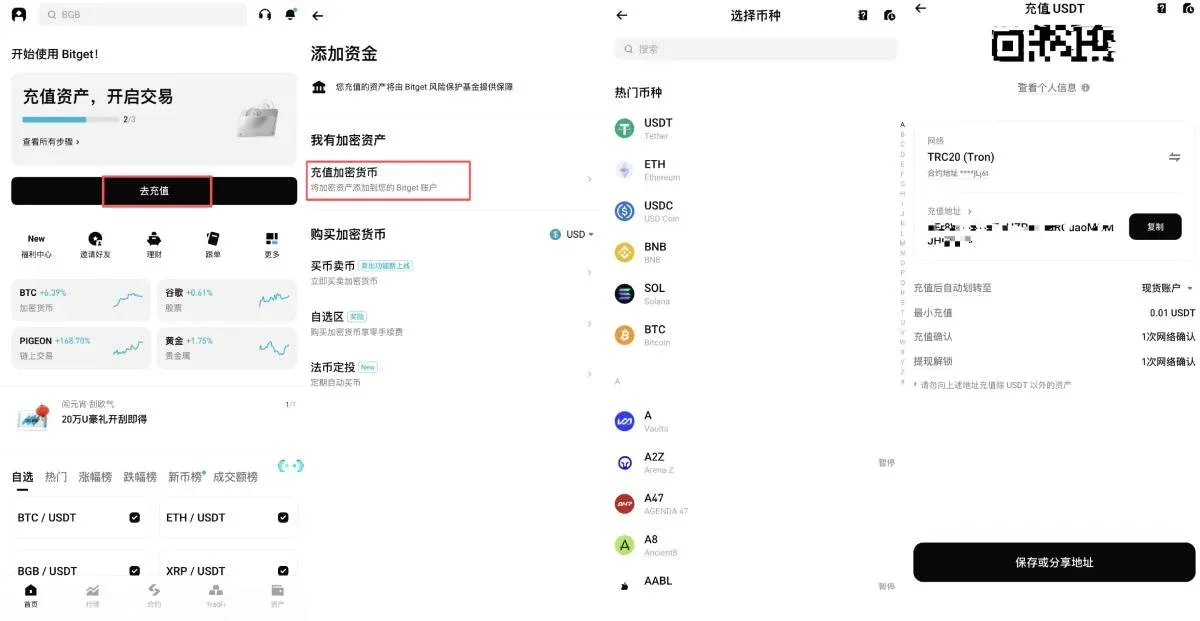
| Item | Details |
|---|---|
| **Fee** | Approximately **0.5‑1 USDT** (charged by the sending exchange) |
| **Arrival time** | 5‑10 minutes |
| **Target audience** | All users, especially newcomers |
| **Pros** | Secure, regulatory‑compliant, low fee |
| **Cons** | Slightly more steps compared with instant credit‑card purchase |
2. Instant Credit‑Card Purchase
Suitable for users who need to fund their account quickly.
Steps
- Complete KYC (Know‑Your‑Customer) verification on Bitget (refer to the detailed Bitget account‑registration + KYC guide).
- Click Buy Crypto on the platform.
- Choose the token (we recommend USDT) and select Credit Card as the payment method.
- Enter the amount you wish to purchase and confirm the transaction through the required security checks.
- After the system processes the payment, the purchased USDT will appear in your Bitget wallet instantly.
Tip: Credit‑card purchases are convenient but carry higher fees; use them only when speed outweighs cost.
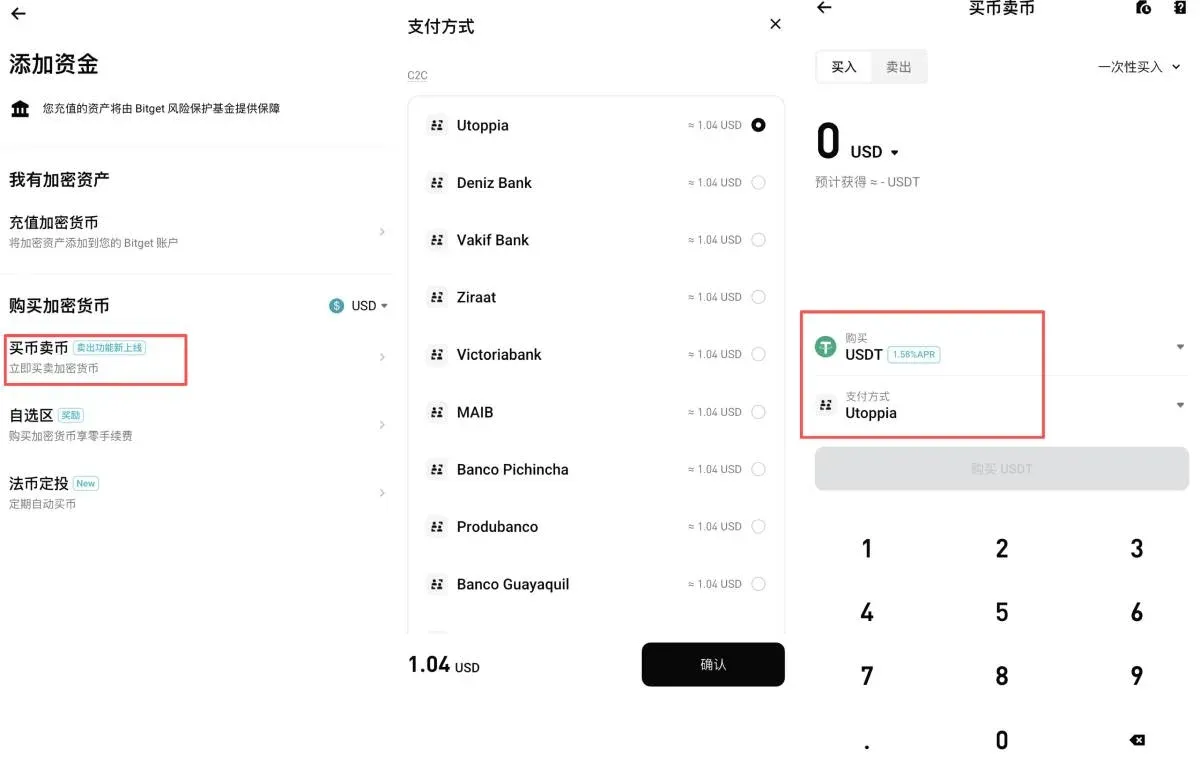
3. Transfer from a Personal Crypto Wallet
If you already hold crypto assets, you can fund Bitget directly from your own wallet.
Steps
- Retrieve the deposit address for the specific token on Bitget.
- Verify the network type (e.g., ERC‑20, TRC‑20, BEP‑20, etc.).
- Initiate a transfer from your wallet, paste the Bitget address, and pay the required miner fee.
- Wait for the blockchain to confirm the transaction.
Common Reasons for Deposit Failures
| Frequent Issue | Explanation |
|---|---|
| **Insufficient blockchain confirmations** | Each token requires a minimum number of confirmations before the deposit is credited. Until the threshold is met, the funds will not appear. You can track the transaction with its TxID on a block explorer. |
| **Wrong token or network selected** | Sending on one chain (e.g., **TRC‑20**) to an address that expects another chain (e.g., **ERC‑20**) locks the assets. |
| **Missing or incorrect Tag/Memo** | Tokens such as **XRP**, **XLM**, **BNB** require an additional Tag/Memo; omitting it leads to loss or delay. |
| **Credit‑card blocked by the bank** | Some banks treat crypto purchases as high‑risk and may reject the transaction due to 3‑D Secure challenges or overseas‑card restrictions. |
| **Account flagged by risk‑control system** | Unusual fund flows can trigger internal safeguards, resulting in delayed or paused deposits. |
The most common pitfalls are network mismatches and bank blocks on credit‑card purchases. Always double‑check token, network, and address before confirming any transfer.
Deposit & Withdrawal Considerations & Recommendations
Fee Comparison Table
| Method | Deposit Fee | Withdrawal Fee | Speed | Recommendation |
|---|---|---|---|---|
| Exchange Transfer (USDT) | 0.5‑1 USDT (fee charged by the sending exchange) | 0.5‑1 USDT | 5‑10 minutes | ★★★★★ |
| Credit‑Card Purchase | 2%‑5% (includes processing and possible currency‑conversion fees) | — | Instant‑few minutes | ★★☆☆☆ |
Key Operational Tips
- Address verification: Copy‑paste the address, then manually compare the first and last 4‑6 characters to ensure accuracy.
- Network selection: Fees differ dramatically between chains; TRC‑20 is usually the cheapest, while ERC‑20 can be costly due to high gas prices.
- KYC status: Completing identity verification raises withdrawal limits. Unverified accounts are capped at US$50,000 per day for withdrawals.
Suggested Workflow for New Users
- Register & verify: Sign up with the referral code `vxje`, finish the KYC process.
- Test with a small amount: Perform a low‑value transfer first to confirm that the procedure works as expected.
- Prefer TRC‑20: Use the TRC‑20 network for both deposits and withdrawals to minimize fees.
- Backup records: Keep screenshots of the transaction ID (TxID), deposit address, and confirmation timestamps.
- Enable security features: Activate two‑factor authentication (2FA) and set a withdrawal password.
Typical Mistakes & Prevention Strategies
| Mistake | Potential Consequence | Prevention |
|---|---|---|
| **Wrong address** | Permanent loss of funds | After pasting, verify the leading and trailing characters; consider sending a tiny test amount first. |
| **Incorrect network** | Funds become stuck or uncredited | Ensure the sending and receiving chains match exactly. |
| **Insufficient miner fee** | Transaction rejected by the network | Allocate a fee that comfortably exceeds the current network minimum. |
| **Ignoring official announcements** | Service interruptions or temporary unavailability | Follow Bitget’s official channels (website, blog, Telegram) for updates. |
Frequently Asked Questions (FAQ)
1. How long does a Bitget deposit take to arrive?
- USDT transfers: Usually 5‑15 minutes, depending on the number of confirmations and network congestion. If the funds have not appeared, use the TxID to check the confirmation count on a block explorer.
- Credit‑card purchases: Typically instant or within a few minutes; however, additional time may be required if the bank conducts extra verification (e.g., 3‑D Secure).
- Risk‑control / KYC checks: If the system flags the transaction or your account lacks completed KYC, deposits may be delayed or temporarily frozen.
If the expected time has passed without credit, gather the TxID, amount, and timestamp, then open a support ticket through Bitget’s Help Center.
2. What is the minimum deposit amount on Bitget?
The minimum varies by token and network; the exact figure is displayed on the Assets → Deposit → Choose Token page. Common examples:
- USDT (TRC‑20): roughly 1‑10 USDT (as shown on the UI)
- ERC‑20: higher minimums due to elevated gas costs
- Credit‑card purchase: generally US$10‑20
Deposits below the stated minimum may be rejected and are often unrecoverable, so always confirm the required floor before initiating a transfer.
3. What fees does Bitget charge for deposits?
- Crypto deposits: Bitget does not levy a direct deposit fee; the cost consists of the sending exchange’s withdrawal fee plus the blockchain miner fee (TRC‑20 is cheap, ERC‑20 is more expensive).
- Credit‑card deposits: The total cost ranges from 2%‑5%, covering the payment processor’s service charge and any foreign‑exchange spread. Some banks may also add an overseas‑card surcharge.
4. Is KYC mandatory for depositing on Bitget?
- Crypto‑to‑crypto deposits: Generally not required, but withdrawals, higher limits, or risk‑control actions may prompt a KYC request.
- Credit‑card purchases: Because fiat money is involved, KYC is compulsory.
- Security & compliance: Even pure crypto deposits can trigger a KYC request if the system detects suspicious activity.
5. I sent funds on the wrong blockchain—what should I do?
- Confirm that the token is the same but the network differs (e.g., USDT sent via TRC‑20 to an ERC‑20 address).
- If the transaction shows as Success on the source chain but Bitget has not credited the balance, do not resend the funds.
- Contact Bitget support promptly, providing the TxID, amount, timestamp, the network you used, and a screenshot of the correct deposit address.
- Recovery depends on whether Bitget supports the mistakenly used chain; if the chain is unsupported, the assets may be unrecoverable.
6. Are Bitget’s deposit channels scams?
- The official channels (website, mobile app, and in‑app deposit page) are secure and verified.
- Scams usually arise from phishing sites, impersonated customer service agents, or fraudulent investment groups that ask you to send funds to private addresses.
- Always double‑check the URL (`https://www.bitget.com`), the source of the app (official app stores), and that the deposit address is generated inside your authenticated Bitget account.
- In peer‑to‑peer (P2P) scenarios, verify the counterpart’s reputation and transaction history before proceeding.
Summary
For users in mainland China, Bitget does not currently support direct RMB deposits. The most cost‑effective approach remains:
- Purchase USDT on another exchange (or via a local fiat gateway such as SEPA/SWIFT for USD, depending on your jurisdiction).
- Transfer the USDT to Bitget using the appropriate blockchain (preferably TRC‑20 for minimal fees).
- Use the credit‑card option only when speed is essential, acknowledging the higher fee and possible bank restrictions.
By mastering the correct steps, carefully verifying the token, network, and address, you can dramatically reduce the likelihood of a failed deposit.
*We hope this guide titled “What are the Bitget Deposit Methods? How to Avoid Deposit Failures? 2026 Updated Bitget Deposit Tutorial” proves useful. For further Bitget‑related information, search for “Bitaigen” or continue browsing the articles below. Thank you for your support!*
Note: Cryptocurrency gains may be subject to taxation in your local jurisdiction. Consult a tax professional to understand your obligations.
Related Reading
- Bitget 2024: Top Crypto Derivatives Platform $10B Volume
- Bitget Review 2024: Crypto Derivatives, Copy‑Trading, Low Fees
- Download Binance, OKX, Bitget: Android APK & iOS Guide
💡 Register on Binance with referral code B2345 for the maximum trading fee discount. See Binance complete guide.



