
 Bitaigen Research
 In this article we outline the evolution of traditional network protocols and explore the potential role of blockchain technology within the underlying architecture. By comparing the core mechanisms of TCP/IP and HTTP, we reveal how blockchain can provide a decentralized trust layer that may become the foundational protocol of the next‑generation Internet. Readers are invited to consider, from a technical‑principle perspective, the future shape and opportunities of network infrastructure.
In networking, a protocol refers to the set of rules that network hardware and operating systems must follow when communicating; these rules are called protocols.
The protocol suite used for Internet communications is the TCP/IP family. It is commonly regarded as comprising four layers: Application layer, Transport layer, Network layer, and Link layer. The Link layer is responsible for placing data onto physical media; the Network layer handles routing; the Transport layer ensures reliable delivery; and the Application layer offers data abstractions in the form of applications, as illustrated in Figure 1.
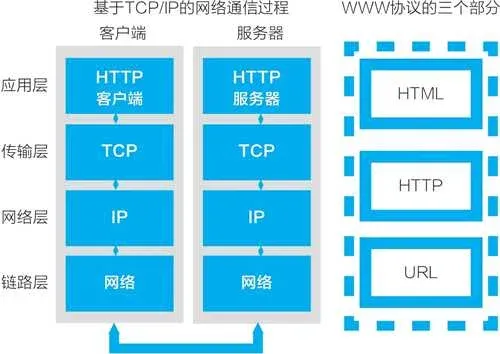
Figure 1: The four‑layer network communication protocol model and the WWW protocol
The TCP/IP suite includes a variety of protocols: the fundamental TCP and IP, the email transport protocol SMTP, the hypertext transfer protocols HTTP/HTTPS, and the Domain Name System (DNS), among others.
In 1989, Tim Berners‑Lee proposed the World Wide Web (WWW) protocol to facilitate information and knowledge sharing in academia. The WWW protocol is generally understood to consist of three components: HTML (HyperText Markup Language), HTTP (HyperText Transfer Protocol), and URL (Uniform Resource Locator).
For the sake of simplicity, we collectively refer to the protocols that pertain to information applications as the WWW protocols. As shown in Figure 1, when discussing information transmission the protocol most frequently mentioned is HTTP, which resides in the Application layer of the communication stack. It is important to note that this “Application layer” is not synonymous with the everyday notion of “websites, apps, and other Internet services.”
The Internet can be divided into three tiers: the hardware network, the WWW protocols, and the website/app layer. The emergence of blockchain technology has introduced, alongside the existing hardware network and WWW protocols, a new set of protocols dedicated to value representation and value transfer—the blockchain credit‑layer protocols. Although blockchain is still evolving and its associated protocols continue to mature, we can already draw an analogy between its role and that of the WWW protocols.
Viewing the network from the classic four‑layer model (Application, Transport, Network, Link) offers an alternative perspective: blockchain may detach from the original Application layer to form an independent value layer (see Figure 2). In the short term, consensus on how to layer network communication protocols remains elusive. To aid understanding, we have drawn a schematic (Figures 1‑2) that abstracts a “value layer” on top of the traditional four layers.
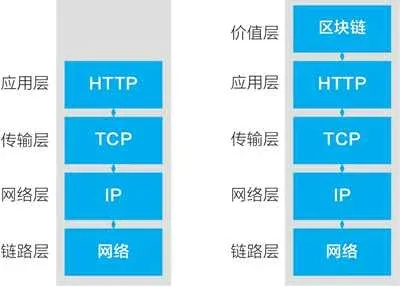
Figure 2: The fifth layer of network communication – the “value layer,” enabling value representation and transfer
In conventional information transmission, the four layers cooperate smoothly. However, in the digital realm, the foundational protocol stack does not natively support the representation and transfer of value. Implementing such functionality typically requires additional development within websites or apps and a reliance on centralized, trusted third parties to manage ledgers and facilitate value flows.
Bitcoin and other blockchain systems demonstrate that a blockchain can simultaneously provide value representation and value transfer capabilities. Leveraging blockchain, users can conduct peer‑to‑peer value transactions without a trusted intermediary. Consequently, blockchain can be seen as extracting value‑related functions from the existing Application layer and establishing a fifth layer— the value layer—within network communications.
Some analysts argue that blockchain introduces a trust function to the Internet, effectively acting as the modern equivalent of a trusted third party. This detached layer can also be described as a “trust layer.”
Our earlier proposal of a “blockchain credit‑layer protocol” aimed to illustrate how blockchain brings changes to the Internet comparable in depth to those introduced by the WWW protocols. From the viewpoint of network communication strata, we now introduce the concept of a “value layer,” because this marks the first time the Internet handles value representation and transfer directly at the protocol level. These ideas are exploratory and intended to stimulate further discussion.
The above constitutes a detailed exposition of why “blockchain could become an Internet foundational protocol, akin to TCP/IP and HTTP.” For additional information on blockchain‑based Internet foundational protocols, please follow the coverage from Bitaigen (比特根).
*When dealing with fiat currency in a global context, users typically transact in USD via SEPA or SWIFT channels. Residents of the United States should use Binance.US rather than the global Binance platform for cryptocurrency services. Please be aware that cryptocurrency gains may be taxable under the laws of your local jurisdiction.*
💡 Register on Binance with referral code B2345 for the maximum trading fee discount. See Binance complete guide.



