
 Bitaigen Research
 In this article we outline the latest market landscape for gold‑backed tokens, providing an in‑depth comparison of the issuance mechanisms, liquidity profiles, and risk considerations of PAXG, XAUT and DGX. The goal is to help investors assess which product may be more suitable for long‑term asset allocation. The piece also reveals the macro‑driving forces behind the sector and highlights potential regulatory challenges, making it a worthwhile read.
Macro Outlook for the Gold‑Token Market in 2025
In 2025, the total trading volume of tokenised gold surpassed US$1.78 trillion for the first time, while the aggregate market capitalisation jumped from US$1.6 billion to US$4.4 billion, a rise of 177 %. This dramatic expansion is being fuelled by simultaneous spikes in global inflation pressures and geopolitical risk, prompting investors to seek assets that combine gold’s store‑of‑value properties with the liquidity of blockchain technology. In the fourth quarter, daily trading volume peaked at US$126 billion, clearly demonstrating that institutional capital is flowing into this niche at a large scale.
Within this surge, three tokens—PAX Gold (PAXG), Tether Gold (XAUt) and Digix Gold (DGX)—collectively account for roughly 90 % of the market share, making them the primary drivers of the industry.

Main Risks to Watch
- Custody risk: The value of a gold‑backed token hinges on the issuer’s ability to securely store the underlying physical gold. The issuer’s reputation and the quality of its disclosures directly affect holder confidence.
- Regulatory uncertainty: Different jurisdictions classify gold tokens in varying ways, which can lead to higher compliance costs or trading restrictions.
- Technical risk: While the underlying blockchains are relatively robust, wallets, exchanges and smart contracts can still contain vulnerabilities that may jeopardise asset safety.
Potential Future Directions for the Industry
With the World Gold Council officially entering the digital‑gold space, institutional participation is expected to accelerate. Standardisation, greater transparency and deeper integration with DeFi protocols are key levers that could drive further scaling of tokenised gold. Going forward, project teams will likely need to focus on improving cross‑chain liquidity, strengthening audit mechanisms and reducing holding costs in order to maintain a competitive edge.
Core Characteristics of the Three Major Gold Tokens
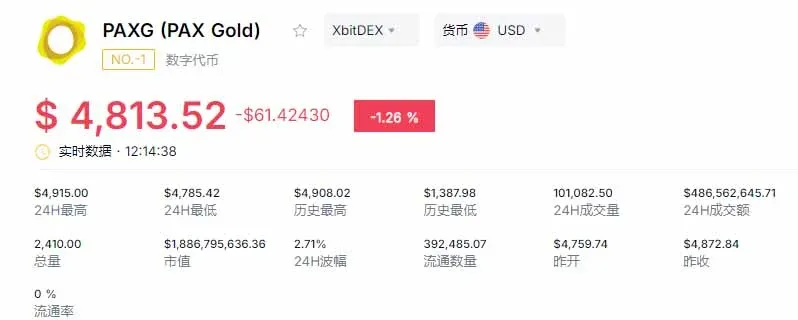
PAXG – The Benchmark for Compliance and Transparency
- Market cap around US$1.6 billion, issued by Paxos Trust Company, which is regulated by the New York State Department of Financial Services (NYDFS).
- Each token represents 1 troy ounce of physical gold; the issuer publishes an independent audit report every month to verify a 1:1 gold reserve backing.
- Holders can look up the serial number and physical attributes of the specific gold bar linked to their token, a level of transparency that is rare in the sector.
- Widely accepted within the DeFi ecosystem, it can be used for lending and liquidity mining, allowing investors to earn yields while retaining the anti‑inflationary properties of gold.
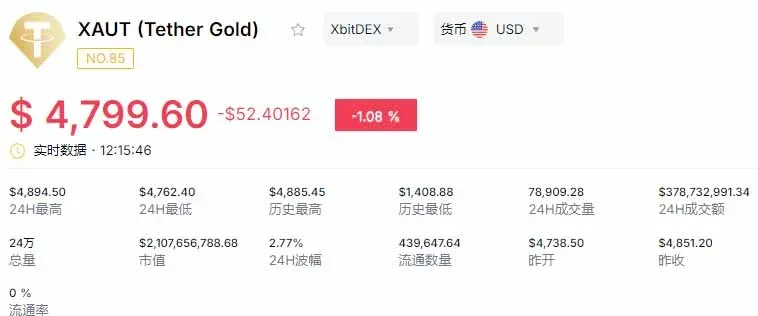
XAUt – The Liquidity Leader
- Market cap around US$2.42 billion, representing about 75 % of total tokenised‑gold trading volume, second only to traditional gold ETFs such as GLD.
- Supports a minimum trade size of 0.000001 ounce, dramatically lowering the entry barrier for retail participants.
- Listed on a wide range of exchanges, including Binance (U.S. residents should use Binance.US), OKX, Bybit and other major platforms; depth is slightly lower than that of some competitors but remains ample for most use cases.
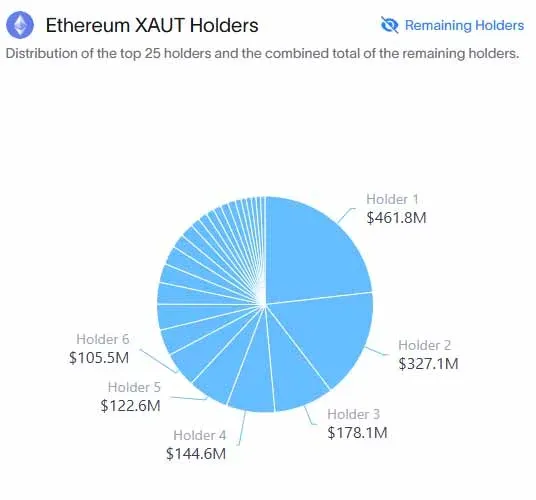
- The regulatory framework is relatively permissive; Tether has moved its operations to the Salvadoran regulator and has not yet completed a full independent audit. For traders who value high‑frequency execution or flexible rebalancing, its low slippage (under 35 basis points) and abundant liquidity are significant advantages.
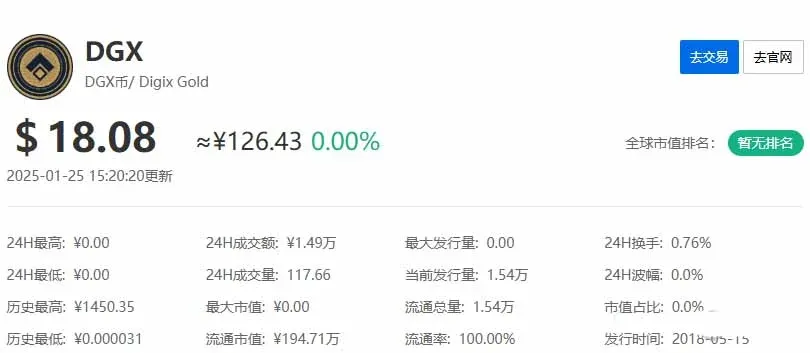
DGX – The Niche Innovator
- Market cap around US$50 million, positioned as an innovative token aimed at a more specialised audience.
- Uses a 1 gram‑per‑DGX valuation model, making it attractive for investors who wish to participate in gold exposure with relatively small capital outlays.
- Introduces a “Proof of Provenance” mechanism that records the origin of every ounce of gold on‑chain, enhancing traceability and transparency of the underlying asset.
- Liquidity is comparatively thin, with limited exchange listings; the annual storage fee is 0.13 %, resulting in a higher cost of holding than PAXG or XAUt.
Key Metrics Comparison Table
Holding Recommendations for 2026
- Conservative investors: If the primary concern is asset safety and regulatory audit, PAXG’s NYDFS‑regulated framework and monthly audit reports provide an extra layer of risk mitigation.
- Users who value flexible trading: XAUt’s high liquidity and low slippage make it more suitable for rebalancing or market‑making activities, especially for active DeFi participants.
- Investors open to experimenting with new models: Allocating a modest amount to DGX can give exposure at the gram level, but be mindful of its thinner liquidity and higher holding costs.
A diversified approach is also viable: allocate the core position to PAXG to ensure compliance and transparency, while reserving a portion of the portfolio for XAUt to boost operational flexibility.
Overall Conclusion
The tokenised‑gold trading volume breaking US$1.78 trillion signals that this niche has entered a scale‑up phase. PAXG leverages strict regulatory oversight and end‑to‑end transparency, making it attractive for compliance‑focused long‑term holders; XAUt capitalises on superior liquidity and extensive exchange coverage, catering to high‑frequency or flexible allocation strategies; DGX’s gram‑level pricing and provenance mechanism offer a differentiated option for small‑scale investors. As traditional gold institutions accelerate their digital initiatives, the sector’s move toward standardisation and larger scale is expected to continue, positioning gold tokens as a more stable “anchor” within diversified portfolios.
*Bitaigen* reminds readers that the core value of gold‑backed tokens lies in hedging inflation and preserving wealth, not in short‑term speculation. A sensible asset allocation can enhance portfolio resilience amid market volatility.
---
For deeper analyses on gold‑backed tokens, stay tuned to subsequent articles published by Bitaigen, or explore the related special reports on this site. Wishing all readers a smooth investment journey!
*Note: Crypto gains may be subject to tax in your local jurisdiction; consider consulting a tax professional.*
💡 Register on Binance with referral code B2345 for the maximum trading fee discount. See Binance complete guide.



