
 Bitaigen Research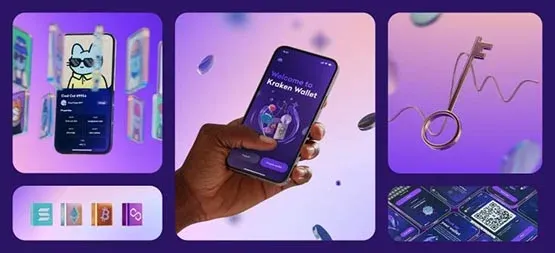
Kraken has released its self‑custody Web3 wallet called Kraken Wallet, supporting Bitcoin, Ethereum and six other major blockchains, and the source code was made public on the day of launch.
In an announcement yesterday, the veteran U.S. exchange Kraken stated that Kraken Wallet lets users securely store tokens, NFTs and DeFi assets without having to switch networks, and the fully open‑source code has been synced to GitHub.
In this article we will examine Kraken’s newly launched self‑custody Web3 wallet in depth, discuss the advantages of its open‑source nature and its cross‑chain asset‑management experience, and help users decide whether it is worthwhile to control digital assets outside a centralized platform. We will also evaluate its security model, user experience, and the audit pathways provided by the open‑source community, giving readers a comprehensive view of the tool’s potential value.
Kraken launches a Web3 wallet
As centralized exchanges (CEXes) increasingly roll out self‑custody solutions, Kraken has also added a brand‑new Kraken Wallet to the App Store, offering users an independent entry point for managing on‑chain assets.
Multi‑chain support and smooth experience
Kraken Wallet supports the following eight blockchains, allowing users to perform cross‑chain operations within a single interface:
Definition: Multi‑chain support means the wallet can connect to and interact with multiple blockchain networks simultaneously, so users do not need to constantly switch networks or juggle several wallets.
The wallet features a polished UI and integrates WalletConnect, enabling seamless access to decentralized applications (DApps).
Emphasis on privacy and security
- Minimal data collection: Kraken claims it collects virtually no user‑side information; login credentials, email addresses and similar data are not stored locally.
- Proxy layer protection: User activity is routed through Kraken’s own infrastructure proxy, masking IP addresses and identity details.
- Biometric & password protection: Fingerprint, facial recognition and password safeguards are supported.
- 24‑hour customer support: Users can obtain assistance at any time via the online support channel.
The first wallet to be open‑sourced at launch
Kraken states that the entire codebase of Kraken Wallet has undergone a Trail of Bits security audit and is published on GitHub for community review.
Why open‑source? Open‑source development is a core principle of cryptographic technology, embodying transparency, decentralization and community collaboration. Kraken is also launching an open‑source grant program to support developers contributing to the ecosystem.
Exchanges rush into the self‑custody wallet market
Tighter global regulation is prompting many exchanges to introduce self‑custody wallets, including Binance (U.S. users should use Binance.US), OKX, Coinbase, Bitget and others. The goal is to enhance user autonomy and privacy while reducing reliance on regulatory‑dependent custodial services.
---
For more details on the Kraken Web3 wallet, stay tuned to Bitaigen’s (比特根) upcoming coverage.
Related Reading
- DeFi & NFTs: Security, Governance & Innovation Challenges
- Badger DAO (BADGER): Bitcoin DeFi, Governance & Staking
- Ethereum Reorg Attacks: Post‑Merge PoS Security & Mitigation
💡 Register on Binance with referral code B2345 for the maximum trading fee discount. See Binance complete guide.
⚠️ Risk Disclaimer: Crypto prices are highly volatile. This is not investment advice.



