
 Bitaigen Research
 This article focuses on the political maneuvering behind Christine Lagarde’s upcoming departure and the regulatory stance that potential successors may take toward crypto assets. We outline the prudent tone the new European Central Bank (ECB) governor is likely to continue and analyze how these signals could shape industry compliance trends, helping readers grasp the key points of the regulatory trajectory.

The Context of Lagarde’s Exit and the Regulatory Outlook for Her Successor
Christine Lagarde is set to announce her resignation as ECB President before the French presidential election next year, a decision that comes amid turbulence in France’s political landscape. French President Emmanuel Macron will play a decisive role in selecting the new chief, and every appointment of an ECB head has historically required Paris’s consent. Reuters notes that the capital of the Eurozone’s second‑largest economy wields decisive influence in such personnel arrangements.
The media are currently zeroing in on a handful of possible candidates. The *Financial Times* mentions that the most talked‑about prospects include former Bank of Spain governor Pablo Hernández de Cos and former Dutch central bank governor Klaas Noten. Both have publicly expressed a cautious attitude toward crypto assets and are expected, should they assume the role, not to overhaul the existing regulatory tone.
- Pablo Hernández de Cos: At the 2022 Bank for International Settlements (BIS) conference he warned that crypto‑currencies could pose “extremely significant risks,” even for the most experienced institutions that struggle to assess them comprehensively. He advocates building a robust regulatory framework to shift the crypto sector from a “wild‑west” imagination to an orderly “civilized railway” development.
- Klaas Noten: In a 2024 BIS speech he acknowledged the potential benefits of blockchain technology for efficiency and asset liquidity, while emphasizing that regulators are prudently evaluating its impact on financial stability. In June 2025 he further stated that innovation around stablecoins or other payment networks should remain neutral and must never come at the expense of system robustness.
“We cannot assume that this innovation—and any further decentralisation—will bring significant benefits to the global financial system.” – Klaas Noten
“Promoting innovation must never sacrifice stability.” – Klaas Noten
“Crypto‑currencies may ‘bring extremely significant risks’ and require strong regulation.” – Pablo Hernández de Cos
These viewpoints align closely with the regulatory tone established during Lagarde’s tenure, indicating that the incoming president is likely to maintain a cautious approach to crypto‑asset oversight.
---
The Regulatory Framework Under Lagarde and the Digital Euro Initiative
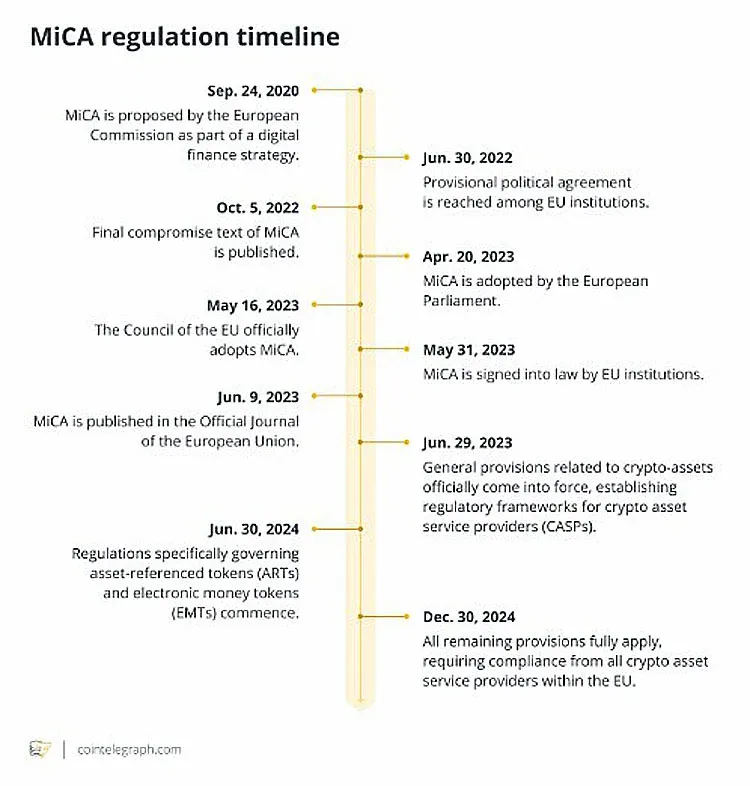
During Lagarde’s leadership, the ECB actively participated in drafting the Markets in Crypto‑Assets Regulation (MiCA), creating the EU’s first systematic crypto‑regulatory regime. Although MiCA has been adopted, the legislation still lacks clear guidance for decentralized finance (DeFi), and the finer details remain under discussion.
Lagarde herself has expressed skepticism about the intrinsic value of crypto‑currencies. In 2022 she openly remarked, “I humbly think it is worth nothing,” noting that crypto assets lack reliable underlying collateral and can easily leave investors “high and dry.” She stressed the necessity of regulating crypto‑currencies to prevent risk contagion.
“It has no basis… there is no underlying asset that serves as a safe anchor.” – Lagarde
Against this backdrop, the ECB provided technical advice and observation comments during the MiCA legislative process, especially focusing on the intersection of monetary policy and payments regulation.
“European legislation should ensure that, unless supported by an equally strong equivalent regime in another jurisdiction and equipped with safeguards for asset transfers between EU and non‑EU entities, such schemes must not operate within the Union.” – Lagarde (September 2025)
She further warned that unregulated stablecoins could erode national sovereignty, turning money from a public good into a privately‑controlled instrument.
“When stablecoins are unregulated, we risk building a system where the private sector controls money. That is not a mission for public officials.” – Lagarde
---
Acknowledging Demand for Digital Payments and the Progress of the Digital Euro
While remaining cautious about crypto assets, Lagarde acknowledged in a 2021 World Economic Forum interview that public demand for digital payments is rising. She said, “If customers prefer digital money over holding paper cash, then digital money should be made available.” Based on this view, she championed the development of a digital euro, aiming to provide a secure, easily accessible, and EU‑compliant digital payment method.
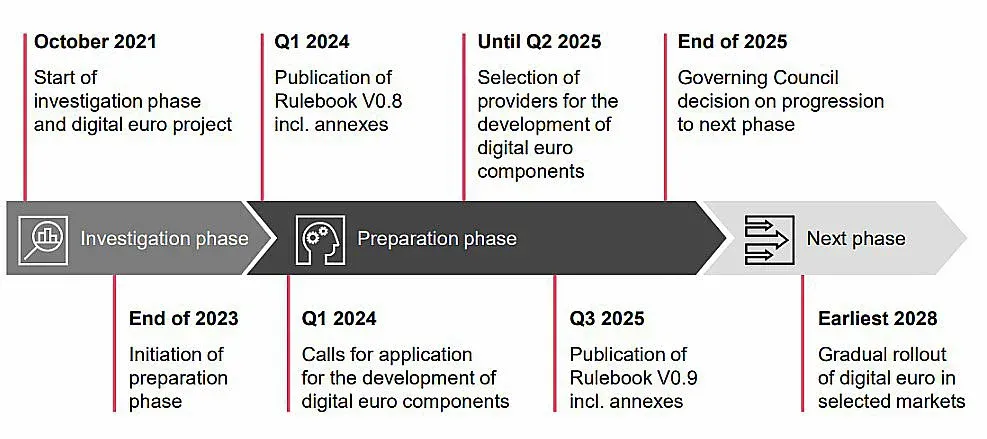
The digital euro exploration began with a survey phase in October 2021, followed by a preparation phase completed in October 2025, when the ECB’s Governing Council decided to launch the pre‑issuance preparation programme.
The digital euro project has sparked extensive debate among the public and academia. Critics fear the tool could be used to monitor consumption habits, restrict anonymous transactions, and increase reliance on digital infrastructure. In response, the ECB pledged to adhere to strict privacy standards, striving to make the digital euro functionally equivalent to traditional cash.
In October 2025, Lagarde emphasized in a public address: “We want to make the euro ‘future‑ready,’ redesign and modernise our banknotes, and prepare for the issuance of digital cash.” Her colleague, ECB Executive Board member Piero Chipoloni, added that the digital euro would bolster payment‑system resilience, lower merchant costs, and provide a platform for private‑sector innovation and competition.
“The digital euro ‘will ensure people enjoy the benefits of cash even in the digital age.’” – Piero Chipoloni
---
Comparative Regulatory Trends: Europe vs. the United States
The EU leads the way in crypto‑asset regulation, having been the first to pass a comprehensive MiCA framework, whereas the United States has yet to enact a unified federal regime. The EU’s regulatory model bears the imprint of the prudent philosophy cultivated during Lagarde’s era, reflecting a strong emphasis on financial‑system stability.
---
Summary
Lagarde’s departure will hand over a “regulatory baton” to the next ECB president. Her critiques of crypto‑currencies, stringent demands on stablecoins, and concrete steps toward a digital euro have set a clear direction for her successor. Although individual candidates may differ on details, public statements to date suggest that the ECB will continue to adopt a cautious, risk‑focused stance on crypto‑asset regulation.
The above overview captures the latest developments surrounding Lagarde’s exit, the EU’s crypto‑regulatory trajectory, and the emerging compliance tone. For further updates, stay tuned to Bitaigen (比特根) reporting.
Localization note: When dealing with fiat transactions, the global market commonly uses USD for dollar‑denominated transfers and SEPA/SWIFT for cross‑border payments. U.S. residents wishing to trade crypto should use Binance.US rather than the global Binance platform. Additionally, crypto gains may be subject to tax in the holder’s local jurisdiction; users should consult a tax professional for guidance.
💡 Register on Binance with referral code B2345 for the maximum trading fee discount. See Binance complete guide.
⚠️ Risk Disclaimer: Crypto prices are highly volatile. This is not investment advice.



