
 Bitaigen Research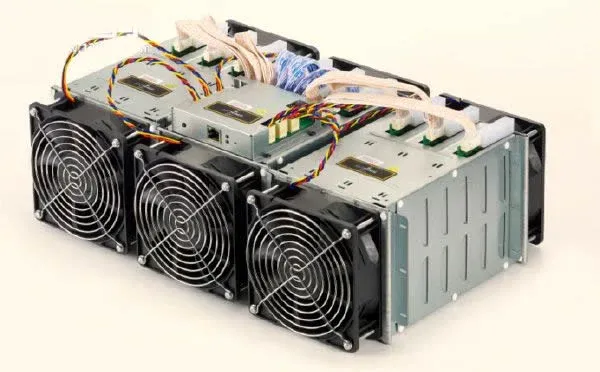
Our editorial team has compiled the most common ways to measure mining hardware hash rates, explained the unit differences across various algorithms, and described the typical conventions for expressing total network hash power. By reading this article you will quickly grasp the relationships among the different units, helping you make clearer decisions when selecting or evaluating mining equipment. Please continue reading.
What hash‑rate units are used for mining hardware today?
The most frequently used units for mining hardware today include Khash/s, Mhash/s, Ghash/s, Thash/s, Phash/s, Ehash/s, and for certain algorithms you will also see sol/s, gps, etc.
Even newcomers to the mining community will hear Bitcoin miners described in terms of how many T or TH/s they deliver. However, not every miner uses T or TH/s; those units are simply the most common choice in many scenarios.
The overall Bitcoin network hash rate is usually not expressed in TH/s; instead the industry uses E or EH/s (exahashes per second) to convey the scale of the whole network. Early‑generation miners were commonly quoted in M (MH/s) or G (GH/s). So what are the conversion relationships among these units? For example, how many M or G are equivalent to 1 T?
1. Primary hash‑rate units
H/s (hashes per second) is the base unit, indicating how many hash calculations are performed each second.
- 1 Khash/s = 1 000 hash/s
- 1 Mhash/s = 1 000 Khash/s
- 1 Ghash/s = 1 000 Mhash/s
- 1 Thash/s = 1 000 Ghash/s
- 1 Phash/s = 1 000 Thash/s
Over the past decade, mining hardware performance has increased dramatically. Today, machines still quoted in GH/s have essentially exited the Bitcoin market.
2. Hash‑rate units for Equihash‑based miners
sol/s (solutions per second) measures the number of valid solutions found each second and is conceptually equivalent to H/s.
- 1 Ksol/s = 1 000 sol/s
- 1 Msol/s = 1 000 Ksol/s = 1 000 000 sol/s
Higher prefixes such as G, T, P, E can be applied in the same way. This algorithm is commonly used by privacy‑focused coins such as Zcash and Beam.
3. Hash‑rate units for Cuckatoo29/31 miners
gps (graphs per second) is the dedicated metric for this algorithm and is often abbreviated simply as G.
- 1 Kgps = 1 000 gps
- 1 Mgps = 1 000 Kgps = 1 000 000 gps
As with the other units, the G, T, P, E prefixes can be used for larger scales. This algorithm is primarily employed by the Grin cryptocurrency.
Why mining hardware hash rates can be unstable
All mining devices experience hash‑rate fluctuations; this is normal. As long as the average hash rate and the daily earnings remain relatively stable, the variation is generally acceptable. The main factors that cause fluctuations include:
- Hardware condition – Improper installation, misconfiguration, or physical damage can reduce performance.
- Operating environment – Excessive temperature may trigger automatic shutdown protection, lowering output.
- Network stability – Disconnections or high latency directly affect hash‑rate delivery.
- Power supply – Outages or voltage swings can also cause hash‑rate variance.
When choosing a miner, you should evaluate not only the raw hash rate, but also how it aligns with power consumption and overall cost. A common efficiency metric is hashes per watt (G/W); a higher value indicates better energy conversion efficiency and generally a more favorable cost‑performance ratio.
This completes the comprehensive overview of “What hash‑rate units are used for mining hardware today?” For more information on mining hardware units, please follow Bitaigen (比特根) and its related sections.
Related Reading
- Avoid Chia Farming Pitfalls: Ponzi, Cloud Hashrate & More
- How Bitcoin Mining Works: Hash Power, Block Rewards & Satoshi's Rules
- Mining Rig Hash Rate: Conversion Guide, Performance Insights
💡 Register on Binance with referral code B2345 for the maximum trading fee discount. See Binance complete guide.



