
 Bitaigen Research
 August 2025 marked a rare market event for OKX’s native token OKB – its market capitalisation quadrupled within a single week and the price surged past the US $250 threshold. This rally was not a random spike; it directly reflected systematic adjustments made by the OKX team to the token’s economics and long‑term strategy.
*We dissect the token model, platform incentives, and ecosystem deployment from every angle, helping readers clarify the fundamental drivers behind OKB’s recent strong upward movement, unveiling the key strategies and risk considerations, and offering an in‑depth look at its long‑term value potential. The forthcoming sections are essential reading.*
What is the OKB token and how does it relate to the OKX exchange?
OKB is issued jointly by the OK Blockchain Foundation and OKX (formerly OKEx) and follows the ERC‑20 standard on the Ethereum network. As the native utility token of OKX, OKB is intended to link platform users, token holders, and prospective digital‑asset projects, providing incentives and synergies across the entire ecosystem.
Uses of the OKB token
Much like Binance’s BNB or KuCoin’s KCS, OKB fulfills multiple functions within the OKX ecosystem, allowing holders to obtain:
- Reduced trading fees
- Passive income (staking rewards)
- Exclusive token‑sale participation rights
- Access to various operations on the OKX Chain
In practice, OKB can be used to pay platform fees, take part in Jumpstart (IEO) projects, and earn rewards in OKX Earn. When a holder’s balance reaches certain thresholds, they can benefit from even lower fees and higher staking yields.
Below we explore the core drivers behind OKB’s dramatic price appreciation.
Supply‑driven catalyst: a thorough overhaul of token economics
When OKX launched OKB in 2018, the supply was capped at 300 million tokens and a quarterly buy‑back‑and‑burn mechanism—funded by exchange revenue—was introduced, creating a modest deflationary path similar to BNB’s model.
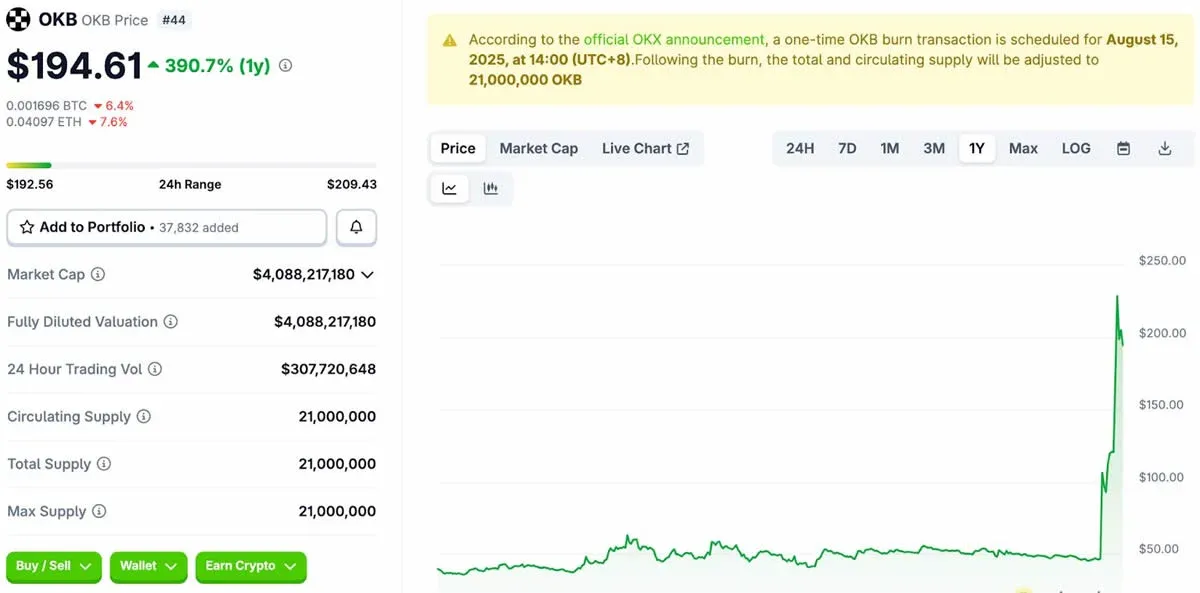
Up until August 2025, OKB’s price hovered between US $40‑50, with a daily trading volume of roughly US $50‑80 million, far below Binance’s BNB (daily $800‑1.2 billion) and MX (about US $15‑20 million).
Following a pivotal announcement in August 2025, the situation flipped dramatically: within a week the market cap breached US $6 billion, a 400 % increase that left OKB far ahead of the average performance of comparable exchange tokens.
On 15 August, OKX executed a one‑time burn of 65.26 million tokens, permanently locking the circulating supply at 21 million – the largest single‑token burn in crypto history. This action shifted OKB’s value model from “revenue‑linked” to “scarcity‑driven,” mirroring Bitcoin’s limited‑supply premium. Consequently, daily trading volume spiked to about US $80 million, and liquidity improvements were only surpassed by the launch of Binance’s BNB Chain in 2021.
Strategy‑driven catalyst: the X Layer upgrade
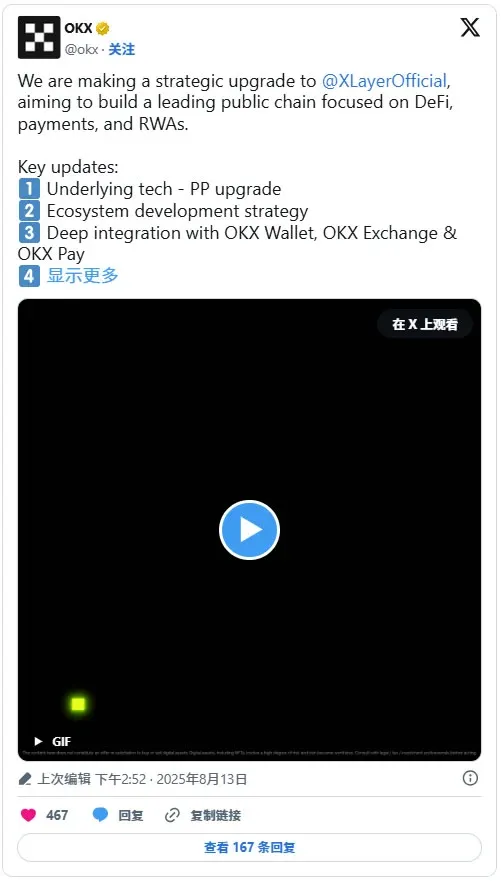
In 2023, OKX partnered with Polygon to launch a zkEVM‑based Layer‑2 chain initially called OKX L2. In April 2024 it was rebranded as X Layer, quickly attracting major protocols such as The Graph, QuickSwap, Curve, and Wormhole. The chain uses OKB as its native token and leverages zero‑knowledge proofs to achieve high‑throughput, low‑cost transactions.
As of 18 August 2025, X Layer had processed 13.06 million transactions, with a volume of roughly 1.33 million OKB (≈ US $150 million). Of this, 378 k OKB (≈ US $43 million) entered the network via cross‑chain bridges. OKX executive Star disclosed that the latest upgrade supports 5,000 TPS and near‑zero fees, while fixing the token’s supply at 21 million to create a “one chain, one token” closed loop aimed at DeFi, cross‑border payments, and real‑world asset (RWA) use cases.
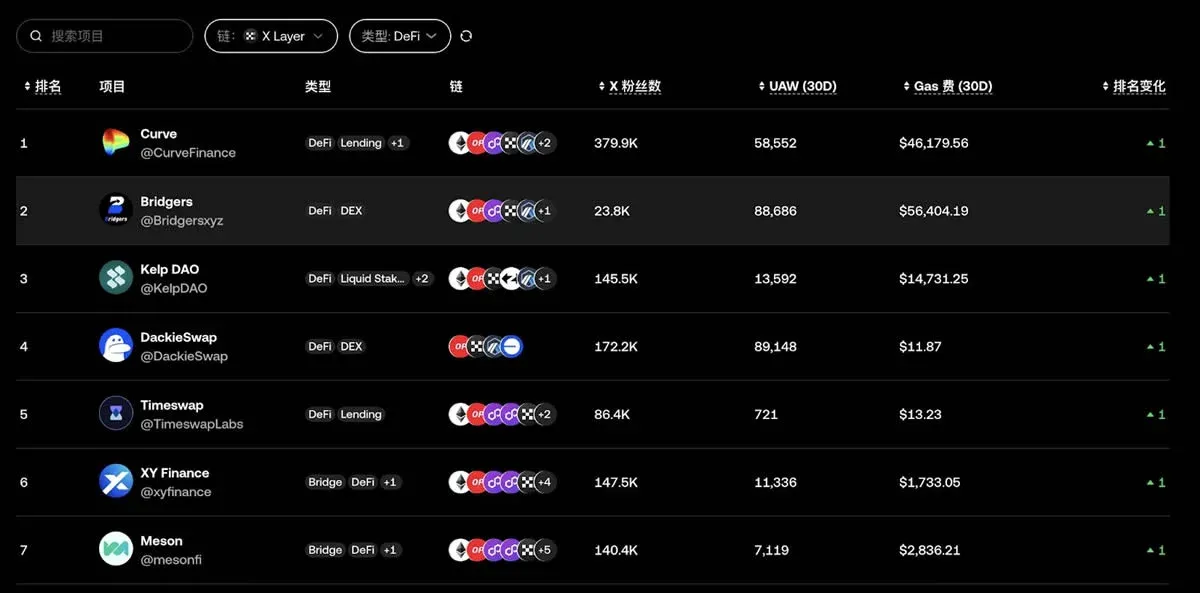
Nevertheless, when benchmarked against competitors such as BNB Chain, Arbitrum, and Polygon, X Layer’s total value locked (TVL) stood at only US $6.5 million, with daily transaction counts in the low‑hundreds‑of‑thousands—well below the 5‑12 million daily transactions typical of rival chains.
Three major challenges facing X Layer
- Limited protocol ecosystem – Only about seven active core protocols, far fewer than the dozens of DeFi building blocks available on other Layer‑2 solutions.
- Insufficient payment conversion – OKX boasts roughly 60 million trading users, yet active participation on the native chain remains modest.
- Stable‑coin liquidity gap – Compared with TRON’s USDT supply exceeding US $800 billion or Solana’s rapid‑minted USDC of US $5.5 billion, X Layer’s stable‑coin supply and usage are still limited.
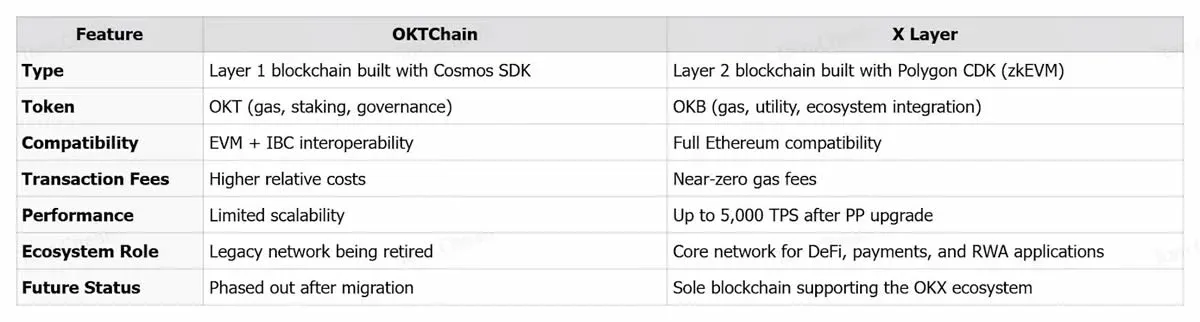
Table: OKTChain vs. X Layer
*(Original table content retained as in the source)*
Strategic comparison: OKB vs. BNB
Both tokens originated as exchange utility tokens and later evolved into gas tokens for their respective public chains. The key distinction lies in their economic models: BNB continues to employ a quarterly burn linked to Binance’s revenue, resulting in a slowly decreasing supply without a hard cap; OKB, after the massive burn, is fixed at 21 million tokens, creating an absolute scarcity akin to Bitcoin.
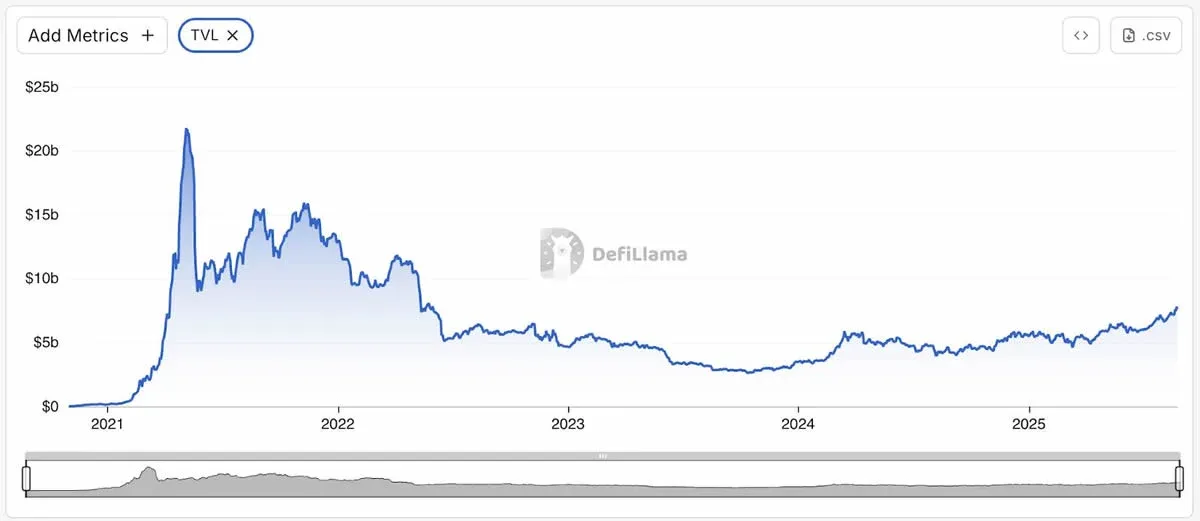
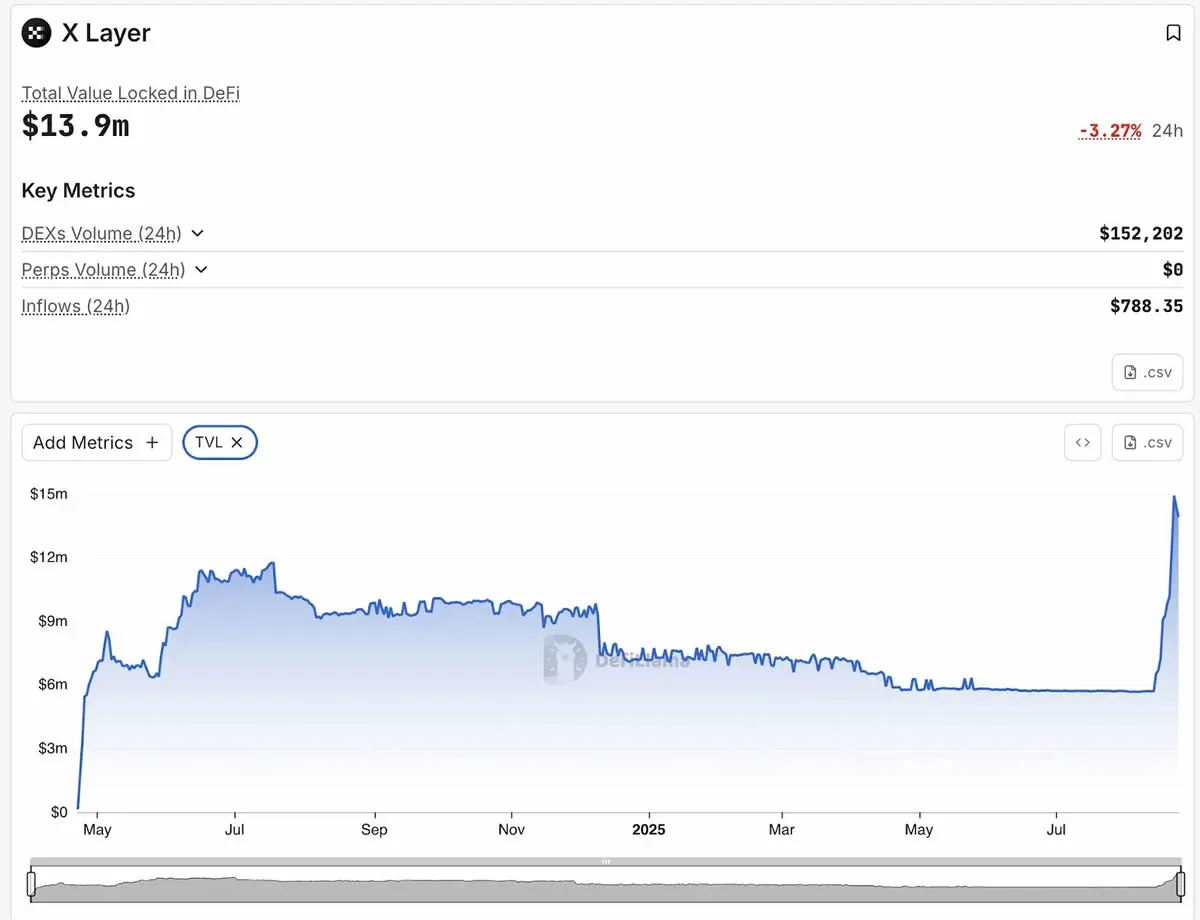
Data shows BNB Chain with a TVL close to US $7.3 billion, processing roughly 12 million transactions per day and a market cap of about US $130 billion. In contrast, the OKB ecosystem’s TVL is only US $13.9 million, with daily transaction volume in the tens of thousands. Although X Layer is still in its early stage, the backing of OKX’s roughly 50 million global users makes it conceivable—though not guaranteed—that it could emulate BNB Chain’s growth trajectory.
Risk analysis
- Short‑term volatility risk – OKB’s RSI has breached 85, entering the overbought zone. On‑chain data indicate that within three days after the burn, roughly 20 million OKB (≈ US $3.5 billion) moved to centralized exchanges, hinting at potential profit‑taking pressure.
- Competitive pressure – X Layer’s TVL of US $13.9 million pales in comparison to Arbitrum (US $12 billion), Optimism (US $6.7 billion), and Polygon (US $5.6 billion). Failure to attract dApps and liquidity quickly could diminish demand for OKB.
- Regulatory uncertainty – OKX has already faced a US $500 million fine in the United States and encounters restrictions in several major jurisdictions, which may impede ecosystem expansion and developer onboarding for X Layer.
Note for U.S. readers: Trading OKB on Binance’s global platform is not available to U.S. residents; they must use Binance.US or other compliant services.
Tax reminder: Gains from cryptocurrency transactions, including OKB, may be taxable in your jurisdiction. Consider consulting a tax professional and reporting any profits in accordance with local laws.
Summary
The recent meteoric rise of OKB illustrates the combined effect of a massive supply reduction (the single‑token burn) and a Layer‑2 upgrade that boosts demand. This dual catalyst has fundamentally altered market perception: what was once merely a functional exchange token is now viewed as a scarce asset with genuine on‑chain utility. To cement this new positioning, X Layer must scale its TVL into the billion‑dollar range, attract millions of active users, and maintain compliance amid tightening global regulatory scrutiny. If those milestones are achieved, OKB could aspire to become the “second BNB.” Conversely, if the ecosystem stalls, the current rally may prove unsustainable.
*The above constitutes the full analysis titled “What Is Driving the OKB Surge? A Detailed Look at the Strategic Factors Behind OKB’s Recent Rally.” For further in‑depth coverage, follow additional articles from Bitaigen (比特根).*
Related Reading
- OKB Utility Token: Benefits, Trading & Staking Overview
- 2026's Top 5 Tokens: Maverick, Marlin, Chainlink, OKB, TEST
- OKB Deep Dive 2024: Token Attributes, Ecosystem Role & 2025 Price Outlook
💡 Register on Binance with referral code B2345 for the maximum trading fee discount. See Binance complete guide.
⚠️ Risk Disclaimer: Crypto prices are highly volatile. This is not investment advice.



