
 Bitaigen Research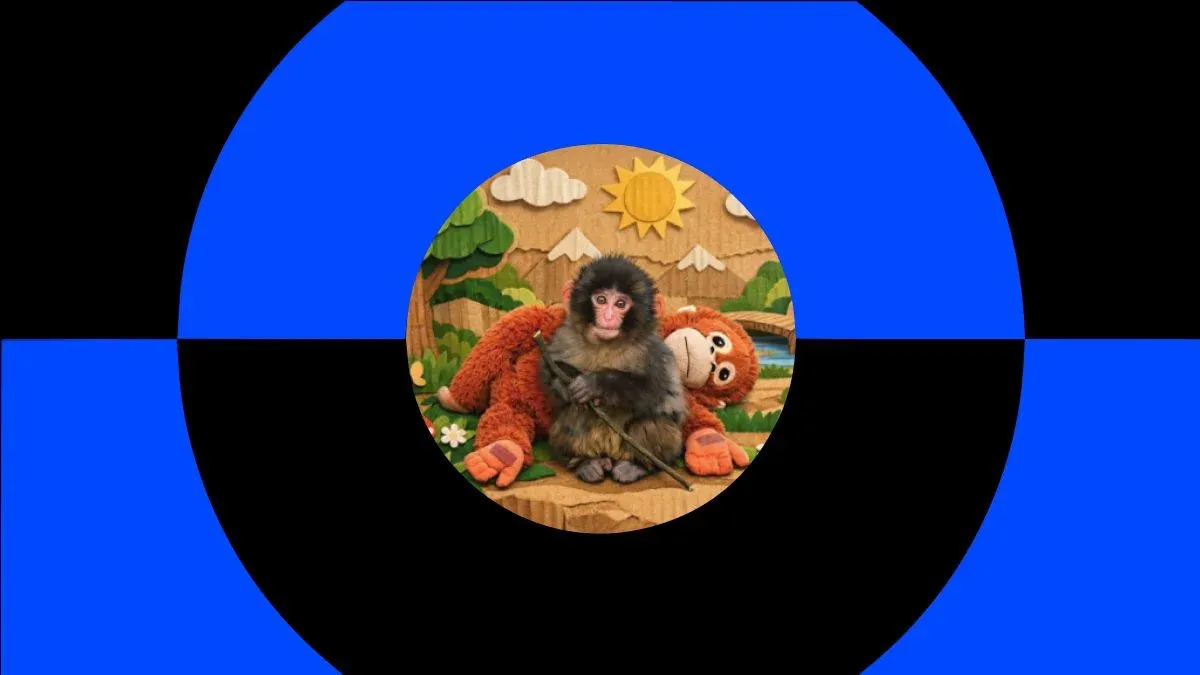
Punch (PUNCH) is a meme token built on the Solana blockchain. It leverages the “Punch‑kun” little‑monkey story that spread rapidly on X, TikTok and other platforms, and relies on Solana’s low transaction fees and sub‑second confirmation times to enable community‑driven speculative trading.
In this article we conduct an in‑depth analysis of the Solana‑based Punch (PUNCH) meme token, trace its community‑driven mechanism that originated from the Punch‑kun monkey mascot, break down its trading characteristics and outline the associated risks. The panoramic review is intended to help readers assess the project’s investment merits rationally. Please continue reading.
What is the Punch (PUNCH) Solana meme token? How does it operate?

Source: Punch community on X
Punch functions through a simple yet powerful emotional hook. The token’s visual identity is tightly linked to Punch‑kun – a juvenile Japanese macaque born in July 2025 at the Ichikawa City Zoo in Chiba Prefecture, Japan. After forming a “surrogate‑mother” attachment to an IKEA orange‑gorilla plush toy, the monkey became an internet sensation in February 2026, spreading virally across social media.
As a cryptocurrency, PUNCH is entirely dependent on community speculation. Its core components are:
- Narrative support – Themes of comfort and companionship resonate during market turbulence, positioning the token as a “feel‑good” speculative asset.
- Solana architecture – By exploiting Solana’s low‑cost, high‑throughput network, retail traders can buy and sell with near‑zero slippage and instant settlement.
- Zero utility – There is no published roadmap, DAO, or staking mechanism; price movements are primarily driven by social‑media activity and the actions of large holders.
What are the tokenomics of PUNCH and the risk of supply concentration?
The touching backstory does not change the need for a sober on‑chain assessment. The project follows a typical meme‑coin template, and its supply distribution presents several risk vectors.
- Total supply – Fixed at 1 billion tokens, which eliminates the possibility of future inflation or additional minting.
- Transaction tax – 0 % buy‑ or sell‑side tax, allowing users to trade freely without hidden fees.
- Decentralisation claim – The team states that liquidity has been burned and contract ownership relinquished, theoretically reducing developer‑control risk, though independent verification is required.
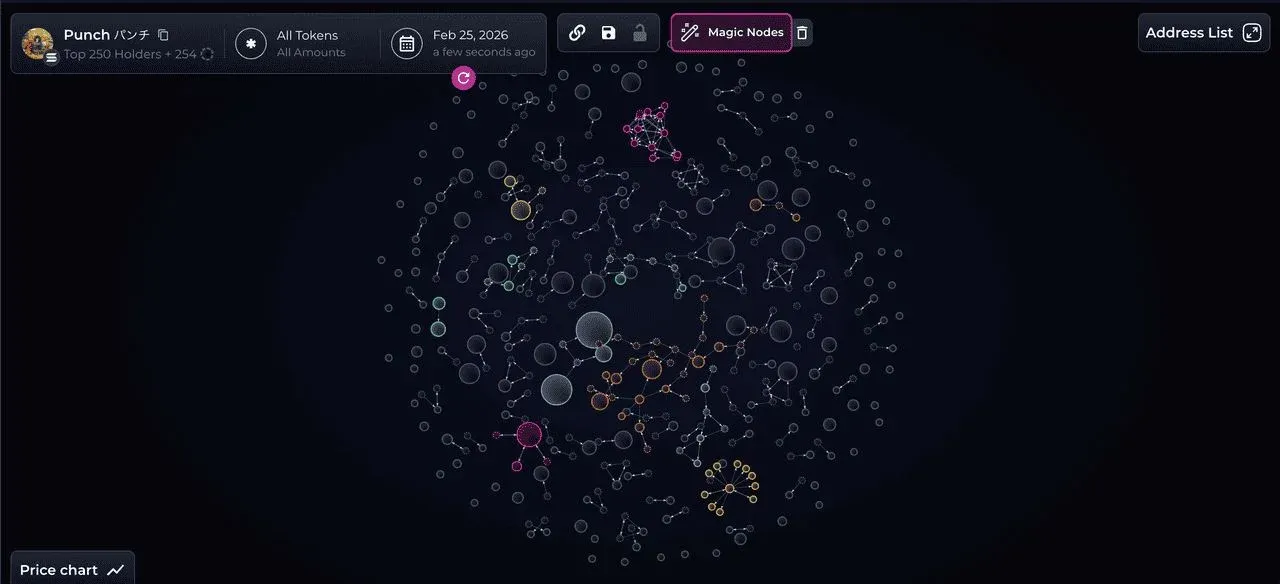
PUNCH Bubblemaps analysis
| Risk point | Explanation |
|---|---|
| **Supply concentration** | Approximately 7.75 % of the total supply is held by three related wallets; simultaneous liquidation could trigger a sharp price decline. |
| **Liquidity risk** | Highly clustered holdings amplify slippage risk when large positions are built up or unwound. |
| **Contract security** | Users should verify the official contract address (CA) on Dex Screener to avoid clone contracts and fraudulent airdrops. |
Key considerations before trading PUNCH
Before committing capital, traders need to separate the cute narrative from the high‑risk mechanics inherent to Solana meme tokens:
- Moo Deng decay pattern – Similar animal‑meme projects often experience a 70 %–90 % correction after the viral hype curve flattens.
- Narrative fragility – Token price is directly tied to media exposure from Ichikawa City Zoo and algorithmic changes on X (formerly Twitter). A lack of fresh content can cause liquidity to evaporate quickly.
- Wallet concentration risk – On‑chain data shows 7.75 % of supply is concentrated in a handful of wallets; coordinated exits could precipitate a catastrophic crash.
- Community‑takeover volatility – After the original developers step back, the project relies on a dispersed community governance model; always confirm the official contract address to guard against scams and clones.
Note for US residents: When converting crypto to fiat, use USD‑based gateways such as Binance.US (or other regulated exchanges) rather than the global Binance platform. For European users, SEPA or SWIFT transfers are typical. Remember that cryptocurrency gains may be taxable in your jurisdiction; consult a tax professional for guidance.
Conclusion: Should you trade the PUNCH meme narrative?
PUNCH exemplifies an emotional‑arbitrage play within the 2026 Solana ecosystem, where a heartfelt real‑world story is quickly turned into speculative liquidity. The token performed strongly during its viral window, but its valuation rests entirely on social sentiment and retail FOMO rather than on technical merit or business fundamentals.
- Pros – Near‑instant transaction speed, negligible fees, and the ability to capture short‑term upside during trending events.
- Cons – No formal roadmap or functional use‑case, and a highly concentrated supply that makes the token vulnerable to market manipulation.
Consequently, PUNCH is better suited as a high‑volatility, sentiment‑driven asset for short‑term trading rather than a long‑term hold. Participants should maintain active monitoring and establish strict exit criteria.
Risk warning: Trading meme tokens like PUNCH carries a substantial risk of capital loss. These assets are prone to extreme price swings, potential market manipulation, and sudden liquidity dry‑ups. Do not allocate funds you cannot afford to lose, and consider employing risk‑management tools such as stop‑loss orders when using leverage.
That concludes the article “What is Punch (PUNCH) meme coin? How does it work? Risk overview.” For more comprehensive information on the PUNCH token, you can search for previous Bitaigen (比特根) articles or follow the related links below. Thank you for supporting Bitaigen (比特根)!
Related Reading
- PIPPIN Token AI Meme Coin on Solana: Listings & Buying Guide
- Trump Token Price Forecast: Technical Analysis & Outlook
- TUSD vs USDT: Issuance, Custody & Risk Comparison
💡 Register on Binance with referral code B2345 for the maximum trading fee discount. See Binance complete guide.



