
 Bitaigen Research
The Bitaigen editorial team points out that breakthroughs in quantum computing could reshape the cryptographic landscape. This article first explains the core principles of the quantum bit, then focuses on its potential threats to wallet private keys, consensus mechanisms, and smart contracts, and finally outlines industry progress on quantum‑resistant solutions, helping readers grasp security risks. Continue reading for a full analysis.
Key Takeaways
- Quantum computers can evaluate a massive number of possibilities in parallel, delivering computational power far beyond that of classical computers.
- This surge in capability poses a direct risk to the private‑key algorithms currently used to protect crypto wallets.
- Blockchain consensus mechanisms and smart contracts may also be weakened by emerging quantum algorithms.
- The industry expects functional quantum computers to appear before 2030, and several projects are already developing quantum‑resistant encryption schemes to counter the looming threat.
---
What Is Quantum Computing?
Traditional computers rely on binary bits (0 or 1) for information processing, whereas quantum computers use quantum bits (qubits) that exhibit two hallmark properties: superposition and entanglement.
- Superposition: A qubit can exist in both the 0 and 1 states simultaneously, similar to a coin that is both heads and tails while it is still in the air.
- Entanglement: The states of two qubits become instantly correlated, regardless of the distance between them, like two “magic dice” that always show the same number.
Thanks to these phenomena, a quantum computer can explore many solution paths at the same time, achieving exponential speed‑ups for certain problems. Google once estimated that its latest quantum chip runs roughly 2.41 million times faster than early‑generation models, completing in a flash tasks that would otherwise take 47 years.
The concept of quantum computing was first proposed by Richard Feynman in 1982, and later, in 1994, Peter Shor demonstrated quantum algorithms that could jeopardize conventional cryptographic systems.
---
How Does Quantum Computing Threaten Cryptocurrencies?
The security of cryptocurrencies rests on public‑key / private‑key pairs derived from elliptic‑curve cryptography. With a conventional computer, deriving the private key from a known public key is practically impossible because it requires solving hard mathematical problems such as discrete logarithms or large integer factorization.
A quantum computer, however, can employ Shor’s algorithm to solve these problems in polynomial time. If successful, an attacker could recover the private key and gain unauthorized control over the assets stored in a wallet. This breakthrough would not only endanger individual wallets but could also undermine the fundamental value proposition of the entire crypto ecosystem.
---
Impact of Quantum Computing on Blockchain Technology
Blockchains safeguard network integrity through distributed ledgers and decentralized computational power. For Bitcoin, an attacker would need to control roughly 51 % of the network’s hash power to tamper with the chain.
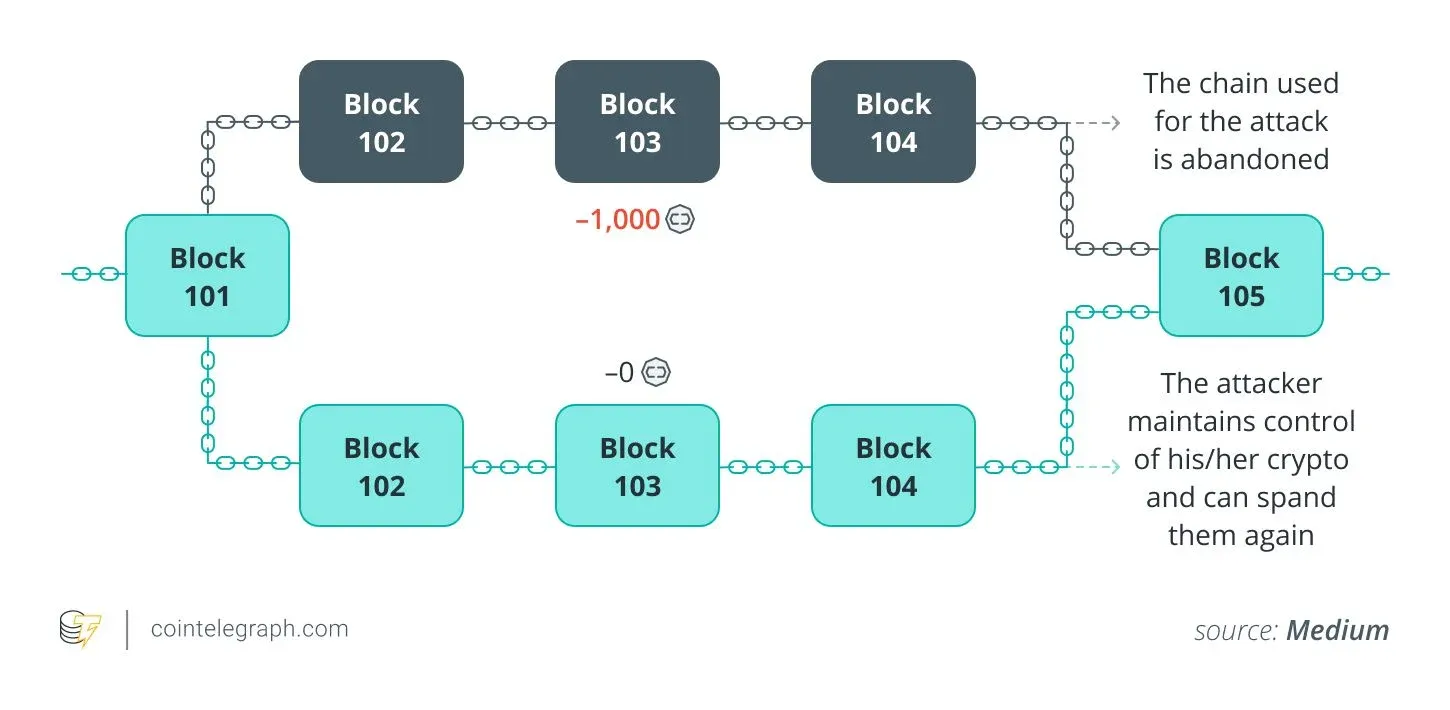
The emergence of quantum computing could fundamentally change the notion of “computational power”:
- Consensus mechanisms: Protocols that rely on massive hash calculations, such as Proof‑of‑Work (PoW), would be dramatically weakened under quantum acceleration, allowing attackers to generate valid blocks more quickly.
- Smart contracts: Signature schemes embedded in contracts face the same risk of being broken by quantum algorithms.
- Network power distribution: If only a few entities possess quantum resources, the decentralized nature of the network could be redefined.
---
Cryptographic Challenges: Quantum Computing vs. Blockchain
While quantum technology threatens public‑key cryptography, the hash functions widely used in blockchains are comparatively more quantum‑resistant. A hash function maps inputs of arbitrary length to a fixed‑size output, and its security does not depend on factorization or discrete logarithms—problems that quantum algorithms excel at.
Nevertheless, Grover’s algorithm can search a hash space in square‑root time, still posing a challenge to hash security. To address this, IBM has released several quantum‑resistant cryptographic suites (e.g., ML‑KEM, ML‑DSA, SLH‑DSA) that could form the basis of future blockchain security.
Quantum‑Resistant Cryptocurrencies: What Are They?
Against the backdrop of potential risks to legacy coins, some projects claim quantum resistance. The most notable example is the Quantum Resistant Ledger (QRL), which employs the eXtended Merkle Signature Scheme (XMSS) for digital signatures. XMSS is a one‑time signature scheme: each transaction generates a fresh signature, making it extremely difficult for an attacker—even with quantum capabilities—to replay or forge transactions.
---
How to Protect Your Crypto Assets from Quantum Threats
- Migrate to quantum‑resistant chains: As ecosystems built on quantum‑resistant coins mature, positioning assets on these chains early can lower exposure.
- Use multi‑signature wallets: Requiring several keys to authorize a transaction adds a layer of protection if a single private key is compromised.
- Cold storage: Keep private keys offline to eliminate exposure to network‑based attacks.
- Keep software up to date: Wallet and node software that receive security patches will incorporate the latest defensive measures.
- Watch quantum‑resistant wallet projects: Initiatives such as the forthcoming Anchor Wallet are being designed specifically to withstand quantum attacks.
Note: In many jurisdictions, gains from cryptocurrency transactions may be subject to tax. Users should consult local tax regulations or a qualified professional to ensure compliance.
---
The Future of Cryptocurrencies in a Quantum World
If major existing coins (e.g., Bitcoin, Ethereum) cannot upgrade their cryptographic foundations in time, the maturation of quantum computers could rapidly erode their security. Some industry forecasts suggest that a sufficiently large quantum computer might break Bitcoin’s public‑key system within 30 minutes, posing a severe challenge to a network with a market capitalization exceeding USD 1 trillion.
---
The Race for Quantum‑Resistant Blockchains
Quantum computing remains in the research phase, with practical deployment expected between 2030 and 2050. This window gives the blockchain community a valuable preparation period, prompting research institutions and enterprises to increase investment in quantum‑resistant cryptography. It is worth noting that the quantum threat is not limited to cryptocurrencies; traditional finance, government agencies, and other sectors that rely on encryption are also at risk. Consequently, the competition between decentralized finance (DeFi) and conventional finance now extends into the quantum domain.
---
This article has systematically outlined “What is quantum computing? What are its potential impacts on cryptocurrencies and blockchain?” For deeper exploration, readers can refer to previous Bitaigen (比特根) articles or follow the related links below. Thank you for reading, and we look forward to your continued interest and support of Bitaigen (比特根)!
💡 Register on Binance with referral code B2345 for the maximum trading fee discount. See Binance complete guide.



