
 Bitaigen Research
 Real‑world asset (RWA) tokenization refers to converting physical assets such as real estate, artwork, commodities, stocks, and bonds into digital tokens that can be traded on a blockchain, enabling on‑chain ownership management and instantaneous settlement.
In this article we systematically outline the core concepts and development pathways of RWA tokenization, break down the main asset classes, and select the ten most promising projects currently active. The clear framework helps readers quickly grasp the value and risks of this emerging trend; subsequent sections will dive deeper into practical analysis, so a careful read is recommended.
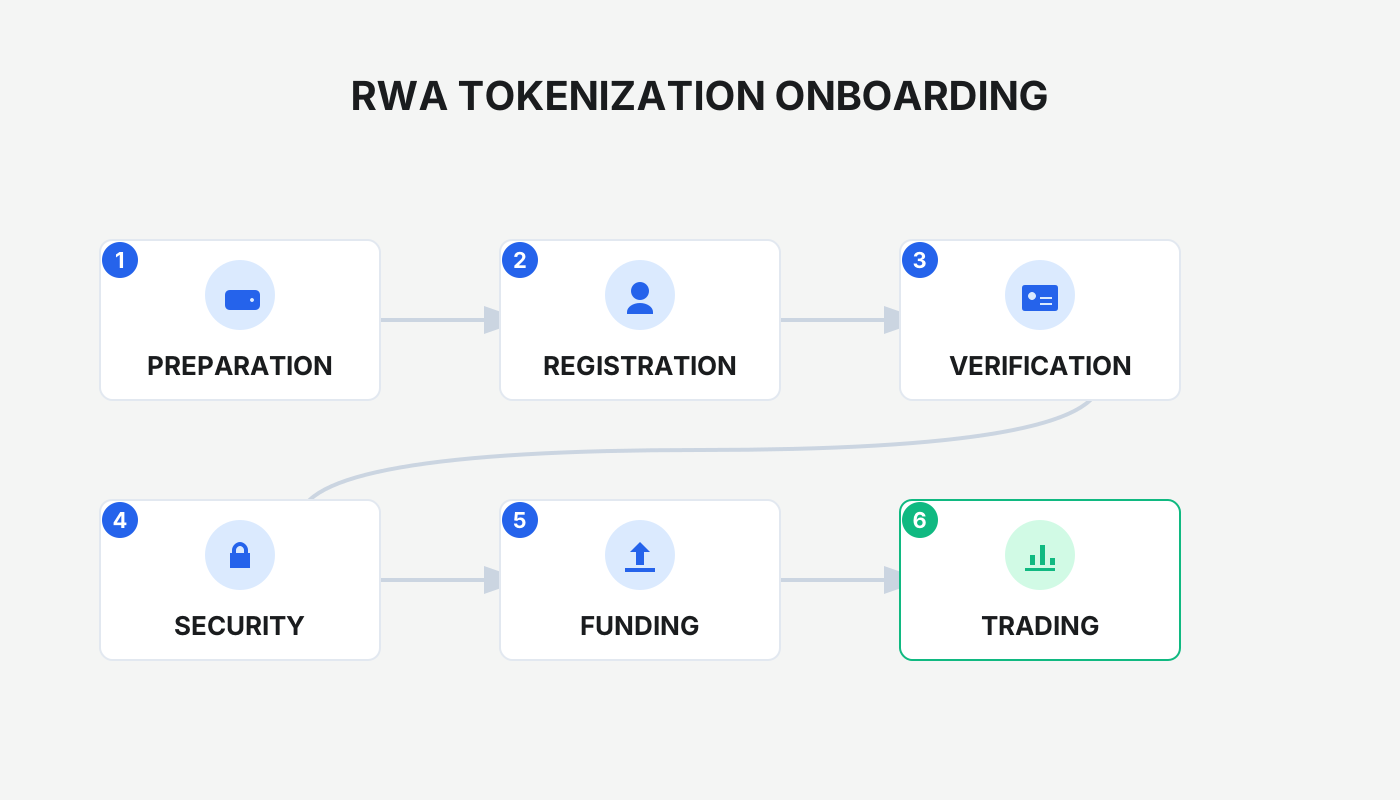
What Is RWA Tokenization?
Real‑world asset (RWA) tokenization transforms tangible and traditional financial assets into digital tokens on a blockchain. This includes real estate, artwork, fiat currencies, commodities, equities, and bonds. It creates a digital representation of the asset and manages ownership on‑chain, thereby bridging the gap between the physical world and the digital realm. The process is rapidly reshaping how assets are acquired, exchanged, and managed, representing a major shift in both finance and technology.
Key Developments and Market Growth
Tokenization of risk‑weighted assets is moving from small‑scale pilots to broad institutional adoption:
- 2023: RWA total value locked (TVL) in DeFi reached $5 billion, indicating scalability potential.
- 2024: Tokenized asset volume surpassed $50 billion; the European Central Bank piloted a €1.59 billion wholesale settlement system.
- 2025‑07‑31: U.S. SEC Chair Gary Gensler (note: the original referenced Paul Atkinson; adjust to the current chair) stated that the entire financial system will migrate to public blockchains.
- 2025: New players such as private‑credit platforms, Coinbase AM, Glasstower, Ripple, and others entered the space.
- 2030 (forecast): Market size is expected to range between $30‑50 trillion, with McKinsey’s baseline estimate around $2 trillion.
Core Types of Tokenized Assets
The variety of assets being tokenized is expanding rapidly, showcasing the broad potential of RWA tokenization. The main categories are:
Real Estate
Approximately $30 billion worth of real estate has already been tokenized or is planned for tokenization. Tokenization enables fractional ownership, supports instant trade settlement, and can serve as collateral on decentralized finance (DeFi) platforms.
Equity
Platforms such as Brickken help companies digitize their shares, issuing tokenized equity that provides a new fundraising channel for startups and improves liquidity.
Debt and Money‑Market Funds
Debt funds saw significant growth in 2024, offering standardized, auditable structures that can be used as collateral for DeFi and institutional financing.
Commodities
Gold tokens like Tether Gold (XAUT) and Paxos Gold (PAXG) have gained wide attention. Other tokenized commodities include whisky funds, diamonds, artwork, renewable‑energy projects, auto‑finance, and Bitcoin mining, giving retail investors an entry point.
Asset‑Backed Securities (ABS)
JPMorgan tokenized auto‑loan receivables, enhancing payment security and efficiency while reducing data‑leak and compliance costs.
Infrastructure for Tokenized Assets
Distributed Ledger Technology (DLT)
DLT provides an immutable record system that secures transactions, tracks ownership, and offers a programmable environment so tokens can achieve global, instantaneous settlement.
Smart Contracts
Smart contracts automate payments, compliance checks, and asset transfers, lowering costs and boosting efficiency. They can also embed KYC/AML rules to ensure safe processes.
Oracles
Oracles bring off‑chain data (e.g., asset prices, ESG scores) onto the blockchain. Chainlink is the leading provider, offering reserve proofs, DECO identity tools, real‑time data streams, and other services that enhance the credibility of tokenized assets.
Cross‑Chain Interoperability
Cross‑chain protocols (e.g., Chainlink CCIP) address liquidity fragmentation across different blockchains, allowing institutional investors to operate on multiple networks without connecting to each chain individually.
Reserve Auditing
Reserve audits verify on‑chain that the underlying assets back the tokens in real time, preventing over‑issuance and improving transparency—an essential trust layer for scaling tokenization.
Why RWA Tokenization Is a Game‑Changer
Compared with traditional finance, RWA tokenization offers several advantages:
- Enhanced Liquidity: Large, illiquid assets are split into tradable micro‑shares, attracting a broader pool of investors.
- Transparency & Security: Blockchain permanently records every transaction, reducing fraud risk and simplifying audits.
- Efficiency Gains: Smart contracts automate payments and compliance, cutting settlement times from days to minutes.
- Lowered Entry Barriers: Investors can hold small fractions of high‑value assets such as real estate or private equity.
- Innovative Financial Structures: On‑chain custody, settlement, and governance reduce counterparty risk and improve asset‑management efficiency. Analysts estimate this could generate roughly $400 billion in additional annual revenue for asset‑management firms.
Leading RWA Platforms and Projects (as of May 2025)
Ranked by total value locked (TVL), the top five platforms are:
| Platform | TVL | Launch Date | Overview |
|---|---|---|---|
| **BlackRock BUIDL** | **$2.88 billion** | March 2024 | The first tokenized money‑market fund, covering U.S. Treasury bonds, cash, etc. By 2024 it expanded to Aptos, Arbitrum, Avalanche, Optimism, and Polygon. |
| **Ethena** | **$1.44 billion (USDtb)** | August 2024 | Offers the decentralized synthetic stablecoin **USDe** and tokenized Treasury exposure **USDtb**, linking traditional yields with DeFi. |
| **Ondo** | **$1.25 billion** | August 2021 | Bridges DeFi and traditional finance; products include **USDY** (a dollar‑yield token) and **OUSG** (short‑term U.S. Treasury fund), supported by BlackRock BUIDL. |
| **Tether Gold (XAUT)** | **$820 million** | January 2020 | Gold‑backed token with each unit representing one ounce of physical gold stored in a Swiss vault; redeemable for physical gold. |
| **Paxos Gold (PAXG)** | **$770 million** | September 2019 | 1:1 linked to London‑stored physical gold, issued by a regulated U.S. entity in compliance with NYDFS rules. |
Navigating RWA Tokenization Regulation
Legal and regulatory frameworks for tokenized assets are still evolving; enterprises should monitor the following core points:
Core Legal Considerations
- Ownership Definition: Clarify whether the token represents full or fractional ownership of the underlying asset.
- Contract Law Applicability: The enforceability of smart contracts, liability for coding errors, and the treatment of offers, acceptances, and consideration remain subjects of judicial interpretation.
- Securities Law Compliance: If a token is deemed a security, it must meet disclosure, trading‑restriction, and other compliance requirements.
Global Regulatory Paths
- Singapore & Switzerland: Have established dedicated digital‑asset frameworks that avoid automatically classifying tokens as securities or commodities.
- United States: Regulation remains fragmented; the SEC evaluates token characteristics under existing securities law.
Compliance Practices
- If a token is classified as a security, the issuer must register with the SEC or obtain an exemption, adhere to AML/KYC rules, and provide transparent disclosures. Non‑compliance can lead to fines, litigation, or reputational damage.
Tax Complexity
- Most jurisdictions treat profits from the sale of tokenized assets as capital gains, with different short‑term and long‑term rates. Cross‑border transactions must follow each country’s tax rules, and participants should keep comprehensive transaction records. *Note: crypto‑related gains may be taxable in your local jurisdiction.*
The Real Transformation of Finance
RWA tokenization is driving global finance toward greater transparency, efficiency, and accessibility. High‑quality, high‑yield products are being offered on‑chain to a wider audience, improving overall market efficiency. As physical and digital assets converge, the very way ownership is expressed will undergo a fundamental shift.
Regulatory clarity is still in progress. Although debates around Bitcoin classification and DeFi licensing continue, traditional finance is beginning to recognize blockchain’s viability. The U.S. SEC chair’s recent green light for blockchain technology marks a new phase of integration between conventional finance and the crypto industry.
The Top 10 RWA Tokenization Projects for 2025
The following projects stand out for compliance, on‑chain activity, and real‑world use cases, covering real estate, bonds, commodities, and more.
1. Ondo (ONDO)
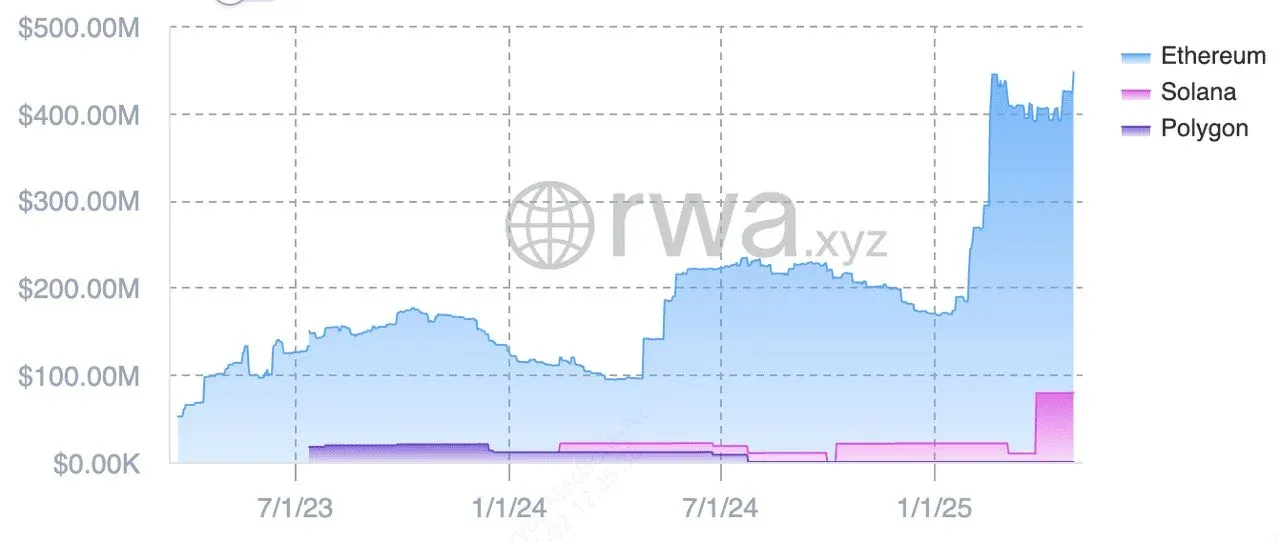
*Cross‑chain OUSG asset management data | Source: RWA.xyz*
Ondo (ONDO) is a U.S.‑registered Money Services Business (MSB) that offers tokenized short‑term U.S. Treasury and high‑quality bond products. Its flagship fund OUSG holds a TVL of $446.9 million across Ethereum, Solana, and Polygon, delivering a 4.07 % annualized yield with a 0.15 % management fee. Nexus technology enables 1:1 mint‑and‑redeem and monthly third‑party audits to ensure transparency.
2. BlackRock USD Institutional Digital Liquidity Fund (BUIDL)
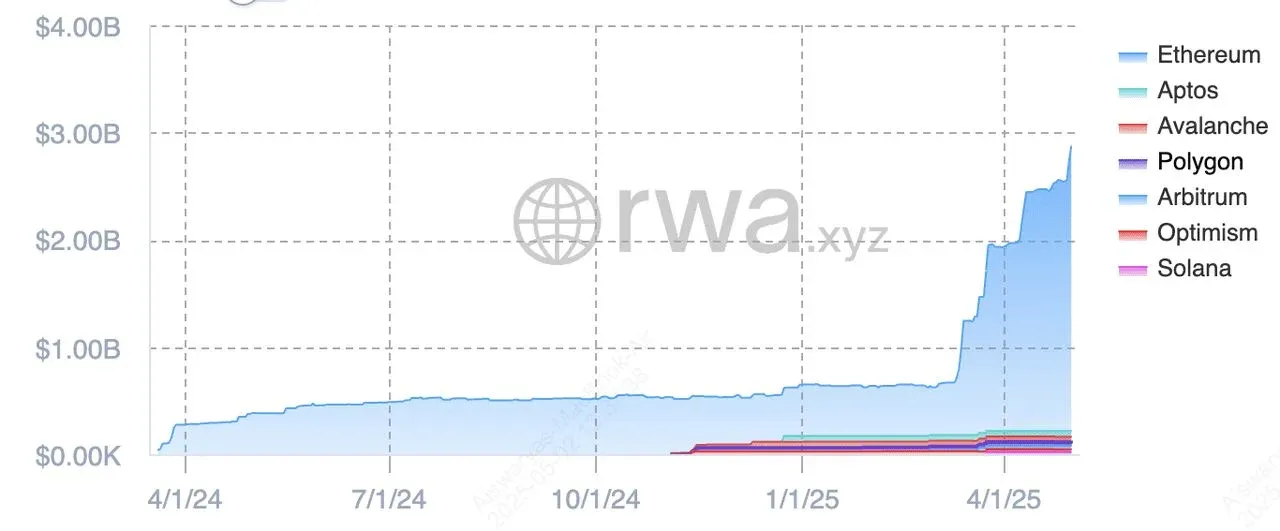
*BlackRock BUIDL asset management snapshot | Source: RWA.xyz*
BUIDL is BlackRock’s inaugural tokenized money‑market fund, available only to qualified U.S. investors with a minimum subscription of $5 million. As of 2025‑04‑30, it manages $2.87 billion in assets, with an average daily trading volume of $172 million. The token is pegged 1:1 to the U.S. dollar. Built on the Securitize platform, it operates across seven chains (Ethereum, Polygon, Avalanche, Optimism, Arbitrum, Aptos, Solana), with custody at Bank of New York Mellon and audits performed by PwC. Management fees can reach 0.50 %.
3. Chainlink (LINK)
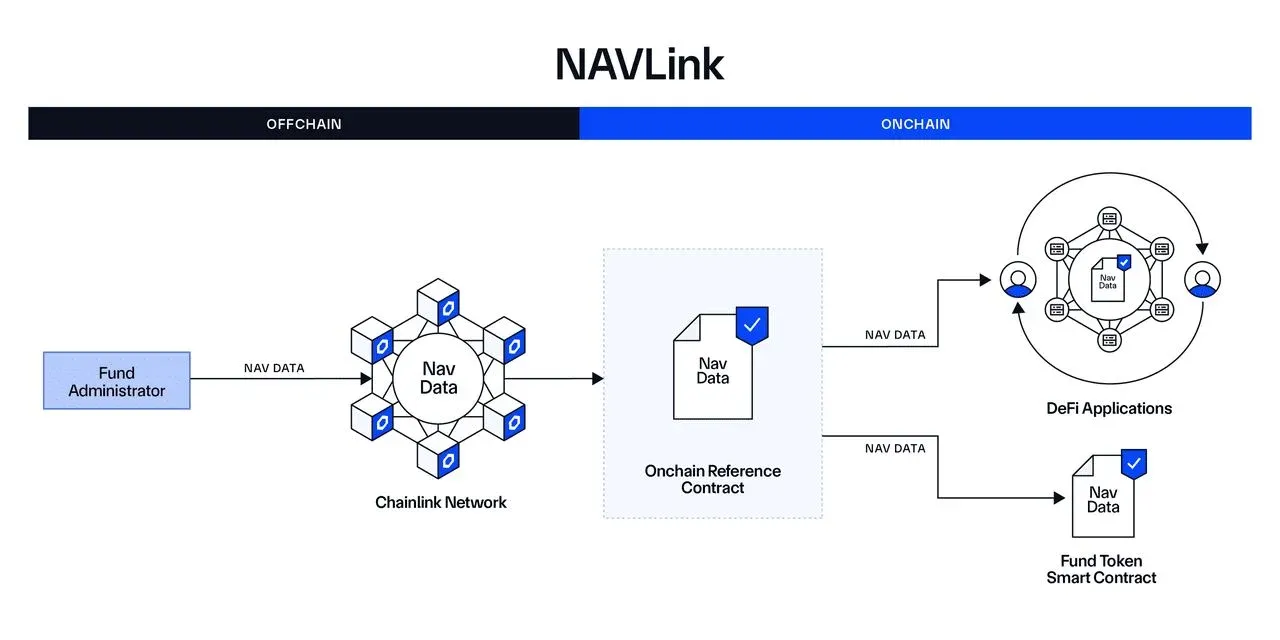
*Chainlink NAVLink application overview in RWA tokenization | Source: Chainlink*
Chainlink (LINK) is the leading oracle network, providing price feeds, net asset value (NAV) data, and reserve verification for tokenized assets. Its decentralized node ecosystem has processed over $20 trillion in transactions, connecting more than 20 institutional partners such as Fidelity International and UBS. Core features include on‑chain reserve proof modules and decentralized audit oracles, ensuring tokenized assets remain fully collateralized and transparent.
4. Plume (PLUME)
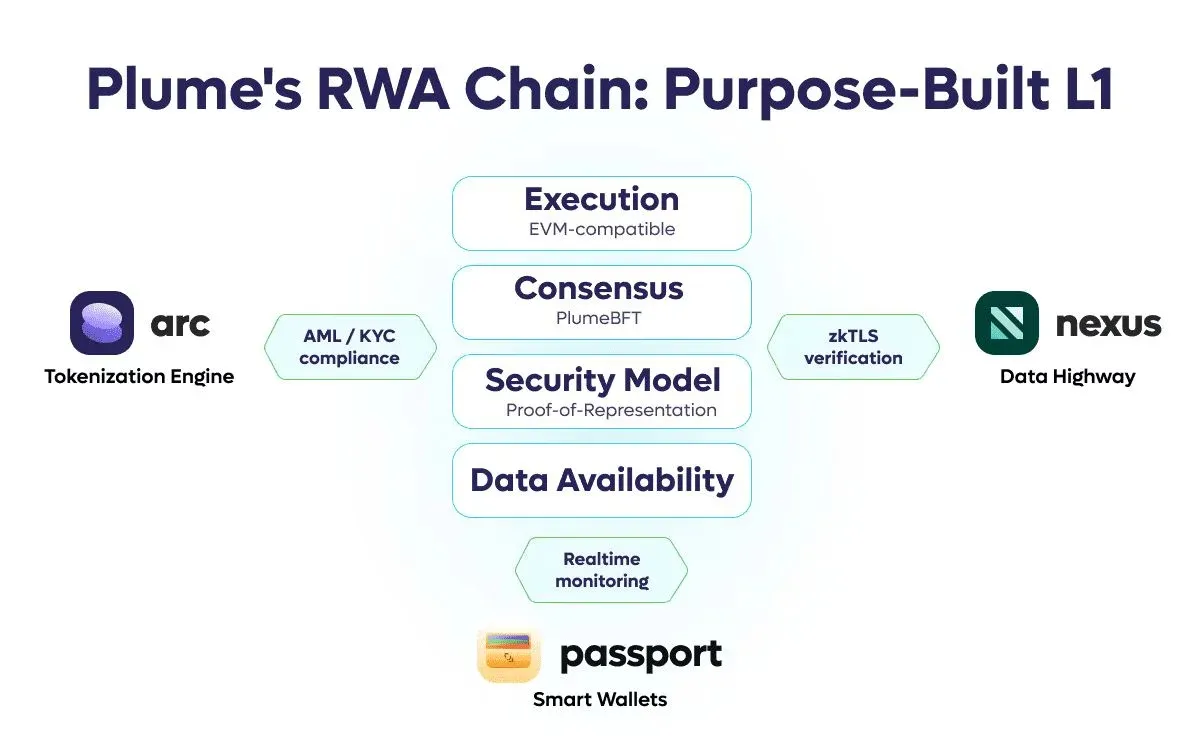
*Plume’s RWA‑dedicated chain | Source: Plume*
Plume (PLUME) builds a dedicated liquidity layer for tokenized real‑estate and receivable financing pools. The protocol hosts over 18 million on‑chain addresses and manages $4 billion of assets across more than 180 protocols. PLUME token holders can earn real yields through capacity mining, while DAO governance lets token holders influence protocol upgrades and risk parameters.
5. XDC Network (XDC)
*Source: XDC Network*
XDC Network (XDC) is a hybrid public‑private, EVM‑compatible first‑layer blockchain focused on enterprise trade finance and commodity tokenization. It offers throughput exceeding 2,000 TPS with gas fees around $0.00013, suitable for high‑frequency RWA scenarios such as tokenized U.S. Treasury USTY and trade receivables. XDC supports ISO 20022 payment channels and Corda/Wanchain bridges for seamless bank integration, and includes on‑chain custody modules for automated settlement.
6. Tether Gold (XAUT)
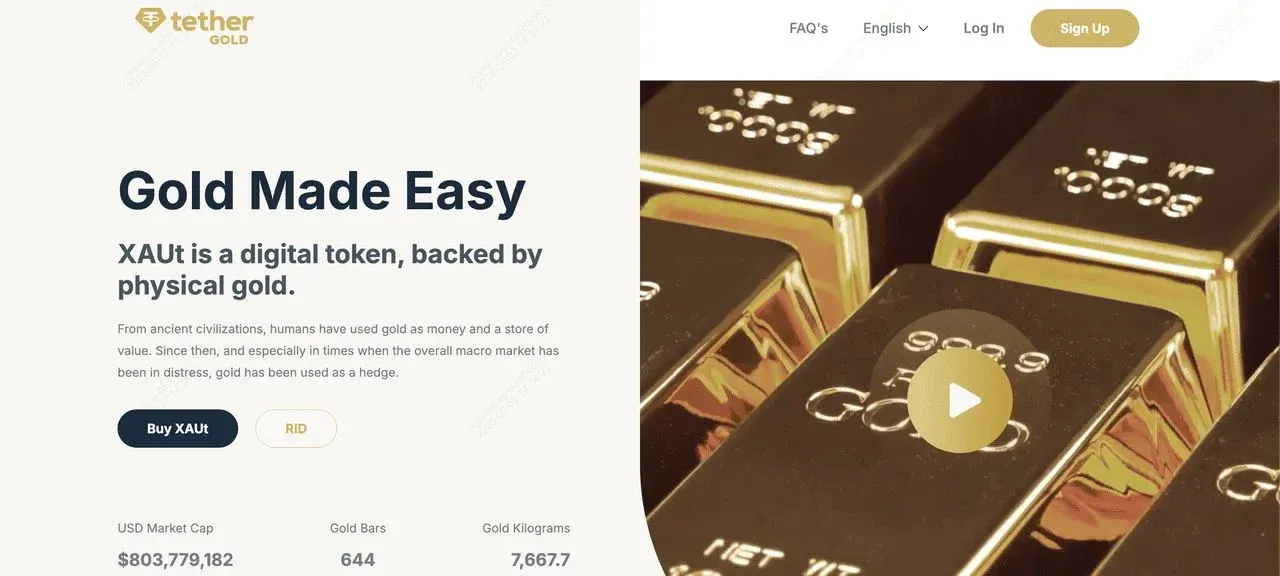
*Source: Tether Gold*
Tether Gold (XAUT) is backed 1:1 by London Bullion Market Association (LBMA)‑certified physical gold bars stored in a Swiss vault, representing 644 bars (7,667.7 kg) and valued at over $807 million. Smart contracts enable instant mint‑and‑burn, and holders can redeem physical gold at any time. Third‑party audits regularly verify reserves, and cross‑chain bridges extend availability to Binance Smart Chain and Tron.
7. Pendle (PENDLE)
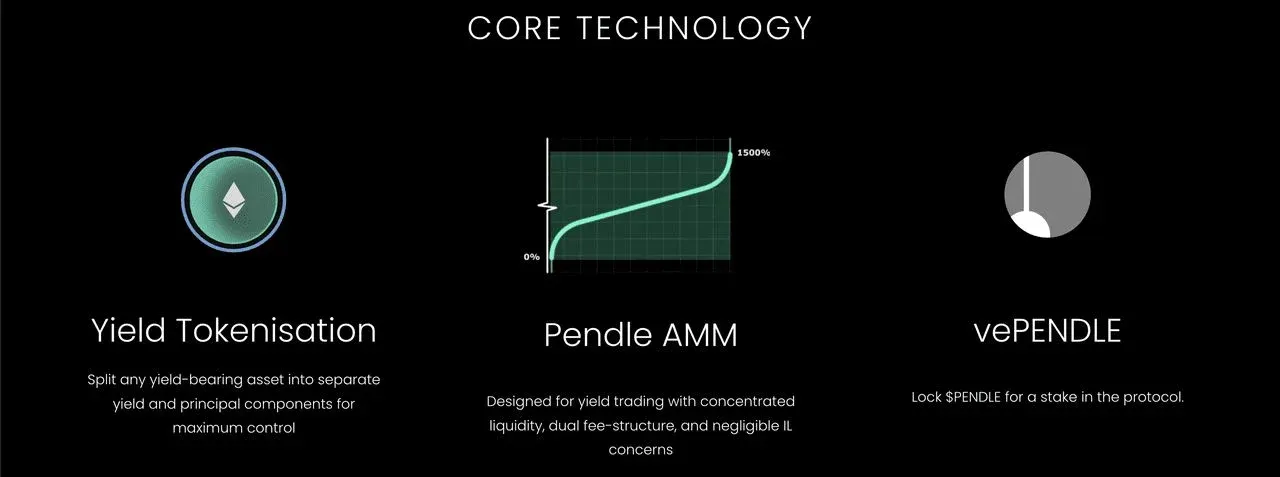
*Pendle operation overview | Source: Pendle Finance*
Pendle (PENDLE) splits bonds into principal tokens (PT) and yield tokens (YT), enabling yield tokenization. Investors can lock PT for a fixed return or trade YT on secondary markets to capture yield‑curve movements. The platform offers leverage tools and is cross‑chain compatible on Ethereum, Arbitrum, BNB Chain, and Optimism, helping users optimize RWA income streams.
8. Ethena USDe (USDE)
*Ethena USDe overview | Source: Ethena*
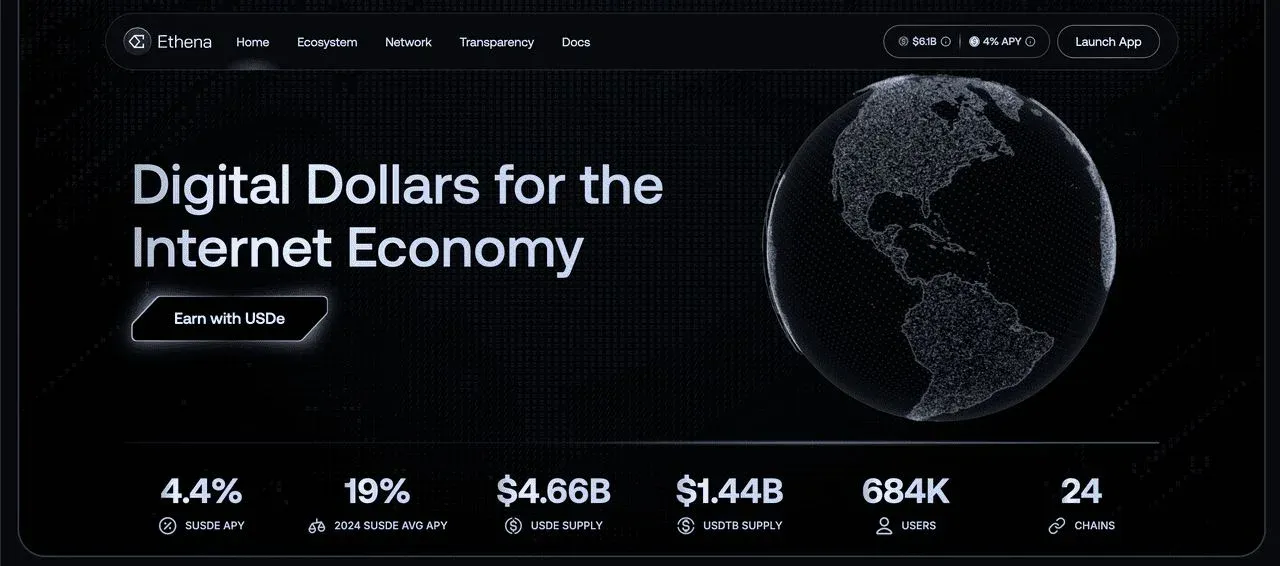
Ethena USDe (USDe) is a dual‑token synthetic dollar system that over‑collateralizes short‑term U.S. Treasury bonds and stable‑coin reserves, maintaining a collateralization ratio >100 % at all times. Users lock collateral to mint USDe, and staking the token as sUSDe yields roughly 4 % annual returns. A dynamic stability fee automatically adjusts mint‑and‑redeem costs; weekly third‑party reserve proofs and monthly custodian audits ensure asset transparency.
9. Polymesh (POLYX)
*Polymesh RWA tokenization | Source: Polymesh*
Polymesh (POLYX) is a permissioned blockchain dedicated to security‑token issuance and lifecycle management. It embeds identity, compliance, and KYC/AML SDKs, offering legal‑wrapper templates that let issuers launch regulated assets such as equities and debt within minutes. On‑chain governance
Related Reading
- Mantra (OM) Token: RWA Tokenization, Staking & Governance
- RWA Tokenization to Drive LINK Demand and Growth 2025-2030
- What Is XAUt? Tokenized Gold on the Blockchain Explained
💡 Register on Binance with referral code B2345 for the maximum trading fee discount. See Binance complete guide.



