
 Bitaigen Research
 In the blockchain ecosystem, stablecoins have become a crucial bridge between traditional finance and digital assets thanks to their low transaction fees, cross‑border payment convenience, and relatively fixed value. Their emergence not only improves the efficiency of on‑chain payments but also offers novice investors a comparatively safe entry point.
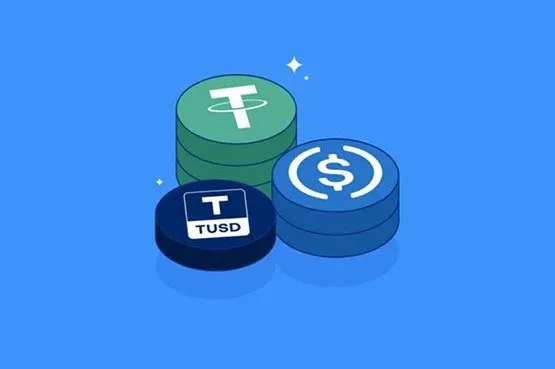
In this article we outline the core mechanisms of stablecoins and their multiple roles within DeFi, and we evaluate the ten most promising virtual assets for 2024. By deeply analysing market structure, technical implementations, and ecosystem applications, readers can quickly capture the key clues that guide investment direction. Subsequent sections compare the advantages and risks of each token, making a careful read worthwhile.
Key Points
- Stablecoins are a class of cryptocurrencies that achieve price stability by anchoring to fiat currencies or other low‑volatility assets.
- Beyond everyday transactions and cross‑chain remittances, they also serve as collateral, liquidity providers, and more within DeFi ecosystems.
- The launch of diversified products such as USDC, FDUSD, and others reflects ongoing platform efforts to improve user experience.
What Is a Stablecoin?
In short, a stablecoin aims to suppress dramatic price swings; its value is usually pegged to relatively stable assets such as the US Dollar, Euro, or gold. Because its price is predictable, a stablecoin enjoys natural advantages for everyday payments, merchant settlement, and hedging against overall crypto‑market volatility.
Types of Stablecoins and Market Capitalisation
As of 12 January 2024, the five stablecoins with the highest market capitalisation are:
- Tether (USDT)
- USD Coin (USDC)
- Dai (DAI)
- TrueUSD (TUSD)
- First Digital USD (FDUSD)
Together, these five account for roughly $129.56 billion in market value, underscoring their pivotal role in the broader crypto market. Globally, about 16 different stablecoins have emerged; the table below lists the ten representative projects that ranked highest in 2022.
1. USDT
Tether (USDT) was among the first digital assets to achieve fiat‑backed anchoring, initially launching in 2014 under the name “Realcoin” in Santa Monica. Its co‑founders include Brock Pierce, Reeve Collins, and Craig Seller. Tether injects stability into the digital‑asset ecosystem by offering transparency and reducing transaction costs.
2. FDUSD
FDUSD is issued by First Digital Limited, a Hong‑Kong‑based company (through its subsidiary FD121 Limited, branded First Digital Labs). It maintains a 1:1 peg to the US Dollar. The token claims programmable features that allow it to execute financial contracts, escrow, and insurance services without third‑party intervention, aiming to curb crypto‑market volatility and improve trading efficiency. Binance provides FDUSD staking and mining services as an alternative to USDT. U.S. users should access these services via Binance.US rather than the global Binance platform.
3. TUSD
True USD (TUSD) is issued by the Trust Token platform and belongs to the fiat‑collateralised stablecoin family. Built on the ERC‑20 standard, its reserves are held in trustee accounts and are pegged 1:1 to the US Dollar. The project launched in 2017 under founder Raphael Kusman, with operations spread across San Francisco, Canada, and the United States.
4. PAX
Paxos Standard (PAX) is an ERC‑20 stablecoin launched by New York‑based Paxos in 2012 and approved by the New York State Department of Financial Services. Within the Paxos ecosystem, PAX functions as a locally circulating currency.
5. USDC
USD Coin (USDC) was jointly issued by Circle, Coinbase, and Bitmain, debuting on the Ethereum network in September 2018. USDC uses open‑source smart contracts to maintain a 1:1 US Dollar peg and offers high programmability for payment use‑cases.
6. BUSD
BUSD is a collaborative issuance between Binance and Paxos, also backed 1:1 by the US Dollar. Since its launch in September 2017, BUSD has been tradable on the Binance platform against BTC, BNB, XRP, and many other major pairs. The operation is headquartered in Malta, with Changpeng Zhao (CZ) serving as chief executive.
7. Goldcoin
Goldcoin is a stablecoin backed by physical gold reserves and built on the Ethereum blockchain. Holders avoid the logistical hassles of storing physical gold because the metal is kept in high‑security vaults, reducing custodial risk.
8. DAI
DAI is issued by the Maker protocol on Ethereum and is a collateral‑backed stablecoin. Initiated in 2014 by Rune Christensen, DAI’s value is automatically adjusted through smart‑contract‑managed Collateralised Debt Positions (CDPs), eliminating the need for a central authority.
9. USDS
StableUSD (USDS) is launched by the crypto startup Stably, maintaining a 1:1 US Dollar peg. Users can acquire USDS by purchasing dollars directly or by collateralising assets such as Bitcoin, USDT, or Ethereum to mint USDS.
10. GUSD
Gemini Dollar (GUSD) is issued by the New York trust company Gemini, follows the ERC‑20 standard, and is dollar‑equivalent. It combines the credit framework of fiat dollars with blockchain’s technical advantages and is overseen by U.S. regulators.
11. HUSD
HUSD is issued by Stable Universal and is another compliant 1:1 US Dollar‑backed token. Assets are held by a trustee and audited monthly by a professional audit firm. Implemented on the Ethereum public chain, HUSD offers transparent, immutable on‑chain operations and aims to serve as infrastructure for the next‑generation financial network.
What Are the Top Ten Potential Virtual Assets for 2024?
Bitcoin (BTC)
As the first cryptocurrency, Bitcoin is widely recognised for its decentralisation, security, and scarcity.
Ethereum (ETH)
Building on Bitcoin’s foundation, Ethereum adds smart‑contract functionality, opening a broader horizon for blockchain applications.
Ripple (XRP)
Focused on improving cross‑border payment efficiency, Ripple aims to create a faster global payments network.
Litecoin (LTC)
Known for faster block times and lower fees, Litecoin is often described as the “lighter” version of Bitcoin.
Polkadot (DOT)
Provides cross‑chain interoperability, striving to enable free flow of assets and information among disparate blockchains.
Cardano (ADA)
Designed with sustainability and scalability in mind, Cardano seeks to drive the next generation of digital economies.
Chainlink (LINK)
As a decentralized oracle network, Chainlink supplies reliable off‑chain data to smart contracts.
Binance Coin (BNB)
The native token of the Binance ecosystem, BNB benefits from strong liquidity and extensive ecosystem support. U.S. users should use Binance.US for any BNB‑related activities.
VeChain (VET)
Focused on supply‑chain use cases, VeChain leverages blockchain to trace product origins and movements.
Solana (SOL)
A high‑performance public blockchain capable of supporting large‑scale decentralized applications with high concurrency.
By reviewing the categories and market capitalisations of stablecoins, and offering a brief overview of the 2024 potential assets, readers can gain a clearer picture of the current market landscape. While stablecoins provide a notable advantage in value anchoring, their fiat‑backed nature also introduces a degree of centralisation. When used responsibly within a decentralised framework, stablecoins still possess substantial growth prospects.
Note: Gains derived from cryptocurrency transactions may be taxable under the laws of your local jurisdiction. It is advisable to consult a tax professional familiar with digital‑asset regulations.
The content above addresses the questions “How many stablecoins exist today?” and “What are the top ten potential virtual assets for 2024?” For more exchange news and in‑depth analysis, please follow Bitaigen (比特根) and its forthcoming articles.
💡 Register on Binance with referral code B2345 for the maximum trading fee discount. See Binance complete guide.



