
 Bitaigen Research
Tether's USDT supply is edging toward the biggest monthly drop recorded since the FTX collapse, with whales and “smart‑money” traders continuously reducing the amount of USDT they hold.
According to blockchain data, the world’s largest dollar‑pegged stablecoin is experiencing the steepest monthly supply decline in years, driven primarily by large holders accelerating redemptions.
Bloomberg, citing data from Artemis Analytics, reported that as of February, USDT’s circulating supply has fallen by roughly $1.5 billion, following a $1.2 billion reduction in January. This trajectory could mark the most significant monthly decline in three years, reminiscent of the weeks immediately after the November 2022 FTX exchange collapse.
In December 2022, the bankruptcy of FTX and its 150 subsidiaries dealt a massive blow to the crypto sector, prompting a $2 billion contraction in USDT supply.
The current downturn may signal a tightening of liquidity across the cryptocurrency market, as USDT serves as the primary on‑ramp for many investors. CoinMarketCap data shows that its $183 billion market cap represents roughly 71 % of the entire stablecoin market.
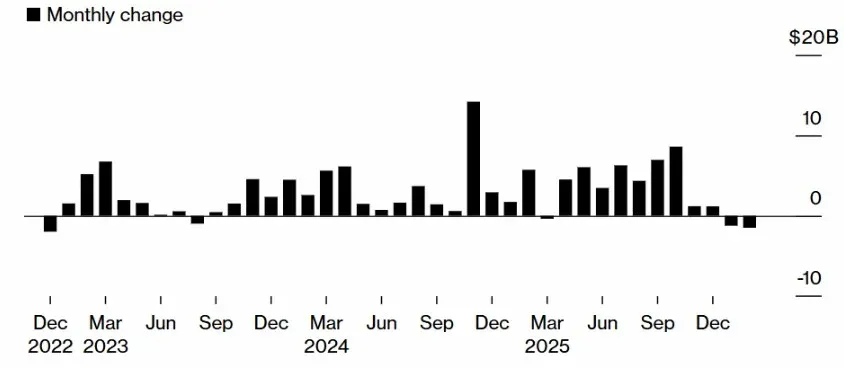
Tether USDT – Monthly Supply Change Percentage, Cumulative Monthly Total
Source: Artemis Analytics, Bloomberg
Cointelegraph reached out to Tether for comment on the February supply contraction; as of publication, no response had been received.
We have observed a rare contraction in USDT’s recent supply, driven by concentrated redemptions from large‑position holders. As a key liquidity anchor for the market, this shift could have cascading effects on the broader ecosystem. This article dissects the supply‑demand dynamics, potential drivers, and the possible implications for participants, helping you gauge the direction of the trend.
February Stablecoin Total Market Cap Remains Flat
USDT’s pull‑back has not translated into a shrinkage of the overall dollar‑pegged stablecoin sector.
DeFiLlama data indicates that, year‑to‑date in February, the combined market cap of stablecoins across all exchanges has risen 2.33 %, climbing from $300 billion to $307 billion.
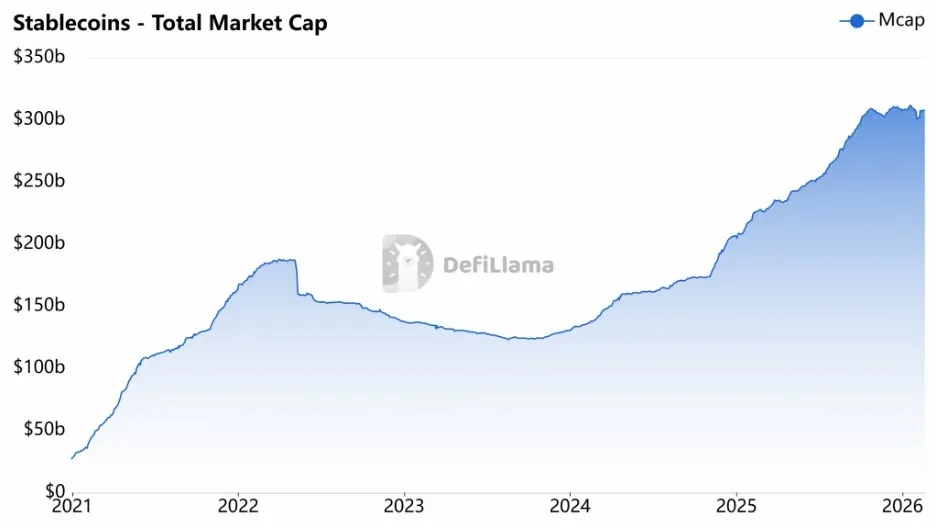
*Total stablecoin market cap.*
Source: DeFiLlama
Although the two dominant stablecoins—USDT and Circle’s USDC—declined 1.7 % and 0.9 % respectively, the USD‑1 stablecoin issued by World Liberty Financial (linked to the Trump family) surged 50 % in market cap over the past month, reaching $5.1 billion as of Friday (DeFiLlama data).
Whales and Smart‑Money Traders Are Selling USDT, but New Wallets Are Quietly Entering
“Whales,” or large cryptocurrency investors, have been off‑loading their USDT holdings; at the same time, fresh participants are generating new demand for the leading stablecoin.
Analytics platform Nansen reports that over the past week, whale wallets collectively sold $69.9 million worth of USDT across 22 addresses, a sell‑off speed 1.6 times higher than previously observed.
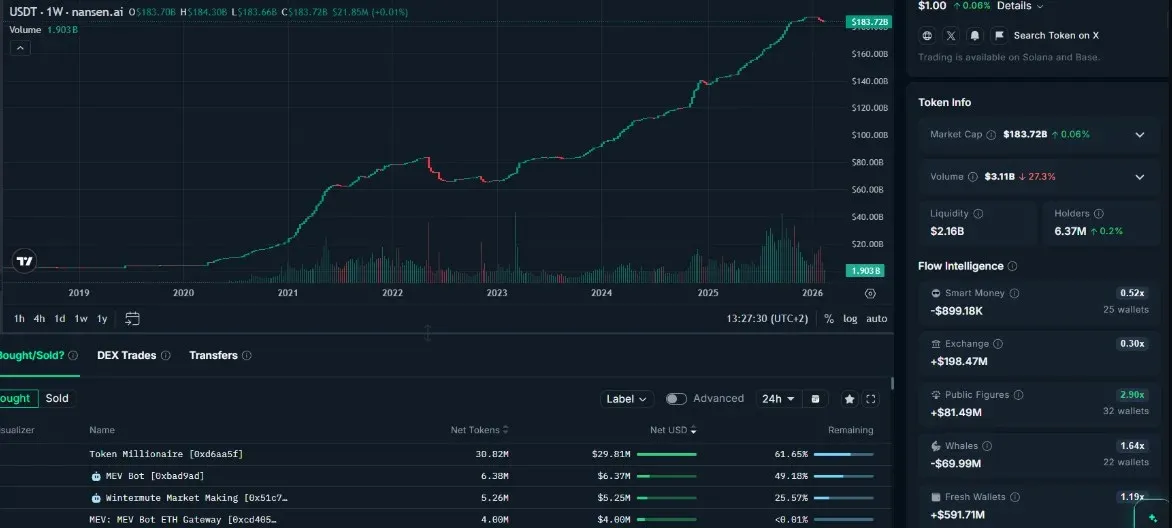
*USDT on Ethereum, token “god mode,” one‑year chart.*
Source: Nansen
Traders identified as “smart money” with high‑return strategies are also net sellers of USDT. Platform statistics show that in the past 15 days, newly created wallets purchased roughly $591 million of USDT within a single week.
This blended flow underscores a market segmentation: large holders are redeeming or re‑allocating funds, while newcomers are buying, providing a degree of offset even though the overall stablecoin issuance remains largely unchanged.
For a deeper dive into “Tether USDT Supply Contraction: Largest Monthly Decline Since the 2022 FTX Collapse,” and further data on USDT’s monthly supply dynamics, stay tuned to additional articles from Bitaigen.
💡 Register on Binance with referral code B2345 for the maximum trading fee discount. See Binance complete guide.
⚠️ Risk Disclaimer: Crypto prices are highly volatile. This is not investment advice.



