
 Bitaigen Research
 In this article we outline the core concepts and operating mechanisms of perpetual DEXs, and highlight several platforms worth watching in 2025. By dissecting funding rates, leverage principles, and on‑chain liquidation processes, we help readers quickly grasp the advantages and risks of decentralized perpetual contracts. Subsequent sections will present each platform’s distinctive features and ecosystem layout, so please continue reading.
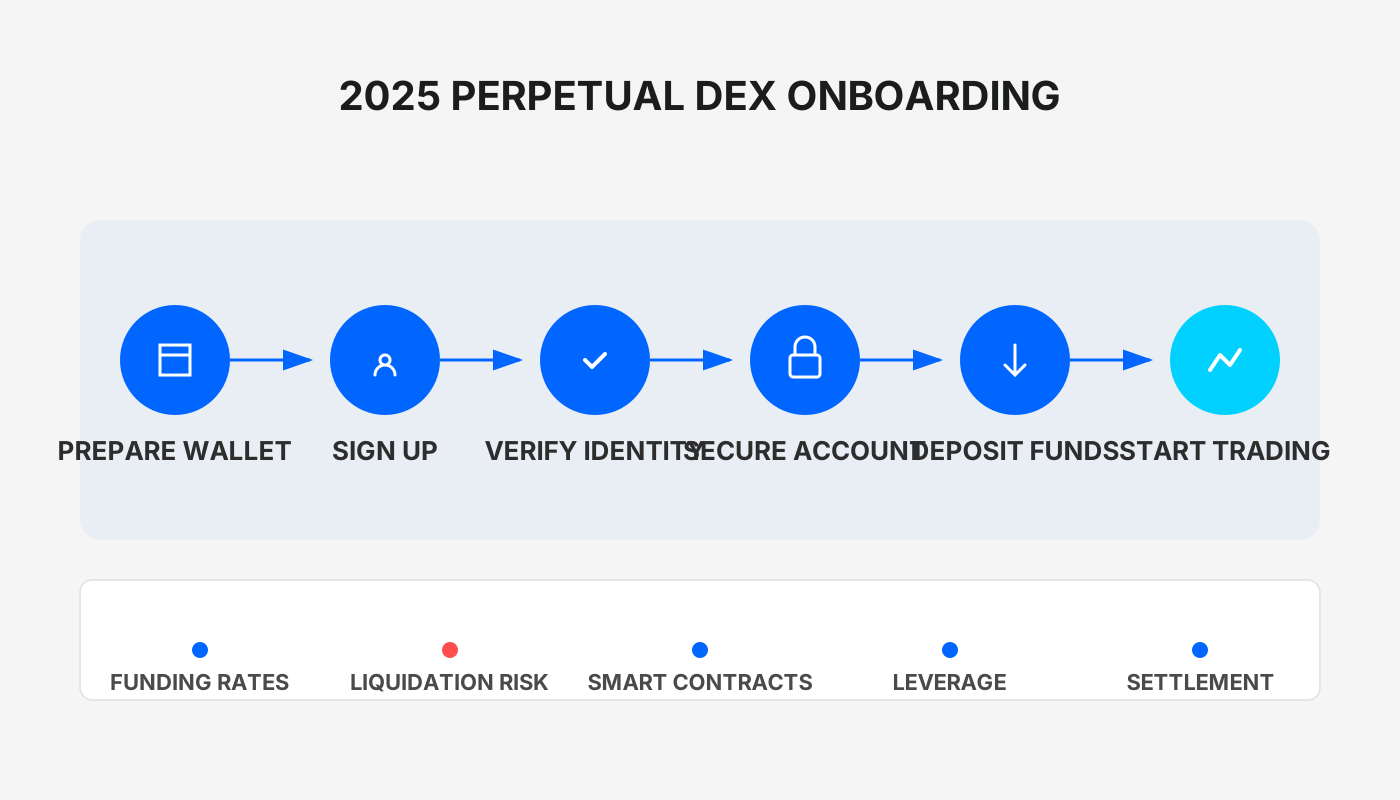
What Is a Perpetual DEX (Perp DEX)? Top Perpetual Contract DeFi Platforms to Watch in 2025
A perpetual DEX (Perp DEX) is a decentralized trading platform where users can engage in leveraged, hedging, or speculative trades through perpetual contracts without holding the underlying asset.
Definition and Operating Mechanism of Perpetual DEXes
Perpetual DEX (Perpetual Decentralized Exchange) is an open‑source exchange built on blockchain that allows users to buy and sell corresponding perpetual contracts without directly owning Bitcoin, Ethereum, stablecoins, or other underlying assets. Traders do not hold the base token; instead they use contracts to predict price movements, hedge risk, or obtain leveraged exposure.
- The biggest difference between perpetual contracts and traditional futures is the absence of a fixed expiry date. The platform uses a Funding Rate mechanism that periodically settles fees between long and short sides, keeping the contract price closely aligned with the spot price.
- Trading flow: the user connects a crypto wallet to the platform, deposits collateral such as USDC, ETH, etc., and then opens a leveraged position. Internally the platform relies on a decentralized order book or AMM, oracle price feeds, and a liquidation engine, delivering fully on‑chain, 24/7 seamless trading.
Drivers of Perpetual Contract Growth in 2025
- Hyperliquid’s market‑dominant effect
- DefiLlama data shows that in August 2025 Hyperliquid’s market share reached 70‑80 %, with monthly trading volume exceeding $350 billion and daily peaks regularly surpassing $30 billion.
- The platform’s monthly revenue has broken the $100 million barrier, establishing a new benchmark for capital efficiency.
- Whale‑level trading events boosting on‑chain attention
- In May 2025, James Wynn placed a $1.28 million bet on Hyperliquid that lost $1.24 million, sparking intense community discussion.
- Around the same period, a “white whale” generated over $50 million profit within 30 days, further attracting newcomers to the perpetual market.
- Technical breakthroughs that challenge centralized exchanges (CEXs)
- Hyperliquid achieved sub‑second settlement, processing 100,000 orders per second, and introduced on‑chain order types with zero gas fees.
- According to Grayscale and CoinMetrics, DEXs accounted for only about 1 % of global perpetual contract trading in 2022; by mid‑2025 that share had risen to 4‑6 %.
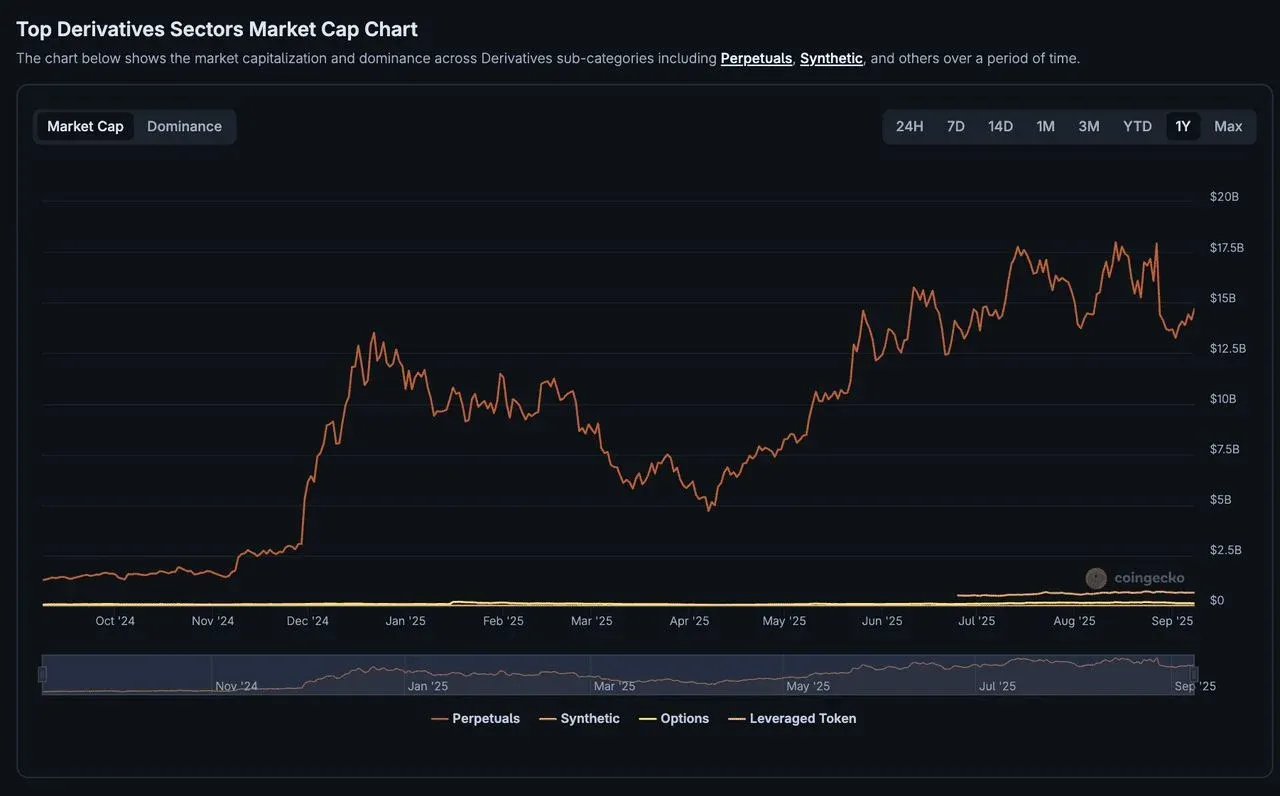
Top Perpetual Contract DeFi Platforms to Watch in 2025
The following platforms occupy leading or rapidly emerging positions in the perpetual contract market, offering high‑performance trading services on various blockchains.
1. Hyperliquid (HYPE) — Self‑Developed Layer‑1 Perpetual Exchange
- Holds roughly 80 % of market share, with monthly volume of $357 billion and daily volume topping $30 billion.
- Utilises a dual‑layer architecture: HyperCore (custom Layer‑1) + HyperEVM (EVM‑compatible layer), delivering 200,000 orders per second, block times under 1 second, and 99.99 % uptime.
- Tokenomics: 70 % of the token supply is allocated to the community with no VC holdings; 97 % of collected fees are burned, creating a deflationary effect.
2. dYdX (DYDX) — Cosmos‑Based Perpetual Exchange
- Total Value Locked (TVL) exceeds $1 billion, with daily trading volume of $2.8 billion.
- Has completed migration from Ethereum to an independent Cosmos chain, achieving faster transaction confirmations and higher throughput.
- Supports 220+ markets, offers up to 50× leverage, and provides cross‑chain access to Ethereum, Arbitrum and five other major chains.
3. MYX Finance (MYX) — Perpetual Platform on BNB Chain / Linea
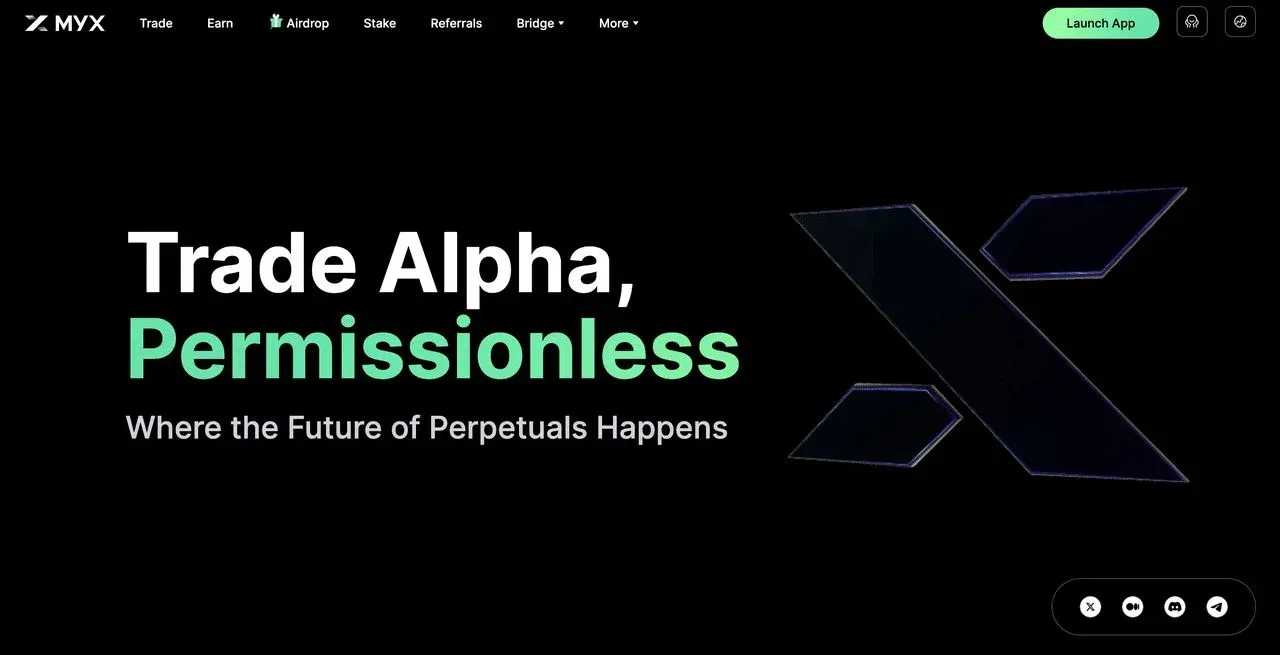
- TVL grew almost 10‑fold since March 2025, surpassing $25 million; perpetual contract turnover reached $343 million.
- Employs MPM (Multiple Position Matching) pools to deliver zero slippage and a capital efficiency of up to 125×.
- Offers USDC‑collateralised perpetual futures with up to 50× leverage and supports cross‑chain trading without the need for bridges.
4. Drift Protocol (DRIFT) — Solana Perpetual Exchange

- Cumulative turnover exceeds $24 billion, TVL over $300 million, and more than 180,000 active users.
- Leverages Solana’s 100 ms finality to provide perpetual futures with up to 101× leverage and spot trading with 5× leverage.
- A cross‑margin system permits any token as collateral, while Just‑In‑Time (JIT) liquidity matches orders instantly.
5. Aster (ASTER) — Perpetual Exchange on BNB Chain / Arbitrum
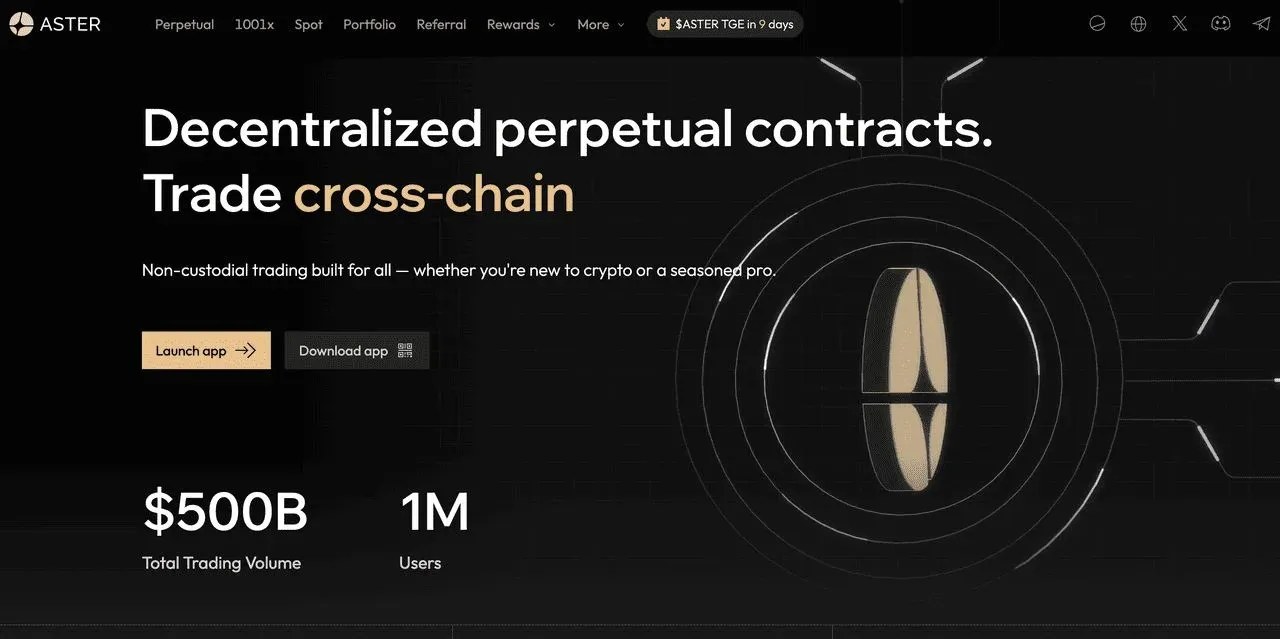
- A token generation event (ASTER TGE) is scheduled for September 17 2025; TVL already exceeds $350 million, representing roughly 20 % of the perpetual DEX market.
- Two trading modes:
- Simple Mode – one‑click trading, up to 1001× leverage, with built‑in MEV protection.
- Pro Mode – advanced order book, maker fee 0.01 %, taker fee 0.035 %.
- Supports seven EVM‑compatible chains plus Solana, requires no KYC, and has accumulated 527,224 wallet addresses and $37.7 billion in trading volume.
6. Jupiter (JUP) — Solana Perpetual Exchange
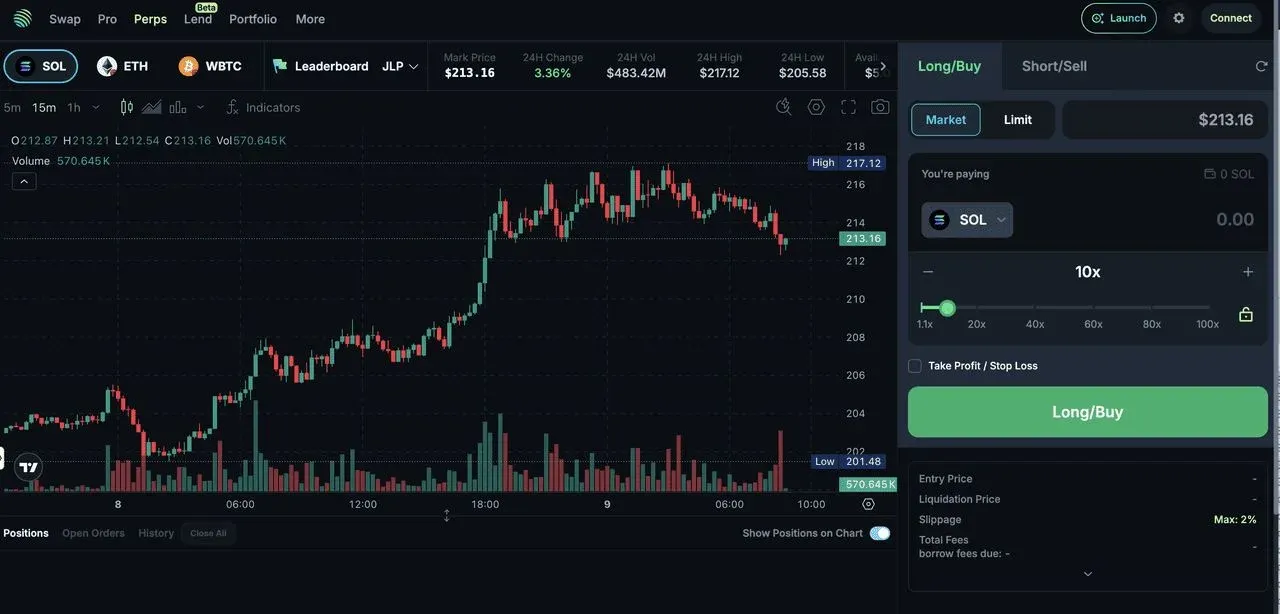
- Cumulative turnover exceeds $294 billion, accounting for 66 % of Solana’s derivatives market.
- Offers only three contracts (SOL, wBTC, ETH) yet generated $32 billion in volume and $5 million in fees within two months of its beta phase.
- Utilises a liquidity‑provider (LP) model, supports up to 150× leverage, and provides zero‑slippage execution.
7. GMX (GMX) — Cross‑Chain (Arbitrum / Avalanche / Solana) Perpetual Platform
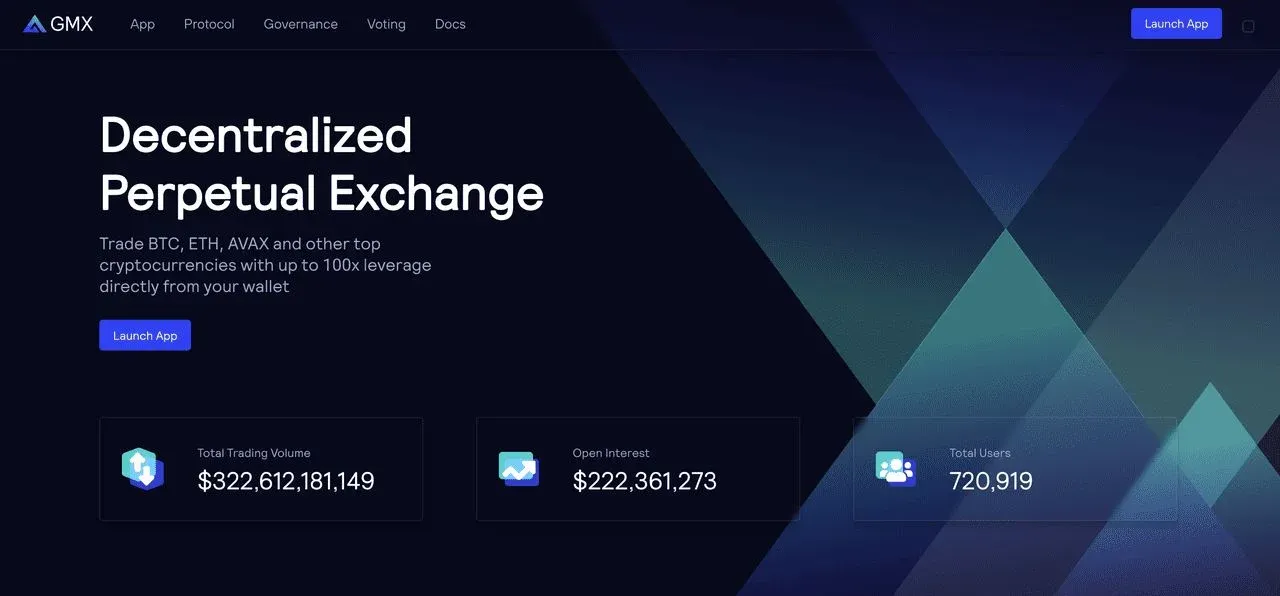
- Since its launch in 2021, cumulative turnover approaches $300 billion, generating $100‑$200 million in fees.
- TVL surpasses $450 million, and the protocol received incentive grants of 12 million ARB tokens.
- Provides up to 100× leverage with extremely low slippage; in 2025 it expanded to Solana and announced plans for gas‑free cross‑chain transactions.
Final Takeaway: The Road Ahead for Perpetual Protocols
The rapid rise of perpetual DEXs in 2025 signals a fundamental shift in DeFi trading architecture. Aggregate turnover has already reached multiple trillion‑dollar levels, and the sector continues to erode the dominance of centralized exchanges, pushing perpetual contracts toward the core of DeFi infrastructure.
- Leading players such as Hyperliquid are expected to keep driving technical innovation.
- Challengers like MYX and Aster are carving out niche markets through higher leverage, cross‑chain capabilities, and user‑friendly designs.
- Regulatory scrutiny is intensifying and may influence compliance pathways for these platforms.
According to statistics from Grayscale and CoinMetrics, the share of decentralized perpetual contracts in global perpetual trading has risen from roughly 1 % in 2022 to 4‑6 % by mid‑2025, underscoring a clear growth trajectory.
This article introduced the concept of perpetual DEXs, the growth drivers in 2025, and seven DeFi perpetual contract platforms worth monitoring. For deeper analysis of perpetual DEXs, search for previous Bitaigen (比特根) articles or continue reading the related links below. We appreciate your ongoing support of Bitaigen!
*Note: For users residing in the United States, access to the global Binance platform is unavailable; you must use Binance.US or other regulated U.S. exchanges. Fiat on‑ramps typically rely on SEPA, SWIFT, or local ACH methods, and all amounts mentioned are expressed in USD. Cryptocurrency gains may be taxable under the laws of your jurisdiction; consult a tax professional for personalized advice.*
Related Reading
- Perpetual DEX Guide: Safety, Leverage & Liquidity
- 2026 Top DEXes: Security, Liquidity & Fees
- Centralized vs Decentralized Exchanges (CEX vs DEX) Explained
💡 Register on Binance with referral code B2345 for the maximum trading fee discount. See Binance complete guide.



