
 Bitaigen Research
 The United Arab Emirates has quietly taken a pivotal step in the digital finance arena. With formal approval from the Central Bank of the UAE, USDU becomes the nation’s first stablecoin pegged to the U.S. dollar that is authorized for regulated digital‑asset settlement across the country.
USDU is issued by Universal Digital, which is supervised by the Financial Services Regulatory Authority (FSRA) of the Abu Dhabi Global Market (ADGM). It is more than just a dollar‑denominated token; it is a policy instrument designed to align with the UAE’s continuously evolving financial system.
Unlike offshore stablecoins that are issued abroad and circulate only internationally, USDU enjoys explicit on‑shore backing. Each token is backed 1:1 by U.S. dollars held in bank accounts located within the UAE, positioning it as a compliant settlement layer that meets institutional‑grade crypto activity requirements.
In practice, this provides the UAE with a domestically regulated dollar bridge, facilitating cross‑border digital‑asset flows, derivatives settlement, and future tokenised finance initiatives.
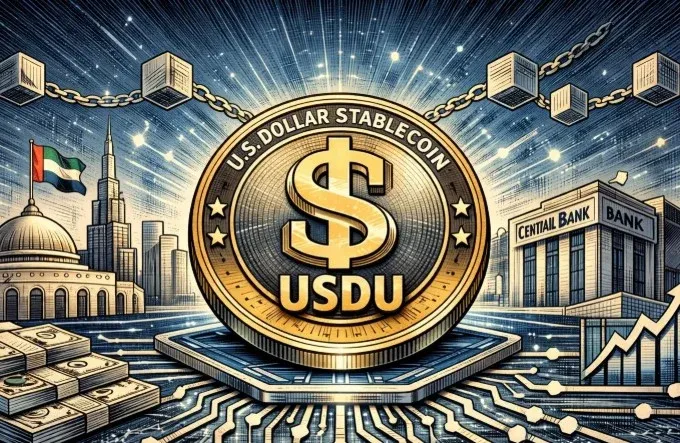
In this article we conduct an in‑depth analysis of the UAE’s first approved dollar‑stablecoin, USDU, unveiling its regulatory framework, reserve mechanism, and how its structure compares with USDT and USDC. The goal is to help readers understand its potential value for compliant settlement and cross‑border finance.
Key Takeaways
- USDU is the first dollar‑stablecoin approved by the Central Bank of the UAE, enabling regulated digital‑asset settlement nationwide.
- All reserves are held in UAE‑based banks, ensuring transparency, custodial control, and clear regulatory oversight.
- This move reinforces the UAE’s position as a hub for compliant crypto infrastructure and institutional adoption in the Middle East and North Africa (MENA) region.
What Is the USDU Stablecoin?
USDU is a foreign‑currency payment token intended for regulated digital‑asset settlement within the UAE. It is issued by Universal Digital and operates under the supervision of the ADGM Financial Services Regulatory Authority, ultimately receiving approval from the Central Bank of the UAE.
Its core characteristic is structural compliance. USDU is fully backed, on a 1:1 basis, by U.S. dollars deposited in local UAE banks—including Emirates NBD, Mashreq, and Mbank. This on‑shore reserve model distinguishes it from the majority of offshore stablecoins worldwide and aligns the token with national financial policy.
UAE Stablecoin Approval and the Relevant Regulatory Framework
USDU’s approval stems from the Central Bank of the UAE’s Payment Token Services Regulation (PTSR). The regulation mandates that digital‑asset payments denominated in foreign currency must be settled through either a legal‑currency payment channel or a registered foreign payment token. Currently, USDU is the sole token permitted for dollar‑denominated settlement under this framework.
It is important to note that USDU is authorised for cross‑border and digital‑asset‑related settlement but is not intended for domestic retail payments. This reflects the UAE’s cautious, institution‑first approach to stablecoin integration—enhancing anti‑money‑laundering standards while encouraging controlled innovation.
On‑Shore 1:1 Dollar Reserves – Why They Matter
The credibility of any stablecoin hinges on its reserve backing. USDU’s reserves are entirely housed within the UAE banking system, subject to local jurisdiction and supervision. This architecture delivers three major advantages:
- Regulatory Transparency – Full‑chain visibility is achieved through domestic oversight.
- Counterparty Risk Reduction – Regional institutions receive a reliable safeguard.
- Policy Consistency – Reserves remain insulated from foreign enforcement actions.
By contrast, many global stablecoins rely on offshore custodians or mixed‑asset reserves, which introduce multi‑jurisdictional and disclosure complexities.
ADGM FSRA Supervision and Institutional Readiness
Under the ADGM FSRA regime, USDU benefits from one of the most mature digital‑asset regulatory frameworks in the Middle East. ADGM’s rules are expressly crafted for institutional participation, covering custody, settlement, and market conduct, and they provide detailed compliance guidance.
To support international expansion, Universal Digital has partnered with Aquanow for global distribution, ensuring that while USDU is anchored in UAE compliance, its operations are not isolated from the broader market.
USDU vs. USDT vs. USDC: Structural Comparison
USDU, USDT, and USDC all aim for a 1:1 USD peg, yet their design philosophies differ markedly.
Fundamentally, USDU does not aim to compete on sheer volume; it competes on regulatory legitimacy within an established national framework.
Why USDU Is Important for the UAE and the MENA Region
USDU’s significance extends beyond a single token. It establishes a compliant dollar‑settlement infrastructure capable of underpinning tokenised securities, regulated derivatives, and regional institutional crypto trading.
The system reduces friction and costs associated with cross‑border settlement and sends a clear market signal: the UAE intends to be a leader—not a follower—in regulated digital finance.
This initiative also boosts investor confidence, positioning the UAE as a jurisdiction where innovation and regulation work hand‑in‑hand.
Frequently Asked Questions
What is the USDU stablecoin?
USDU is a dollar‑pegged stablecoin approved by the Central Bank of the UAE for regulated digital‑asset settlement. It is issued by Universal Digital under the oversight of the ADGM Financial Services Regulatory Authority.
Is USDU fully backed by U.S. dollars?
Yes. USDU maintains a 100 % 1:1 backing, with the reserve dollars kept in on‑shore UAE bank accounts.
Which authority regulates USDU in the UAE?
USDU is regulated by the Central Bank of the UAE pursuant to the Payment Token Services Regulation (PTSR) and is supervised by the ADGM Financial Services Regulatory Authority.
How does USDU differ from USDT and USDC?
- USDU is UAE‑specific, featuring on‑shore reserves and strict jurisdictional compliance, intended for regulated settlement activities.
- USDT focuses on global liquidity and breadth of use, with a reserve model that has faced ongoing transparency scrutiny.
- USDC is a globally oriented, compliance‑driven token backed by U.S. Treasury‑linked reserves and subject to regular third‑party attestations.
Are crypto gains from using USDU taxable?
While the article does not delve into taxation, users should be aware that crypto‑related gains may be taxable under the tax laws of their respective jurisdictions. It is advisable to consult a local tax professional for guidance.
---
*Note for U.S. readers: If you intend to trade or hold USDU, you must use Binance.US or another U.S.-registered exchange, as the global Binance platform is not available to U.S. customers.*
💡 Register on Binance with referral code B2345 for the maximum trading fee discount. See Binance complete guide.



