
 Bitaigen Research
 Japan is attempting to reclaim its financial narrative on the blockchain. With US‑dollar‑denominated stablecoins (USDT, USDC) dominating the global market, a yen‑denominated stablecoin is seen as the key to unlocking a new paradigm of on‑chain arbitrage.
---
From both macro‑economic and technical perspectives, we dissect the potential role of a yen stablecoin in the global on‑chain arbitrage landscape. The article focuses on three major bottlenecks—liquidity, regulation, and retail participation—evaluates whether Japan’s financial giants can provide sufficient support, and explores how policy directions may affect market involvement. Through an in‑depth analysis, readers can grasp this emerging cross‑border arbitrage shift.
Triple Challenge: Liquidity, Regulation, and Retail Participation
For Japan to launch a yen stablecoin onto the global stage, it must first overcome three major hurdles.
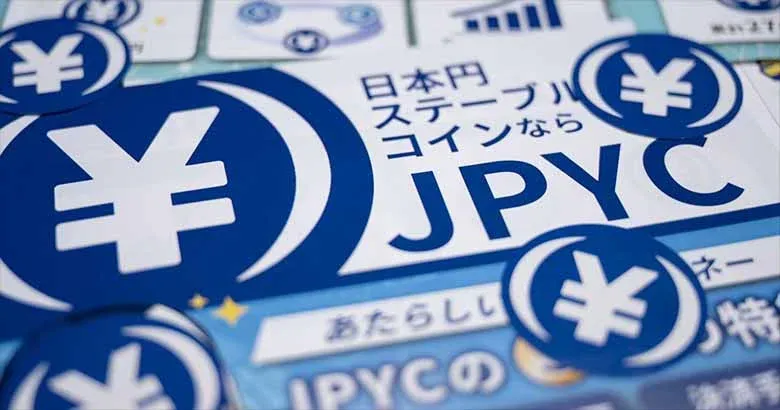
- Insufficient liquidity: The yen stablecoins currently circulating in the market (e.g., JPYC) have a total market capitalization of roughly USD 20 million, far below the depth needed to sustain large‑scale arbitrage. Only a joint issuance by major banks such as Mitsubishi UFJ and Mizuho, or the involvement of a financial powerhouse like SBI, could create a sufficiently deep liquidity pool.
- Regulatory gray area: The accounting treatment of stablecoins on bank balance sheets and the associated capital requirements remain unclear. Recently, the U.S. SEC reduced the capital discount rate for broker‑dealers holding stablecoins from 100 % to 2 %, offering a critical reference point for global regulators while also highlighting the urgency of rule‑making.
- Low retail participation: Domestic crypto holders in Japan face a 55 % capital gains tax, which heavily suppresses retail demand. The government plans to cut the rate to 20 % and re‑classify crypto assets as financial products, but progress is slow. As Sota Watanabe put it, “The Japanese government moves very sluggishly… a tax relief in 2027 is necessary.”
*Note: Cryptocurrency gains may be taxable in your local jurisdiction; consult a tax professional for advice.*
---
The “Sleeping Giant” and Its Web3 Ambitions
Japan is the world’s fourth‑largest economy, and the yen accounts for 5.82 % of global foreign‑exchange reserves, ranking just behind the U.S. dollar and the euro as a systemically important currency. Prolonged ultra‑low interest rates have turned the yen into a favored “funding currency” for global investors—borrow low‑cost yen, convert it into higher‑yielding assets, and capture the spread.
However, this advantage has barely manifested within the blockchain ecosystem. Since Prime Minister Naoto Kanda took office in 2025 and pledged to “make Japan a Web3 hub” as part of the national strategy, the situation has begun to shift. One policy focus is the institutionalisation of cryptocurrencies, with stablecoins and real‑world‑asset tokens (RWAs) earmarked as priority development tracks.
---
SBI’s “National Strategy” Chessboard
As one of Japan’s largest financial groups, SBI plays a pivotal role in the nation‑level blockchain rollout. Founder Yoshitaka Kitao—the industry legend who co‑founded SoftBank’s financial arm with Masayoshi Son—is steering SBI toward a blockchain‑based financial infrastructure.
SBI’s partnership with the Startale Group has produced the Strium blockchain, targeting institutional markets and aiming to provide a settlement layer for tokenised equities and RWAs. To achieve true on‑chain stocks (including dividend distribution and voting rights), a compliant yen stablecoin is required for dividend payments and settlement.
Consequently, the yen stablecoin’s relevance extends beyond domestic payment use; it is the core tool for on‑chain yen arbitrage trades. In traditional finance, arbitrage is often limited by trading windows and cross‑border clearing costs. On‑chain, the theory envisions a 24/7, near‑instantaneous loop: investors collateralise assets to obtain a yen stablecoin, swap it for a USD‑denominated stablecoin, deploy it into DeFi protocols for higher yields, and thereby channel the massive institutional demand for yen borrowing into the decentralized finance ecosystem.
Startale has announced plans to launch a purpose‑built yen stablecoin, JPYSC, in Q2 2026. Founder Sota Watanabe revealed that the team is already engaging with several top‑tier U.S. financial institutions, which have shown strong interest in using on‑chain yen for arbitrage and swap transactions.
---
A Race of Financial Sovereignty and Efficiency
While USD‑denominated stablecoins quietly expand their on‑chain footprint, Europe is shaping a unified regulatory environment through MiCA, and the United Arab Emirates is building a compliant settlement layer centred on Abu Dhabi, Japan must carve out its own space.
Japan’s path leverages its traditional financial strengths: a massive international yen reserve, a mature banking system, and deep expertise in RWAs and institutional arbitrage. If these resources can be transformed into on‑chain infrastructure, Japan could stake a claim in the $40 trillion global credit and arbitrage market as a yen‑centric, non‑USD foundational asset.
Victory in this competition will not hinge solely on technical execution or the success of a single stablecoin; it will also depend on the speed of regulatory innovation, the commitment of legacy financial giants, and the ability to mobilise the dormant domestic retail sector. Should Japan overcome the three‑fold challenges outlined above, the on‑chain arbitrage landscape will achieve a new equilibrium.
---
Japan’s Web3 ambition rests on this yen‑anchored digital token. If it succeeds, the global on‑chain arbitrage market will witness its first robust non‑USD pillar, reshaping the efficiency and configuration of cross‑border capital flows.
💡 Register on Binance with referral code B2345 for the maximum trading fee discount. See Binance complete guide.
⚠️ Risk Disclaimer: Crypto prices are highly volatile. This is not investment advice.



