
 Bitaigen Research
 Recently, many people have found their bank cards frozen. After visiting their banks and going through a series of inquiries, they were told the reason was that they had recently sold Bitcoin and received funds that were flagged as “involved in a case.” Most investors react with panic and are unsure what they did wrong. In such moments, the question “how to deal with a Bitcoin withdrawal that freezes a bank card?” often arises. Below is an in‑depth analysis of the issue.
If your bank card is frozen because of a Bitcoin withdrawal, the first step is to determine whether the freeze was imposed by the bank itself or by a judicial authority, and then follow the corresponding procedure to contact the bank or the police, provide an explanation of the source of funds, and cooperate with the unfreeze process.
From a regulatory and compliance perspective, we have systematically outlined the most common reasons a Bitcoin withdrawal can lead to a frozen bank card, and we provide a step‑by‑step response plan. This helps readers identify whether the freeze is a bank‑initiated or a judicial one, prepare the necessary documentation quickly, and reduce associated risks. For detailed operational guidance, keep reading.
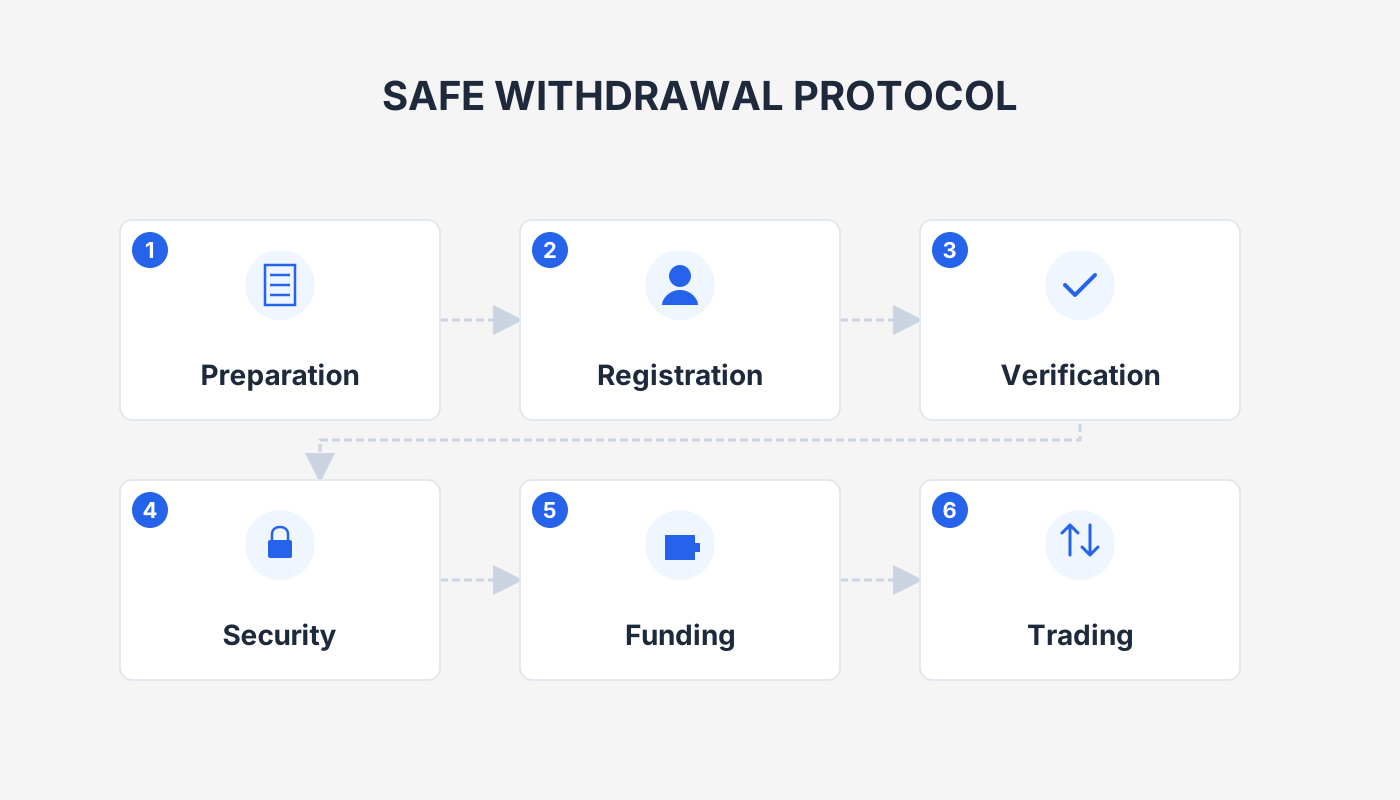
What to Do When a Bitcoin Withdrawal Freezes Your Bank Card?
Freezes generally fall into two categories: bank‑initiated freeze and judicial freeze.

1. Bank‑Initiated Freeze
Bank freezes usually occur under one of the following circumstances:
- Regulatory restriction – In certain countries or regions, banks are prohibited from allowing accounts to engage in digital‑asset transactions. When a transfer memo contains keywords such as BTC, ETH, USDT, the bank’s risk‑control system may flag the transaction and either freeze the account or suspend part of its transaction capabilities.
- Anti‑money‑laundering (AML) trigger – Large transfers late at night, frequent trades with multiple counterparties, or accounts that have been dormant with a zero balance for an extended period can trigger the bank’s AML monitoring system, leading to functional restrictions on the account.
Remediation steps
- Proactively contact the bank where the account is held and provide any requested documentation that explains the source of the funds.
- Preventive measures: when conducting crypto trades, advise counterparties not to use sensitive keywords like “BTC” or “USDT” in the transaction memo; consider using several bank cards and rotate them periodically to lower the risk attached to any single card.
2. Judicial Freeze
The judicial‑freeze process varies by jurisdiction, but the overall flow is similar:
- After a victim files a police report, law‑enforcement agencies trace the money flow, identify the relevant bank accounts, and order a freeze on those accounts.
- The freeze chain can involve multiple accounts; even account holders who were unaware of any wrongdoing may find their cards frozen as a collateral measure.
Remediation steps
- Use the bank’s online portal or customer‑service hotline to inquire about the freeze’s duration and its legal source; both pieces of information are accessible in the bank’s back‑office system.
- Most judicial freezes are temporary. After cooperating with the police investigation, the account is usually unfrozen automatically within 2–3 business days. If the system shows a six‑month freeze, it indicates that the funds are closely linked to the investigated case and a longer review period is required.
- Contact the local police department proactively to obtain the specific transaction records that triggered the freeze. Provide, as requested by the authorities:
- Huobi OTC trade order records (log in to Huobi OTC, export and print the statements)
- Bank‑card transaction statements for the frozen account
- If the counterpart’s personal information is needed, request it through the OTC platform’s legal‑compliance channel.
- If police refuse to lift the freeze, you may apply for a partial release of funds that are unrelated to the alleged case, or consult a qualified attorney to confirm that you are a good‑faith participant.
How to Reduce the Likelihood of a Bank Card Being Frozen After a Bitcoin Withdrawal?
- Diversify bank cards – Use local small‑scale banks (e.g., Changsha Bank, Donghai Island Credit Union) and keep several cards on hand, avoiding large‑value transactions on a single card.
- Sell in small batches – Convert crypto to fiat in multiple low‑value transactions rather than one large withdrawal; this lowers the chance of triggering risk‑control alerts.
- Choose compliant platforms – Opt for OTC platforms that require facial‑recognition KYC; such platforms are less likely to be abused by illicit actors.
- Dedicated card for digital‑asset activity – Reserve specific cards solely for crypto‑related transactions and keep them separate from everyday payment cards.
- Pre‑deposit verification – Before funding an account, confirm that the account is not already flagged as frozen in the bank’s system.
Do Banks Review Bitcoin Withdrawals?
Whether a bank conducts a review depends on the withdrawal amount and the currency involved:
- Large withdrawals (e.g., a single pull of roughly CNY 300,000 worth of Bitcoin) typically trigger regulatory scrutiny.
- Foreign‑currency withdrawals (USD, EUR via SEPA/SWIFT, JPY, etc.) are even more likely to be examined.
- Some corporate accounts, because of higher regular transaction volumes, may face a relatively relaxed review threshold.
In addition, many jurisdictions worldwide have begun taxing cryptocurrency transactions. Countries such as China, South Korea, and members of the European Union are tightening oversight. Failure to report crypto‑related income may constitute tax evasion. (*Note: crypto gains may be taxable in your local jurisdiction; consult a tax professional for guidance.*)
Is Personal Income Tax Required on Bitcoin Withdrawals?
- Gifts – According to regulatory notices (e.g., Announcement 94, Document 289), gifting virtual assets is not prohibited, but the recipient must declare any resulting personal‑income tax to the tax authority.
- Cross‑border trading – Buying with RMB and selling for foreign currency (or vice‑versa) can breach foreign‑exchange regulations and may raise money‑laundering concerns, regardless of how many times the trade occurs.
- Peer‑to‑peer transfers – While not expressly banned, such transactions receive no policy incentives and must still comply with applicable laws.
- Facilitating illegal cross‑border flows – If you knowingly assist a party whose funds stem from illegal activity and help them trade virtual currencies, you could be implicated in money‑laundering offenses.
Summary of Key Steps
| Step | Action Points |
|---|---|
| 1️⃣ Identify freeze type | Bank‑initiated → contact bank; Judicial → query source and duration |
| 2️⃣ Submit documentation | Trade records, bank‑card statements, counterpart information (if required) |
| 3️⃣ Cooperate with investigation | Explain fund origin per police or bank request, maintain open communication |
| 4️⃣ Request unfreeze | If funds are unrelated to the case, apply for partial release; seek legal counsel when needed |
| 5️⃣ Prevent future freezes | Use multiple dedicated cards, transact in smaller batches, select compliant platforms |
Friendly reminder: A freeze does not automatically imply wrongdoing; it often results from unclear fund origins or being inadvertently linked to another party’s case. As long as your transactions are legitimate and you provide complete documentation, cooperating with the relevant authorities should lead to a swift resolution. If you have any doubts, promptly reach out to local law‑enforcement or a qualified attorney for assistance.
*For U.S. residents, please note that only Binance.US is authorized for crypto trading; the global Binance platform is not available to U.S. users.*
💡 Register on Binance with referral code B2345 for the maximum trading fee discount. See Binance complete guide.



